Quick answer: Preservative 211, E211, and INS 211 all mean sodium benzoate. For the canonical label lookup, start with the sodium benzoate ingredient profile; this explainer goes deeper on beverage chemistry, benzene risk, and storage conditions.
Ingredient Deep Dives
Preservative 211 / INS 211: Sodium Benzoate (E211)
Preservative 211, INS 211, and E211 are sodium benzoate. Learn where it appears, when vitamin C can form benzene, and which label names to check.
Apr 7, 2026|9 min read
Start from the cluster
Preservative 211, E211, and INS 211 at a Glance
| Label term | What it means | Where you may see it | What to check nearby |
|---|---|---|---|
| Sodium benzoate | The ingredient's common name | US and international ingredient lists | Vitamin C, ascorbic acid, acidic drinks, and storage instructions |
| Preservative 211 | Sodium benzoate identified by its additive number | India, Australia, New Zealand, and imported foods | The same benzoate and vitamin C combination |
| INS 211 | Sodium benzoate in the International Numbering System | India and other markets using INS numbers | Ascorbic acid, listed as vitamin C or INS 300 |
| E211 | Sodium benzoate under the European additive-number convention | EU and UK labels, plus imported foods | Ascorbic acid or E300, especially in acidic beverages |
| Benzoic acid, E210, or INS 210 | A related benzoate preservative, not another name for sodium benzoate | Acidic drinks, sauces, pickles, and condiments | Vitamin C, heat, light, and long storage |
| Potassium benzoate, E212, or INS 212 | A related potassium salt, not sodium benzoate | Beverages and acidic packaged foods | Vitamin C and the same benzene-management conditions |
The E prefix identifies a European additive number. INS refers to the Codex International Numbering System. The number 211 identifies sodium benzoate in both systems, so these label terms describe the same preservative even though the format changes by market.
What Is E211 Preservative?
Does E211 on a drink label mean it contains benzene?
No. Sodium benzoate and benzene are different chemicals. Seeing E211, INS 211, or preservative 211 on a label does not demonstrate that benzene is present. The concern discussed here is formation under particular beverage formulation and storage conditions, not the preservative's name alone.
Use this three-step check:
- Identify the preservative. Sodium benzoate is E211; benzoic acid and potassium benzoate are related preservatives with different numbers.
- Check the complete formula. Vitamin C may be listed as ascorbic acid. Its presence alongside a benzoate is a reason to understand the manufacturer's controls, not proof that a drink is unsafe.
- Follow storage instructions. Avoid unnecessary heat and sunlight. An ingredient list or scanner cannot measure benzene; that requires testing.
This keeps the decision proportionate: use the ingredient profile for a quick identity check, and this article for the drink-specific chemistry and evidence.
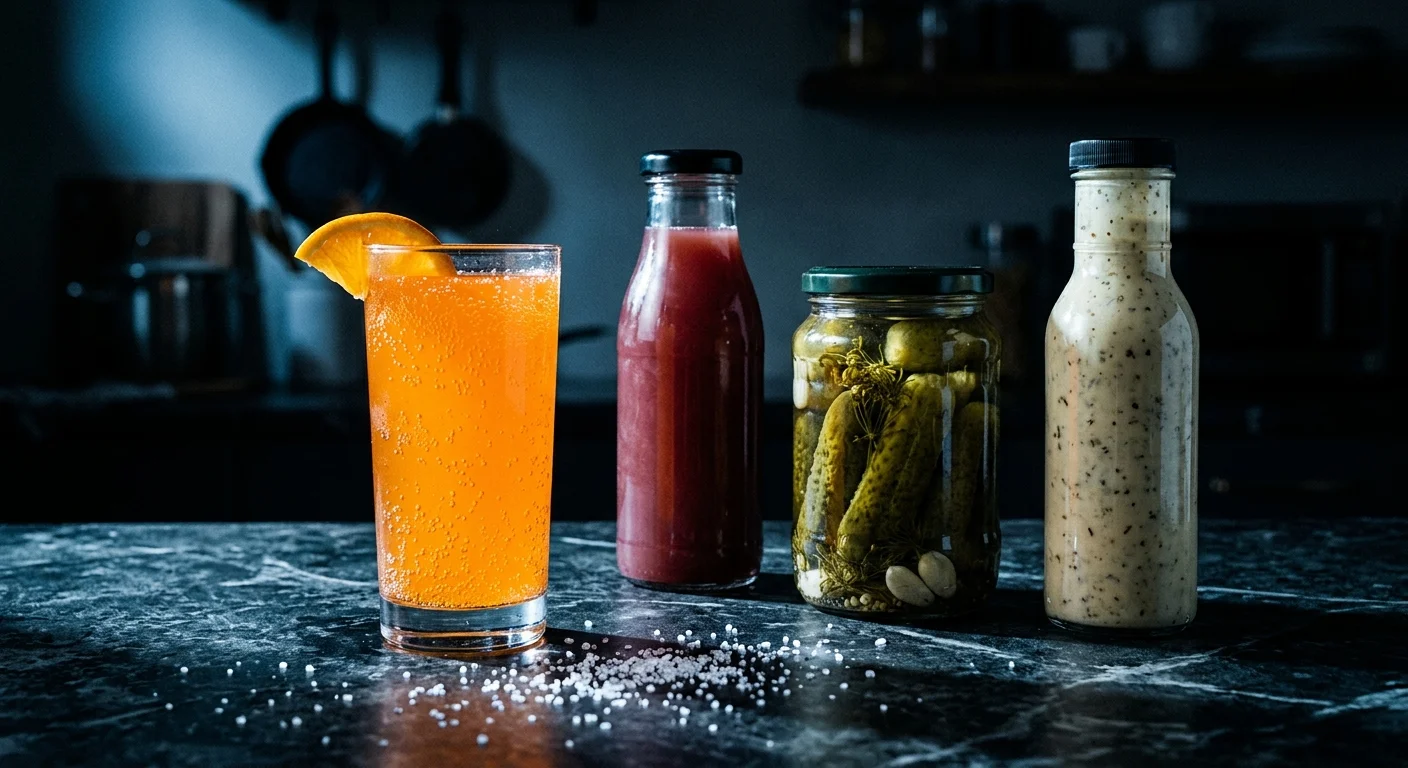
E211 is the food additive code for sodium benzoate. It helps slow the growth of bacteria, yeasts, and moulds in acidic packaged foods, which is why it often appears in soft drinks, fruit drinks, pickles, sauces, and condiments. If a label says E211, read it as sodium benzoate and check nearby ingredients such as vitamin C, ascorbic acid, benzoic acid, potassium benzoate, and synthetic colors.
The same ingredient may also appear as preservative 211, preservative E211, INS 211, or sodium benzoate E211. In India and some imported foods, INS 211 is the common additive-number format. If you are searching for "INS 211 means in Hindi," the practical answer is simple: it means sodium benzoate, a preservative used to keep acidic packaged foods stable for longer.
For the compact lookup path, start with the E-Number Glossary entry for E211, the sodium benzoate ingredient profile, and the Banned Additive Status hub if your question is whether sodium benzoate is banned. This explainer goes deeper on the beverage chemistry, storage conditions, and why FDA and EFSA context matters.
Most people glancing at a drinks label look for calories, sugar, and maybe artificial sweeteners. Few notice the word "sodium benzoate" or its European code, E211, buried in the ingredients list. Yet this preservative shows up in sodas, fruit juices, pickles, salad dressings, soy sauce, and dozens of other common products.
On its own, sodium benzoate is considered safe at the levels typically used in food. The problem is that it rarely sits on its own. Combine it with vitamin C, add a little heat or light, and you get something far more concerning: benzene, a chemical classified as a Group 1 carcinogen by the International Agency for Research on Cancer.
This doesn't mean every drink with sodium benzoate is dangerous. But it does mean that what's on your label deserves a closer look than most people give it.
Is Sodium Benzoate Dangerous?
Sodium benzoate is not automatically dangerous every time it appears on a label. Regulators in the U.S., EU, and many other markets still allow it within permitted limits. The better question is: which products make sodium benzoate more worth checking?
Prioritize products with these label patterns:
- Benzoate plus vitamin C: sodium benzoate, potassium benzoate, benzoic acid, E210, or E211 alongside ascorbic acid or vitamin C
- Acidic drinks: soda, fruit drinks, squashes, flavored waters, sports drinks, and shelf-stable juices
- Heat or light exposure: clear bottles, warm storage, long shelf life, or drinks left in hot cars
- Child-facing dyed drinks: products that combine preservatives, artificial colors, and sweeteners
- Repeated daily use: condiments or drinks your household consumes often, where small exposures can become routine
For most shoppers, the practical move is not panic. It is comparison. If two similar drinks are available and one avoids benzoates, the benzoate-free option is usually the simpler choice.
What Is Sodium Benzoate?
Sodium benzoate is the sodium salt of benzoic acid. It works by disrupting the cell membranes of microbes, making it harder for bacteria, yeasts, and moulds to survive. This extends the shelf life of products without refrigeration, which is why it's a go-to preservative for drinks and condiments.
It works best in acidic environments, which is why it's most commonly found in low-pH foods: carbonated soft drinks, fruit juices, squashes, vinegar-based condiments, pickles, and jams.
In the US, the FDA classifies sodium benzoate as Generally Recognized as Safe (GRAS) at concentrations up to 0.1% by weight. The EU permits it as E211, and the WHO has set an acceptable daily intake (ADI) of 0–5 mg per kilogram of body weight. At levels found in normal food consumption, most people stay well below this ADI.
Where You'll Find It
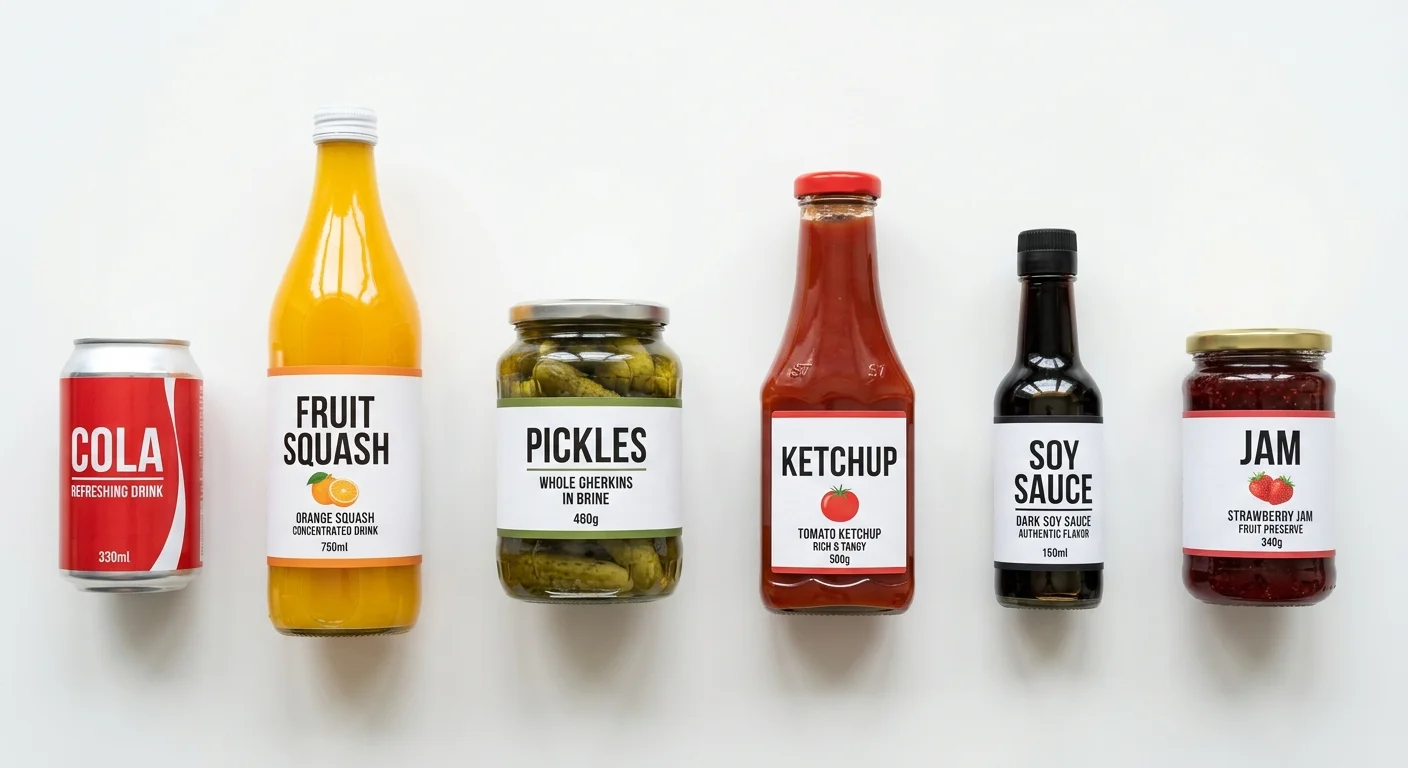
Sodium benzoate turns up in a wider range of products than most consumers expect. The categories most likely to contain it:
Carbonated soft drinks: Many cola and fruit-flavoured sodas list it as a preservative. Some brands have reformulated, but it remains widespread.
Fruit juices and squashes: Especially concentrated juices, sports drinks, and ready-to-drink fruit beverages. When these also contain added vitamin C, the benzene risk becomes relevant.
Condiments: Soy sauce, ketchup, salad dressings, hot sauce, mustard, and mayonnaise commonly contain sodium benzoate. These are acidic products where benzoate works well as a shelf-life extender.
Pickles and olives: High-acid, brine-based products frequently use it.
Jams and jellies: Particularly those with lower sugar content, where the lower sugar level reduces the natural preserving effect.
Sparkling waters with added vitamin C: This combination on the same label is worth flagging. The benzene risk is highest when benzoate and ascorbic acid are both present.
On labels, it appears as "sodium benzoate" or "E211." Benzoic acid itself (E210) produces the same preserving effect and the same benzene risk.
The Benzene Problem
Benzene is one of the best-studied carcinogens. Long-term exposure is linked to leukaemia and other blood cancers. It occurs naturally in the environment at trace levels, and it's also produced industrially. The question with sodium benzoate is whether it can produce meaningful amounts of benzene inside the foods and drinks you consume.
The answer is: yes, under certain conditions.
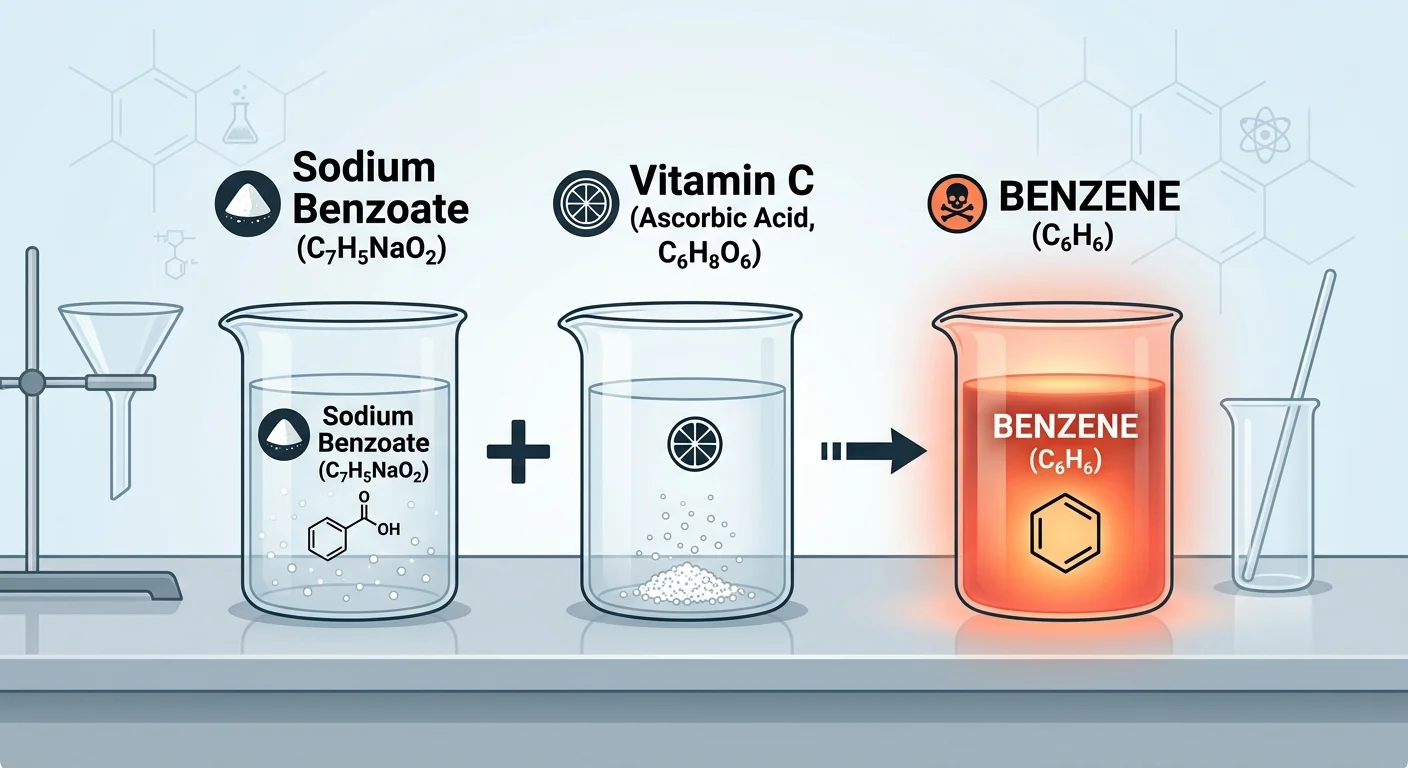
When sodium benzoate and ascorbic acid (vitamin C, E300) are present together in an acidic solution, a chemical reaction can occur that strips a carbon dioxide molecule from the benzoate ion, leaving behind benzene. The reaction is catalysed by transition metals like iron and copper, and it accelerates with heat and light exposure.
The reaction pathway is well understood. A hydroxyl radical, formed when ascorbic acid reduces metal ions in the presence of oxygen, attacks the benzoate ion. The result is benzene.
In 2005 and 2006, the FDA tested over 100 beverages in the US market that contained both ascorbic acid and benzoate salts. Of those tested, five products exceeded 5 parts per billion (ppb) — the EPA's maximum contaminant level for benzene in drinking water. The concentrations in affected products ranged from 5 ppb to 79 ppb, with most of the elevated readings in fruit-flavoured drinks and squashes.
The FDA worked with manufacturers to reformulate those products, and follow-up testing found most had been brought below the 5 ppb threshold. But the agency acknowledged that low-level benzene exposure from these beverages represents a potential risk that warrants ongoing attention.
"Although the low levels of benzene found in soft drinks don't present a safety concern, FDA will continue to monitor the situation." — FDA Q&A on Benzene in Beverages
Storage matters too. Studies have shown that benzene levels rise when drinks are stored in warm environments or exposed to direct light. A bottle of juice sitting in a hot car, or a clear glass bottle of lemonade left in sunlight, will accumulate more benzene than the same product stored cool and dark.
The Children's Hyperactivity Link
Beyond benzene, sodium benzoate attracted attention in 2007 through a landmark study published in The Lancet. Researchers at the University of Southampton recruited 153 three-year-olds and 144 eight-to-nine-year-olds and placed them on an additive-free diet for a baseline period.
Children were then given daily drinks containing one of two mixtures of food dyes plus sodium benzoate, or a plain fruit juice placebo, in a randomised, double-blinded, placebo-controlled design.
The results were clear. Both mixtures containing sodium benzoate and artificial dyes produced significantly increased hyperactivity compared to placebo. The effect was seen across both age groups, though it was more pronounced in the younger children for one of the two mixes.
What made this study influential was its design. The dyes and benzoate were tested together, not in isolation, which better reflects how children actually consume them. The Food Standards Agency in the UK acted on the findings and advised manufacturers to voluntarily remove the implicated dyes from products. The EU followed with a mandatory warning label on products containing the relevant dyes: "may have an adverse effect on activity and attention in children."
The difficulty in interpreting the Southampton findings is that the test drinks used sodium benzoate alongside multiple dyes, making it hard to separate benzoate's individual contribution to hyperactivity from that of the dyes. EFSA's review concluded the data was insufficient to set a new ADI for benzoate based on this study alone. The link between sodium benzoate and ADHD-like symptoms is suggestive rather than proven, and individual sensitivity appears to vary considerably.
What Recent Research Is Finding
Attention has shifted recently to sodium benzoate's effects on the gut microbiome. This is where some of the more troubling research is emerging.
A 2023 study found that sodium benzoate suppresses beneficial gut bacteria, including Lactobacillus species and Clostridium tyrobutyricum, while leaving pro-inflammatory bacteria relatively unaffected. This creates an imbalance that could, over time, increase baseline inflammation.
A 2025 study specifically examining sodium benzoate's effects across different age groups found that higher doses disrupted the functional outputs of gut bacteria, including a drop in propionate production. Propionate is a short-chain fatty acid associated with anti-inflammatory effects and metabolic regulation.
Short-term studies have also found elevated levels of interleukin-1β (IL-1β) and interleukin-6 (IL-6) following sodium benzoate exposure. These are cytokines involved in inflammatory response. The concentrations needed to produce these effects in most studies are higher than typical dietary exposure, but the consistency of the signal across different research groups is worth tracking.
Other documented concerns include increased oxidative stress markers at high doses, including reduced activity of the antioxidant enzymes superoxide dismutase and catalase. Again, these effects are dose-dependent and the concentrations used in animal studies often exceed normal human intake. That said, repeated exposure to sub-threshold doses throughout a lifetime is something the research hasn't fully addressed.
The Regulatory Situation
Sodium benzoate remains approved in the US, EU, UK, and most other markets. No authority has moved to ban it, and the regulatory consensus holds that it's safe at permitted levels when consumed within the ADI. That means "sodium benzoate ban" is usually the wrong frame; the better question is which products combine benzoates, vitamin C, heat, light, and storage conditions in a way that raises benzene-management concerns.
The FDA's GRAS designation has not been revisited as part of its current post-market review programme, which is currently focused on BHA, BHT, and azodicarbonamide. Sodium benzoate is not on the near-term review list.
The EU continues to permit E211 in a range of food categories. EFSA's previous safety evaluations have upheld its approval, though with the caveat that the benzene interaction with ascorbic acid is a real phenomenon that manufacturers should manage through formulation choices.
The practical regulatory concern, then, isn't benzoate in isolation. It's the combination problem. No regulation currently prohibits a manufacturer from using both sodium benzoate and added vitamin C in the same product, even though their co-presence creates the conditions for benzene formation. The onus falls on manufacturers to test finished products and ensure benzene levels remain below acceptable thresholds, and on consumers to be aware of this interaction.
How to Reduce Your Exposure
Eliminating sodium benzoate entirely from your diet would require cutting out a significant proportion of packaged drinks and condiments. For most people, that isn't practical. But there are straightforward ways to reduce exposure.
Read the label for the combination. The benzene risk is specific to products that contain both sodium benzoate (or benzoic acid) and ascorbic acid (vitamin C). A product with sodium benzoate and no added vitamin C carries much lower benzene risk. Look for both terms in the ingredients list before buying.
Check store brands and cheaper juices. Premium and organic brands tend to avoid synthetic preservatives. Value-range squashes, concentrated fruit drinks, and budget sodas are the categories where sodium benzoate is most prevalent.
Store acidic drinks correctly. Keep products away from heat and direct light. Refrigeration slows the reaction significantly. Don't leave vitamin-C-fortified drinks in warm cars or sunny spots.
For children, be more cautious. The Southampton study focused on children specifically, and the ADHD-related concerns are most relevant for younger, smaller bodies. Fruit squashes and cordials marketed to children are a category worth scrutinising.
E211 is the code to know. In countries using E-numbers, sodium benzoate will appear as E211. Benzoic acid, which behaves identically, is E210.
Using IngrediCheck, you can scan any packaged product and immediately see whether it contains sodium benzoate (E211) or benzoic acid (E210), and whether it also contains ascorbic acid. If both appear on the same label, IngrediCheck will flag the combination so you can make an informed decision about whether to buy it.
For a quicker label-reading reference, compare this explainer with Food Additives Banned in the EU but Still Allowed in the U.S., the sodium benzoate ingredient profile, the E-Number Glossary for E211 and related additive codes, the Label Name Glossary for E211 and benzoate aliases, the Where Ingredients Appear hub for common drink and condiment categories, the broader Food Additives hub, and the Safer Ingredient Swaps hub for benzoate-free drink and condiment comparisons.
Related Guides
- Sodium Benzoate Ingredient Profile: E211, INS 211, and Preservative 211
- Benzoate Preservatives: Why Aldi Flags Potassium Benzoate
- Food Additives Banned in the EU but Still Allowed in the U.S. (2026 Guide)
- Why Europe Bans Some Food Additives the U.S. Still Allows
- Potassium Bromate: Banned in 40 Countries, Still in US Bread
- Azodicarbonamide (ADA): The Yoga Mat Chemical in US Bread
- Titanium Dioxide (E171): Banned in EU, Still in US Candy
- BHA: The Preservative the FDA Is Finally Reviewing
- Red 40 & Yellow 5: The 6 Food Dyes the FDA Is Phasing Out
- 44 Food Additives Banned Abroad: Texas's Warning Label List
On this page
Frequently Asked Questions
What is E211 preservative?
E211 is sodium benzoate, a preservative used mostly in acidic drinks, sauces, condiments, and shelf-stable foods.
When does sodium benzoate become a benzene concern?
The concern is highest when benzoate preservatives and vitamin C appear together in acidic drinks that are exposed to heat, light, or long storage.
Should I avoid every product with sodium benzoate?
Not necessarily. Focus first on acidic drinks and dye-heavy beverages, then compare similar products without benzoate preservatives when they are easy to find.
Sources
Source lists are maintained with our editorial policy.
- Questions and Answers on Benzene in Soft Drinks — FDA
- Sodium Benzoate — Harmfulness and Potential Use in Therapies (PMC, 2022)
- Food additives and hyperactive behaviour in 3-year-old and 8/9-year-old children — The Lancet (2007)
- EFSA evaluates Southampton study on food additives and child behaviour
- The Effect of Sodium Benzoate on Host Health — PMC (2023)
- The Effect of Sodium Benzoate on the Gut Microbiome Across Age Groups — PubMed (2025)
- Food Additives: Emerging Detrimental Roles on Gut Health — FASEB Journal (2025)
- Benzene in soft drinks — Wikipedia
- What is sodium benzoate? — EWG (2024)
- Sodium benzoate — eCFR 21 CFR 184.1733
- Sodium Benzoate: Uses, Dangers, and Safety — Healthline
- Human gut microbes are susceptible to antimicrobial food additives in vitro — PubMed
Next Label Check
Follow the scanner, hub, and ingredient paths connected to this guide
Scanner workflows
Gluten-free scannerScanner workflow
Gluten-Free Barcode Scanner
Scan barcodes and labels for gluten clues, hidden wheat, barley, rye, malt, and celiac-relevant ingredient risks with IngrediCheck's gluten-free workflow.
Low-histamine scannerScanner workflow
Low-Histamine Ingredient Checker App
Flag fermented, aged, cured, preserved, and personally avoided ingredient patterns with IngrediCheck's low-histamine scanner.
Nightshade-free scannerScanner workflow
Nightshade-Free Ingredient Checker App
Scan nightshade-free labels for tomato, paprika, chili pepper, potato starch, spice blends, and saved household rules with IngrediCheck.
Topic hubs
Topic hub
Ingredient Safety
Explore IngrediCheck's ingredient safety hub for additives, contaminants, preservatives, and evidence-based label guidance.
Topic hub
Preservatives
Review preservative label guidance for sodium benzoate, BHA, BHT, parabens, calcium propionate, and related packaged foods.
Topic hub
Gluten-Free Label Reading
Find IngrediCheck's gluten-free topic hub covering hidden gluten, celiac-safe label reading, and ingredient-level guidance.
Related articles
Ingredient Deep DivesArticle
Nitrates in Processed Meat: Are They Causing Cancer?
Processed meat is in IARC's top cancer risk category alongside tobacco — but that doesn't mean eating bacon is as dangerous as smoking. Here's what the nitrate science actually says.
Ingredient Deep DivesArticle
Benzoate Preservatives: Why Aldi Flags Potassium Benzoate
Potassium benzoate is the Aldi list entry, but shoppers usually need the larger benzoate family context. Here is why these preservatives still matter on modern labels.
Ingredient Deep DivesArticle
BHA: The Preservative the FDA Is Finally Reviewing
BHA has been listed as a probable carcinogen since 1991 and banned from general food use in the EU. The FDA issued a safety review request in February 2026 — 35 years later.
Get the app for clearer label decisions.
Scan labels, see what fits your food notes, and read the why in plain English.