Soy-Free Living: Decoding Labels & Delicious Swaps

Soy hides in bread, canned tuna, vitamin E, and more under 20+ label names. Learn to spot hidden soy and find delicious soy-free swaps for everyday cooking.

Mar 18, 2026|10 min read
Soy-Free Living: Decoding Labels & Delicious Swaps

Soy is one of the most pervasive ingredients in the modern food supply. It's estimated to appear in roughly 60% of processed foods — lurking not just in obvious places like tofu, edamame, and soy sauce, but in bread, canned tuna, vegetable broth, chocolate bars, and even some vitamin supplements. For the approximately 1.5 million American adults living with a soy allergy, plus the many more navigating soy intolerance or sensitivity, this creates a daily label-reading challenge that can feel relentless.

The good news: once you know what to look for, soy becomes much easier to spot and avoid. And the soy-free pantry has never been better stocked with alternatives that work just as well in the kitchen.

This article is for informational purposes only and should not be considered medical advice. Consult a healthcare professional for personalized guidance.

Soy Allergy vs. Soy Intolerance: An Important Distinction

Before diving into label decoding, it's worth understanding the difference between a soy allergy and a soy intolerance — because the management approach and the stakes are very different.

Soy allergy is an immune-mediated response. The immune system mistakenly identifies soy proteins as a threat and mounts a reaction that can range from hives and gastrointestinal distress to, in severe cases, anaphylaxis. Even trace amounts can trigger a reaction in highly sensitized individuals. Soy is one of the nine major allergens regulated under FALCPA, the U.S. food allergen labeling law, reflecting the seriousness of allergic reactions it can cause.

Soy intolerance is a digestive issue — not an immune response. The body has difficulty processing soy, leading to symptoms like bloating, gas, cramping, diarrhea, or fatigue, typically appearing 30 minutes to 48 hours after eating. It is not life-threatening, and many people with soy intolerance can tolerate small amounts without major consequences.

The confusion between the two matters practically: someone with soy intolerance may be able to tolerate small amounts of fermented soy (like a dash of miso), while someone with IgE-mediated soy allergy cannot afford that flexibility.

About outgrowing soy allergy: Unlike peanut or tree nut allergies, soy allergy is frequently outgrown in childhood. Research suggests that approximately 69% of soy-allergic children resolve their allergy by age 10 — though more recent data indicates resolution may be occurring more slowly than in previous decades. Adults who develop soy allergy later in life are less likely to outgrow it.

Every Name Soy Hides Under

Every Name Soy Hides Under

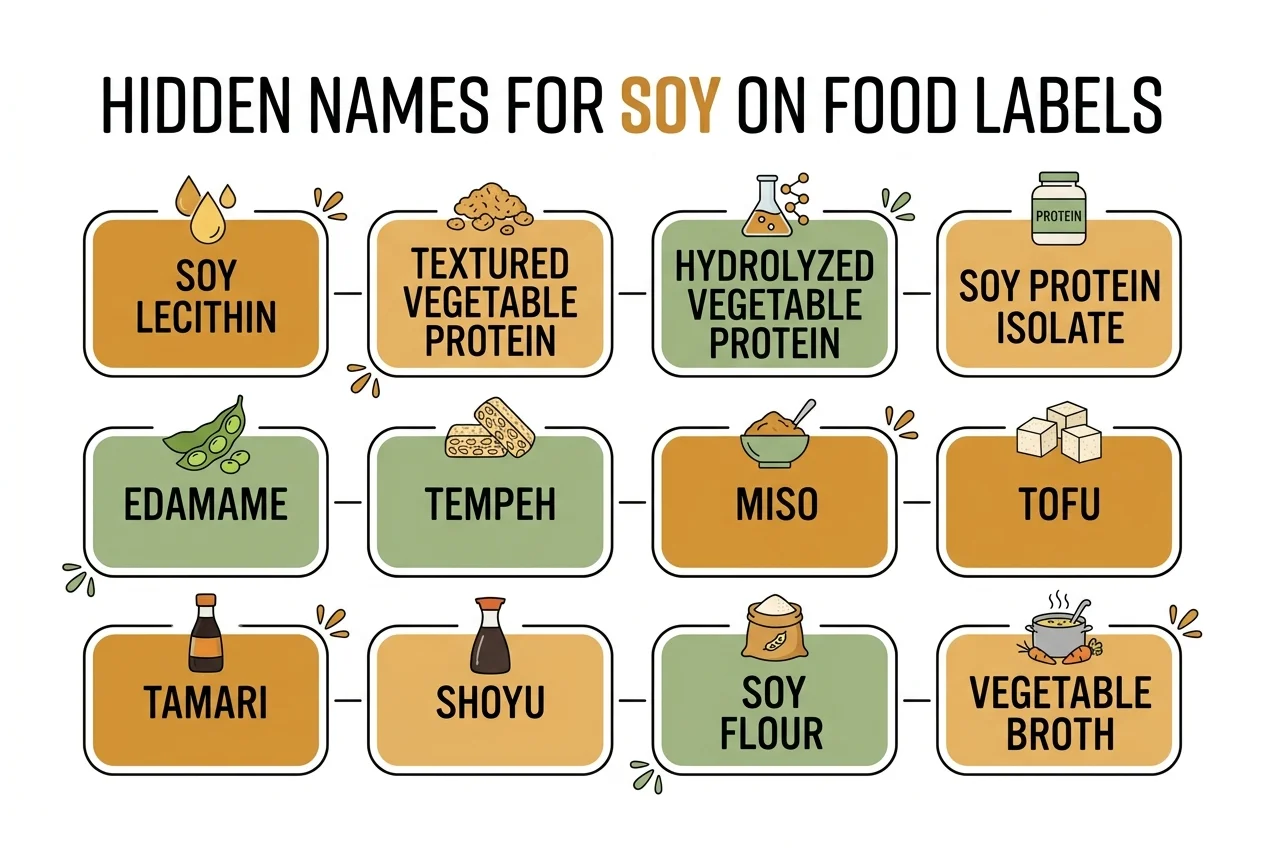
The most important skill for soy-free label reading is knowing soy's aliases. The American College of Allergy, Asthma, and Immunology identifies more than 20 soy-derived ingredients that can appear on food labels.

Obvious soy names:

  • Soybeans, soya, soy
  • Edamame (immature soybeans)
  • Tofu (also called bean curd)
  • Tempeh, miso, natto
  • Soy milk, soy yogurt, soy cheese
  • Soy sauce, tamari, shoyu, teriyaki sauce

Processed and derived ingredients:

  • Soy lecithin (also E322) — an emulsifier found in chocolate, baked goods, infant formula, and countless packaged foods
  • Soy protein isolate / soy protein concentrate — in protein bars, meal replacements, and meat alternatives
  • Textured vegetable protein (TVP) / textured soy protein (TSP) — in meat substitutes and some ground meat products
  • Hydrolyzed vegetable protein (HVP) / hydrolyzed soy protein — a flavor enhancer common in soups, sauces, and seasonings
  • Soy flour — used in baked goods for texture
  • Soybean oil — must appear in the ingredient list but is exempt from mandatory allergen declaration under FALCPA (see regulatory section below)
  • Mono- and diglycerides — can be soy-derived; manufacturers rarely specify the source
  • Vegetable oil, vegetable starch, vegetable broth — all can contain soy; manufacturer verification required
  • Vitamin E / tocopherols — soy is the most common commercial source of vitamin E; most tocopherol supplements are soy-derived unless labeled otherwise
  • Xanthan gum — can be produced using soy-based media, though this is less common

Watch for "vegetable" as a red flag. "Vegetable oil," "vegetable broth," and "vegetable protein" are vague by design. They do not guarantee soy-free status and often contain soy. When in doubt, contact the manufacturer directly.

Where Soy Hides in Unexpected Places

Avoiding obvious soy products is the easy part. The harder work is catching soy in foods you'd never suspect.

Bread and baked goods — Soy flour and soy lecithin are commonly added to improve shelf life and texture. Many commercial sandwich breads, dinner rolls, and bagels contain one or both.

Canned tuna and canned meats — Some tuna packed in broth uses "vegetable broth" that contains soy. Check the ingredient list carefully; not all canned tuna is soy-free.

Chocolate and confectionery — Soy lecithin is the industry-standard emulsifier in chocolate manufacturing. Most commercial milk chocolate, dark chocolate, and chocolate coatings on snack bars contain it.

Salad dressings and mayonnaise — Soybean oil is one of the most common base oils used in these products. While highly refined soybean oil generally doesn't trigger allergic reactions (see below), it still appears frequently and its presence may be a concern for highly sensitive individuals.

Vitamin E supplements — The vast majority of vitamin E (tocopherol) sold as a supplement or used as a food preservative is derived from soy. If you're managing a soy allergy and taking supplements, check the label or look for sunflower-derived vitamin E.

Cereals and crackers — Many breakfast cereals and crackers add soy flour or soy protein for nutritional fortification. Even products that appear grain-only may contain soy.

Infant formula — Soy-based infant formula is a common alternative for infants who don't tolerate cow's milk formula. For infants with soy allergy, extensively hydrolyzed or amino acid-based formulas are used instead.

The Soy Lecithin Question

One of the most common questions among soy-allergic individuals is: does soy lecithin need to be avoided?

The scientific consensus, including positions from the Food Allergy Research & Resource Program (FARRP) at the University of Nebraska and the American Academy of Allergy, Asthma & Immunology (AAAAI), is that most soy-allergic individuals can safely consume soy lecithin. The manufacturing process for soy lecithin removes the vast majority of soy protein — the component responsible for triggering allergic reactions. By the time it becomes a food ingredient, soy lecithin contains only trace residual protein levels that are insufficient to provoke reactions in most allergic individuals.

Similarly, highly refined soybean oil does not elicit allergic reactions in soy-protein-sensitive individuals in controlled studies, and it is exempt from mandatory allergen declaration under FALCPA precisely for this reason.

That said, a small number of case reports of reactions to soy lecithin do exist, and some individuals are more highly sensitized than others. This is a conversation to have with your allergist — particularly if you have a history of severe reactions. The default guidance from most clinical allergists is that soy lecithin avoidance is unnecessary for the majority of soy-allergic patients, but individual thresholds vary.

Soy-Free Swaps That Actually Work

Soy-Free Swaps That Actually Work

The soy-free pantry is better stocked than ever. Here are the swaps that deliver on both flavor and function.

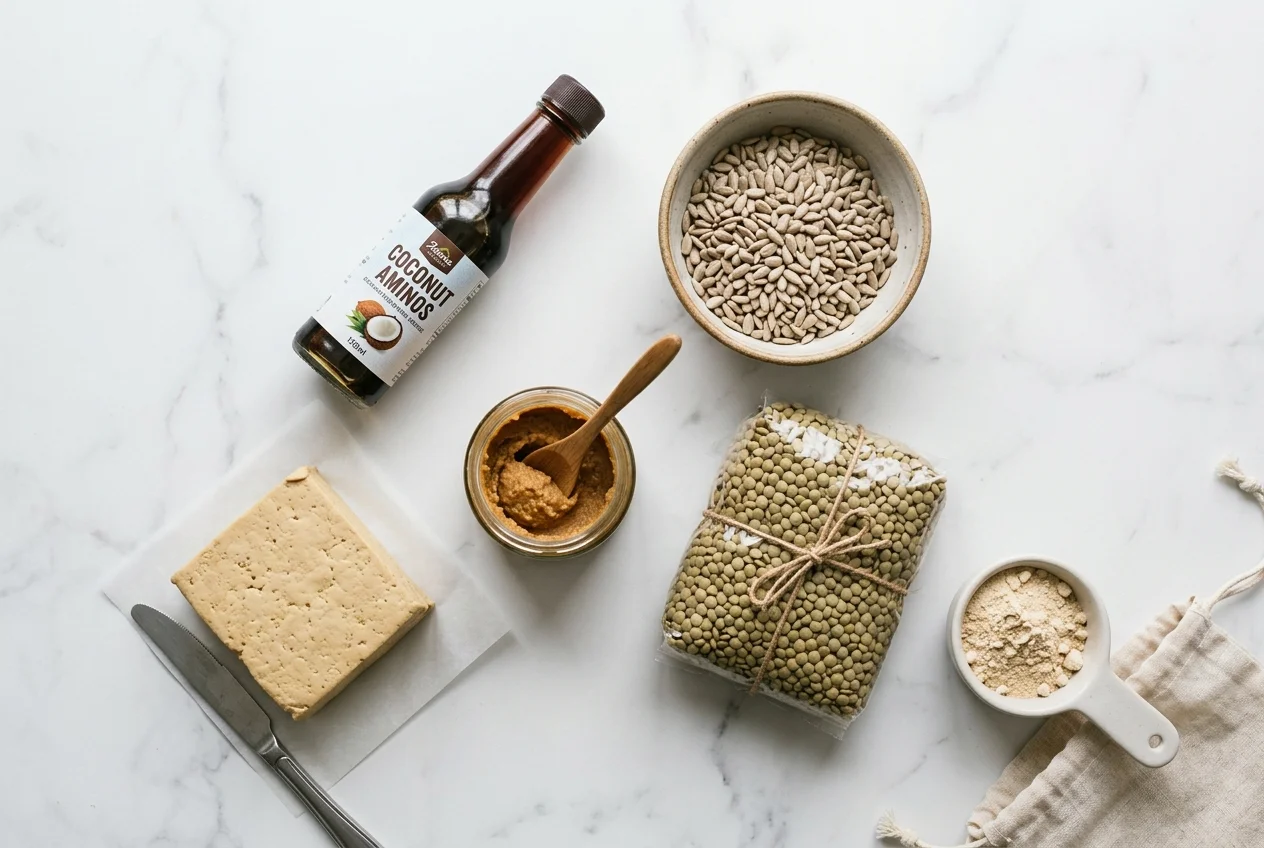
Coconut Aminos — The Soy Sauce Replacement

Coconut aminos are made from fermented coconut tree sap and sea salt. They substitute 1:1 for soy sauce, are soy-free and gluten-free, and contain about 72% less sodium (roughly 198 mg per tablespoon vs. 878 mg in standard soy sauce). The flavor is slightly sweeter and milder — which works beautifully in most Asian-inspired recipes, marinades, and stir-fries. It's also paleo, Whole30, and keto-compatible.

Chickpea-Based Alternatives

Chickpea tofu (also called Burmese tofu) is made from chickpea flour and water, with a firm texture that works well in stir-fries and scrambles. Chickpea miso ferments chickpeas instead of soybeans, delivering the same umami depth in soups and dressings. These are the most direct one-for-one replacements for soy's savory applications.

Protein Replacements

For those relying on soy as a protein source — particularly plant-based eaters — alternatives include:

  • Pea protein — the most widely used plant-based protein powder alternative; mild flavor and good amino acid profile
  • Hemp protein — contains all essential amino acids; richer, slightly nutty flavor
  • Lentils and legumes — black beans (~15g protein per cup), lentils (~12g per ½ cup cooked), and chickpeas are filling whole-food protein sources
  • Quinoa — a complete protein (~8g per cup cooked) that works as a grain replacement in many dishes

Baking and Emulsification

Sunflower lecithin is a direct soy lecithin substitute in baking — it performs identically as an emulsifier and is derived from sunflowers rather than soybeans. Look for it in soy-free chocolate brands and as a standalone baking supplement.

Plant Milks

Most oat, almond, coconut, hemp, and rice milks are soy-free (though always verify the label — some brands add soy for creaminess). These work interchangeably in baking, coffee drinks, and cooking.

Nutritional Considerations

For most people, removing soy from the diet doesn't create meaningful nutritional gaps — provided whole foods fill the void left by processed soy products. The key considerations:

Protein: Soy is one of the few plant-based complete proteins. If soy has been a primary protein source (particularly for vegans), intentional planning is needed to replace it with a varied mix of legumes, quinoa, hemp, and pea protein.

Phytoestrogens: Soy is the richest dietary source of isoflavones. Removing soy eliminates these plant estrogens from the diet. For most people this is nutritionally neutral; for those with specific hormonal health concerns, a conversation with a healthcare provider is worthwhile.

Vitamin E: If you're switching away from soy-derived tocopherol supplements, look for products that specifically state "sunflower-derived" vitamin E or "non-GMO, non-soy vitamin E."

The Regulatory Framework

In the U.S., the Food Allergen Labeling and Consumer Protection Act (FALCPA, 2004) requires soy to be declared on all FDA-regulated food labels. It can appear as "soy," "soybean," or "soya" — either in parentheses after the ingredient name (e.g., "lecithin (soy)") or in a separate "Contains: Soy" statement. The FDA issued updated allergen labeling guidance in January 2025 (Edition 5) with further clarifications. Important exception: highly refined soybean oil is exempt from allergen declaration, though it must still appear in the ingredient list.

In the EU, Regulation 1169/2011 lists soybeans among 14 major allergens that must be visually emphasized (bold, italics, or contrasting color) in every ingredient list — and this requirement extends to non-prepacked foods in restaurants and cafes. EU exemptions parallel the U.S.: fully refined soybean oil and natural tocopherols from soybean sources are exempt from mandatory allergen declaration.

A Practical Label-Reading Framework

When scanning a product for soy, here's a quick checklist:

  1. Check the "Contains" allergen box — if soy is present as a major allergen, it must be listed here in the U.S.
  2. Read the full ingredient list — "Contains" statements cover intentionally added allergens, but "vegetable oil," "vegetable broth," and "mono- and diglycerides" may contain soy without triggering the allergen statement
  3. Watch for "hydrolyzed," "textured," and "vegetable" — these modifier words often precede soy-derived ingredients
  4. Check vitamin E and supplements — look for "sunflower-derived" if soy-derived tocopherols are a concern
  5. Verify with manufacturers for products where the ingredient list is ambiguous

How IngrediCheck Makes Soy-Free Label Reading Effortless

With more than 20 names that soy can appear under — from hydrolyzed vegetable protein to mono- and diglycerides to vitamin E — manually cross-referencing every label is time-consuming and error-prone. IngrediCheck scans a product's full ingredient list and instantly flags all soy-derived ingredients, including the less obvious ones, so you can make a confident soy-free choice at the shelf without spending five minutes reading fine print. Whether you're managing a diagnosed soy allergy or simply trying to reduce soy in your diet, IngrediCheck keeps the guesswork out of every scan.

Start making confident food choices today!

Scan food and understand what's right for you and your family, with AI.

IngrediCheck app