Label Reading Guides

Broths and Stocks Without Onion or Garlic: Options Compared

Compare five Fody and Bay’s Kitchen soup bases and stocks with explicit no-onion, no-garlic claims, including dilution, country and dietary caveats.

Sep 24, 2026|8 min read
By Sanket Patel|Updated 2026-09-24|5 sources|Editorial standards
Broths and Stocks Without Onion or Garlic: Options Compared

Fody’s Chicken and Vegetable Soup Bases and Bay’s Kitchen’s Concentrated Beef, Chicken and Vegetable Stocks all had explicit manufacturer no-onion and no-garlic claims when checked on September 24, 2026. These are five specific products to investigate, not a blanket endorsement of every stock sold by either brand.

The distinction matters because “low FODMAP,” “vegetable stock” and “made without onion and garlic” answer different questions. A vegetable stock can contain onion. A low-FODMAP broth can use selected green allium ingredients. A powder with neither onion nor garlic can still contain celery or an animal ingredient you need to avoid.

This guide compares current manufacturer pages and published ingredient panels, not laboratory tests or taste tests. Fody was reviewed on its U.S. storefront; Bay’s Kitchen was reviewed on its UK storefront. Shipping, availability and formulations can differ by country. Always match the exact product and your current package before buying.
Five Exact Products to Compare

Five Exact Products to Compare
ProductReviewed market and formatManufacturer claimImportant separate check
Fody Chicken Soup BaseU.S.; 300 g powdered baseNo onion, no garlicContains chicken, chicken fat and celery
Fody Vegetable Soup BaseU.S.; 300 g powdered baseNo onion, no garlicVegan label; contains celery, carrots and potato starch
Bay’s Kitchen Concentrated Beef StockUK; 200 g concentrateNo onion, no garlicBeef ingredients; low-FODMAP certification limited to an 18 g serving plus water
Bay’s Kitchen Concentrated Chicken StockUK; 200 g concentrateNo onion, no garlicChicken ingredients and natural flavouring; verify the current claim and panel together
Bay’s Kitchen Concentrated Vegetable StockUK; 200 g concentrateNo onion, no garlicVegan-approved claim; contains carrot, parsnip and porcini mushroom

None of these is a ready-to-pour carton in the format reviewed. The powders and concentrates need dilution. That can be convenient for a small recipe, but it also means the amount of product in your finished serving depends on how you prepare and portion it.

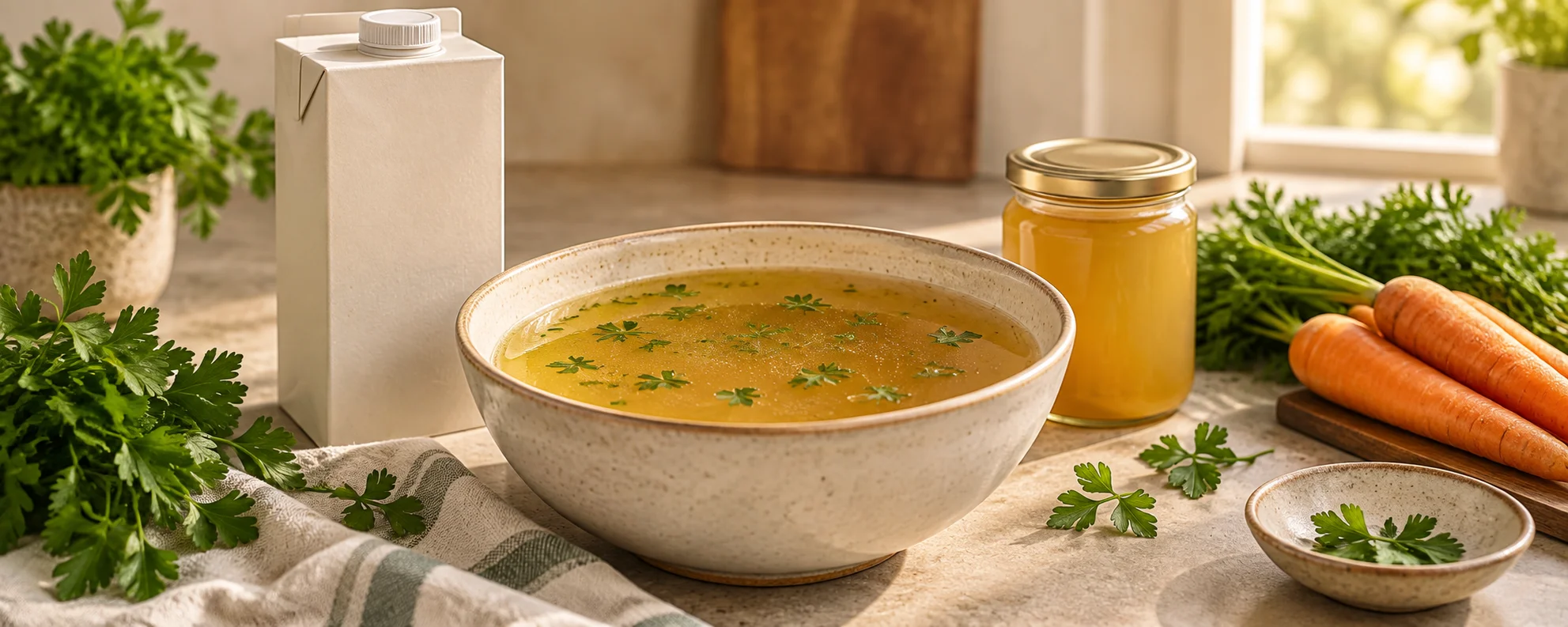
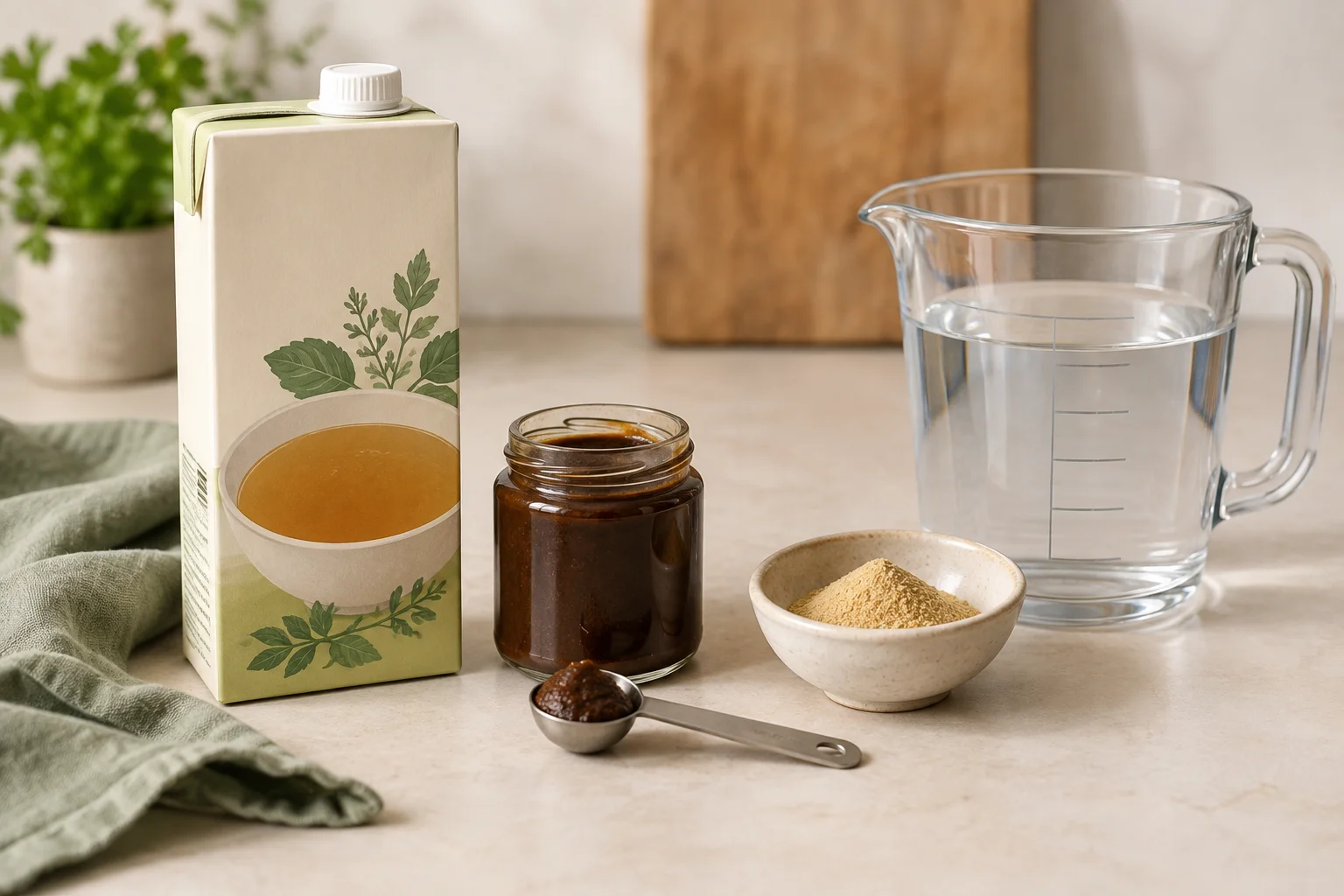
Illustration of broth preparation, not photographs of the listed products or evidence of their ingredients.

Fody Chicken Soup Base

Fody’s 10.6 oz/300 g Chicken Soup Base, SKU 888009, is explicitly described as made without onion or garlic. Its published label lists salt, dehydrated chicken, rice flour, chicken fat, sugar, celery, sage, turmeric and rosemary extract.

This is a chicken product, not a vegetarian substitute with chicken-style flavor. Both chicken and chicken fat appear in the ingredient list. Celery also deserves its own check, particularly if you are reading the list for an allergy rather than simply avoiding alliums.

The reviewed label specifies one teaspoon, 3.5 g, dissolved in one cup of hot water. For four cups, it gives one tablespoon plus one teaspoon. Follow the package you have rather than borrowing the dilution ratio from another brand’s jar.

The product page calls it low FODMAP and gluten-free. The examined material did not identify a low-FODMAP certifying body, so this guide does not call it Monash-certified. A familiar dietary badge should not be upgraded into a different organization’s endorsement.

Fody Vegetable Soup Base

The 300 g Vegetable Soup Base, SKU 888010, also carries explicit no-onion and no-garlic wording. The full reviewed list is salt, dehydrated vegetables (carrots, tomatoes), sugar, potato starch, herbs and spices (basil, celery, oregano, rosemary, parsley, paprika), canola oil and extra virgin olive oil.

Fody labels this product vegan. That helps distinguish it from the chicken base, but vegan is not the same as suitable for every religious or medical dietary restriction. Carrots and potato starch are relevant to someone avoiding root-vegetable ingredients. Celery appears inside the herbs-and-spices group, so reading only the first few ingredients would miss it.

The label uses the same one-teaspoon-to-one-cup preparation as the chicken base. The page recommends dissolving the powder in hot water first. When using it in rice, gravy or a sauce rather than soup, keep track of the amount of powder used across the whole recipe.

The page describes the product as certified low FODMAP and gluten-free. We did not establish a named low-FODMAP certifier from the reviewed material. Report the manufacturer’s claim at that level rather than assuming all certification programs are interchangeable.

Bay’s Kitchen Concentrated Beef Stock

This UK product comes in a 200 g jar and explicitly states no onion or garlic. Its ingredients are water, beef stock base (31%), cornflour and lactic acid. The nested stock base contains beef stock made from beef bones, water, salt and beef fat; yeast extract with salt; sugar; concentrated lemon juice; and rosemary extract.

The nested list is important. A short headline ingredient such as “stock base” is not a complete disclosure on its own; the ingredients inside it tell you what the concentrate actually contains.

Bay’s Kitchen recommends 18 g, or one tablespoon, per 100 ml of boiling water. Its low-FODMAP certification claim is specifically limited to an 18 g serving plus water. Adding more water does not reduce the amount of concentrate you consume if you finish the entire bowl. Doubling the concentrate is also not covered merely because you follow the same dilution ratio.

The page says to refrigerate after opening and use within one month. Check the current jar for storage instructions, especially if you only use stock occasionally.

Bay’s Kitchen Concentrated Chicken Stock

The 200 g chicken concentrate has the same explicit no-onion and no-garlic claim. Its full panel names water, chicken stock base (31%), cornflour and lactic acid. Inside the base are chicken stock made from chicken bones, chicken fat, water and salt; yeast extract with salt; natural flavouring; and rosemary extract.

“Natural flavouring” is not, by itself, evidence of either onion’s presence or absence. This product qualifies for the shortlist because the manufacturer separately states no onion and no garlic. If your requirement involves an allergy or strict trace avoidance, ask the manufacturer about your exact requirement rather than treating that marketing statement as a cross-contact guarantee.

Preparation is 18 g per 100 ml boiling water. Unlike the beef stock, the chicken page currently describes its low-FODMAP certification as having no maximum serving size. That is the manufacturer’s product-specific certification wording, not a promise that unlimited stock will suit every person or every overall diet.

Bay’s Kitchen Concentrated Vegetable Stock

The reviewed 200 g vegetable stock lists water, carrot concentrate (15%), parsnip concentrate (6%), tomato paste (6%), salt, dextrose, cornflour, bay leaf, porcini mushroom (0.3%), lactic acid and black pepper.

Bay’s Kitchen states no onion and no garlic and describes the product as vegan-approved. It also says low-FODMAP certified with no maximum serving. As with the chicken product, keep that wording specific to the product rather than generalizing it to all vegetable stocks.

Carrot, parsnip and mushroom make this an especially useful example of why “no onion or garlic” is not shorthand for Jain compatibility. A shopper following a Jain diet needs a broader ingredient review. The same caution applies to the Fody vegetable base’s root-derived ingredients.

The preparation instruction is again 18 g per 100 ml boiling water. The page recommends refrigeration after opening and gives a one-month refrigerated storage period.

Why Low FODMAP Is Not the Same as No Alliums

Monash University’s food guidance identifies onion, garlic and other allium foods among relevant fructan sources, while directing readers to detailed food and serving information. That does not turn a low-FODMAP badge into a botanical ingredient-exclusion certificate.

For example, Gourmend’s chicken broth lists scallion green tops, leek green tops and chives. Those are intentional ingredients, not a labeling mistake. It was not included in this stricter shopping list because a reader seeking an unqualified onion/allium exclusion needs that distinction made explicit.

Likewise, garlic-infused oil and a whole garlic ingredient are different formulation questions, but someone who wants no garlic-derived ingredient should not have that preference silently replaced with a low-FODMAP criterion. Decide which rule you actually need before choosing a product.

Certification is also product-specific. FODMAP Friendly explains its certification program; it is not a substitute for checking a different flavor or assuming that every product from a participating brand has the same serving conditions.

A Practical Label-Checking Routine

A Practical Label-Checking Routine

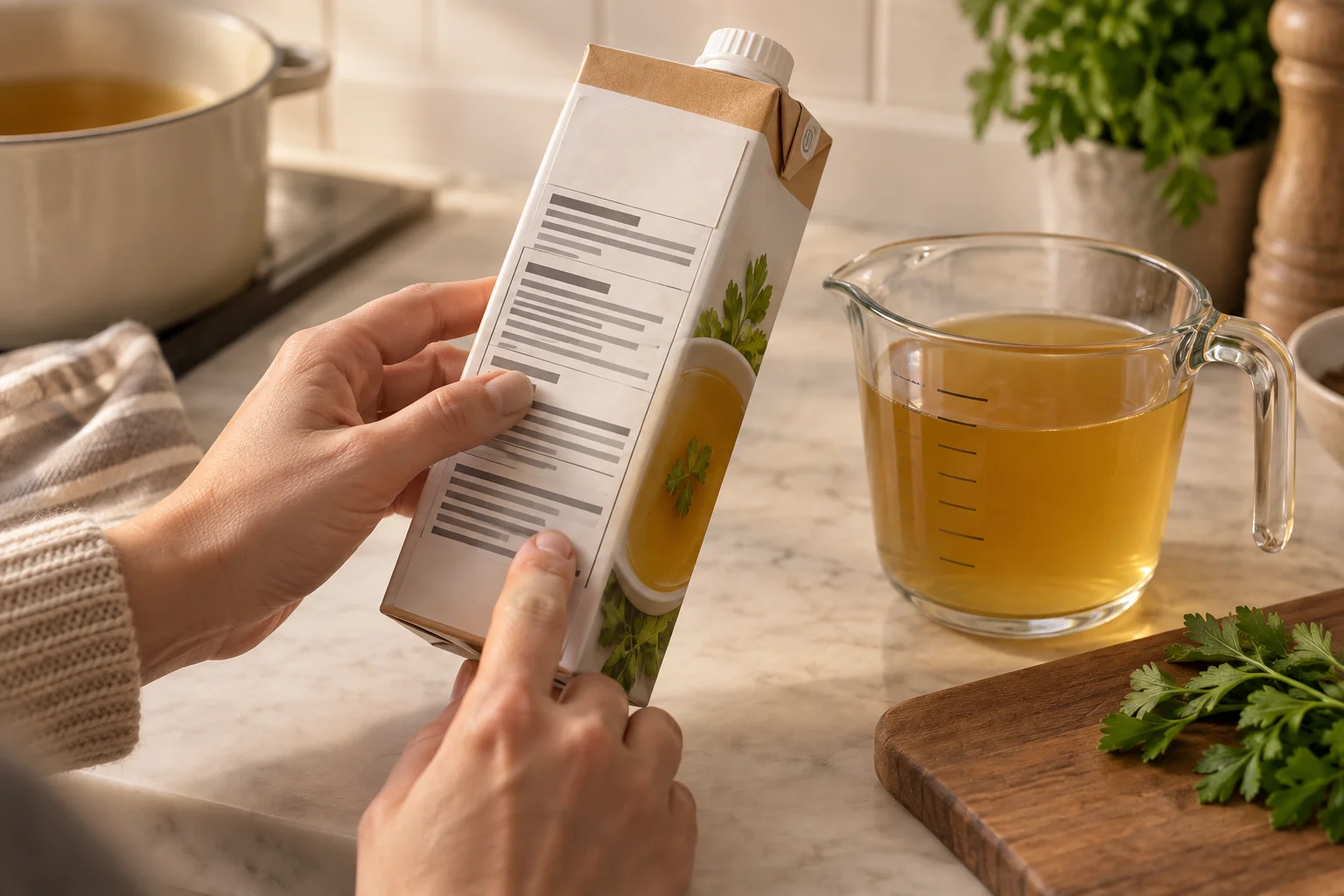
Illustrative packaging only. Use the actual manufacturer panel and current container for product decisions.

Start with the exact product name and country. Then read the complete ingredient panel, including nested stock bases, seasoning blends and flavor components. Look for onion, garlic, their powders and extracts, and any green allium ingredients that conflict with your own rule.

Next, compare the panel with an explicit manufacturer statement. An unfamiliar umbrella term is a reason to ask a question, not a reason to declare the product safe or unsuitable without evidence. Keep allergy and cross-contact questions separate from a recipe’s ingredient exclusions.

Finally, check dilution and the amount you will actually consume. Measure concentrate before adding it, divide the finished recipe into realistic portions, and follow storage instructions. A recipe that contains several servings of stock concentrate is not necessarily one serving just because it fits in one saucepan.

For a repeatable shopping workflow, the low-FODMAP ingredient checker can help review labels against your saved needs. A scan does not replace product-specific certification, a dietitian’s guidance or confirmation about undisclosed flavoring and cross-contact.

For a matching pantry staple, compare our pasta sauces without onion or garlic. For a different label trigger, see inulin and chicory root in low-FODMAP shopping and the protein bars without inulin or chicory root fiber shortlist.

The goal is not to find one badge that answers every dietary question. It is to match an exact product, a current ingredient list and a clearly defined personal requirement, then keep checking as labels change.

Frequently Asked Questions

Which stocks are made without onion and garlic?

Fody Chicken Soup Base and Vegetable Soup Base, plus Bay’s Kitchen Concentrated Beef, Chicken and Vegetable Stocks, had explicit manufacturer no-onion and no-garlic claims when reviewed on September 24, 2026. Recheck the exact current package.

Does low FODMAP mean a broth contains no onion or garlic?

No. Some low-FODMAP broths use selected green allium parts or garlic-infused oil. If you need ingredient-level exclusion, check the full ingredient list and a specific manufacturer absence statement.

Are onion- and garlic-free vegetable stocks suitable for a Jain diet?

Not automatically. The vegetable products reviewed here contain root-vegetable ingredients, and the Bay’s Kitchen vegetable stock also contains mushroom. Vegan and no-onion/no-garlic claims do not establish Jain suitability.

How much soup base should I use?

The reviewed Fody labels specify one teaspoon in one cup of water. Bay’s Kitchen recommends 18 grams per 100 milliliters of boiling water. Follow your current package, and do not confuse dilution with a low-FODMAP certified serving.

Next Label Check

Follow the scanner, hub, and ingredient paths connected to this guide

Get the app for clearer label decisions.

Scan labels, see what fits your food notes, and read the why in plain English.

IngrediCheck app