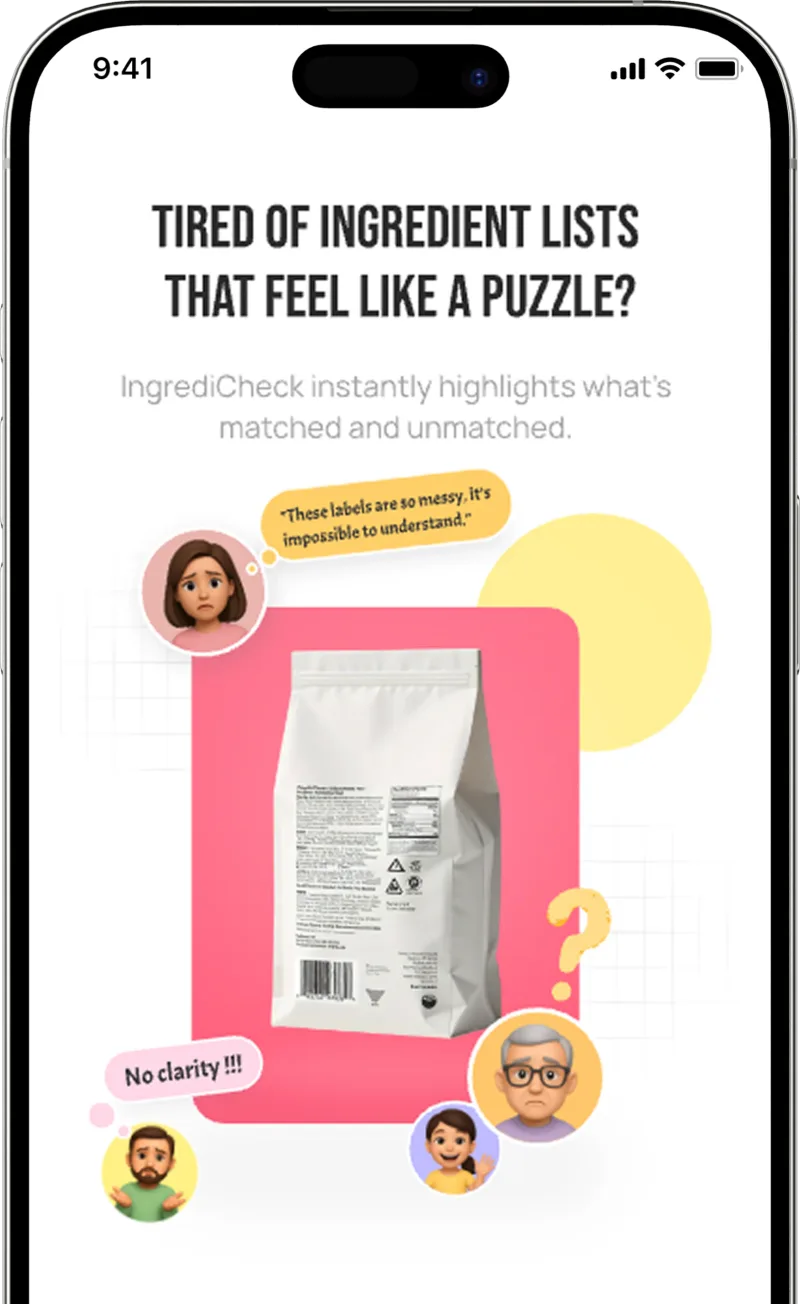
Named gluten sources
Look first for wheat, barley, rye, malt, brewer's yeast, triticale, semolina, spelt, farina, and related flour terms. A scanner should explain the matched word rather than show only a score.
Gluten-free label reading is easiest when certification, allergen statements, and ingredient clues are checked together. IngrediCheck helps you scan barcodes or labels for wheat, barley, rye, malt language, and gluten-related risk before you decide whether to buy.
Quick answer
IngrediCheck is currently a free iOS and Android option for shoppers who want barcode and ingredient-label checks against saved gluten-free rules with explanations. It may fit that workflow, but it cannot measure gluten, verify a 20 ppm threshold, inspect manufacturing controls, or replace certification, package, and clinician review.
What It Catches
Workflow
Read the label
Look first for wheat, barley, rye, malt, brewer's yeast, triticale, semolina, spelt, farina, and related flour terms. A scanner should explain the matched word rather than show only a score.
Modified food starch, dextrin, flavor systems, oats, and imported labels can need country or certification context. Oats also raise cross-contact questions even when the ingredient itself is naturally gluten-free.
A gluten-free claim, a certified mark, and a wheat-free claim are different signals. Shoppers managing celiac disease should review certification, facility language, and clinician guidance alongside the scan.
Decision boundary
The app can identify declared ingredients and precautionary wording, but it cannot measure gluten, verify a 20 ppm threshold, or inspect manufacturing controls. Treat the scan as a fast label-reading pass, not laboratory evidence or a replacement for celiac medical guidance.
Detailed label guide
A gluten-free claim is useful, but it answers only part of the shopping question. In the United States, foods that use that claim must meet the federal gluten-free standard, while using the claim is voluntary. A package without the words gluten-free is therefore not automatically unsuitable, and a wheat-free package is not automatically gluten-free because barley, rye, malt, and other gluten sources can still be present. Use the claim and any certification mark as evidence, then read the current ingredient and allergen statements before deciding.
Treat every package as current evidence rather than relying on the product name or a previous purchase. Recipes, suppliers, factories, and regional versions can change. The barcode is a fast entry point when the product record is current; a label photo is the better input when the package is new, imported, or reformulated. In either workflow, compare the result with the label in your hand and slow down if the stored data and package disagree.
The fastest repeatable order is to check the gluten-free or certified claim, scan the complete ingredient panel, review the Contains statement without treating it as a complete gluten screen, and then examine precautionary language. This sequence keeps a front-of-pack promise from overriding a conflicting ingredient while also avoiding the mistake of treating an absent wheat callout as proof that barley or rye is absent.
Direct matches should be easy to explain. Wheat, barley, rye, triticale, spelt, semolina, farina, durum, malt extract, malt flavoring, malt vinegar, brewer's yeast, and wheat-based sauces belong in the first review layer. A useful result names the term that matched and where it appeared instead of reducing the whole label to an unexplained score. That makes it possible to distinguish an obvious conflict from a product that needs more context.
The second layer contains terms whose meaning depends on source, country, or processing. Starch, modified food starch, dextrin, maltodextrin, hydrolyzed protein, natural flavors, smoke flavor, seasoning blends, broth, and imported declarations can require a closer read. Some of these terms are often gluten-free under a particular labeling system, but a scanner should not convert an unknown source into certainty. Check surrounding words, the market where the package is sold, certification, and manufacturer information when the declaration does not resolve the source.
Processed foods concentrate these questions. Soups, sauces, gravies, dressings, snack seasonings, meat substitutes, candy, frozen meals, and supplements can combine a direct grain ingredient with flavor carriers or thickeners. Review the exact matched term first, then decide whether the product is clearly unsuitable, clearly supported by the package, or unresolved. This manual-review bucket is an important output: it preserves uncertainty for the few products that deserve a slower decision instead of pretending every scan can produce a safe-or-unsafe guarantee.
Oats deserve their own decision rather than being grouped with wheat, barley, and rye. Oats are naturally gluten-free, but growing, transport, milling, and packaging can introduce wheat, barley, or rye. For a celiac-focused profile, generic oats should remain a review item unless the exact package provides the gluten-free evidence the shopper's care plan requires. Purity-protocol and mechanically sorted oats describe different control approaches; neither can be inferred from the word oats alone.
Ingredient presence and cross-contact are also separate layers. The declared list can show what was intentionally added, while may contain, shared equipment, and facility statements describe possible unintended exposure and are not standardized enough to act as a universal verdict. A strict celiac profile may flag that wording for review, especially when the product lacks a gluten-free claim, includes oats, belongs to a higher-risk category, or comes from an unfamiliar manufacturer. The app can surface the text, but it cannot inspect production controls or measure the finished food.
Certification adds evidence about testing and controls, yet the exact certifier and package still matter. Check the mark rather than assuming every gluten-free-looking symbol represents the same program. When the package evidence remains unclear, keep the product unresolved, consult the manufacturer about the ingredient source and cross-contact controls, or choose an alternative with clearer labeling. That boundary is especially important for newly diagnosed shoppers who are still building reliable default products with a clinician or dietitian.
A household may include one person with celiac disease, another following clinician-guided gluten avoidance, and someone who is screening wheat for a different reason. Those profiles should not silently share one threshold. Save the intended rule, keep celiac-level precautions visible for the person who needs them, and show which rule triggered each result. The same label can reasonably produce a direct avoid, a needs-review result, or no saved-rule match for different profiles without changing the underlying ingredient evidence.
Repeat purchases are where a structured workflow prevents complacency. Rescan when the ingredient list, allergen statement, claim, package size, country, or manufacturer changes, and do not let a previous result override a new label. If a familiar food moves from certified to uncertified, adds oats, changes a flavor system, or no longer exposes a complete declaration, treat it as a fresh decision. A purchase history can reduce search time, but it is not proof that the current formulation is unchanged.
Use the scan to eliminate obvious conflicts and reserve attention for the smaller set of ambiguous products. Compare alternatives under the same saved profile, prefer the package with clearer evidence when two products otherwise fit, and keep medical, certification, and manufacturer decisions outside the app's promise. This turns the gluten-free checker into a repeatable shopping aid while preserving the human review that celiac-safe purchasing still requires.
Keep ingredient evidence separate from the final safety decision. A scan can establish that a package declares barley malt, that oats need certification context, or that a flavor source remains unknown; it cannot establish the amount of gluten in the finished product or predict an individual's reaction. Record unresolved products as unresolved, keep a short list of well-supported alternatives for routine trips, and revisit the saved rule when clinician guidance changes. For repeat shopping, note which exact package evidence supported the decision so future reformulations are easier to spot and reassess. That approach makes the tool faster without making its conclusion broader than the label evidence supports.
Related Scanner Paths
Peanut-Free Ingredient Checker App
Scan labels for peanut ingredients, cross-contact clues, snack risks, and family allergy rules with IngrediCheck's peanut-free checker.
Alpha-Gal Ingredient Checker App
Scan labels for alpha-gal shopping rules, gelatin, lard, broth, dairy clues, and mammalian-source ingredients with IngrediCheck.
Dairy-Free Ingredient Checker App
Use IngrediCheck's dairy-free ingredient checker to scan labels for milk, whey, casein, ghee, lactose, and may-contain milk statements.
Gluten
Gluten is the protein network that gives wheat-based dough elasticity, chew, and structure. It matters to label readers because avoiding gluten is not just about bread; it is about derivatives, cross-contact, and reformulation drift across packaged foods.
Xanthan gum
Xanthan gum is a fermentation-derived thickener that shows up in gluten-free baking, sauces, dressings, and frozen desserts. It is often the ingredient that gives wheat-free products enough structure to hold together.
Lecithin
Lecithin is a broad label term for phospholipid-rich emulsifiers used in chocolate, baked goods, dressings, infant foods, and supplements. The source can be soy, sunflower, egg, or less commonly animal tissue.
Label Clues
protein
Gluten: what it does in food, current safety notes, diet compatibility, and shopper guidance from IngrediCheck.
thickener
Xanthan gum: what it does in food, current safety notes, diet compatibility, and shopper guidance from IngrediCheck.
emulsifier
Lecithin: what it does in food, current safety notes, diet compatibility, and shopper guidance from IngrediCheck.
Related Guides
Apr 29, 2026 | 9 min read
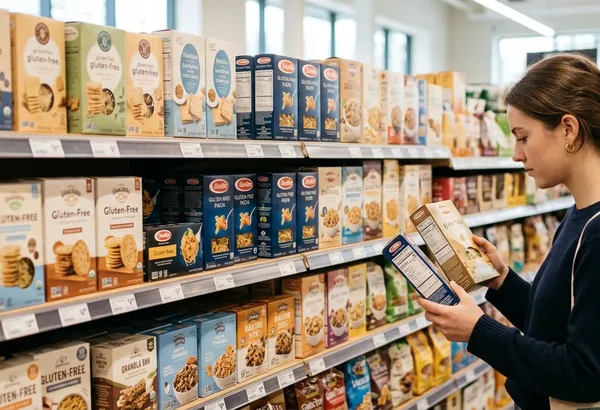
A celiac-focused guide to certified gluten-free marks, FDA gluten-free claims, advisory labels, oats, and wheat-starch nuance.
Mar 30, 2026 | 9 min read
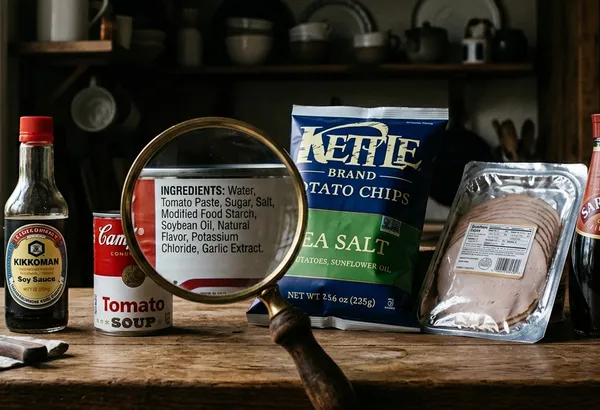
Gluten hides far beyond wheat bread — it lurks in soy sauce, potato chips, canned soups, cold cuts, medications, and even lip balm. Here's where to look and what to look for on the label.

Apr 21, 2026 | 8 min read
A practical guide to checking packaged foods against your own allergies, diets, and ingredient preferences, instead of relying on a generic food score.
FAQ
IngrediCheck can flag gluten-related ingredients and point you to label context, but celiac safety also depends on certification, testing, cross-contact controls, and advice from your clinician or dietitian.
Wheat, barley, rye, malt extract, malt vinegar, brewer's yeast, wheat starch, and grain-derived flavoring language are common terms worth reviewing.
Yes. IngrediCheck is currently free to download and use on iOS and Android; optional one-time tips do not unlock features or create a subscription. It may fit barcode and ingredient-label checks, but it is not a certification, gluten measurement, or guarantee of celiac safety.
Scan labels, see what fits your food notes, and read the why in plain English.