Beyond Bread: Hidden Gluten in Unexpected Foods (2026)

Gluten hides in soy sauce, chips, cold cuts, soups, and medications. Discover the most surprising hidden sources and the label terms to watch for in 2026.

Mar 30, 2026|9 min read
Beyond Bread: Hidden Gluten in Unexpected Foods (2026)

Ask most people where gluten hides and they'll say bread, pasta, and beer. They're right, but they're only partly right. For the roughly 1 in 70 people worldwide living with celiac disease, and the larger population managing non-celiac gluten sensitivity, the challenge isn't just avoiding the obvious. It's tracking down gluten in the places nobody tells you to look.

Research published in Nutrients found that approximately 50% of celiac patients experience persistent intestinal inflammation despite reporting adherence to a gluten-free diet. Unintentional gluten ingestion through contaminated or mislabeled food is a leading cause. A meta-analysis on cross-contamination risk found a mean contamination prevalence of 42% in certified gluten-free products offered by food services, and 13% in industrially labeled gluten-free products. The problem is real, and it starts with knowing where to look.

Here are the most common, and most commonly overlooked, places gluten hides in 2026.
The Condiment Trap

The Condiment Trap

Soy Sauce

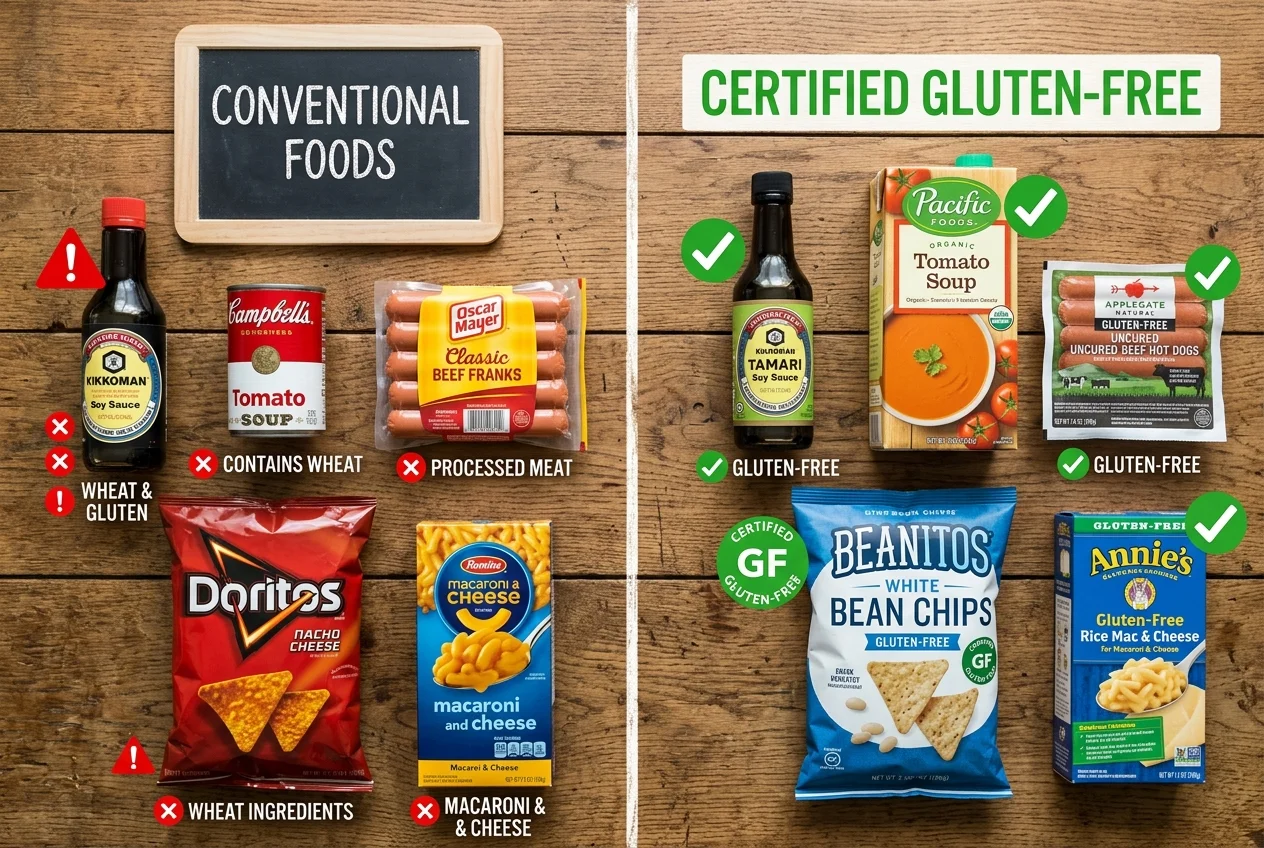
This is the single biggest blind spot for people eating at Asian restaurants or cooking stir-fries at home. Traditional soy sauce is made by fermenting a mixture of soybeans and wheat. Unless a bottle specifically says "tamari" or "gluten-free," assume it contains wheat. That means dishes seasoned with standard soy sauce, teriyaki sauce, hoisin, or oyster sauce are almost certainly off-limits.

The FDA has clarified that wheat-based soy sauce is not permitted in foods labeled gluten-free, but the fermentation process makes testing unreliable. Gluten ELISA methods detect intact gluten proteins, and soy sauce's extensive hydrolysis can mask their presence while still leaving reactive peptides.

Worcestershire Sauce, Malt Vinegar, and Salad Dressings

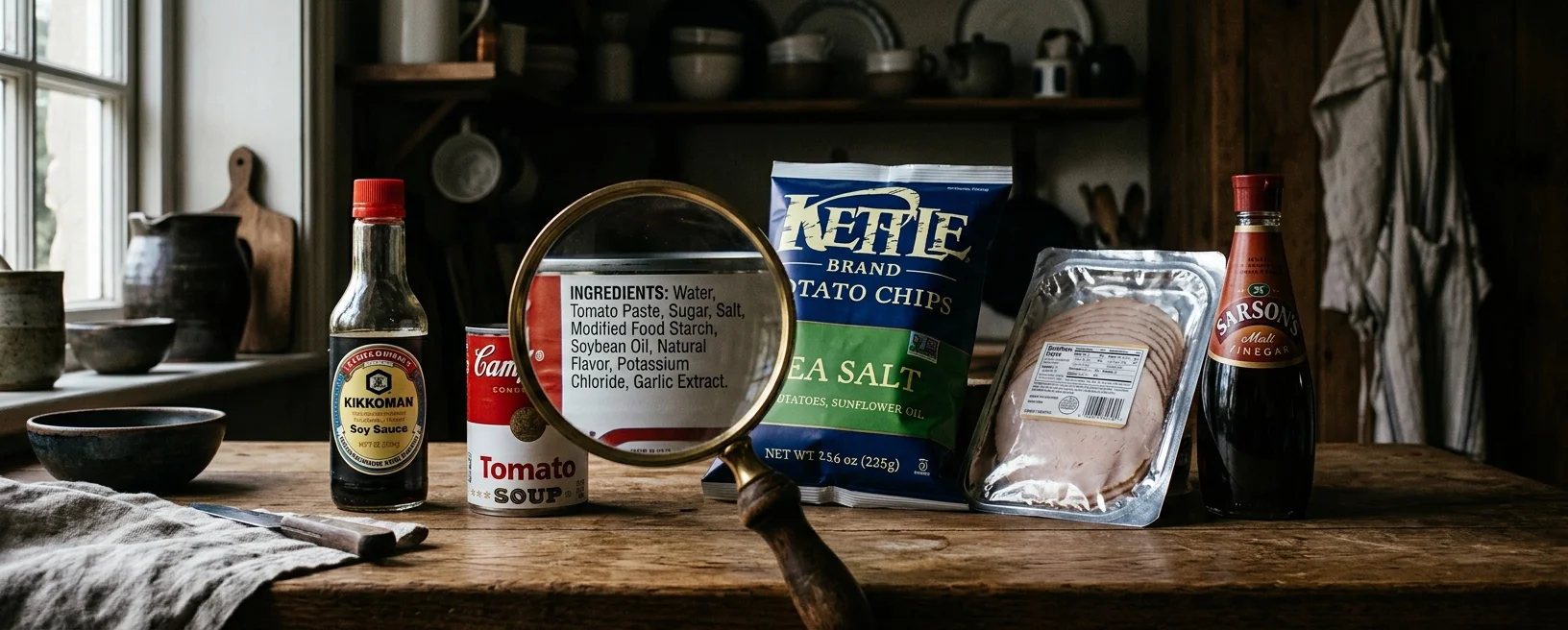
Worcestershire sauce typically contains malt vinegar derived from barley. Standard malt vinegar, the kind sprinkled on fish and chips or added to potato chip seasoning, is brewed from barley and contains gluten. Many salad dressings use it as a flavoring, and some use wheat flour as a thickener. When buying dressings, checking for "malt vinegar" or "wheat starch" on the label is essential.

Barbecue Sauces and Marinades

Many commercial barbecue sauces use wheat-based Worcestershire as a base ingredient. Pre-marinated and self-basting poultry products often contain wheat-based seasonings injected into the meat, which isn't obvious from looking at the product.

The Snack Aisle

Potato Chips

Plain potato chips are naturally gluten-free: just potatoes, oil, and salt. But flavored chips are a different story. Seasoning blends frequently contain malt vinegar, wheat starch, and hydrolyzed wheat protein as flavor carriers. Sour cream and onion, salt and vinegar, and BBQ flavors are particularly prone. Two chips from the same brand can have very different safety profiles depending on the flavor.

Cereals: Corn Flakes, Rice Puffs, Granola

This surprises many people. Corn and rice are naturally gluten-free grains, so why aren't corn flakes safe? The answer is malt extract, derived from barley, which is used as a sweetener and flavoring in most mainstream corn flakes and puffed rice cereals. It's listed openly on the label, but shoppers scanning for "wheat" or "gluten" may miss it entirely. Granola typically uses standard oats, not certified gluten-free oats, adding another layer of risk.

Oats: The Complicated Case

Pure oats don't contain gluten. But the vast majority of commercial oats are grown in rotation with wheat and processed in shared facilities, giving them a high risk of cross-contamination, according to the Cleveland Clinic. Only oats specifically labeled "certified gluten-free" can be trusted, and even then, a subset of celiac patients react to avenin, a protein in oats that mimics some properties of gluten.

Processed Meats and Deli Counter Surprises

Cold Cuts, Hot Dogs, and Sausages

Deli meats might seem like a safe bet. They're just meat, right? Not quite. Many cold cuts, hot dogs, salami, and sausages contain hydrolyzed wheat protein as a filler or binder to improve texture and moisture. Imitation crab meat (surimi) is another frequent offender, using wheat starch as a binding agent. The Celiac Disease Foundation specifically flags processed meats as a hidden gluten source.

If you're buying from a deli counter, cross-contamination from shared slicers is an additional concern, even if the meat itself is gluten-free.

Soups, Broths, and Bouillon

Canned soups and bouillon cubes are among the most common kitchen staples, and also among the most reliably hidden sources of gluten. Wheat flour and wheat starch are standard thickening agents in cream soups, chowders, and many broth-based soups. Cream of mushroom, tomato bisque, and French onion soup are particularly likely to contain it. Bouillon cubes and stock powders frequently use wheat as a binding and flavoring base.

Reading the label on every single can or packet is non-negotiable. "Natural flavors" in soups can also be derived from barley malt, making a clean-looking ingredient list potentially misleading.

Plant-Based and Meat Substitute Products

Plant-Based and Meat Substitute Products

The rise of plant-based eating has created a new hidden gluten problem. Seitan is literally wheat gluten: it's the protein extracted from wheat flour, and it appears in many veggie burgers, plant-based chicken strips, and deli-style slices. Beyond seitan, many plant-based products use wheat-derived ingredients as binders and texture agents, since gluten's elastic properties are exactly what gives meat substitutes their chew. If a plant-based product doesn't specifically say gluten-free, it very likely isn't.

Medications, Vitamins, and Supplements

This category is widely underappreciated. The active ingredient in a medication may be gluten-free, but the excipients (inactive binders, fillers, and coatings used to hold a pill together or control release) can contain wheat starch. These are not always clearly declared on packaging. The Celiac Disease Foundation recommends verifying with the pharmacist or manufacturer for any medication taken regularly.

Herbal supplements and vitamins carry the same risk. Capsule coatings, tablet binders, and anti-caking agents may all derive from wheat. Given that celiac patients often have nutritional deficiencies and depend on supplements for B vitamins, vitamin D, and iron, this is a particularly consequential blind spot.

Lip Products and Cosmetics

Gluten in cosmetics is generally not a concern for intact skin, because it cannot be absorbed through the skin barrier. But lip products are different: lipstick, lip gloss, and lip balm are routinely ingested in small amounts throughout the day. For people with celiac disease, this can be enough to trigger a reaction.

Ingredients to watch for in lip products include wheat germ oil, hydrolyzed wheat protein, wheat amino acids, and oat-derived extracts. These appear in lip balms as emollients and in foundations and powders as texture agents.

Restaurant Red Flags

Even when ordering what seems like a safe dish, restaurant preparation introduces several hidden risks:

  • Scrambled eggs and omelets: Some restaurants add a small amount of pancake batter to eggs to make them fluffier. It's a known practice that can introduce wheat into what looks like a plain egg dish
  • Shared fryers: French fries cooked in the same oil as breaded chicken or onion rings will absorb gluten. Even a brief contamination can push levels above the 20 ppm safety threshold
  • Shared griddles: Cross-contact from pancake, crepe, or French toast preparation contaminates grills used for other foods
  • Bulk bins and condiment stations: Shared scoops and shared condiment jars regularly cross-contaminate otherwise safe foods

The Label Terms That Signal Hidden Gluten

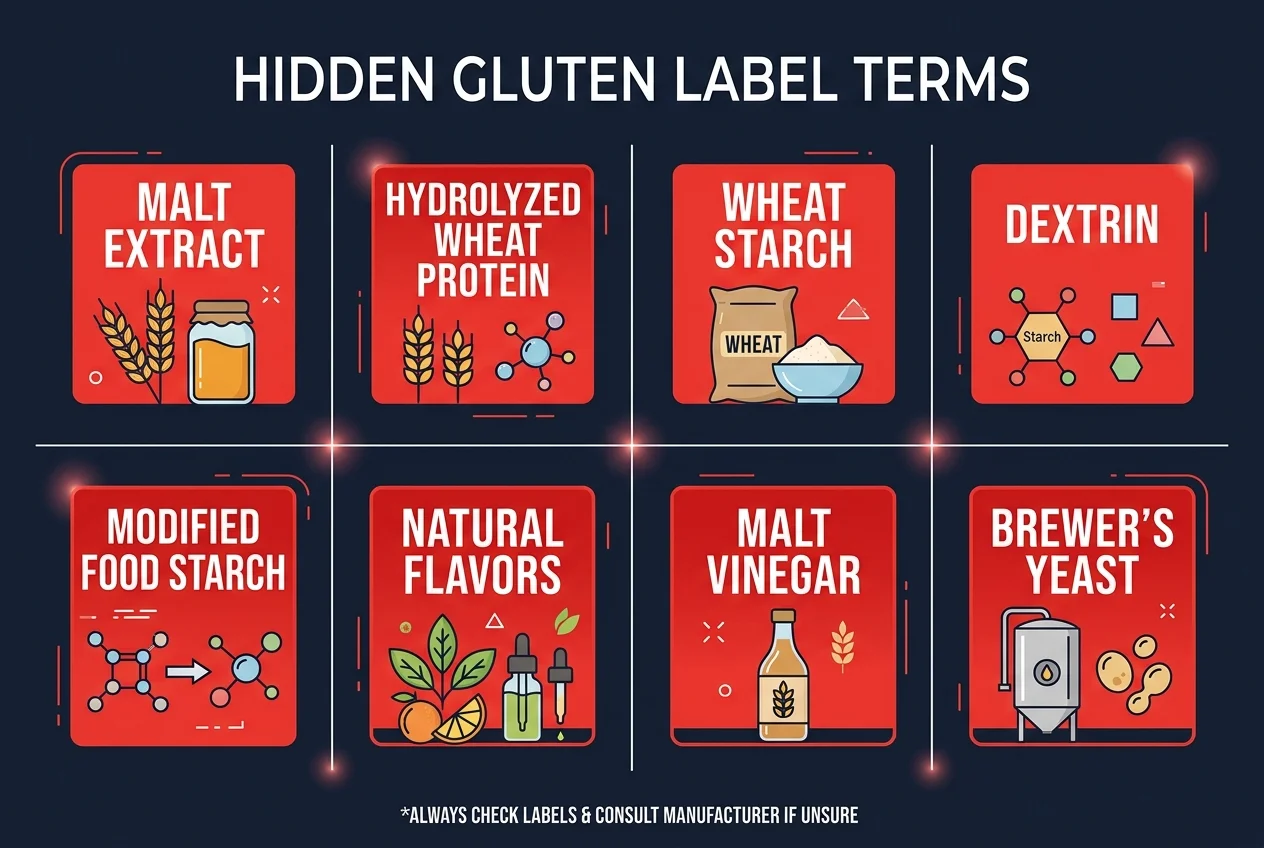
This is the core skill for avoiding hidden gluten: learning the names that don't say "wheat" but mean it.

  • Malt, malt extract, malt syrup, malt flavoring → barley-derived
  • Hydrolyzed wheat protein → explicitly wheat
  • Wheat starch, wheat germ, wheat bran → explicitly wheat
  • Dextrin → may be wheat-based (must verify source)
  • Modified food starch → may be wheat-based (must verify source)
  • Natural flavors → may be barley malt-derived
  • Spelt, farro, einkorn, kamut, emmer, triticale, durum → all forms of wheat
  • Brewer's yeast → often barley-derived

Under US law, if a product contains wheat as an allergen it must declare it. But barley and rye are not covered by US allergen labeling law, so gluten from these sources may appear only as "malt," "flavoring," or not be declared at all.

A Note on "Wheat-Free" vs. "Gluten-Free"

These are not the same thing. A product labeled wheat-free may still contain barley, rye, spelt, or triticale, all of which contain gluten. The gluten-free label, regulated by the FDA to require less than 20 ppm gluten, is the only designation that provides meaningful protection.

This article is for informational purposes only and should not be considered medical advice. Consult a healthcare professional or registered dietitian specializing in celiac disease for personalized dietary guidance.

Stay Ahead of Hidden Gluten

The challenge with hidden gluten isn't ignorance. Most celiac patients know to avoid bread and pasta. It's the dozens of everyday products where gluten appears under unfamiliar names, in unexpected categories, or as a result of cross-contamination during manufacturing or food service. With IngrediCheck, you can scan any product's barcode and instantly see whether it contains gluten, wheat, malt, or any of the hidden derivatives. No label-decoding required. It's the fastest way to catch what the ingredient list is trying to hide.

Start making confident food choices today!

Scan food and understand what's right for you and your family, with AI.

IngrediCheck app