Ingredient Deep Dives

Inulin and Chicory Root: Low FODMAP Label Trap

Inulin and chicory root fiber are marketed as gut-healthy prebiotics, but they can be high-FODMAP fructans for IBS shoppers. Learn the label aliases and when to flag them.

Jun 14, 2026|9 min read
By Sanket Patel|Updated 2026-06-14|6 sources|Editorial standards
Inulin and Chicory Root: Low FODMAP Label Trap

Quick answer: Inulin is usually not low FODMAP. It is a fructan, which places it in the oligosaccharide group of FODMAPs. Chicory root fiber is one of the most common commercial sources of inulin, so labels that say chicory root, chicory root fiber, oligofructose, or FOS deserve a closer look if you are following the low-FODMAP elimination phase.

This is the missing detail behind a lot of confusing IBS shopping moments. A product can say "gut health," "prebiotic fiber," "high fiber," "no added sugar," or "plant-based" on the front, then use an ingredient that many low-FODMAP shoppers are trying to avoid on the back.

For the broader framework, keep this guide next to the Low FODMAP Dietary Guide, the Low FODMAP Scanner for IBS, and the Low FODMAP Label Reading hub.
What Inulin Actually Is

What Inulin Actually Is

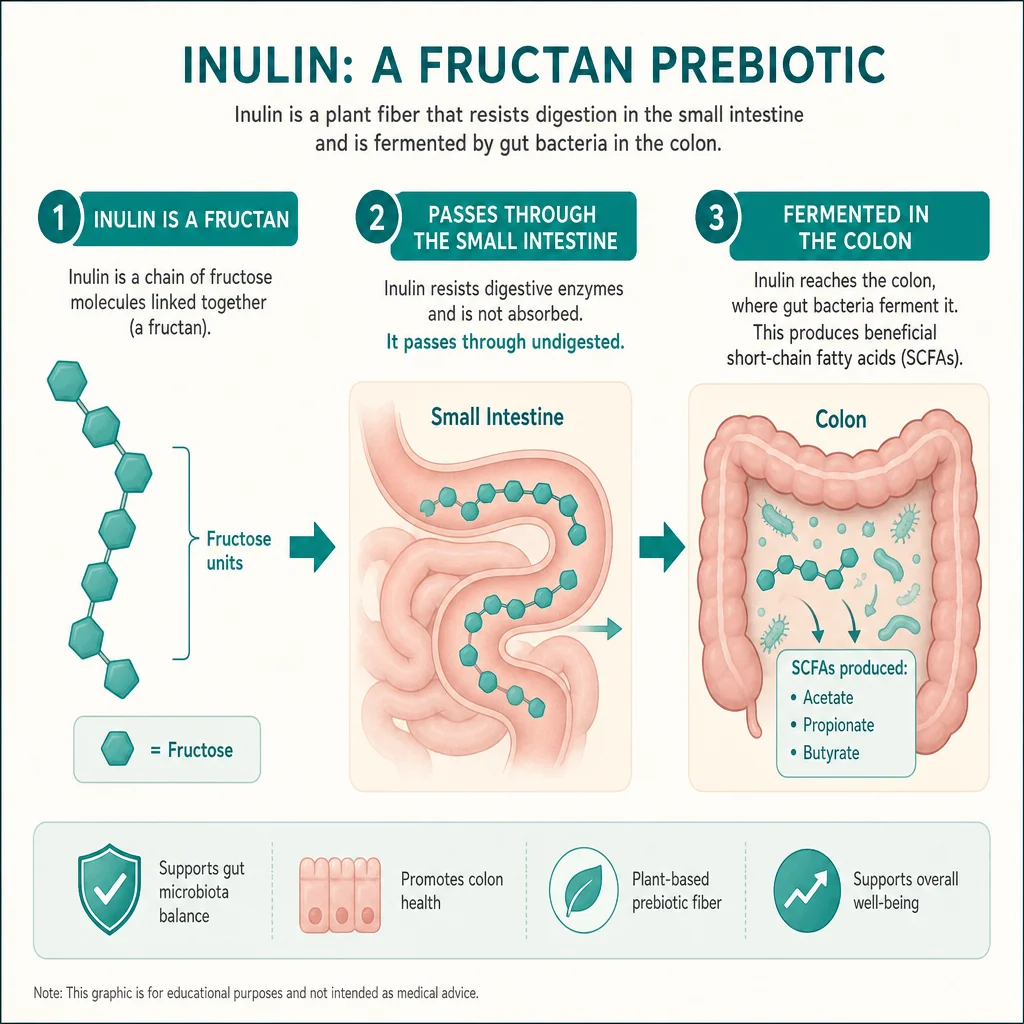
Inulin is a soluble, fermentable fiber found naturally in many plants, including chicory root, garlic, onion, leeks, asparagus, Jerusalem artichoke, wheat, and bananas. Chemically, it belongs to a family called fructans, which are chains of fructose molecules.

Humans do not digest inulin in the small intestine. Instead, it travels to the colon, where gut bacteria ferment it. That fermentation can produce short-chain fatty acids, which is one reason inulin is marketed as a prebiotic. For many people, that can be a legitimate benefit.

For people with IBS who are sensitive to fructans, the same fermentation can mean gas, bloating, pain, urgency, or altered bowel habits. That is the FODMAP tension in one sentence: an ingredient can be beneficial for one gut and miserable for another.

Why Chicory Root Shows Up So Often

Commercial inulin is often extracted from chicory root because chicory is naturally rich in inulin-type fructans. Food manufacturers like it because it does several jobs at once:

  • adds dietary fiber
  • supports "prebiotic" or "gut health" positioning
  • improves creaminess in yogurt alternatives and ice cream
  • helps bind bars and snacks
  • can reduce some sugar or fat while keeping texture
  • sounds more natural than many technical additives

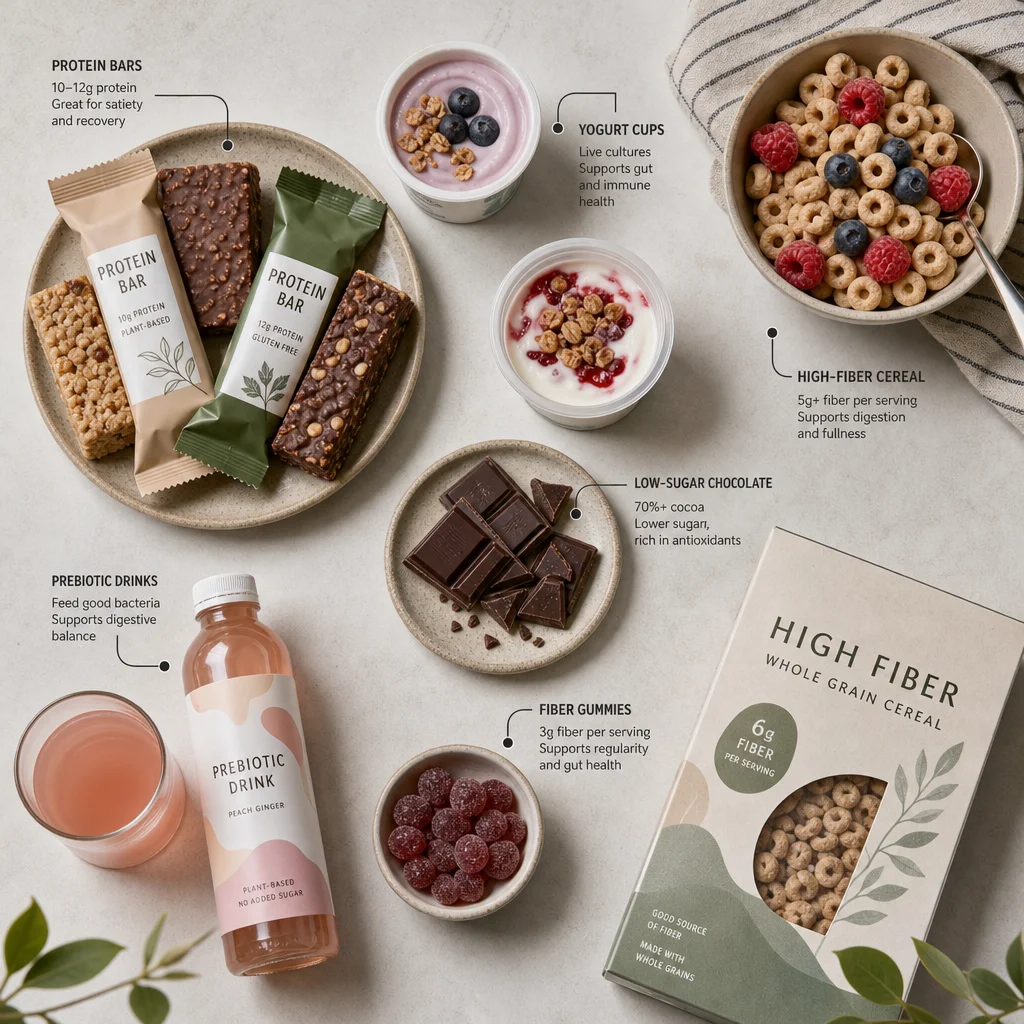
That is why chicory root fiber appears in foods that otherwise look IBS-friendly: protein bars, granola, low-sugar chocolate, high-fiber cereals, keto snacks, dairy-free yogurts, meal replacement shakes, fiber gummies, and some supplements.

The front label often sounds reassuring. The ingredient list is where the FODMAP clue lives.

The Label Aliases to Know

The Label Aliases to Know

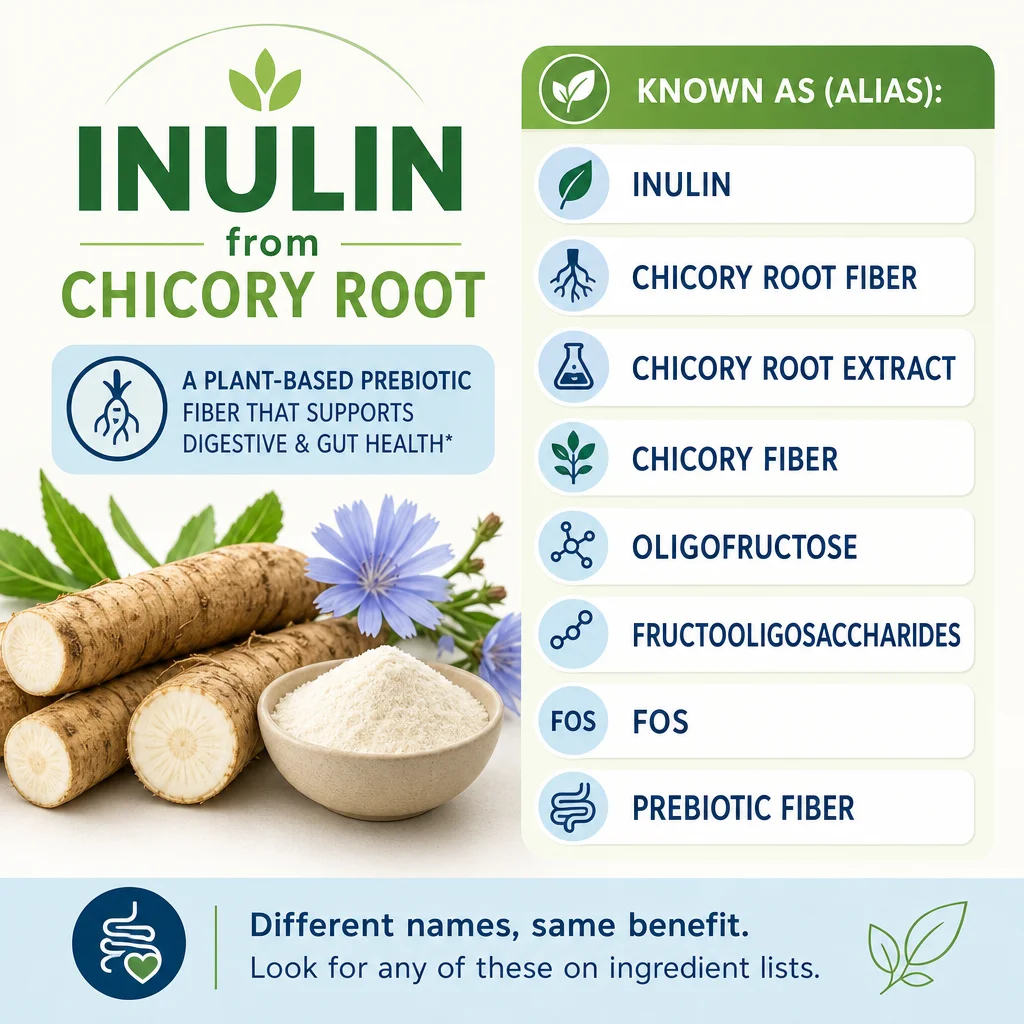
If you are checking a label for inulin, do not search only for the word inulin. Manufacturers use several names.

Common label terms include:

  • inulin
  • chicory root fiber
  • chicory root extract
  • chicory fiber
  • oligofructose
  • fructooligosaccharides
  • FOS
  • prebiotic fiber

The last one, prebiotic fiber, is less precise. It may refer to inulin, but it can also refer to other fibers. If a product matters to you, check the full ingredient list or contact the manufacturer.

Why "High Fiber" Can Be a Problem for IBS

Low-FODMAP eating is not a low-fiber diet by definition. Many low-FODMAP foods contain fiber, including oats, chia seeds, kiwi, firm bananas, potatoes with skin, carrots, oranges, and some low-FODMAP servings of nuts and seeds.

The problem is added fermentable fiber. A protein bar with chicory root fiber may deliver several grams of isolated fructans in one small serving. A yogurt alternative may use inulin for creaminess and then market the product as gut-friendly. A cereal may add fiber to improve the nutrition panel, while making the product harder for fructan-sensitive shoppers.

That is why "fiber" is not enough information. Low-FODMAP shoppers need to ask: what kind of fiber, and how much?

Where Inulin Hides in Packaged Foods

Where Inulin Hides in Packaged Foods

You are most likely to see inulin or chicory root fiber in products designed to look modern, higher-protein, lower-sugar, or gut-healthy.

Common categories include:

  • protein bars and meal bars
  • granola and breakfast clusters
  • high-fiber cereals
  • low-sugar chocolate or candy
  • keto snacks and desserts
  • dairy-free yogurts
  • low-fat yogurts
  • plant-based ice creams
  • powdered meal replacements
  • prebiotic sodas and drink powders
  • fiber gummies
  • probiotic or digestive supplements

This is why the inulin problem often surprises careful shoppers. They are not eating obvious onion soup or garlic bread. They are choosing a bar that looks clean, high-protein, and low-sugar.

How It Differs From Onion and Garlic

Inulin, onion, and garlic all connect through fructans, but they show up differently on labels.

Onion and garlic usually appear in savory foods: sauces, broths, seasoning blends, marinades, ready meals, chips, deli meats, and soups. Inulin and chicory root fiber show up more often in "healthy" sweet or snack products.

Both matter for low-FODMAP shoppers, but the decision process is different:

  • Onion powder in a soup is a savory flavor clue.
  • Garlic powder in a spice blend is a seasoning clue.
  • Chicory root fiber in a bar is a functional fiber clue.
  • FOS in a supplement is a prebiotic clue.

If you are using a low FODMAP ingredient checker, it should flag all of these patterns, not only the obvious onion and garlic terms.

What About Small Amounts?

FODMAP tolerance is dose-dependent. That means some people may tolerate small amounts of fructans after reintroduction, while others remain sensitive. The low-FODMAP diet is designed to move from elimination to reintroduction and personalization, not permanent avoidance of every fermentable carbohydrate.

The tricky part is that packaged labels do not tell you how many grams of inulin are present. Ingredients are listed by weight, but exact amounts are not disclosed. If chicory root fiber appears near the beginning of the ingredient list, it likely contributes meaningfully to the product. If it appears near the end, the amount may be smaller, but the label still cannot tell you whether it fits your personal threshold.

During the elimination phase, the conservative move is to avoid inulin and chicory root fiber. During personalization, your own reintroduction results matter more.

Inulin vs Polyols: Two Different "Healthy Snack" Traps

Inulin is not a sugar alcohol. It is a fructan fiber. Polyols are sugar alcohols such as sorbitol, mannitol, maltitol, xylitol, and isomalt.

They often appear in the same product universe because both can help make a snack look higher-fiber or lower-sugar. A low-sugar bar might contain chicory root fiber for texture and maltitol for sweetness. A "diabetic-friendly" candy might use polyols. A prebiotic gummy might use inulin.

The Monash polyols guide explains that polyols can draw water into the bowel and be fermented, which can create symptoms for some people with IBS. For a deeper sweetener-specific example, see our guide to high-fructose corn syrup label names and the erythritol ingredient profile, which explains why erythritol behaves differently from many other sugar alcohols.

A Practical Scan Checklist

Use this checklist when a product is marketed as high-fiber, gut-friendly, prebiotic, keto, low-sugar, or plant-based:

  1. Search the ingredient list for inulin. If it appears, treat it as a fructan flag.
  2. Search for chicory terms. Chicory root, chicory root fiber, chicory root extract, and chicory fiber all deserve review.
  3. Check for FOS and oligofructose. These terms are often used in supplements, bars, and functional foods.
  4. Look at ingredient position. Near the top usually means more of the ingredient.
  5. Watch the front-label claims. Prebiotic, high fiber, and gut health often point to added fermentable fibers.
  6. Check for other FODMAP traps in the same product. Maltitol, sorbitol, honey, agave, apple juice concentrate, onion powder, and garlic powder can stack with inulin.
  7. Match the decision to your phase. Elimination is stricter. Personalization depends on your tested tolerance.

This workflow pairs naturally with the broader ingredient checker and food scanner guides hub, because the useful question is rarely one ingredient alone. It is whether the whole product fits your saved rules.

The Bottom Line

Inulin and chicory root fiber are not "bad" ingredients. They are fermentable prebiotic fibers that can be useful for some people and uncomfortable for others. For low-FODMAP shoppers, especially during elimination, they are high-value label clues because they often appear in foods that look otherwise safe.

The cleanest rule is this: if a packaged food says inulin, chicory root fiber, oligofructose, fructooligosaccharides, or FOS, pause before treating it as low FODMAP.

IngrediCheck can help by scanning ingredient lists for inulin, chicory root fiber, FOS, oligofructose, polyols, onion powder, garlic powder, and other likely FODMAP triggers, then showing whether a product fits your saved low-FODMAP rules before it lands in your cart.

Frequently Asked Questions

Is inulin low FODMAP?

No. Inulin is a fructan, one of the oligosaccharide FODMAP groups, and is usually avoided during the low-FODMAP elimination phase.

Is chicory root fiber the same as inulin?

Chicory root fiber is one of the most common commercial sources of inulin, so low-FODMAP shoppers should treat it as an inulin or fructan clue.

What label names can mean inulin?

Look for inulin, chicory root fiber, chicory root extract, chicory fiber, oligofructose, fructooligosaccharides, and FOS.

Why do food companies add inulin?

Inulin adds fiber, supports prebiotic marketing, improves texture, and can replace some sugar or fat in bars, yogurts, cereals, and snack foods.

Next Label Check

Follow the scanner, hub, and ingredient paths connected to this guide

Get the app for clearer label decisions.

Scan labels, see what fits your food notes, and read the why in plain English.

IngrediCheck app