This is where erythritol's story gets more complicated and where many keto enthusiasts have not yet caught up.
The 2023 Nature Medicine study
In February 2023, researchers at Cleveland Clinic published findings in Nature Medicine that sent a wave through the sweetener conversation. Examining over 4,000 participants in the US and Europe who had undergone cardiac risk assessment, they found that individuals in the top quartile for blood erythritol levels were approximately twice as likely to experience a major cardiovascular event (heart attack or stroke) over three years compared to those in the bottom quartile.
"The study's findings raise concern about the long-term safety of erythritol." — Dr. Stanley Hazen, Cleveland Clinic
A follow-up study in 2024, published in Arteriosclerosis, Thrombosis and Vascular Biology, tested 20 healthy volunteers directly. Those given a drink containing erythritol saw their blood erythritol levels rise more than 1,000-fold, and their platelets showed significantly higher clotting activity compared to those given sugar.
The 2025 and 2026 brain studies
Research published in the Journal of Applied Physiology in July 2025 by a University of Colorado team found that erythritol at concentrations typical after consuming a single sugar-free drink caused measurable changes in human brain microvascular endothelial cells. The cells produced less nitric oxide (which helps blood vessels dilate), more endothelin-1 (which constricts vessels), and showed reduced ability to break down clots. A follow-up study published in March 2026 added to this growing body of evidence linking erythritol to elevated stroke risk.
These are lab studies on cells, not human clinical trials, and causation has not been established. But the trajectory of findings is notable enough that both EFSA and the NIH have flagged the need for further research.
An important caveat: blood erythritol is partly endogenous
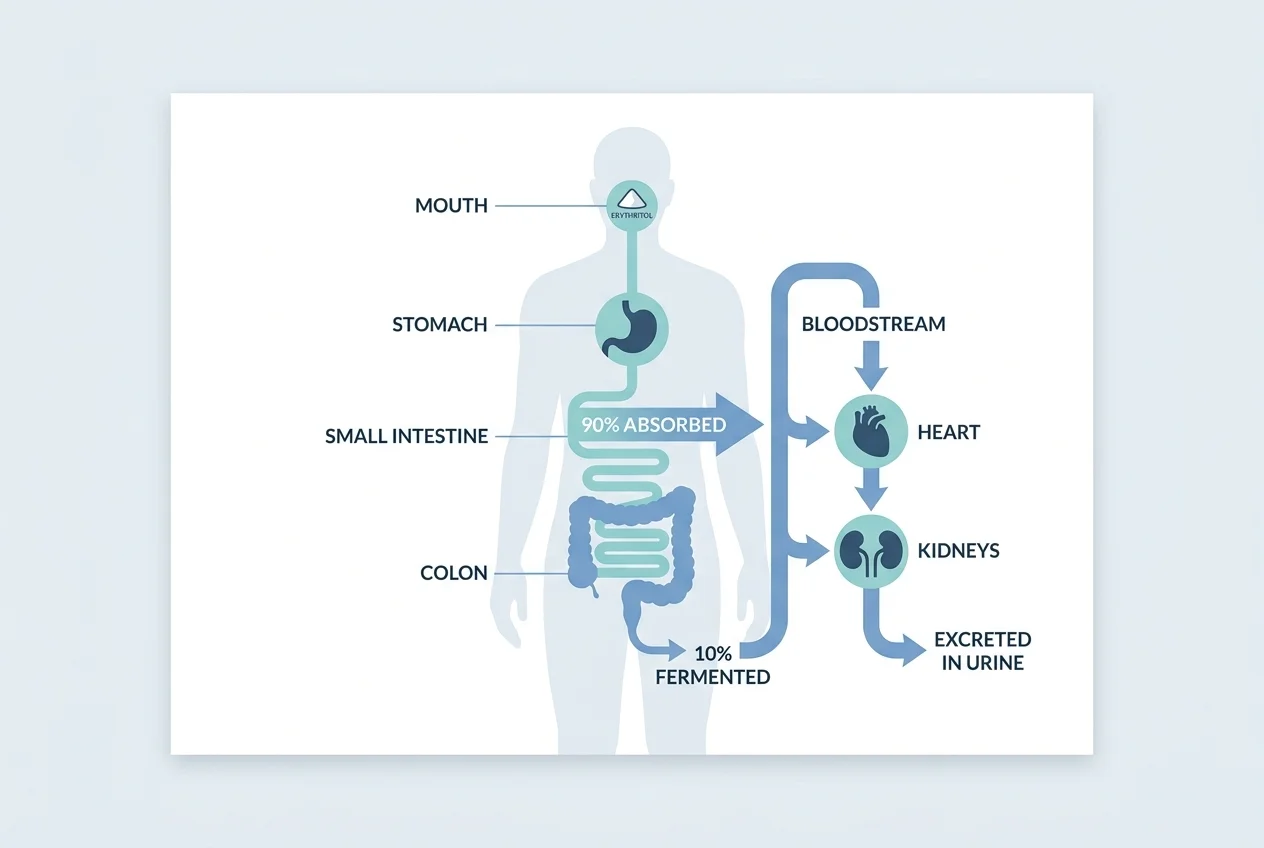
One critical nuance in interpreting these studies: erythritol is produced naturally by your own body as a byproduct of the pentose phosphate pathway, a metabolic process involved in glucose metabolism. People with diabetes, obesity, and metabolic syndrome tend to have higher baseline blood erythritol levels. This means high erythritol in the blood may partly be a marker of underlying metabolic dysfunction, not purely the result of eating erythritol-sweetened products.
The FDA has reviewed the observational studies and maintains that no causal link has been established between dietary erythritol and cardiovascular harm. The agency says it will continue monitoring new evidence as it emerges.
What this means practically: the science is genuinely unsettled. The cardiovascular question is not resolved, and sweeping it under the rug by saying "it's GRAS" is not a complete answer.