Decoding 'Clean Eating' and 'Plant-Based' Labels in 2026

'Clean eating' and 'plant-based' appear on thousands of products but neither term has a legal definition. Learn what the labels really mean in 2026.

Apr 6, 2026|11 min read
Decoding 'Clean Eating' and 'Plant-Based' Labels in 2026

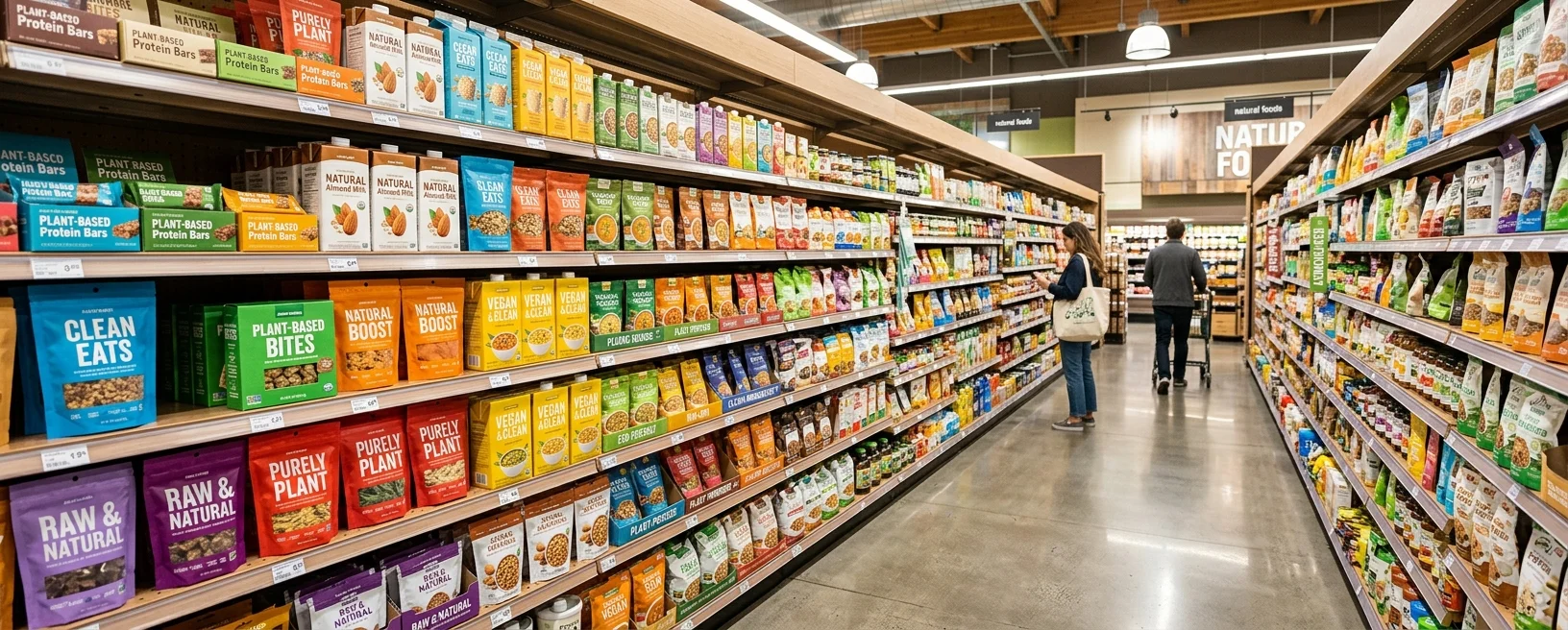
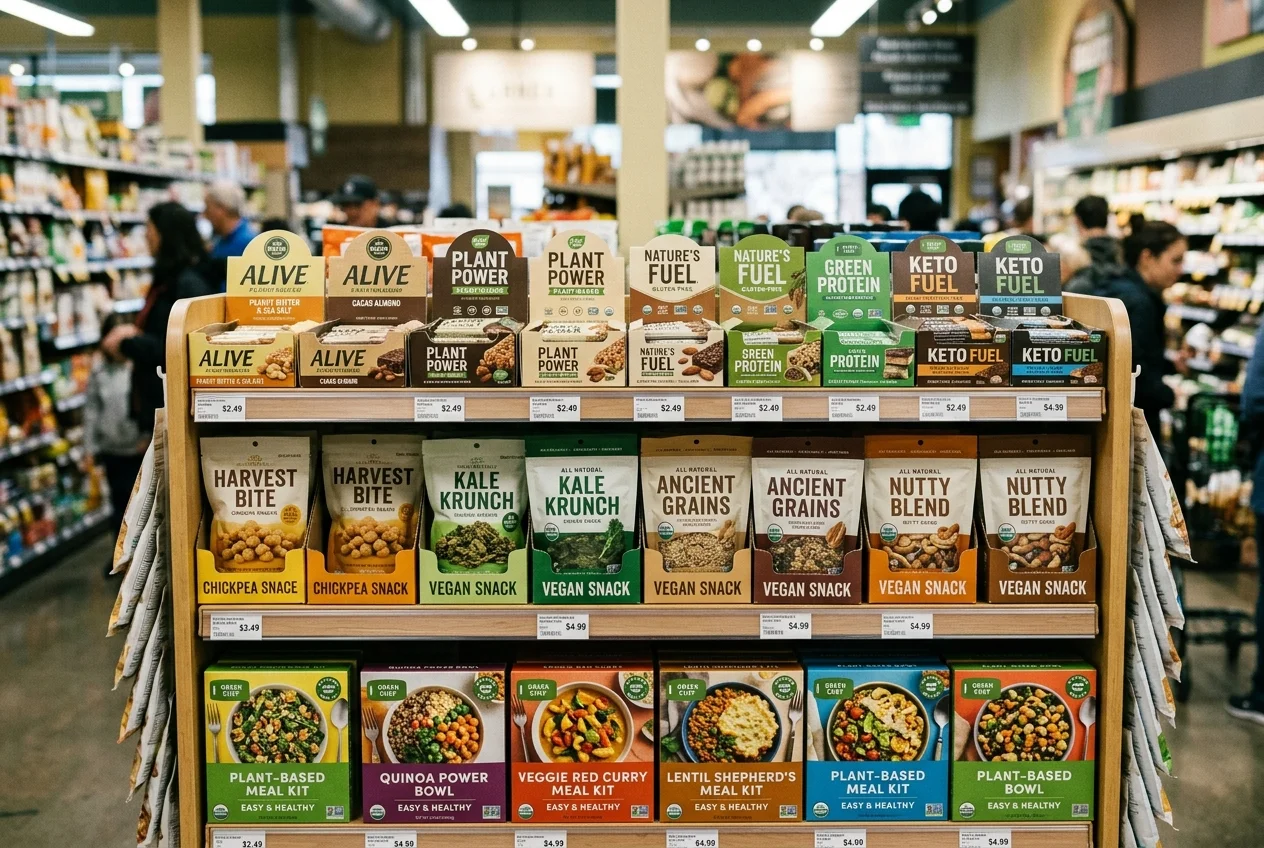
Walk through any grocery store in 2026 and you will find these words on hundreds of labels: clean, clean eating, plant-based, plant-powered, real food, whole food. They appear on protein bars, snack chips, meal kits, condiments, and frozen dinners. They are usually presented alongside earthy colors, minimal packaging, and fonts that suggest something artisanal and trustworthy.

Here is the thing: neither "clean" nor "plant-based" has a legal definition in the United States. Neither term requires any specific nutritional profile, processing standard, or ingredient quality. A brand can print "clean eating" across a product that contains 30 ingredients, multiple synthetic additives, and more sugar than a candy bar, and face no regulatory challenge for doing so.

This does not make all products using these terms bad. But it does mean that the words alone tell you almost nothing about what is actually in the food.
Where "Clean Eating" Came From

The clean eating movement gained mainstream visibility around the early 2010s, driven by bloggers, fitness influencers, and wellness-focused cookbooks. The basic premise was appealing: eat whole foods as close to their natural state as possible, reduce processed ingredients, and avoid artificial additives.

As a guiding philosophy, that is not a bad starting point. Most credible nutrition science supports eating more vegetables, legumes, whole grains, and unprocessed proteins. The problem came when "clean" became a marketing label rather than a dietary philosophy, and when the definition began expanding to fit whatever a given brand wanted to sell.

Today the term means something different to almost everyone who uses it. To one brand, "clean" means no artificial colors. To another, it means gluten-free. To a third, it means no ingredient names longer than two syllables, whether or not those ingredients are harmful.

The International Food Information Council puts it plainly: clean eating has no standardized definition, and the variation in how it is interpreted makes it essentially meaningless as a nutritional signal.

The "Clean" Illusion on Processed Food

The "Clean" Illusion on Processed Food

The appeal-to-nature argument runs deep in clean eating culture: natural equals good, artificial equals bad. This is a logical fallacy. Plenty of natural substances are harmful, and plenty of approved synthetic additives are safe. Botulinum toxin is entirely natural. Vanillin, a synthetic version of the flavor compound in vanilla, is chemically identical to what is in the bean.

What makes this particularly tricky at the supermarket is that "clean" claims are not regulated. The National Advertising Division reviewed at least four food and beverage cases in 2025 challenging unsupported clean label and better-for-you claims, signaling increased scrutiny. But enforcement is patchy, and most consumers have no way to know whether a "clean" claim has any substance behind it.

A granola bar can carry a "clean ingredients" banner while containing:

  • Glucose syrup (a refined sugar)
  • Soy protein isolate (an extracted, highly processed form of soy)
  • Sunflower lecithin, carnauba wax, and natural flavors

All of those can be considered "natural," and the bar can still truthfully say it contains no artificial preservatives. But "clean"? That word is doing marketing work, not nutritional work.

"Clean eating labels often appear on products that don't actually align with these dietary approaches. The term is meaningless unless the ingredient list backs it up." — IFIC, 2025

What "Plant-Based" Actually Means on a Label

"Plant-based" has a somewhat more specific connotation: the product is made primarily from plant ingredients rather than animal-derived ones. But even here, there is no federal definition that governs when a brand can or cannot use the term.

In January 2025, the FDA issued draft guidance on the labeling of plant-based alternatives to animal-derived foods. The guidance covers plant-based alternatives to eggs, seafood, poultry, meat, and dairy (excluding plant-based milk, which has its own framework).

The key recommendation: labels should identify the specific plant source. "Chickpea and lentil-based fish sticks" is informative. "Plant-based fish sticks" alone is not, because it tells you nothing about what plant ingredients are actually in the product. The FDA's stated goal was to help consumers "understand the nature or source of individual plant-based alternative foods" so they could make genuinely informed choices.

This matters for several reasons:

Allergens: A product labeled "plant-based chicken" made from soy is relevant to soy-allergic consumers in a way that generic "plant-based" labeling conceals.

Nutritional quality: The plant source significantly affects the nutritional profile. Pea protein, hemp seeds, and textured wheat protein all behave very differently in the body.

Processing level: "Plant-based" says nothing about how extensively a product has been processed.

As of April 2026, the FDA guidance remains in draft form. The comment period closed in May 2025, and finalized guidance is expected but has not yet been issued. In the meantime, "plant-based" on a label still carries no enforceable nutritional standard.

The NOVA Problem: Plant-Based Does Not Mean Minimally Processed

This is where the gap between marketing and reality becomes most significant.

The NOVA classification, developed by researchers at the University of São Paulo, organizes food by the extent and purpose of its processing into four groups. Group 1 covers unprocessed or minimally processed foods. Group 4, the concern category, is ultra-processed foods: industrially manufactured products with long ingredient lists including substances extracted from food (like soy protein isolate or glucose syrup), additives rarely used in home cooking, and flavors, emulsifiers, and colorants.

A plain lentil is Group 1. A lentil-based plant-based burger with soy protein concentrate, methylcellulose, yeast extract, and a list of stabilizers is Group 4.

Both can carry "plant-based" on the label. Neither is lying. But the nutritional implications are radically different.

Research published in The Lancet in 2025 found that participants with the highest ultra-processed food consumption had a 15% higher risk of all-cause mortality compared to those with the lowest consumption.

This does not mean plant-based eating is unhealthy. Far from it. Diets centered on legumes, vegetables, whole grains, and minimally processed plant foods consistently show positive health outcomes in large-scale observational studies. The problem is conflating "plant-based" on a package with "minimally processed plant food." The former is a marketing category. The latter is a nutritional reality.

When you see "plant-based" on a product, the NOVA question to ask is: what is the ingredient list actually doing? Are you reading "black beans, water, sea salt"? Or are you reading 22 ingredients, including several you would not find in a home kitchen?

"Clean Label" as a Business Strategy

Separate from "clean eating" as a consumer philosophy, "clean label" has become a formal product development and marketing strategy in the food industry.

According to Innova Market Insights, 38% of all new US and Canadian food and beverage launches in recent years have carried clean label claims. Globally, 56% of consumers say they will pay more for products with recognizable ingredients.

That is a large market incentive. And it has driven real change: many manufacturers have removed artificial colors, switched to natural preservatives, and shortened ingredient lists. That is genuinely positive.

But it has also generated a wave of strategic reformulations where the appearance of simplicity is more important than the substance of it. A product may remove an artificial preservative and replace it with a combination of three naturally-derived preservatives that achieve the same effect with a longer ingredient list. The product can still say "no artificial preservatives." The ingredient list gets longer. Nothing nutritionally meaningful has changed.

The International Food Information Council found that consumers prioritize short ingredient lists and recognizable names over actual nutritional profiles. Brands know this, and some optimize for it. "Clean" on the front label and complexity in the fine print.

When Healthy Intentions Become Harmful

When Healthy Intentions Become Harmful

There is a dimension to clean eating that nutrition researchers have watched with concern for over a decade.

Orthorexia nervosa is an obsessive preoccupation with eating only foods deemed "pure" or "clean." First described by physician Steven Bratman in 1997, it is characterized by anxiety around food choices, rigid rules about what is acceptable to eat, and significant distress when those rules are violated.

The Cleveland Clinic describes it as a condition where what begins as a health-positive intention can spiral into social isolation, malnutrition, and psychological distress. Unlike anorexia, the primary concern is purity rather than quantity. But the outcome, nutritional restriction to the point of harm, can be similar.

Clean eating culture, with its emphasis on moral categories for food (clean, dirty, real, fake), can feed orthorexic thinking patterns. This is not to say that anyone who reads ingredient labels carefully is at risk. But the framing of food in terms of moral purity, rather than nutritional context, is worth examining.

This article is for informational purposes only and should not be considered medical advice. If concerns about food or eating habits are affecting your quality of life, consult a healthcare professional.

What to Actually Look For

Given that neither "clean" nor "plant-based" carries an enforceable nutritional standard, what should you actually focus on?

The Ingredient List Is the Truth

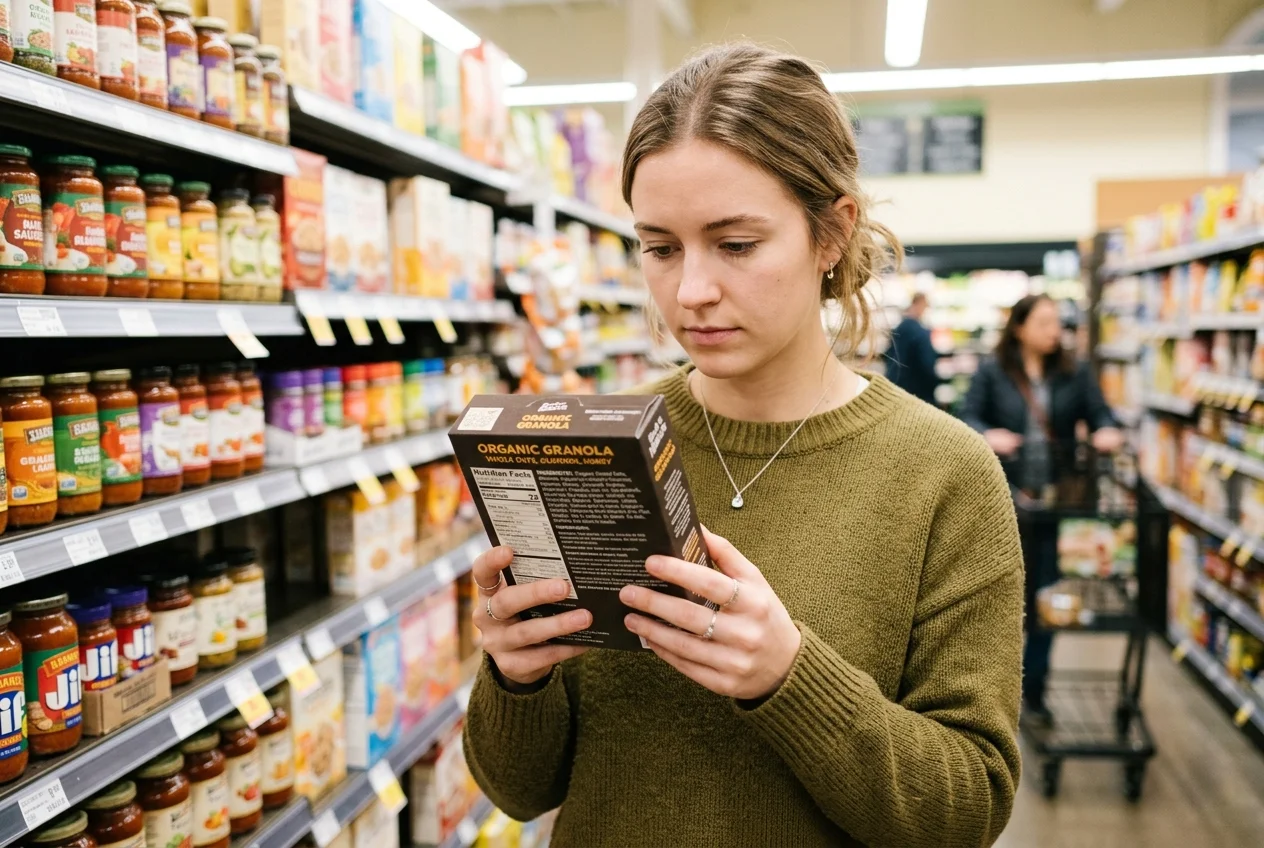
The ingredient list is the most reliable information on any food package. Ingredients appear in descending order of weight. The first few ingredients dominate the product. If sugar appears as the second ingredient on a "clean eating" snack, the front-of-pack claim is not informative.

Look for:

  • Recognizable whole-food ingredients near the top of the list
  • A relatively short list overall (though length alone is not the only measure)
  • The absence of ingredients you are specifically trying to avoid (allergens, additives, certain preservatives)

Understand What "Natural Flavors" Actually Means

"Natural flavors" is one of the most common ingredients on "clean" products. Under FDA rules, natural flavors can include any substance derived from a natural source, including plants, animals, fermentation, or roasting processes. The flavoring compound itself might be one of hundreds of individual chemicals. "Natural" here means the origin, not the processing.

This is not automatically harmful. But if you are buying a product partly because you want simple, understandable ingredients, "natural flavors" is a placeholder that could mean many things.

Apply the NOVA Question

Before accepting "plant-based" as a marker of nutritional quality, ask: could I make this at home from recognizable whole ingredients? A plant-based burger that requires industrial processing, extrusion, and binding agents to hold together is not equivalent to cooking a black bean patty at home. Both can be part of a healthy diet. But they are not nutritionally identical, and "plant-based" on the label does not tell you which category you are holding.

Ignore the Front, Read the Back

Nutrition researchers and consumer advocates have said this for decades and it remains the most practical advice available. Everything on the front of a food package is marketing. The ingredient list and nutrition facts panel on the back are regulated content. Spend your time there.

The Honest Version of These Ideas

The underlying ideas behind clean eating and plant-based eating are sound. Eating more whole, minimally processed foods with recognizable ingredients is broadly supported by nutrition science. Reducing reliance on animal-derived foods, particularly processed red meat, has consistent evidence behind it.

The problem is not the philosophy. The problem is what happens when those philosophies become marketing categories. When "clean" can mean anything, it means nothing. When "plant-based" can apply to a product that is chemically complex and industrially manufactured, it stops being a nutritional signal.

Cutting through that requires getting past the front of the package and into the ingredient list every time.

IngrediCheck can help you do that faster. Scan any food product and IngrediCheck's AI will immediately analyze the full ingredient list against your dietary needs, allergies, and preferences, flagging additives, allergens, and ingredients you want to avoid. Whether you are skeptical of "clean eating" claims or trying to genuinely eat more plant-based whole foods, IngrediCheck reads past the buzzwords so you do not have to.

Start making confident food choices today!

Scan food and understand what's right for you and your family, with AI.

IngrediCheck app