Whole Grains: Rye, Barley, and Oats
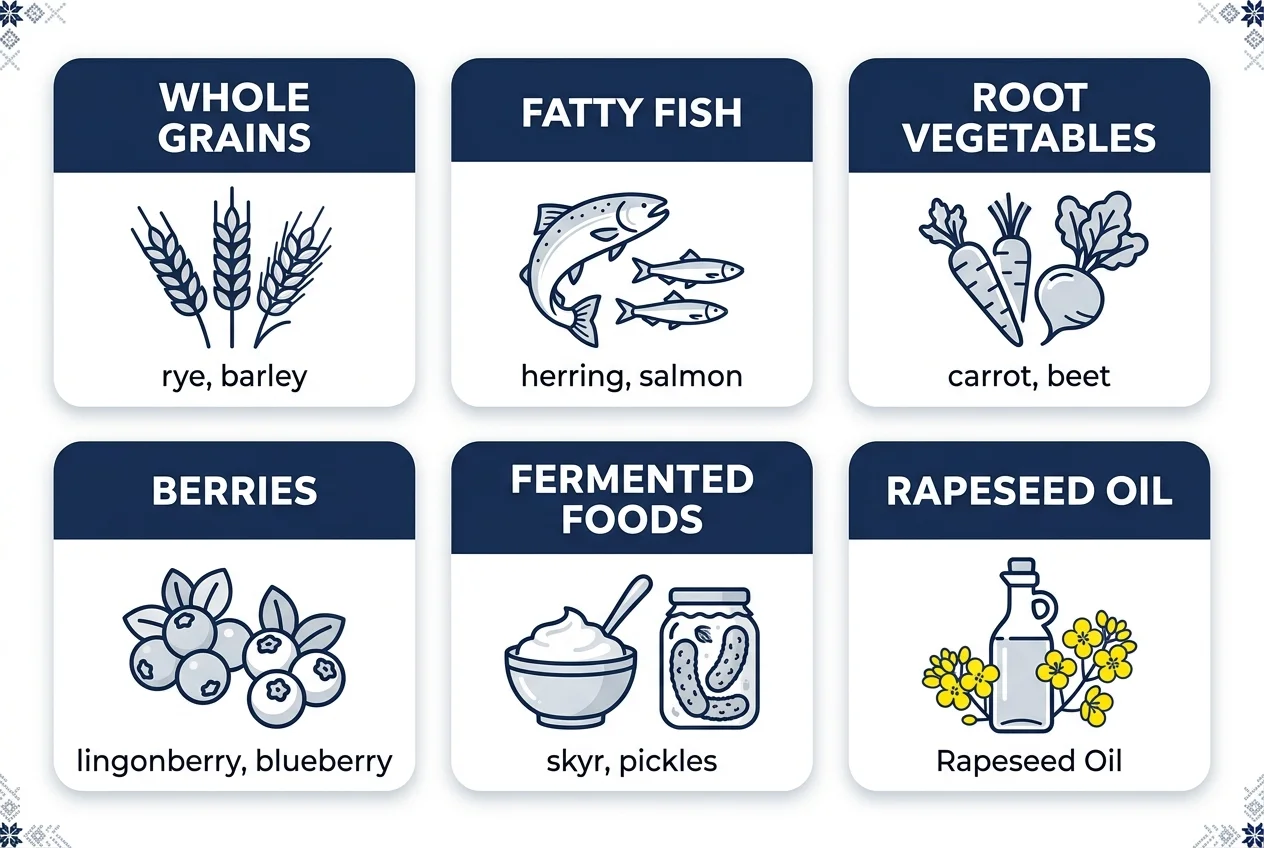
Rye is the grain most closely associated with Nordic eating. Rugbrød, the dense Danish rye bread, and its many Scandinavian relatives have been daily staples for centuries. Unlike wheat, rye has a lower glycemic index and a higher fiber content, particularly soluble fiber, which contributes to improved insulin sensitivity.
Barley and oats complete the whole-grain picture. All three grains appear in everything from porridges and crispbreads to sourdough loaves and traditional flatbreads.
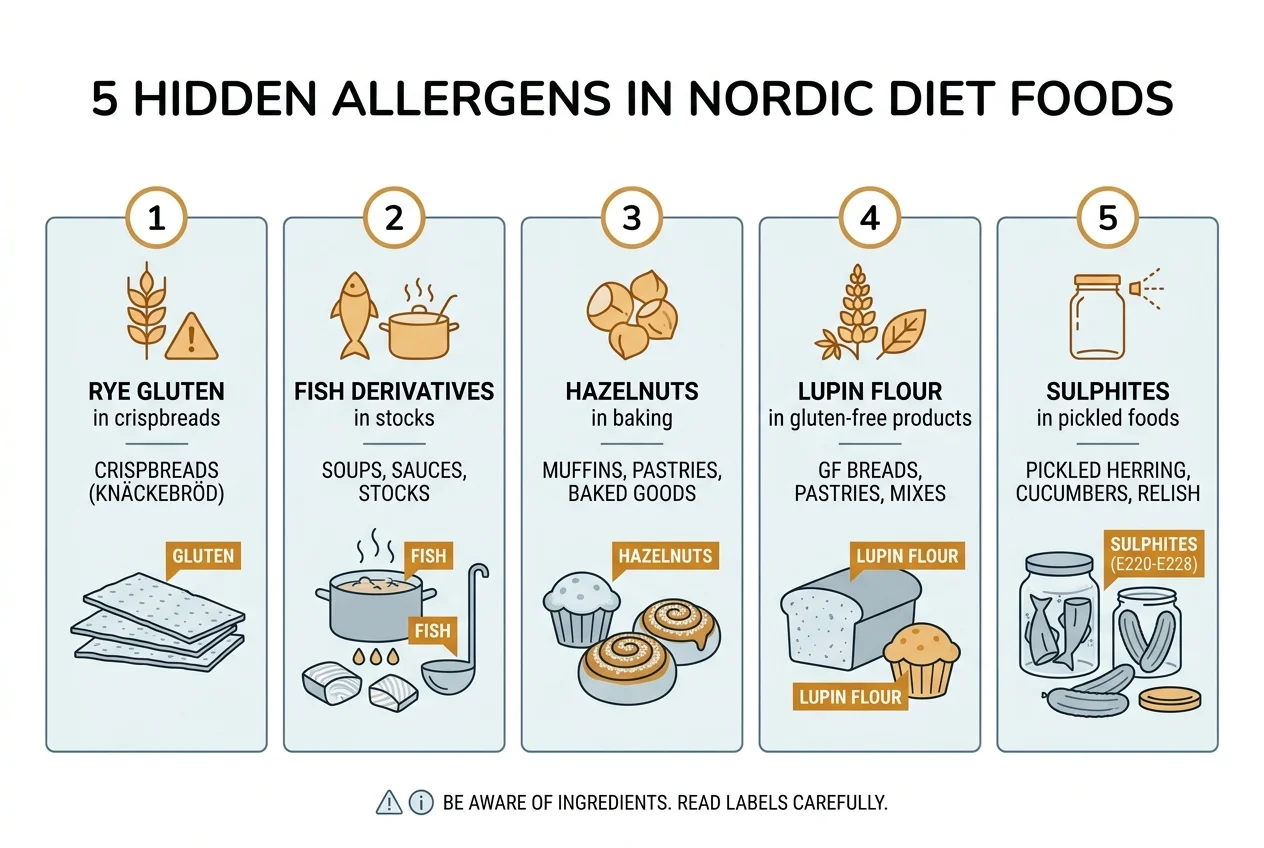
Here is the critical point for label readers: rye contains gluten. People who assume "not wheat" means "gluten-free" run into serious problems with rye. The protein structure differs from wheat gluten but remains fully reactive for people with celiac disease or non-celiac gluten sensitivity. Many consumers with gluten sensitivity focus their label-reading on wheat and miss rye entirely.
Fatty Fish
Herring, mackerel, and salmon are the protein workhorses of the Nordic diet. These fish are dense in omega-3 fatty acids EPA and DHA, which are associated with reduced inflammation and cardiovascular protection. Herring holds a particularly central place in traditional Nordic cuisine, prepared pickled, smoked, gravlax-cured, or fermented.
Fish is one of the top 14 allergens under EU labeling law, and Nordic cuisine's reliance on these fish creates more opportunities for cross-contact and hidden fish derivatives than in most other food traditions. Pickled herring brine, fish stock cubes, and smoked fish spreads can all contain concentrated fish proteins that basic label reading may not immediately surface.
Root Vegetables and Cabbage
Potatoes, carrots, turnips, parsnips, and beets form the foundation of Nordic side dishes, soups, and stews. Cabbage, including fermented forms, provides substantial fiber and vitamin C. These vegetables are largely allergen-free in their whole form.
Commercial preparations introduce a different consideration. Fermented and pickled versions, a Nordic staple, often contain added vinegar, caraway seeds, and preservatives. Caraway is a known cross-reactive allergen for people with birch pollen sensitivity. Sulphites used as preservatives must be declared under EU rules when present above 10mg/kg, but their presence can still catch sensitive consumers off guard in foods that otherwise look wholesome.
Berries
Cloudberries, lingonberries, blueberries, and bilberries grow wild across the Nordic landscape. These fruits are among the most antioxidant-dense foods in any regional diet and contribute meaningfully to the anti-inflammatory profile that researchers associate with Nordic eating patterns.
In commercial products, berries often appear alongside added sugars, pectin, and colorants. A lingonberry jam in a Scandinavian-branded jar may look traditional on the outside while carrying an ingredient list that would surprise anyone expecting simplicity.
Rapeseed Oil
This is where the Nordic diet most visibly diverges from the Mediterranean. Olive oil defines Mediterranean cooking. Rapeseed oil, known as canola in North America, is the primary fat in Nordic cuisine. Rapeseed oil has a favorable omega-3 to omega-6 ratio and a higher smoke point than many alternatives. Cold-pressed varieties retain more micronutrients and have a distinct, slightly nutty flavor.
The distinction between cold-pressed rapeseed oil and industrially refined canola oil matters for consumers who care about processing levels, even if both come from the same plant.
Skyr and Fermented Dairy
Skyr is an Icelandic cultured dairy product, thick like Greek yogurt but technically a soft cheese. It's high in protein, low in fat, and has been consumed in Iceland for over a thousand years. Across Scandinavia, fermented dairy products including various buttermilks and cultured creams have long been daily staples.
Skyr is a dairy product. People with milk allergies or lactose intolerance should not assume that its fermented nature changes this. Fermentation reduces lactose to some degree, but skyr is not lactose-free, and it contains intact milk proteins relevant to those with milk allergies.