Sattvic Diet Explained: Foods, Rules & Label-Reading Tips

Discover the ancient Ayurvedic sattvic diet — what to eat, what to avoid, and how to spot hidden non-sattvic ingredients on modern food labels.

Mar 19, 2026|9 min read
Sattvic Diet Explained: Foods, Rules & Label-Reading Tips

The sattvic diet is one of the oldest dietary frameworks in the world, rooted in Ayurvedic philosophy that dates back thousands of years in the Indian subcontinent. But it's no longer confined to ancient texts or yoga ashrams. Today, millions of people — from wellness seekers in the West to spiritual practitioners across South Asia — follow sattvic principles as a way to eat more consciously, reduce inflammation, and cultivate mental clarity.

If you're curious about what the sattvic diet actually involves, what you can and can't eat, and — critically — how to navigate modern food labels while following it, this guide covers everything you need to know.
The Philosophy Behind Sattvic Eating

The Philosophy Behind Sattvic Eating

To understand the sattvic diet, you first need to understand the three gunas — the fundamental qualities that Ayurvedic and yogic philosophy assigns to all matter, including food.

  • Sattva (purity, clarity, balance) — foods that are fresh, natural, light, and easy to digest
  • Rajas (stimulation, passion, restlessness) — foods that are spicy, hot, fried, or excessively stimulating
  • Tamas (inertia, dullness, heaviness) — foods that are stale, overprocessed, or produced through harm to living beings

The goal of a sattvic diet is to eat predominantly sattvic foods: those that nourish the body without agitating the mind. Ancient Hindu scriptures, including the Bhagavad Gita, describe sattvic food as that which "increases life, purity, strength, health, joy, and cheerfulness."

This isn't a calorie-counting or macronutrient framework. It's a philosophy of eating that asks you to consider not just what you eat, but how food is prepared, how fresh it is, and how it affects your mental and physical state afterward.

What You Can Eat on a Sattvic Diet

The sattvic food list is plant-forward and whole-food-focused. Here's what's generally considered sattvic:

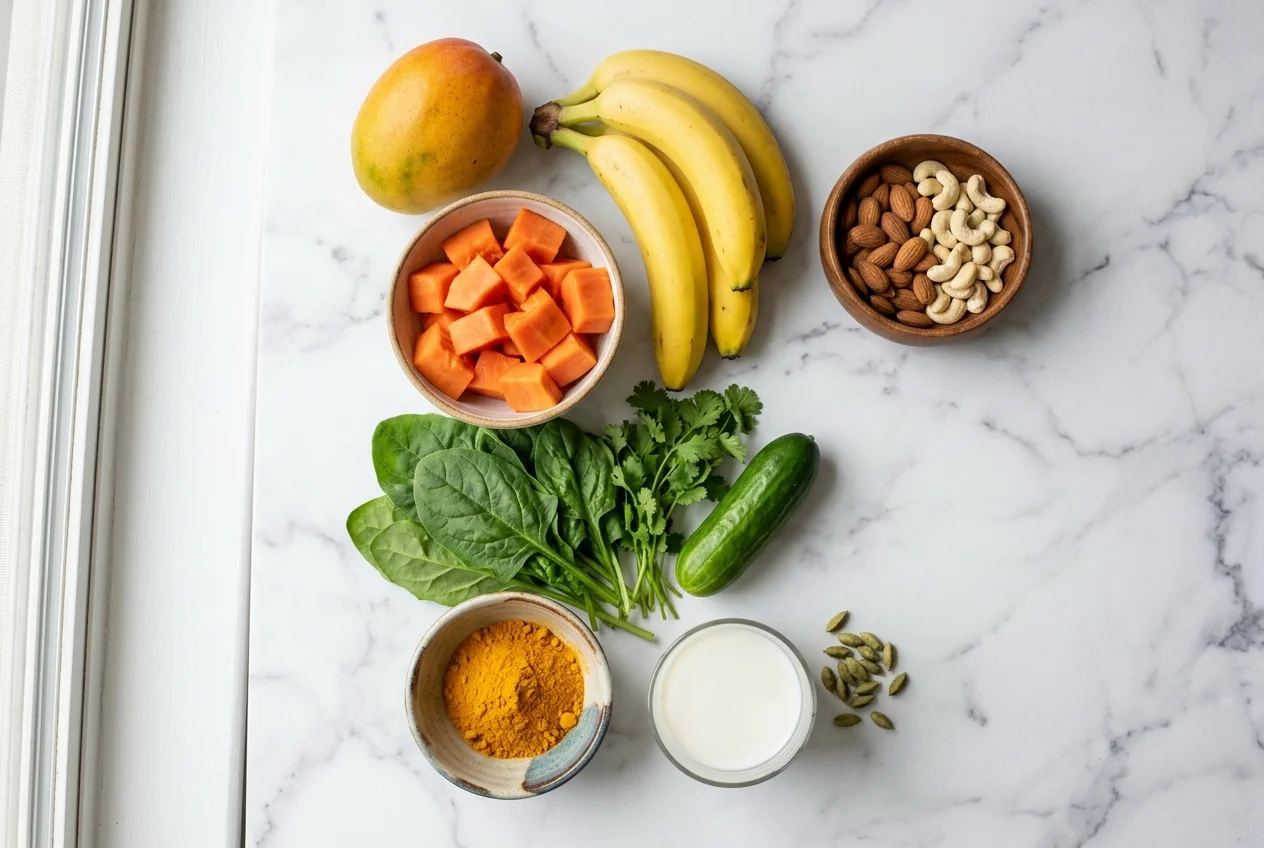
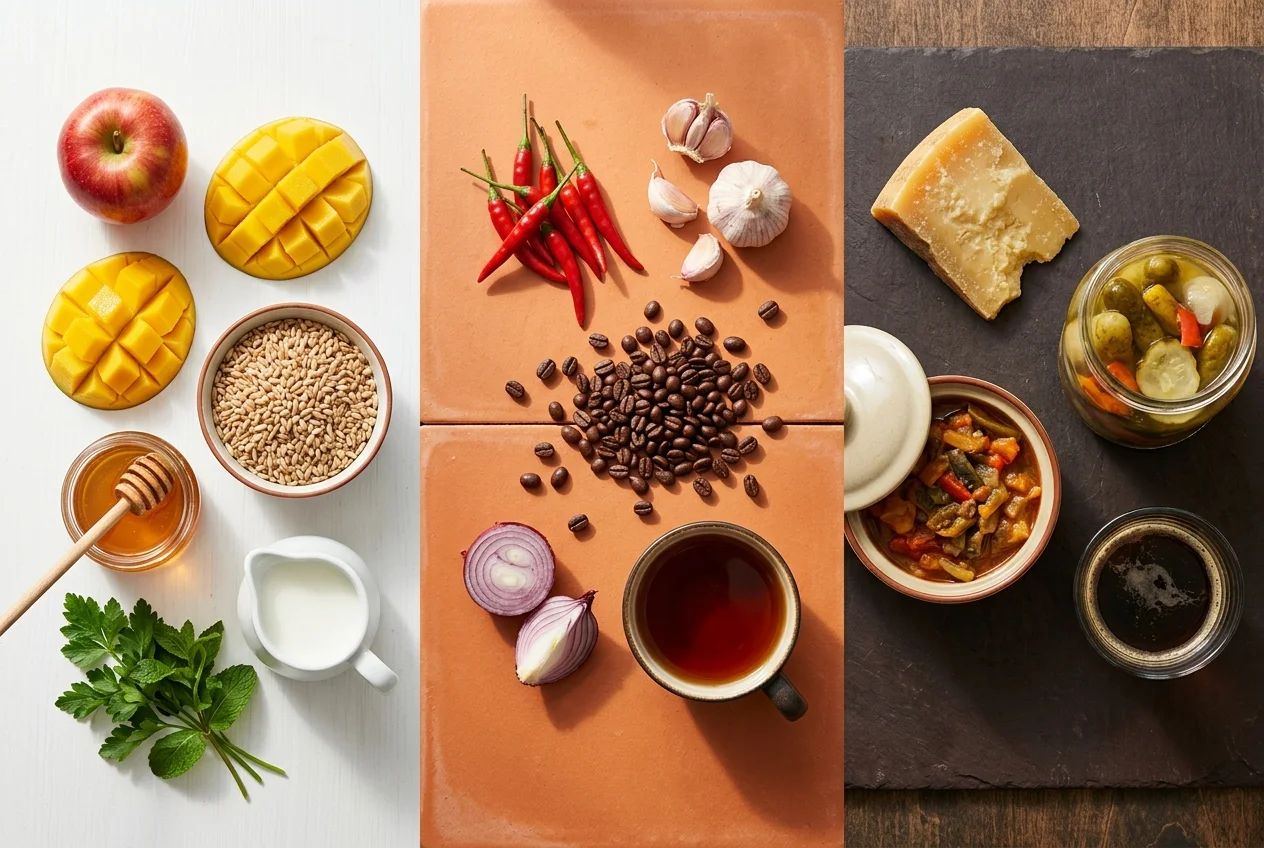
Fruits and vegetables: Most fresh, seasonal fruits are sattvic — particularly sweet fruits like mangoes, bananas, papayas, figs, dates, and berries. Vegetables are encouraged, especially mildly flavored ones: leafy greens, squash, cucumbers, carrots, beets, and sweet potatoes. Notably, onions and garlic are excluded from a strict sattvic diet, as they are considered rajasic or tamasic (more on this below).

Grains and legumes: Whole grains like rice, oats, quinoa, and barley are sattvic staples. Legumes such as lentils, mung beans, and chickpeas are central to sattvic cooking. The classic Indian dish khichdi — a simple rice and lentil porridge cooked with mild spices — is considered one of the most perfectly sattvic meals in existence.

Dairy: Milk, ghee (clarified butter), fresh paneer, and yogurt are traditionally sattvic, provided they come from ethically treated animals. Ghee in particular is considered a powerful sattvic ingredient, prized in Ayurveda for its digestive and nourishing properties.

Nuts and seeds: Raw, unroasted almonds, cashews, walnuts, sunflower seeds, and pumpkin seeds are sattvic. Roasted, salted, or heavily flavored versions edge toward rajasic.

Natural sweeteners: Raw honey and jaggery (unrefined cane sugar) are sattvic. Refined white sugar is generally avoided, as is high-fructose corn syrup and artificial sweeteners.

Herbs and mild spices: Turmeric, cumin, coriander, cardamom, cinnamon, fennel, and fresh ginger are all sattvic. These gentle spices add flavor without overstimulating the digestive or nervous system. Hot chili peppers and heavy seasoning are rajasic and avoided.

What to Avoid: Rajasic and Tamasic Foods

This is where sattvic eating diverges sharply from the average modern diet.

Rajasic foods to avoid:

  • Onions and garlic
  • Hot peppers and excessively spicy food
  • Coffee and caffeinated tea
  • Alcohol in any form
  • Meat, poultry, and fish
  • Heavily salted or pickled foods
  • Fermented foods in excess (vinegar, aged cheese)

Tamasic foods to avoid:

  • Stale, leftover, or reheated food
  • Overprocessed and packaged food containing artificial additives or preservatives
  • Deep-fried food
  • Frozen or microwaved meals
  • Refined white sugar and high-fructose corn syrup
  • Mushrooms (considered tamasic in some Ayurvedic traditions)

The emphasis on freshness is especially strict. Many sattvic practitioners avoid eating food that has been stored for more than a few hours, and traditional guidance recommends meals prepared fresh — ideally eaten twice a day in a calm, mindful state.

What the Science Says

What the Science Says

Modern research on the sattvic diet is still emerging, which is expected for a framework rooted in ancient philosophy rather than controlled clinical trials. However, a landmark 2025 comprehensive review published in Nutrition & Diabetes (a Nature portfolio journal) examined the yogic/sattvic diet's role in reducing inflammation in type 2 diabetes.

The findings were significant. Following a yogic diet centered on low-fat vegetarian whole foods was associated with:

  • Reduced levels of inflammatory markers
  • Improved insulin sensitivity and reduced insulin resistance
  • Healthier body weight maintenance
  • Enhanced gut microbiome diversity
  • Better immune regulation

Researchers noted that sattvic dietary principles — emphasizing plants, whole grains, and the avoidance of ultra-processed foods — closely align with what modern nutritional science recommends for reducing chronic disease risk.

A separate systematic review from the University of Akron found that while direct evidence linking the sattvic diet specifically to all-cause mortality reduction remains insufficient, the individual food components it recommends (fruits, vegetables, legumes, whole grains, nuts) each carry robust independent evidence for long-term health benefits.

In other words: the ancient wisdom and the modern science are pointing in the same direction.

The Hidden Challenge: Modern Food Labels

Here is where following a sattvic diet in the real world becomes genuinely difficult. Even if you're cooking from scratch most of the time, most households still reach for some packaged ingredients — spice blends, canned goods, dairy products, sauces, or packaged grains. And that's where non-sattvic ingredients frequently hide, often without any obvious signal on the front of the pack.

Garlic and Onion Are Everywhere

Onions and garlic are among the most ubiquitous ingredients in processed food. They appear in:

  • Spice blends and seasoning packets — often listed as "garlic powder," "onion powder," or concealed within "natural flavors"
  • Ready-made sauces, soups, and gravies
  • Salad dressings and marinades
  • Packaged savory snacks and crisps
  • Vegetable broths and bouillon cubes — even "vegetable" ones typically contain onion

For strict sattvic practitioners, spotting these on a label — especially when buried in a spice blend or hidden within "natural flavors" — requires focused attention.

Artificial Preservatives and Additives

Tamasic food explicitly excludes artificial additives and preservatives. Common ones that appear in otherwise "healthy-looking" packaged foods include:

  • Sodium benzoate (E211) — a preservative in sauces, juices, and pickles
  • BHA and BHT (E320, E321) — antioxidant preservatives in cereals, snacks, and fats
  • Artificial colors (Red 40, Yellow 5, etc.) — common in flavored dairy, candies, and drinks
  • Carrageenan — a seaweed-derived thickener used in dairy alternatives and some yogurts
  • MSG and its disguised forms — often listed as "yeast extract," "hydrolyzed vegetable protein," or "natural flavors"

Alcohol-Based Ingredients

Alcohol is explicitly avoided in a sattvic diet, yet it appears in unexpected places on food labels:

  • Vanilla extract — standard vanilla extract contains approximately 35% alcohol. Vanilla powder or vanilla bean paste are the sattvic alternatives.
  • Flavor extracts — many common flavor extracts use alcohol as a carrier
  • Some vinegars — wine vinegar and malt vinegar involve fermentation processes that some practitioners consider tamasic

Refined Sugars and Syrups

White sugar, high-fructose corn syrup, and glucose syrup appear extensively in packaged goods — including many savory products where you wouldn't expect sweetness. Sattvic eating prefers jaggery or raw honey, ingredients rarely used in commercially manufactured food.

Practical Label-Reading Tips for Sattvic Eaters

When evaluating any packaged product for sattvic compatibility, run through this checklist:

  1. Scan for garlic and onion — by name, as powder, extract, or hidden within "spices" and "natural flavors"
  2. Check for artificial preservatives — any E-numbers in the 200s (preservatives) or 300s (synthetic antioxidants)
  3. Look for alcohol derivatives — vanilla extract, certain flavor extracts, cooking wines
  4. Identify the sugar source — "sugar" on a label almost always means refined cane sugar; look for jaggery, dates, or no added sweetener
  5. Count the ingredients — the longer the list, the more likely non-sattvic elements are present
  6. Assess shelf life — a 24-month shelf-stable product has typically undergone significant processing and preservation, which is fundamentally at odds with sattvic freshness principles
  7. Watch for fermented derivatives — nutritional yeast, fermented soy, miso-based flavorings

The challenge is that many of these ingredients don't stand out at a glance. They require knowing exactly what to look for across a label that may contain 30 or more ingredients listed in small print.

Living Sattvic in a Processed World

The sattvic diet doesn't demand perfection, and most modern practitioners take a pragmatic approach. Cooking fresh at home as often as possible, being selective about which packaged products you use, and prioritizing organic and minimally processed ingredients when convenience is necessary — these are the pillars of sattvic eating adapted to contemporary life.

The diet's emphasis on seasonal, fresh, and locally sourced food also aligns naturally with sustainability values, which is part of why it's attracting attention well beyond traditional Ayurvedic communities. As interest in clean eating, plant-based nutrition, and mindful food choices continues to grow globally, the sattvic framework offers something most modern diets lack: a coherent philosophy that connects what you eat with how you think and feel.

For families, the sattvic approach can be adopted by degree. Perhaps not following every restriction strictly, but using the philosophy as a compass — toward fresher ingredients, simpler preparations, and greater awareness of what's actually in the food you bring home.

Using IngrediCheck, following a sattvic diet in a world full of packaged food becomes significantly more manageable. Scan any product and instantly see if it contains garlic, onion, artificial preservatives, alcohol-based additives, or refined sugars that conflict with sattvic principles. Instead of manually decoding a 30-ingredient label while standing in a grocery aisle, IngrediCheck surfaces exactly the ingredients that matter for your way of eating — so you can shop with confidence and stay true to your values.

Start making confident food choices today!

Scan food and understand what's right for you and your family, with AI.

IngrediCheck app