Need a sattvic food checker? Whether your household spells it sattvic or satvik, the packaged-food problem is the same: the front of the package rarely tells you whether a product fits your food rules.
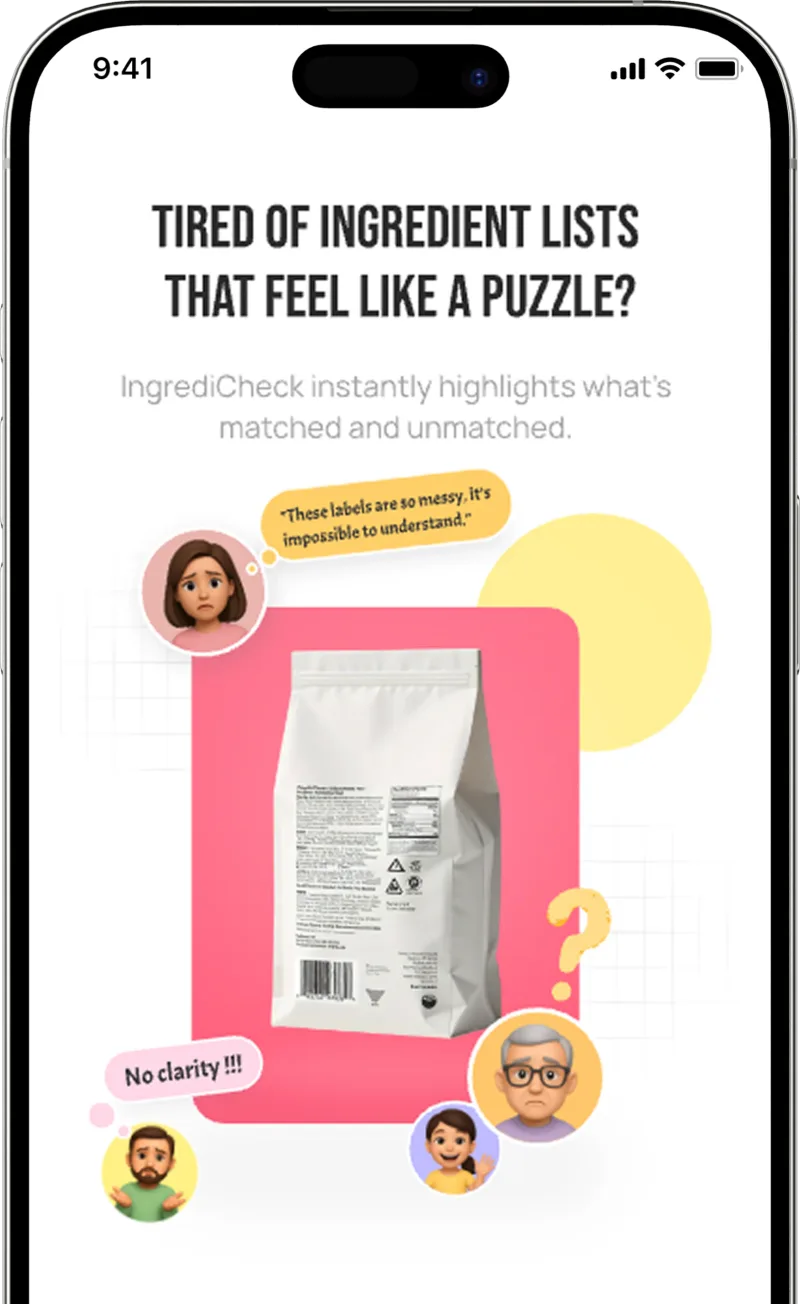
IngrediCheck helps by scanning a barcode or ingredient list and surfacing the ingredients that usually matter most for sattvic shopping, including onion, garlic, artificial preservatives, alcohol-based extracts, and refined sugars.
That matters because most packaged foods are not designed around sattvic eating. Even products that look simple or "clean" on the front can still include seasoning blends, flavor carriers, preservatives, or sweeteners that conflict with how many people interpret sattvic food rules.
This article is for informational purposes only and should not be considered medical advice or spiritual guidance. Sattvic food practices vary by lineage, teacher, household, and personal discipline. Use label scanning as a support tool, not a substitute for your own guidance.
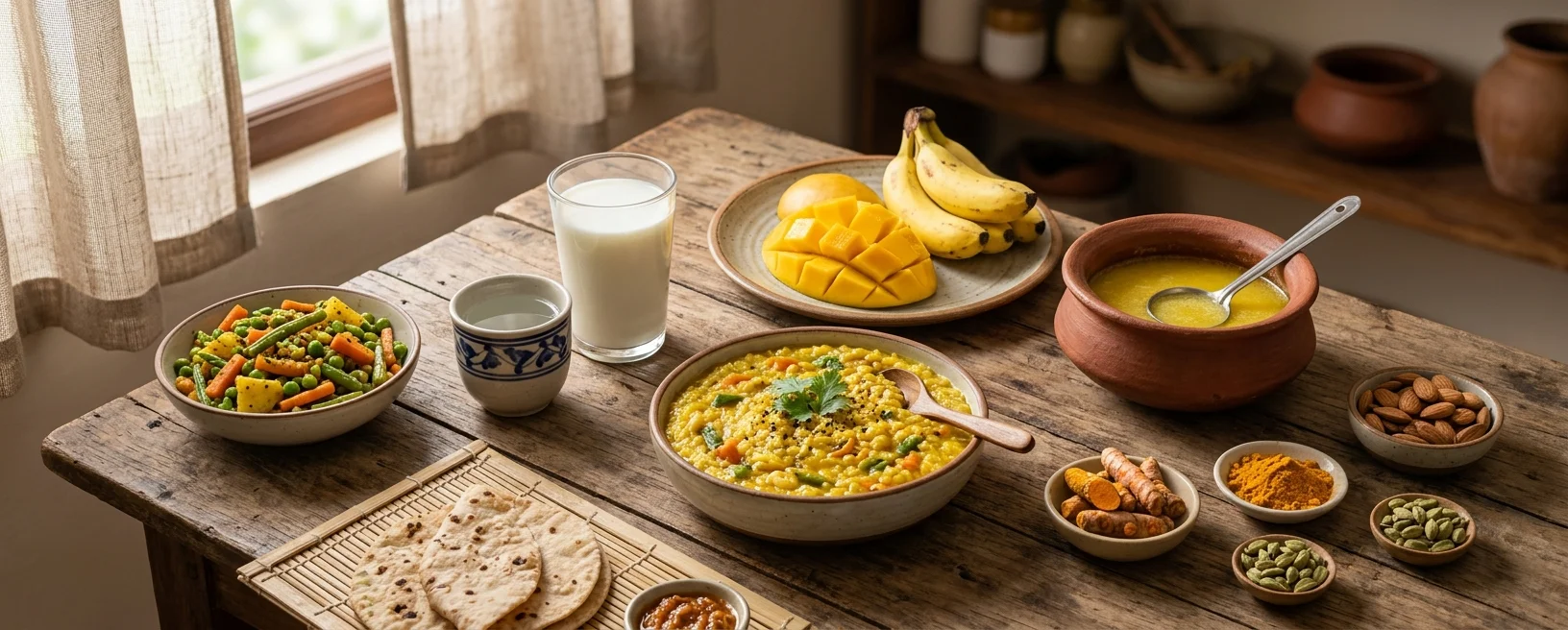
Whole foods are usually the easy part of sattvic eating. Fresh fruit, simple grains, lentils, vegetables, dairy, nuts, seeds, and mild spices are easy to understand when you buy them in their basic form.
Packaged foods are where the friction starts.
The problem is not just that a label is long. It is that the ingredients most likely to conflict with sattvic rules often hide inside ordinary product categories:
- spice blends that include onion powder or garlic powder
- broths, soups, sauces, and gravies built on allium-heavy flavor bases
- flavored dairy, dessert mixes, and snacks that use refined sugar or additives
- extracts and flavorings that rely on alcohol as a carrier
- shelf-stable foods that look simple on the front but depend on preservatives, colors, stabilizers, or strong flavor systems
That makes sattvic shopping less like following a single universal diet list and more like repeated label interpretation under time pressure.
Why a Generic "Healthy" Score Is Not Enough
This is where search intent matters.
Someone searching for a sattvic food checker is usually not asking, "Is this broadly healthy?" They are asking a narrower question: does this fit the rules I actually follow?
That is a different job from a generic nutrition score.
A generic food app might reward protein, fiber, or lower calories and still miss the exact ingredients that matter to a sattvic shopper. A product can have a respectable health profile and still contain garlic, onion powder, alcohol-based flavoring, or a long additive list that makes it a bad fit for your household.
That is why a checker is more useful than a one-size-fits-all verdict. It lets the product be evaluated against your food rules, not a generic theory of what everyone should eat.
The Label Still Cannot Answer Everything
This is the limitation an honest sattvic checker has to admit.
Not every sattvic question can be solved from a package alone.
Some households also care about factors such as:
- whether a food is freshly prepared or long shelf-stable
- whether it is fermented, aged, or strongly stimulating
- whether the recipe includes mushrooms, vinegar, or specific flavoring categories
- how the food was cooked, stored, or reheated
Those questions matter because sattvic eating is not only about ingredient exclusion. It is also about freshness, preparation, simplicity, and how the food affects the body and mind.
So the right model is not blind trust in a scan. It is faster first-pass screening. The checker helps you rule out obvious conflicts sooner and spend more attention on the products that actually deserve a closer look.
What a Sattvic Food Checker Should Actually Do
If a tool is going to be useful in real shopping, it should:
- work from both barcodes and ingredient-label photos
- flag common non-sattvic ingredients quickly
- let you save custom rules in plain English
- explain why a product was flagged instead of only showing a red or green verdict
- support stricter and looser household interpretations without forcing one definition on everyone
That last point matters more than it first appears.
Some shoppers want a strict rule set like:
avoid onion and garlicavoid alcohol-based extractsavoid artificial preservatives and colors
Others want a softer review workflow like:
flag vinegar and fermented flavors for reviewtreat long additive lists as needs-reviewprefer simpler ingredient lists
A useful sattvic food checker should handle both. The point is not to flatten every tradition into one canned setting. The point is to make your version of sattvic label reading less repetitive.
Need the Full Sattvic Food List and Rules?
This page is the scanner-first version of the topic. It is built for the grocery-aisle question: does this packaged food fit my rules?
If you want the broader explanation of sattvic eating, including the philosophy, foods to eat, foods to avoid, and the longer label-reading context, read Sattvic Diet Explained: Foods, Rules & Label-Reading Tips.
That guide is the better place to start if you want the full background on sattva, rajasic vs tamasic food categories, and the reasoning behind common sattvic restrictions. For the broader scanner cluster, compare it with the general ingredient checker app guide and browse the full ingredient checker and food scanner guides hub.
Start with Faster Screening, Not More Guessing
You should not need to memorize every hidden onion powder, every alcohol-based extract, or every additive category before you can decide whether a packaged food belongs in your cart.
With a sattvic food checker, the first pass gets easier. You scan the label, surface the ingredients that matter to your household, and decide faster which foods are clearly fine, clearly not for you, or still worth a closer look.