Soy Lecithin
Soy lecithin is by far the most widely used plant-based lecithin. It's a byproduct of soybean oil refining: when crude soy oil is processed, a water-soluble fraction called "gum" separates out. That gum is dried and refined into lecithin.
Is soy lecithin vegan? Yes. It comes entirely from soybeans and involves no animal ingredients in its production.
But there are caveats some vegans care about:
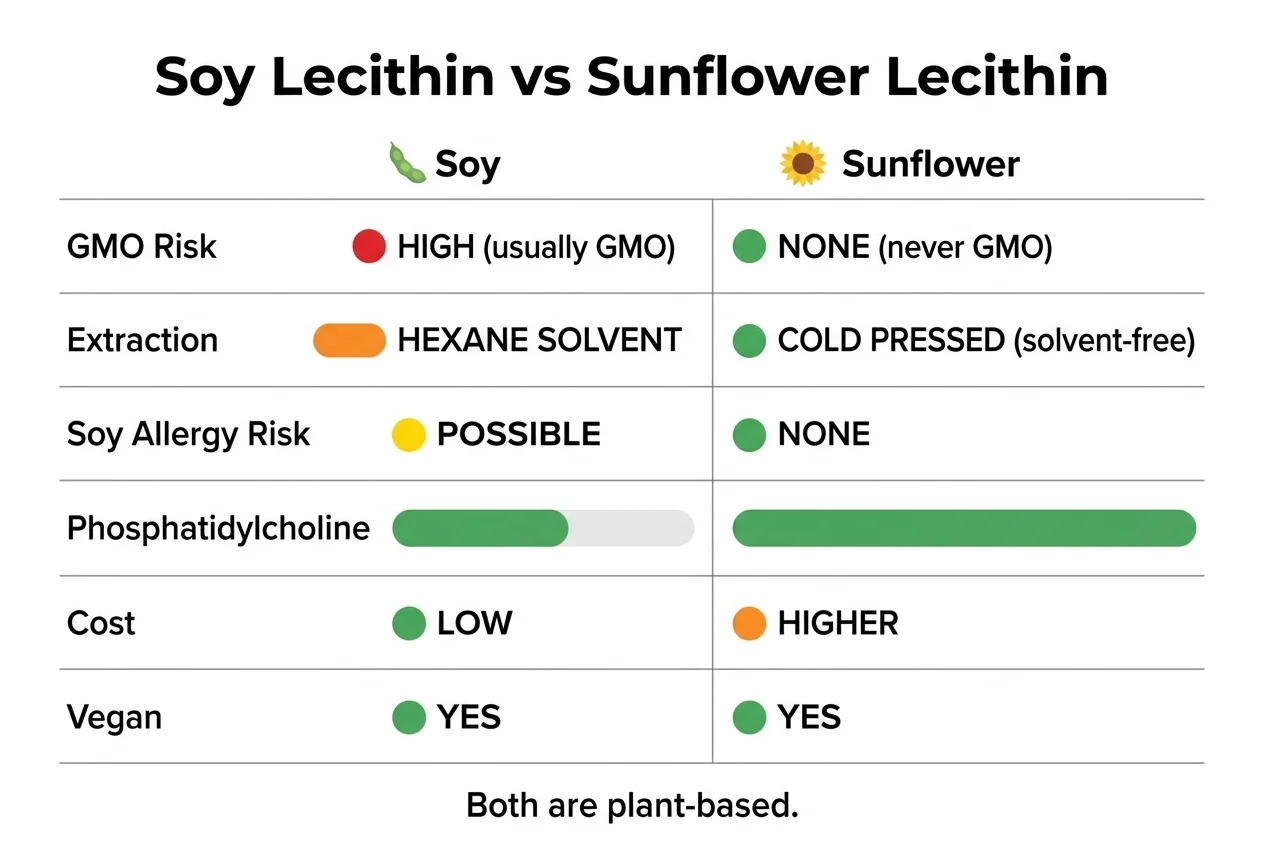
- GMO: Most soybeans grown commercially — particularly in North America — are genetically modified. If you prefer to avoid GMOs, look for products explicitly labeled non-GMO or organic soy lecithin.
- Hexane extraction: Conventional soy lecithin production typically uses hexane, a petroleum-derived chemical solvent, to maximize phospholipid yield. While hexane residues in the final product are extremely low (and considered safe by regulators), some vegans prefer to avoid it on broader ethical and environmental grounds.
- Soy allergy: Soy is one of the major allergens. However, EFSA and other bodies have concluded that highly refined soy lecithin contains such negligible protein that it typically does not trigger reactions in soy-allergic individuals — though anyone with a confirmed soy allergy should consult their allergist.
Sunflower Lecithin
Sunflower lecithin has grown significantly in popularity as a cleaner alternative to soy lecithin, both in food manufacturing and in health supplements.
It's extracted through cold pressing — sunflower seeds are dehydrated, then pressed to separate the gum fraction, which is further dried into lecithin. No chemical solvents are required. This makes sunflower lecithin:
- Non-GMO (sunflowers are not commercially grown as GMO crops)
- Solvent-free
- Free from soy allergens
- Vegan by default, since the extraction process is purely mechanical
Nutritionally, sunflower lecithin tends to be higher in phosphatidylcholine (the brain-supporting phospholipid) relative to soy lecithin, while soy lecithin is higher in phosphatidylinositol.
The main downside: sunflower lecithin costs more to produce, which is why it remains less common in mainstream processed foods.
Rapeseed and Corn Lecithin
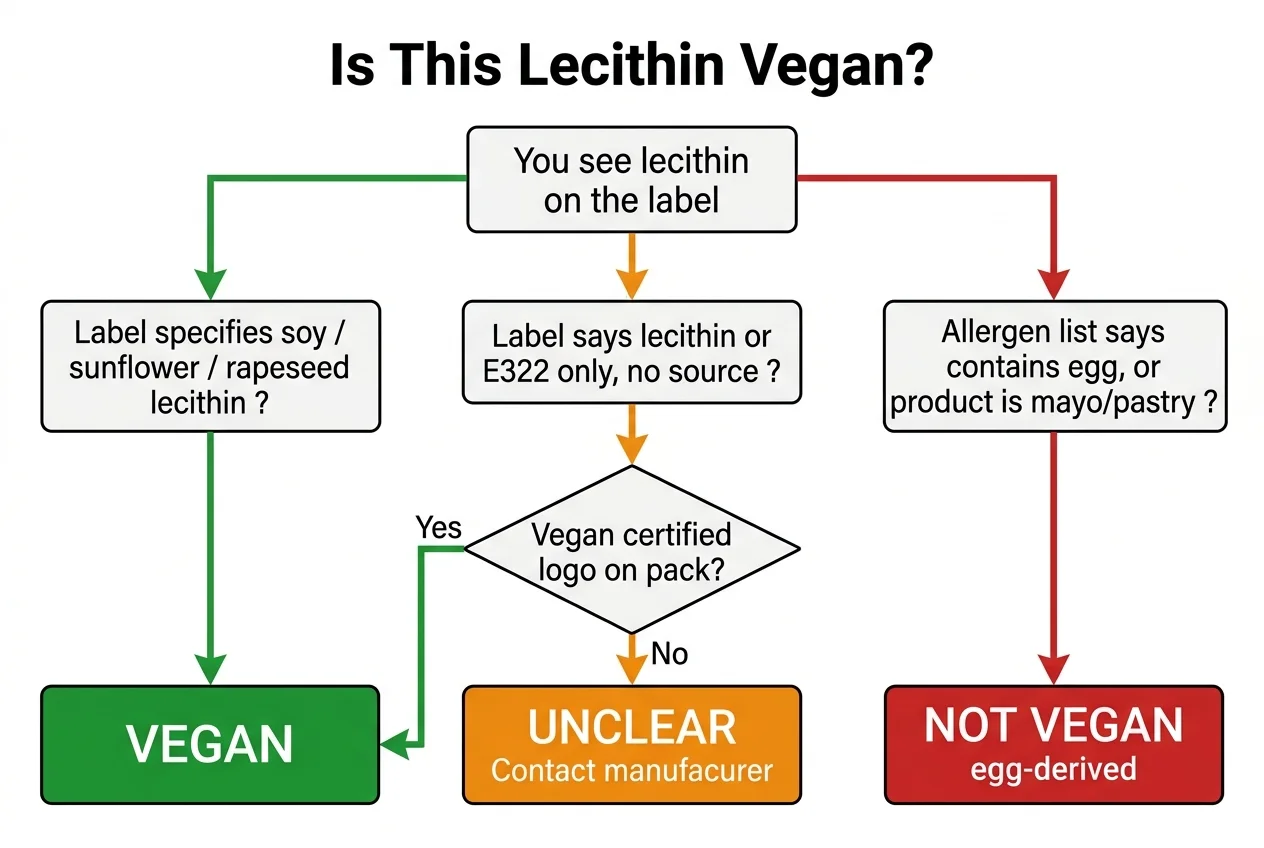
Rapeseed (canola) lecithin and corn lecithin are also commercially produced and are plant-based. They're less common on labels than soy or sunflower, but follow the same general logic: if the source is declared as a plant, it's vegan. If it's just "lecithin," the source is unknown.