Is Xanthan Gum Safe for a Gluten-Free Diet?

Is xanthan gum safe for celiac disease and gluten-free diets? Learn how it's made, its regulatory status, side effects, and who should avoid it.

Mar 29, 2026|9 min read
Is Xanthan Gum Safe for a Gluten-Free Diet?

If you've spent any time in the gluten-free aisle, you've almost certainly seen xanthan gum on an ingredient list. It's in gluten-free bread, pasta, pizza bases, salad dressings, ice cream, and dozens of other products. For people managing celiac disease or non-celiac gluten sensitivity, this raises a fair question: is xanthan gum actually safe, or is it something to watch out for?

The short answer is yes: xanthan gum is gluten-free and considered safe for most people with celiac disease. But the longer answer comes with some important nuance about how it's made, potential sensitivities, and which populations should approach it with caution.
What Is Xanthan Gum?

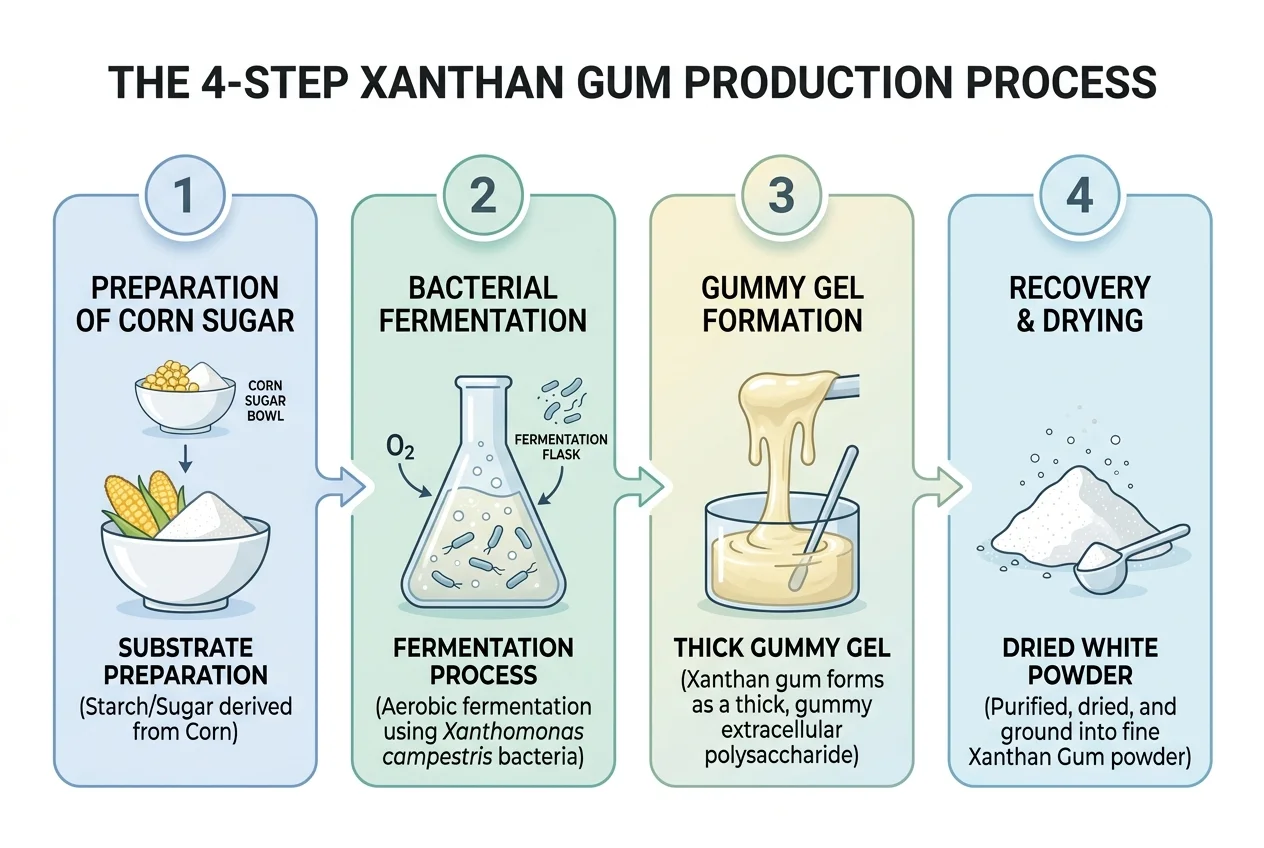
Xanthan gum is a polysaccharide (a long-chain carbohydrate) produced through bacterial fermentation. The bacteria Xanthomonas campestris is fed a sugar source and produces a thick, gummy substance as a byproduct. That substance is then dried and milled into the fine white powder you find in stores and food products.

The sugar used for fermentation varies by manufacturer. Common sources include:

  • Corn (most common in the United States)
  • Wheat
  • Soy
  • Dairy (whey)

This is where much of the confusion around xanthan gum starts. If it can be made from wheat, does that mean it contains gluten?

Why Xanthan Gum Itself Is Gluten-Free

Why Xanthan Gum Itself Is Gluten-Free

The key distinction is what xanthan gum is versus what it's made from. When Xanthomonas campestris ferments the sugar, it converts that sugar into a polysaccharide, which is a carbohydrate chain. Gluten is a protein, not a carbohydrate. The fermentation process does not produce gluten proteins, regardless of whether wheat was used as the sugar source.

The end product, xanthan gum itself, contains no gluten proteins. This is why both the National Celiac Association and Celiac.com affirm that xanthan gum is gluten-free.

That said, cross-contamination is a real concern if xanthan gum is manufactured in a facility that also processes wheat. For people with celiac disease, where even trace amounts under 20 parts per million (ppm) can trigger an immune response, looking for certified gluten-free xanthan gum is the safest approach. Products labeled "gluten-free" in the US and EU are legally required to contain less than 20 ppm gluten.

Regulatory Status: What FDA and EFSA Say

Xanthan gum has one of the more robust safety records of any food additive.

In the US, the FDA lists xanthan gum under 21 CFR § 172.695 as a permitted food additive with Generally Recognized As Safe (GRAS) status, a designation it has held since 1969. It has received no-questions GRAS status in multiple independent reviews.

In the EU, the European Food Safety Authority (EFSA) conducted a full re-evaluation of xanthan gum (E 415) published in 2017. The panel concluded there was "no safety concern" at estimated exposure levels and assigned an ADI of "not specified," the highest possible safety designation, meaning realistic dietary intake poses no health risk. Animal studies found no adverse effects at doses up to 1,000 mg/kg body weight per day, and no genotoxicity concerns were identified. The EFSA panel also noted that xanthan gum is unlikely to be absorbed intact by the body. It is instead fermented by intestinal microbiota.

Internationally, JECFA (the Joint FAO/WHO Expert Committee on Food Additives) has reviewed and affirmed its safety, making xanthan gum one of the most thoroughly evaluated food additives in the world.

Why Gluten-Free Baking Needs Xanthan Gum

Why Gluten-Free Baking Needs Xanthan Gum

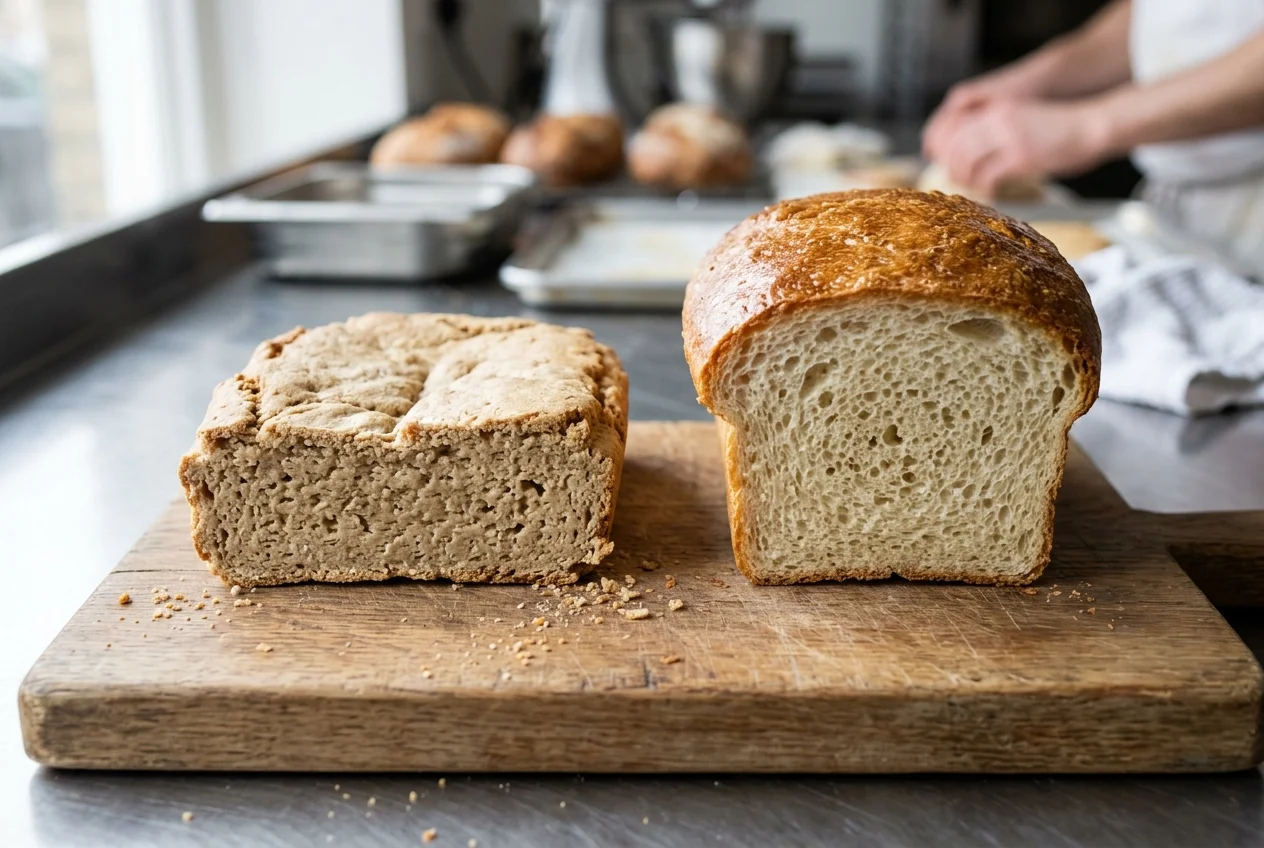
Understanding xanthan gum's role helps explain why it's so prevalent in gluten-free products. Gluten is what gives wheat-based dough its elasticity and structure: it forms a protein network that traps gas bubbles during baking, giving bread its chew and rise.

Without gluten, dough made from rice flour, almond flour, or tapioca tends to be crumbly, dense, and dry. Xanthan gum fills that structural gap. When it gets wet, it forms a sticky, viscous gel that:

  • Binds ingredients together in place of gluten's protein network
  • Traps gas bubbles, enabling rise and lightness
  • Retains moisture, extending shelf life and preventing dry, crumbly texture
  • Acts as an emulsifier, helping water and fat combine smoothly

Typical usage is small, around ¼ teaspoon per cup of gluten-free flour for most baked goods, scaling up slightly for items that need more elasticity (like pizza dough) and down for items that don't (like shortbread). At these quantities, the amount of xanthan gum you're actually consuming in a single serving is a fraction of a gram.

Side Effects: What the Research Actually Shows

Xanthan gum is a soluble fiber, and like all soluble fibers, it can cause digestive symptoms. But the evidence suggests this only happens at doses far above what's found in food.

The EFSA review noted that adults consuming up to 214 mg/kg body weight per day experienced only mild abdominal discomfort, characterized as "undesirable but not adverse." That's an enormous amount. In a typical serving of gluten-free bread, you might consume 0.5–1 gram total. The threshold for noticeable digestive effects is generally cited at around 15 grams per day, roughly equivalent to eating multiple entire loaves of gluten-free bread at once.

At normal dietary exposure, side effects are unlikely for the vast majority of people. However, some individuals do report sensitivity:

  • People with IBS or IBD may find that soluble fibers, including xanthan gum, aggravate their symptoms even at smaller amounts
  • Those with corn, soy, or dairy allergies should check the source of the xanthan gum, since allergenic proteins from the original sugar source could theoretically persist through manufacturing (though this is rare with reputable brands)
  • Infants should not be given xanthan gum. Their immature guts are more susceptible to its bulking effects, and it was linked to cases of necrotizing enterocolitis in premature infants given formula thickened with the additive
  • People with bowel obstruction or fecal impaction should avoid it, as its bulking properties could worsen these conditions

The "Corn Sensitivity" Confusion

One layer of complexity worth addressing: some people on strict gluten-free diets also react to corn. In the United States, corn is the most common fermentation substrate for xanthan gum, which means corn-derived xanthan gum could be problematic for those managing corn allergies or corn sensitivity alongside gluten avoidance.

If you're managing multiple food sensitivities, it's worth contacting the manufacturer to confirm the source. Some brands specifically market wheat-free or corn-free xanthan gum for this reason.

Is Xanthan Gum Always Necessary?

Not always, and some people prefer to avoid it even if they tolerate it fine. If you're sensitive to gums or simply prefer a cleaner ingredient list, there are functional alternatives:

  • Psyllium husk: a soluble fiber that provides similar binding and texture properties
  • Guar gum: another galactomannan-based hydrocolloid (though some people are equally sensitive to it)
  • Flaxseed meal or chia seeds: form gels when hydrated, works well in denser baked goods
  • Egg whites: provide binding and structure in many recipes without any additives

Many commercial gluten-free products use a combination of starches (tapioca, potato, arrowroot) alongside xanthan gum or guar gum to achieve the right texture.

How to Identify It on Labels

Xanthan gum is almost always listed by its full name, "xanthan gum," on ingredient labels. It may also appear as E 415 on European product labels. It's not hidden under ambiguous umbrella terms like "natural flavors," so it's straightforward to spot.

If you're buying standalone xanthan gum for home baking, look for:

  • A certified gluten-free designation (ensures <20 ppm gluten)
  • The source listed on the label if you manage corn or soy allergies

Brands like Bob's Red Mill and Anthony's specifically label their xanthan gum as gluten-free and list the fermentation source.

The Bottom Line

For most people with celiac disease or gluten sensitivity, xanthan gum is safe, well-tolerated, and genuinely useful. It's been reviewed and approved by FDA, EFSA, and JECFA, and the scientific consensus is that it poses no health risk at normal dietary levels. Its presence in a gluten-free product is not a red flag. In many cases, it's exactly what makes that product edible.

The main caveats are practical: look for certified gluten-free labeling to avoid cross-contamination, be aware of the fermentation source if you manage corn or soy allergies, and pay attention to your own digestive response if you have IBS or IBD.

With IngrediCheck, you can instantly scan any product containing xanthan gum and see not just its gluten-free status but also the full allergen breakdown, including whether the product is safe for corn, soy, or dairy-free diets. If you're navigating multiple intolerances alongside gluten, that context makes all the difference.

Start making confident food choices today!

Scan food and understand what's right for you and your family, with AI.

IngrediCheck app