Label Reading Guides

Clean Label Food Scanner: Check Additives and Ingredient Claims

A clean label food scanner helps shoppers review additive names, natural flavor claims, preservative wording, sweeteners, dyes, and saved ingredient preferences.

May 9, 2026|9 min read
By Sanket Patel|Updated 2026-05-13|5 sources|Editorial standards
Clean Label Food Scanner: Check Additives and Ingredient Claims

Clean label sounds simple: fewer artificial ingredients, shorter labels, and names you recognize. The problem is that clean is not one fixed legal category. Two shoppers can use the same phrase and mean different things.

One person may mean no synthetic dyes. Another may mean no preservatives, no artificial sweeteners, no MSG, no seed oils, no high-fructose corn syrup, or no ingredients they cannot pronounce. A clean label food scanner is useful only if it respects that difference. It should check the ingredient list against the rules you save, not pretend there is one universal clean-label score.

Clean Label Is Not One Official Standard

A widely cited review by Asioli and colleagues in Food Research International describes clean label as a trend driven by consumer interest in production methods and food components, especially artificial additives and unfamiliar ingredients. The review also notes that there is no common and objective definition of clean label.

That uncertainty matters. A package can advertise simple ingredients or no artificial preservatives, but the claim may not answer your actual question. You still need to read the ingredient list and understand which additives, flavorings, sweeteners, colors, or processing aids matter to you.

For a scanner, that means the first design rule is humility:

  • do not declare a product universally clean
  • show the ingredient terms that matched saved rules
  • explain why a term was flagged
  • let users decide which ingredient families matter
  • keep regulatory facts separate from personal preferences

That is different from a generic health score. Clean-label shopping is often about transparency and preference, not only safety.

Additives Are Regulated, But Shoppers Still Want Context

Additives Are Regulated, But Shoppers Still Want Context

The FDA explains that direct food additives are added to food for a specific purpose, such as texture, preservation, color, or flavor. For approved food additives, FDA regulations can specify the foods where the additive may be used, maximum amounts, and how the ingredient should be identified on labels. Manufacturers are also required to limit food additives to the amount necessary for the desired effect.

That regulatory framework matters. Clean-label copy should not imply that every additive is automatically unsafe. Some additives solve real food-quality problems. The shopper question is more specific:

  • What is this ingredient doing?
  • Is it a dye, preservative, sweetener, emulsifier, flavor enhancer, or texture additive?
  • Is it on my household avoid list?
  • Does this claim hide a similar function under a friendlier name?

The best clean-label scanner answers those questions without turning the ingredient list into fear marketing.

GRAS Does Not Mean "No Need to Read"

Many ingredients enter the food supply through the Generally Recognized as Safe pathway. The FDA's GRAS page explains that an intentionally added food substance is a food additive subject to premarket review unless it is generally recognized among qualified experts as safe under the conditions of its intended use or otherwise excepted.

FDA consumer guidance adds two practical details. GRAS uses must meet the same safety standard as food additives: reasonable certainty of no harm under the intended conditions of use. But GRAS notification is not mandatory, and FDA strongly encourages manufacturers to submit notices for agency oversight.

For shoppers, this means allowed and fits my preferences are not the same question. A clean-label scanner should keep that distinction clear:

  • regulatory status explains whether an ingredient is legally used
  • saved rules explain whether you personally want to flag it
  • the final product decision still belongs to the shopper

That framing is especially important for additives that are legal but controversial in consumer discussions, such as certain synthetic dyes, preservatives, sweeteners, and flavor-enhancer systems.

Natural Flavor Is Still a Label Term

Many clean-label shoppers focus on natural flavors because the phrase sounds simpler than a long chemical name but reveals less detail than a named ingredient.

Under 21 CFR 101.22, U.S. rules define how spices, flavorings, colorings, and chemical preservatives are declared. The regulation separates natural flavors, artificial flavors, color additives, and chemical preservatives. It also requires chemical preservatives to be declared with both their common or usual name and a separate description of their function, such as preservative, mold inhibitor, or to promote color retention.

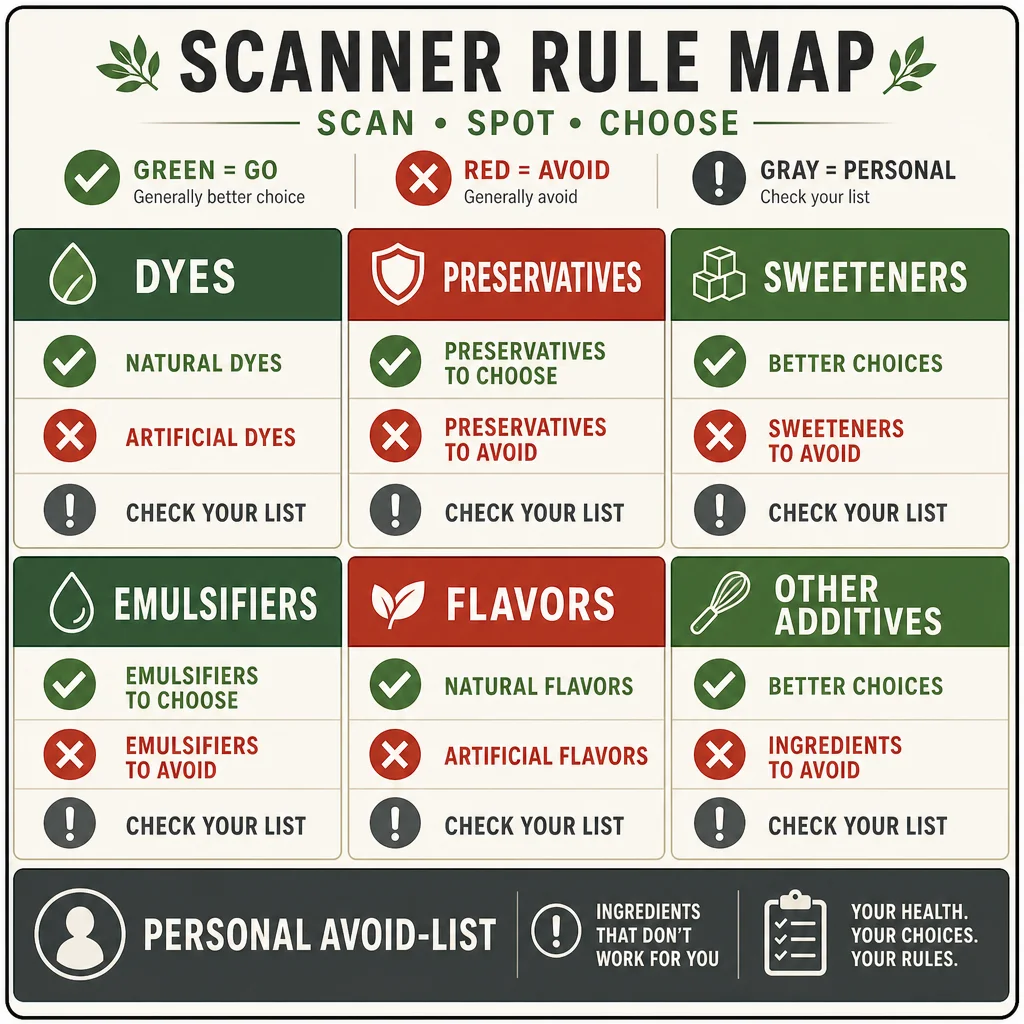
For clean-label scanning, that creates useful flags:

  • natural flavor as a transparency review term
  • artificial flavor as a stricter avoid-list term
  • preservatives such as sodium benzoate, potassium sorbate, calcium propionate, BHA, BHT, or TBHQ
  • color additives such as Red 40, Yellow 5, Yellow 6, Blue 1, or Red 3
  • flavor-enhancer terms such as MSG, yeast extract, hydrolyzed protein, disodium inosinate, and disodium guanylate

Different shoppers will treat these differently. The app should let the user's rules define the result.

Clean Label Can Hide Functional Substitutions

Clean Label Can Hide Functional Substitutions

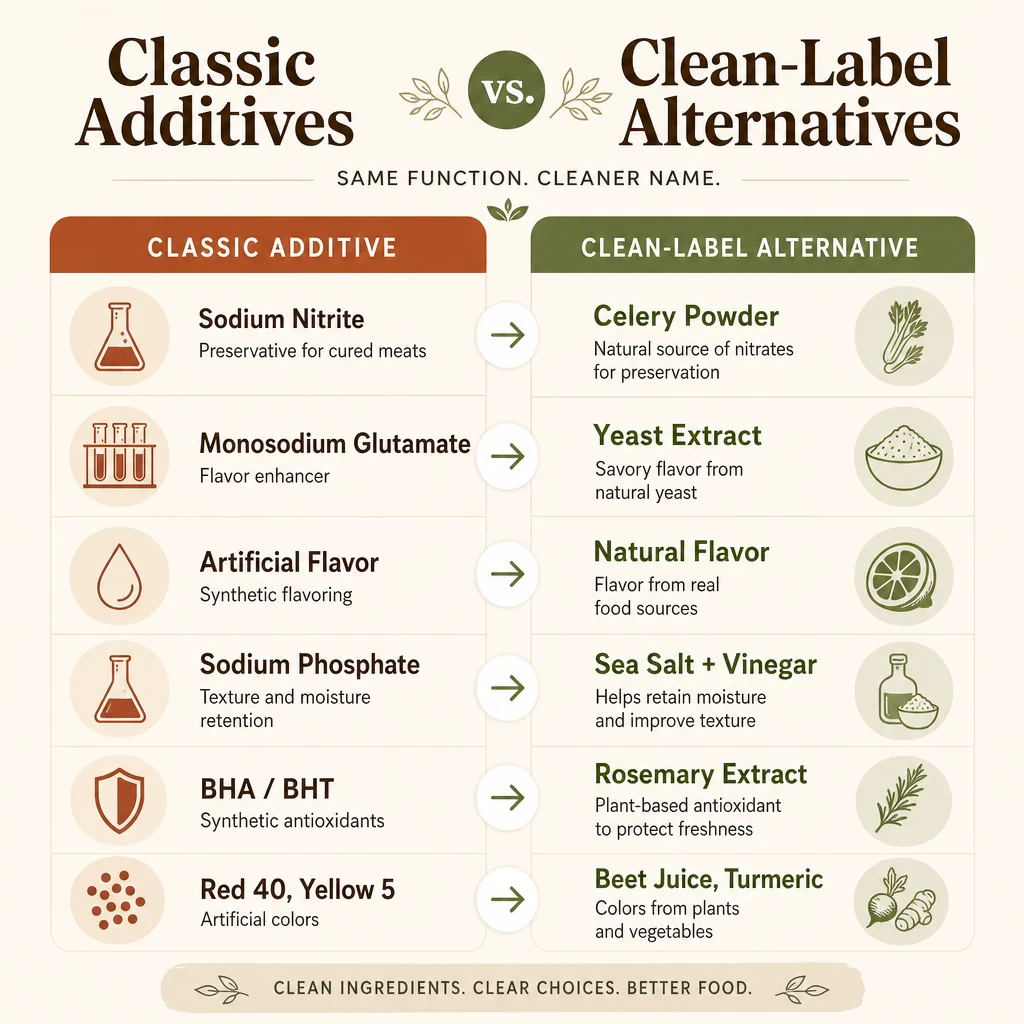
One of the hardest clean-label problems is substitution. A product may remove an ingredient with an E-number or chemical-sounding name and replace it with a more familiar-sounding ingredient that performs a similar function.

Examples include:

  • celery powder used in cured meat systems
  • fruit or vegetable concentrates used for color
  • cultured dextrose used as a preservative-style ingredient
  • yeast extract used for savory flavor enhancement
  • juice concentrate used as a sweetening ingredient

Those substitutions are not automatically bad. Some may be exactly what a shopper wants. But they show why a scanner should identify ingredient function, not only ingredient names.

If you are using clean-label rules to avoid specific additive families, the saved rule should include both the classic additive names and the common replacement terms that perform similar jobs.

How IngrediCheck Handles Clean-Label Rules

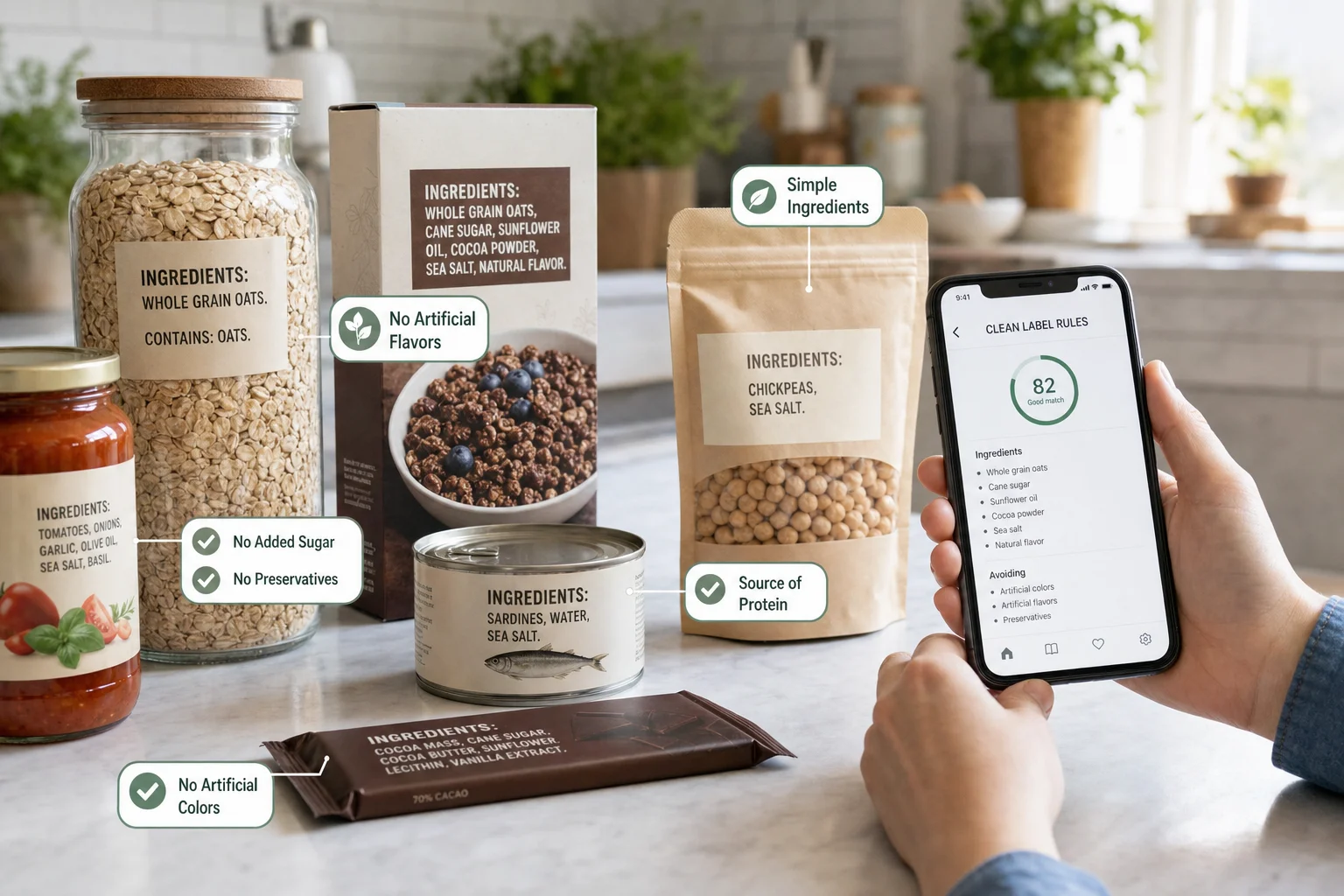
IngrediCheck works best when the question is personalized: does this product fit the ingredient rules I saved?

For clean-label shopping, you might save rules like:

  • flag synthetic dyes
  • flag BHA, BHT, TBHQ, and propyl gallate
  • flag sodium benzoate and potassium benzoate
  • flag artificial sweeteners
  • flag MSG and flavor enhancer clues
  • flag natural flavors for review
  • flag seed oils
  • flag ingredients I do not recognize

The app can then scan the barcode or ingredient label and show the specific terms that matched. That is more useful than saying clean or not clean, because the explanation travels with the result. If antioxidant preservatives are part of your clean-label rule, compare BHA, BHT, and TBHQ with propyl gallate, which is another fat-protection additive shoppers often miss.

For broader scanner context, read the ingredient checker app guide and browse the ingredient checker and food scanner guides hub. For additive-specific background, use the Food Additives hub, the Ingredient Safety hub, and the Safer Ingredient Swaps hub when you want aisle-level alternatives without treating every substitute as automatically safer.

A Practical Clean-Label Scan Routine

Use this order:

  1. Ignore the front claim for a moment.
  2. Scan the ingredient list.
  3. Review the additive families: colors, preservatives, sweeteners, emulsifiers, flavors, and flavor enhancers.
  4. Check Nutrition Facts if sugar, sodium, or saturated fat is part of your rule set.
  5. Look for substitutions that do the same job as the ingredient you meant to avoid.
  6. Decide based on your saved rules, not on the package's use of the word clean.

That routine helps you compare products consistently without treating every unfamiliar ingredient as the same kind of concern.

Make "Clean" Specific

Clean-label shopping gets more useful when you turn a vague preference into saved ingredient rules. IngrediCheck helps you scan labels, flag the additive and claim language you care about, and make the final call based on your own definition instead of a one-size-fits-all score.

Next Label Check

Follow the scanner, hub, and ingredient paths connected to this guide

Frequently Asked Questions

What does clean label mean?

Clean label is a consumer and industry term, not one single legal definition. Most shoppers use it to mean simpler, recognizable ingredients and fewer additives they personally want to avoid.

Can a scanner prove a food is clean?

No. A scanner can flag ingredients and claims against saved rules, but clean label depends on the shopper's definition and does not replace regulatory or safety review.

What should a clean label scanner flag?

Common flags include synthetic dyes, certain preservatives, high-intensity sweeteners, flavor-enhancer terms, natural flavor claims, color additives, and any ingredient list terms saved by the user.

Get the app for clearer label decisions.

Scan labels, see what fits your food notes, and read the why in plain English.

IngrediCheck app