Ingredient Deep Dives

High-Fructose Corn Syrup: Label Names and How to Spot It

High-fructose corn syrup is only one of many added sugar terms on packaged food labels. Learn the label names, Nutrition Facts clues, and scanner rules.

May 13, 2026|9 min read
By Sanket Patel|Updated 2026-05-13|4 sources|Editorial standards
High-Fructose Corn Syrup: Label Names and How to Spot It

High-fructose corn syrup is one of the easiest added sugars to recognize by name and one of the easiest to misunderstand. It is not the only added sugar that matters. It is not hidden when the label names it clearly. And it is not the whole story when a product contains several sweeteners at once.

The label-reading problem is broader: packaged foods can spread sweetness across many ingredient names while the Nutrition Facts panel summarizes the result under Total Sugars and Added Sugars.

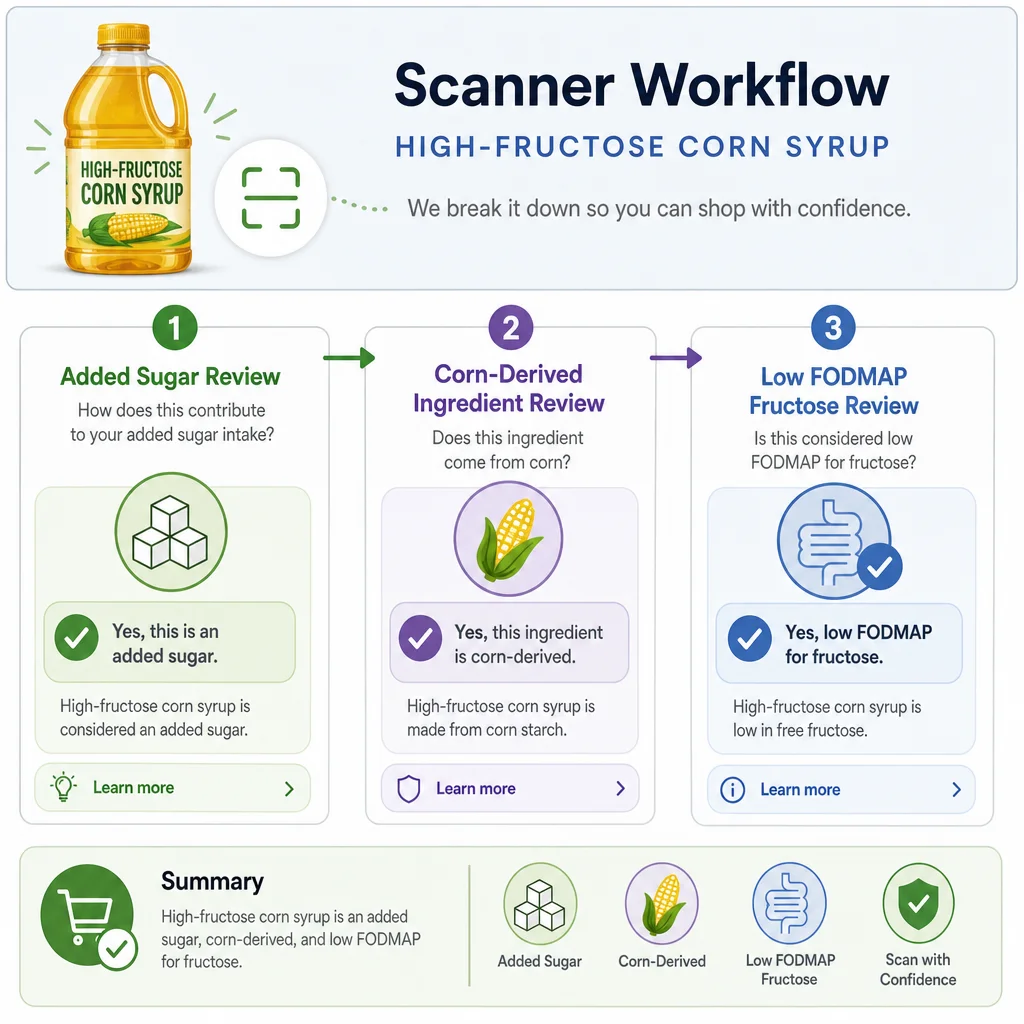
For shoppers, high-fructose corn syrup belongs in three saved-rule groups:

  • added sugar review
  • corn-derived ingredient review
  • ultra-processed food pattern review

It may be a hard avoid for one household and just a comparison cue for another. The right scanner workflow should make the term visible, then let your saved rule decide how strongly to treat it.
What High-Fructose Corn Syrup Is

High-fructose corn syrup, often shortened to HFCS, is a corn-derived liquid sweetener. It is made from corn starch that has been broken down into glucose and then processed so part of that glucose becomes fructose.

That chemistry matters less to most shoppers than the label reality. HFCS is an added sugar used because it is liquid, inexpensive, easy to blend, and useful in large-scale food manufacturing.

You are most likely to see it in:

  • regular soft drinks
  • fruit drinks
  • sweetened teas
  • barbecue sauce
  • ketchup
  • sweet salad dressings
  • flavored yogurts
  • breakfast bars
  • sweetened cereals
  • packaged bakery products
  • frozen desserts

It also appears in foods that do not taste obviously sweet. Sauce, bread, dressing, and marinades are common examples.

The Nutrition Facts Panel Gives the Amount, Not the Name

The Nutrition Facts Panel Gives the Amount, Not the Name

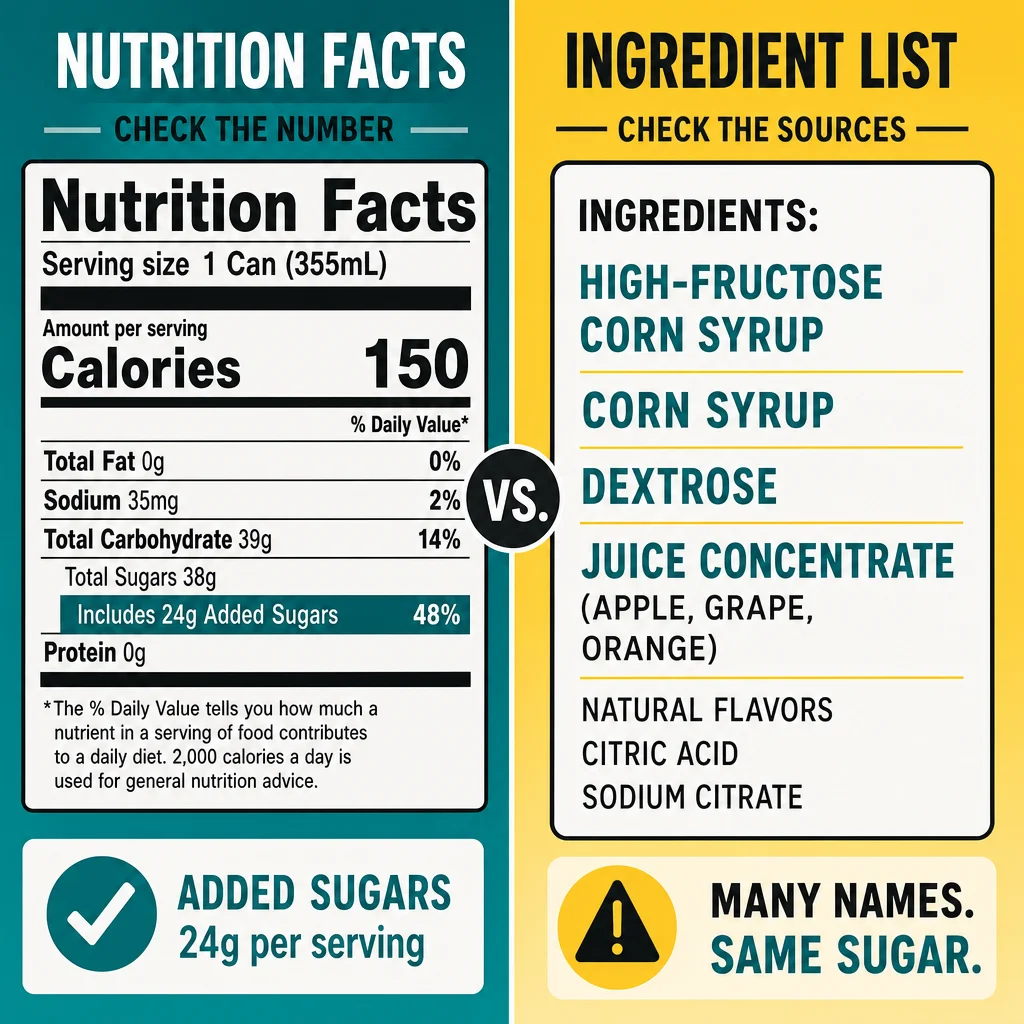
The Nutrition Facts panel is the place to check quantity. It shows Total Sugars and Added Sugars. The ingredient list is the place to check identity.

The FDA's added sugars factsheet explains that Added Sugars include sugars added during food processing, sugars packaged as sweeteners, sugars from syrups and honey, and sugars from concentrated fruit or vegetable juices. The Daily Value for added sugars is 50 grams per day on a 2,000-calorie diet.

That means a product with high-fructose corn syrup should contribute to Added Sugars. But the panel will not say high-fructose corn syrup: 14 grams. You need the ingredient list for that.

This is the main reason HFCS articles should not stop at chemistry. A shopper usually needs two answers at once: how much added sugar is in the serving, and which sweetener system is creating it. Nutrition Facts answers the first question. The ingredient list answers the second. A scanner should put those answers beside each other instead of treating them as separate chores.

Under 21 CFR 101.4, ingredients must generally be listed by common or usual name in descending order of predominance by weight. So if high-fructose corn syrup is near the top of the list, it is a major ingredient. If it appears after a contains 2 percent or less statement, it is present at a lower level.

Label Names to Save Beside HFCS

High-fructose corn syrup is only one term. If your rule is avoid added sugar, the saved list needs to be wider.

The CDC's hidden sugars guidance names several common clues:

  • sugars such as cane sugar, confectioner's sugar, and turbinado sugar
  • syrups such as corn syrup, high-fructose corn syrup, and rice syrup
  • molasses
  • caramel
  • juice
  • honey
  • agave
  • ingredients ending in -ose, including glucose, fructose, lactose, maltose, dextrose, and sucrose

For a high-fructose corn syrup rule, use two tiers.

Hard HFCS terms:

  • high-fructose corn syrup
  • high fructose corn syrup
  • HFCS

Adjacent sugar and corn-syrup terms for review:

  • corn syrup
  • corn syrup solids
  • glucose syrup
  • fructose
  • crystalline fructose
  • dextrose
  • maltose
  • sucrose
  • invert sugar
  • rice syrup
  • fruit juice concentrate
  • agave syrup
  • honey

Those terms are not identical. Corn syrup is not automatically high-fructose corn syrup, and fruit juice concentrate is not corn-derived. They belong together because they often answer the same shopper question: how much added sweetness is this product using, and under what names?

Why Multiple Sweeteners Matter

Ingredient splitting is one reason labels can feel misleading even when they follow the rules.

Because ingredients are listed by weight, a product with one large amount of sugar may show sugar near the top. A product using several smaller sweeteners may list each one lower down:

  • high-fructose corn syrup
  • fruit juice concentrate
  • dextrose
  • honey
  • brown rice syrup

Each term may appear less prominent than one single sweetener would. But the Nutrition Facts panel still captures the total under Added Sugars.

That is why the best routine is not only find HFCS. It is:

  1. check Added Sugars
  2. check serving size
  3. scan for high-fructose corn syrup
  4. scan for other added sugar names
  5. compare similar products in the same category

This is especially useful for products with small serving sizes, such as sauces and dressings. A two-tablespoon serving may look modest, but real use can double it quickly.

HFCS and Corn-Free Rules

For corn-free shoppers, high-fructose corn syrup is not a subtle source question. It is a direct corn-derived term.

The harder labels are the ones that use source-dependent ingredients such as maltodextrin, dextrose, citric acid, modified food starch, or natural flavors. Those can be corn-derived without always identifying the source.

That is why the corn-free food scanner app guide separates obvious corn terms from source-dependent review terms. HFCS belongs in the obvious group. Maltodextrin and dextrose usually belong in the review group unless a brand confirms the source.

For sugar-aware shoppers, HFCS is a sweetener. For corn-free shoppers, it is also a source marker.

That distinction matters in family shopping. One person may save a general added-sugar limit, while another may save a stricter corn-free rule. The same label term can trigger both rules, but the explanation should be different. HFCS is not just sweetener found; it can also be corn-derived ingredient found, which is a more useful message for source-sensitive households.

HFCS and Low FODMAP Labels

High-fructose corn syrup can also matter for low FODMAP shoppers because excess fructose can trigger symptoms for some people with IBS.

The practical point is not that every corn syrup term has the same FODMAP profile. The point is that a saved low-FODMAP rule should flag high-fructose corn syrup for review, especially in drinks, sauces, bars, and sweetened dairy products.

If you are following a clinical low FODMAP protocol, use your dietitian's instructions and the product's serving size. A scanner can catch terms. It cannot determine your personal tolerance threshold.

How IngrediCheck Helps

How IngrediCheck Helps

IngrediCheck helps by finding the exact label terms and tying them back to your saved rule. Useful rules might include:

  • flag high-fructose corn syrup
  • flag corn-derived sweeteners
  • flag added sugar names
  • flag -ose sugar terms
  • flag syrups and juice concentrates
  • flag high-FODMAP sweeteners for review

That lets one product generate different meanings for different households. A parent may care about added sugar. A corn-free shopper may care about source. A low FODMAP shopper may care about fructose load. A clean-label shopper may care about product formulation.

For adjacent context, compare this page with 30 Hidden Names for Sugar, Sugar-Free and No Added Sugar Scanner, Corn-Free Food Scanner App, the Label Name Glossary, and the Food Additives hub.

A Practical HFCS Shopping Routine

Use this routine when comparing two packaged foods:

  1. Look at serving size first.
  2. Check Added Sugars grams and percent Daily Value.
  3. Read the ingredient list for high-fructose corn syrup.
  4. Count other sweetener names nearby.
  5. If corn avoidance matters, flag HFCS as a direct corn term.
  6. If low FODMAP matters, treat HFCS as a fructose review clue.
  7. Compare the same product category, not a sauce against a cereal.

The goal is not to turn one ingredient into a universal villain. The goal is to see the full sweetness strategy on the label.

Scan Sugar Names Before They Blend Together

High-fructose corn syrup is easy to search for once you decide it matters. The harder part is catching the surrounding sweetener pattern. IngrediCheck can scan a label, flag HFCS and related sugar terms, and show whether a product fits your saved added-sugar, corn-free, low FODMAP, or clean-label rules before it goes in the cart.

Next Label Check

Follow the scanner, hub, and ingredient paths connected to this guide

Frequently Asked Questions

Is high-fructose corn syrup the only sugar term to watch for?

No. CDC lists syrups, honey, agave, juice, caramel, molasses, and ingredients ending in -ose as common added sugar clues.

Does the Nutrition Facts label show high-fructose corn syrup separately?

No. The Nutrition Facts panel shows Total Sugars and Added Sugars. The ingredient list is where you look for high-fructose corn syrup by name.

Should corn-free shoppers flag high-fructose corn syrup?

Yes. High-fructose corn syrup is a corn-derived sweetener and is usually an obvious avoid term for strict corn-free rules.

Get the app for clearer label decisions.

Scan labels, see what fits your food notes, and read the why in plain English.

IngrediCheck app