Maltodextrin is easy to miss because it does not sound like sugar. It sounds technical, bland, and harmless. That is part of why it shows up in so many products marketed as healthy, sporty, sugar-free, light, protein-rich, or keto-adjacent.
The better way to think about maltodextrin is this: it is a starch-derived, digestible carbohydrate used by food manufacturers for texture, bulking, powder flow, mouthfeel, sweetness systems, and fast energy. It is not automatically dangerous, but it is absolutely worth understanding if you track sugar, carbs, blood glucose, corn-derived ingredients, or ultra-processed formulation.
What Maltodextrin Is
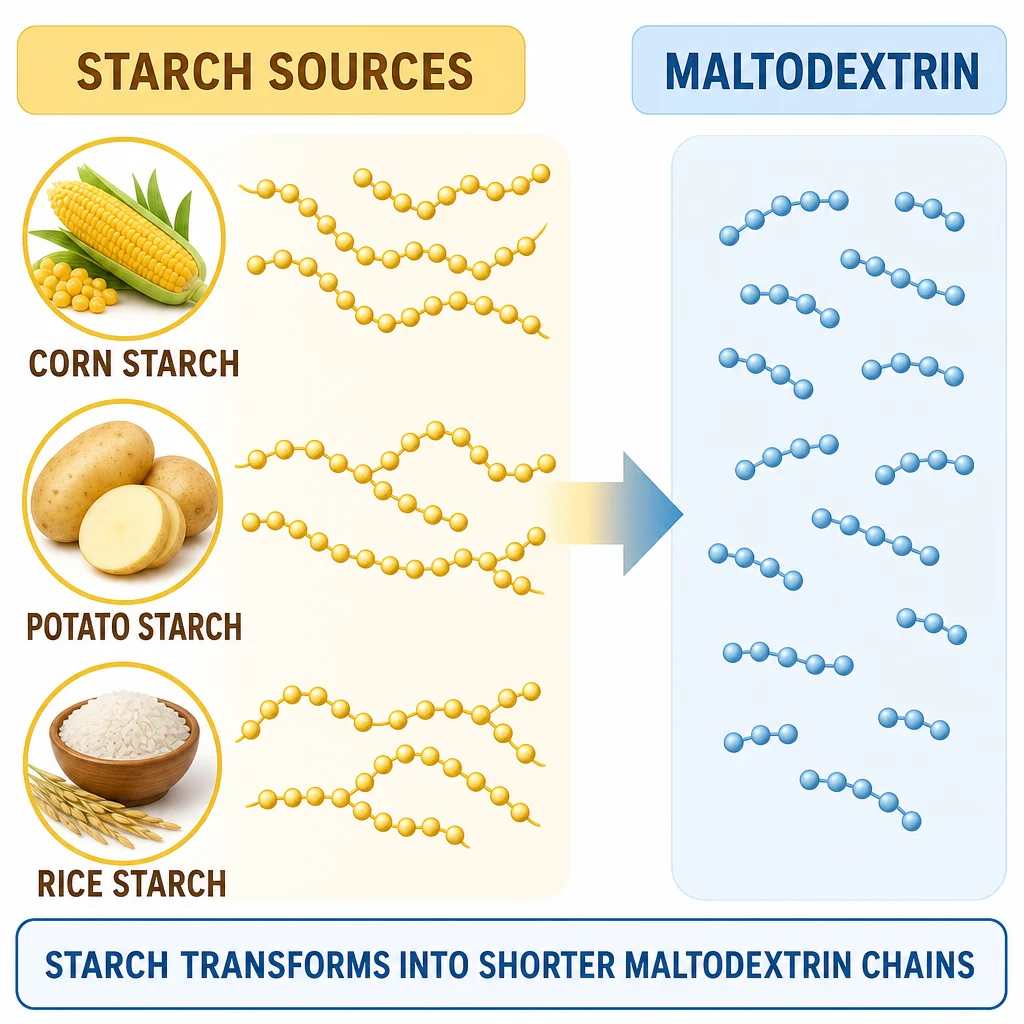
The FDA regulation at 21 CFR 184.1444 describes maltodextrin as a nonsweet nutritive saccharide polymer made of D-glucose units, prepared by partial hydrolysis of corn starch, potato starch, or rice starch with safe and suitable acids and enzymes.
That sentence has three important shopper takeaways.
First, maltodextrin is carbohydrate. It is not a zero-calorie sweetener.
Second, it is starch-derived. Corn is a common source, but the regulation also covers potato and rice starch.
Third, it is nonsweet or only mildly sweet compared with ordinary sugars. That makes it easy to use in products that do not taste obviously sugary.
Related Label Terms to Review Beside Maltodextrin
Maltodextrin rarely appears alone in the kind of products shoppers worry about. It often sits near other carbohydrate, starch, or sweetener terms.
Useful saved-rule neighbors include:
- dextrose
- dextrin
- glucose syrup
- corn syrup
- modified food starch
- corn starch
- rice syrup
- tapioca starch
- potato starch
- maltitol
- polydextrose
- soluble corn fiber
These ingredients are not interchangeable, and they do not all mean the same thing. The reason to group them in a scanner is practical: they often appear in the same low-sugar, low-fat, powdered, or keto-adjacent products where shoppers want a closer carbohydrate review.
Why Sugar-Free Shoppers Still Flag It
Maltodextrin is not the same as table sugar, but it can still matter for sugar-aware shoppers.
The FDA Nutrition Facts label separates Total Sugars from Added Sugars, and 21 CFR 101.9 describes how added sugars and sugar alcohols are declared. Maltodextrin sits in a label-reading gray zone for many consumers because it may contribute carbohydrate without looking like a familiar sugar word.
That is why the phrase hidden sugar is common in consumer searches, even though a more precise phrase is hidden fast-digesting carb.
If a product says sugar free but contains maltodextrin, the key question is not did the label break the law? The better question is does this ingredient fit my carb or blood sugar rule?
The answer depends on the person.
Why Keto Shoppers Care
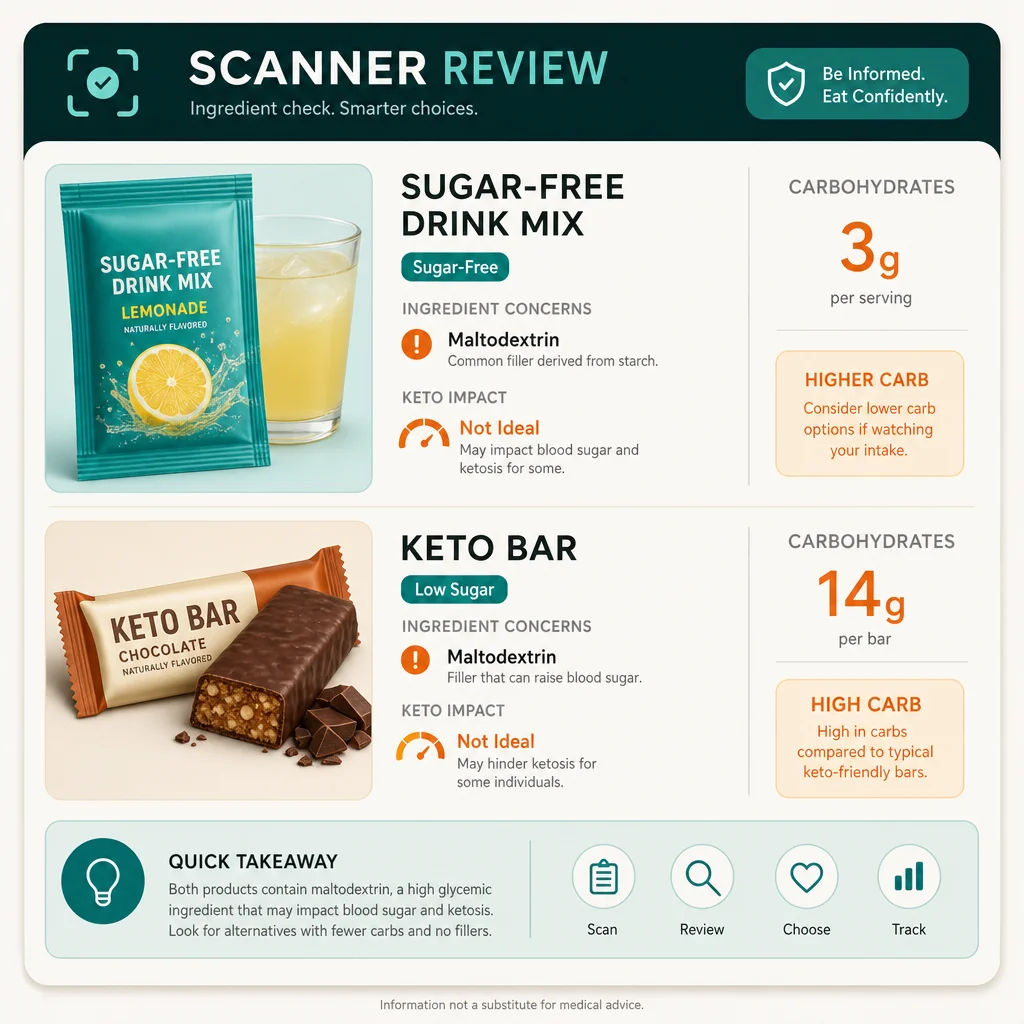
Keto shoppers usually care about total carbohydrate first. Because maltodextrin is a digestible carbohydrate, many keto rule sets flag it even when the front of the package says zero sugar, low sugar, or keto friendly.
That is why the keto food scanner app guide treats maltodextrin as a red-flag ingredient for review. It may appear in products where the main marketing claim is about sugar, not total carbohydrate.
Examples:
- powdered drink mixes bulked with maltodextrin
- sweetener packets where maltodextrin carries a high-intensity sweetener
- low-sugar bars using starch-derived binders
- sauces and dressings with small serving sizes
- seasoning blends used in larger real-world portions
The label may still be accurate. The problem is that the shopper's goal is stricter than the front-of-package claim.
Why Corn-Free Shoppers Care
Maltodextrin can be made from corn starch, potato starch, or rice starch. U.S. labels may not always make the source obvious.
For people avoiding corn, that creates a source question. Some shoppers only avoid obvious corn terms. Others want to flag maltodextrin every time unless the manufacturer confirms a non-corn source.
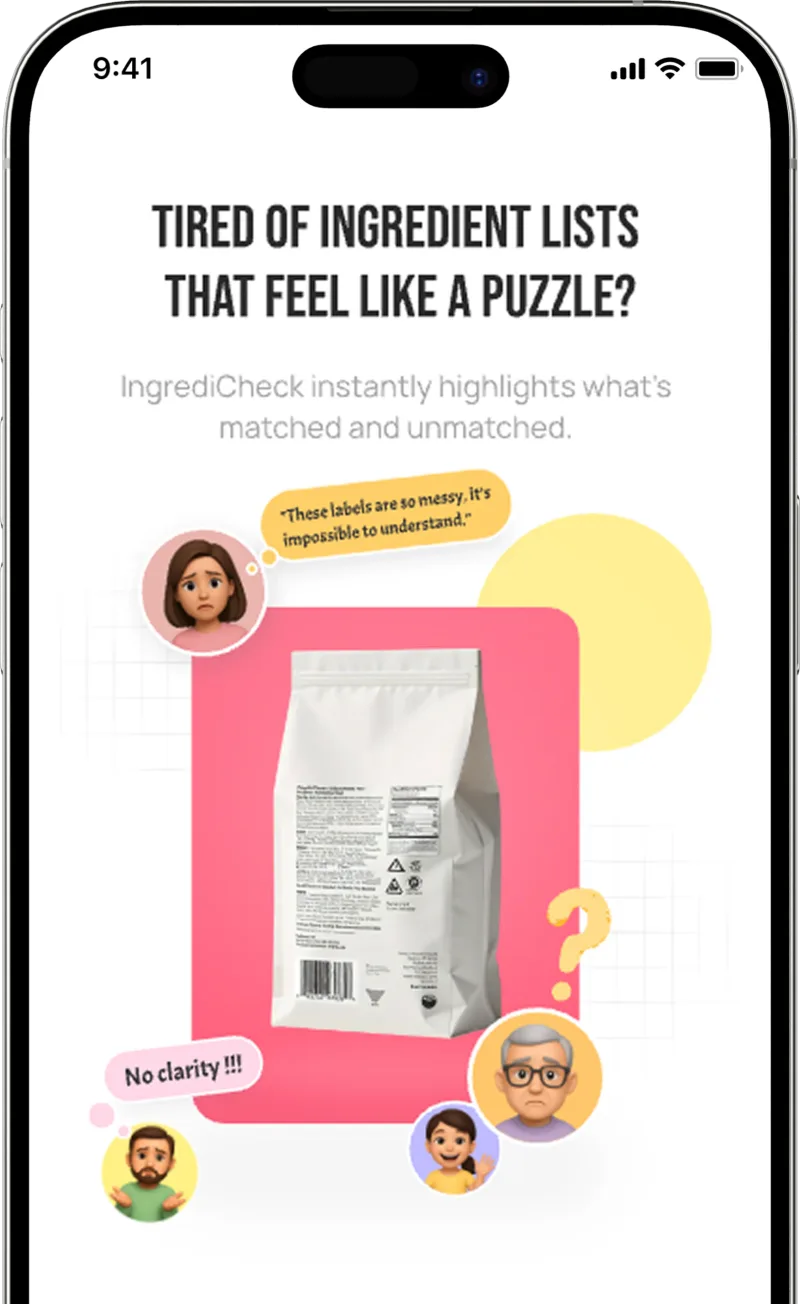
The corn-free food scanner app guide frames this as a saved-rule issue. A scanner should not pretend to know the source when the package does not say. It should flag the term and let the user decide whether source confirmation is needed.