Corn-Free Food Scanner App: Catch Corn-Derived Ingredients Faster

Corn-free shopping is not as simple as avoiding corn on the cob, popcorn, and corn chips. In packaged food, corn can show up as starch, syrup, flour, meal, oil, dextrose, maltodextrin, and other ingredient systems that support texture, sweetness, thickening, or shelf life.

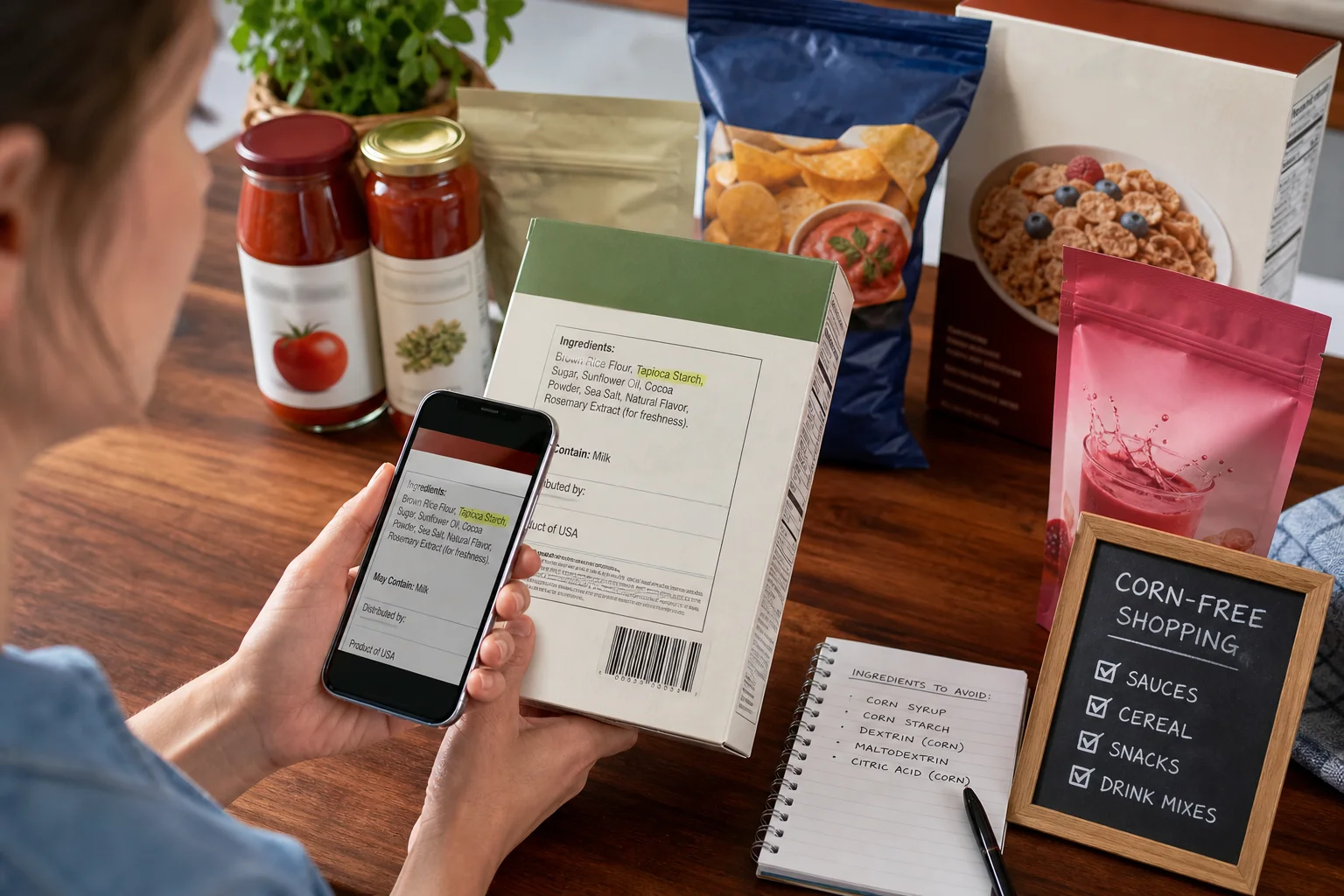
A corn-free food scanner app is useful because corn avoidance is usually a custom-rule problem. The app should let you scan the product, compare the label against your own corn-free rules, and decide whether the result is acceptable for your situation.
Why Corn-Free Label Reading Is Different From Major Allergen Shopping

The FDA's U.S. major allergen list includes milk, eggs, fish, crustacean shellfish, tree nuts, peanuts, wheat, soybeans, and sesame. Corn is not on that list.

That distinction matters. If a product contains peanut or almond, U.S. allergen labeling rules require the food source to be declared as a major allergen. Corn does not get the same special major-allergen treatment.

Corn can still matter a lot to shoppers. People may avoid it for diagnosed corn allergy, a clinician-guided elimination diet, digestive tolerance, personal ingredient preferences, or a family rule. But because the law does not treat corn like peanut or milk, a corn-free shopper has to rely more heavily on the ingredient list and manufacturer details.

That makes scanning especially helpful, as long as the scanner is honest about its limits.

Corn Allergy Is Real, but Not Always Straightforward

Food allergy organizations tend to discuss corn less often than the major allergens. That does not mean corn reactions are impossible.

The University of Manchester's InformAll database describes corn allergy as IgE-mediated and notes that a corn lipid transfer protein has been established as an allergen involved in corn allergy. It also says very little is known about how often corn allergy occurs.

The Australian Allergy Centre notes that corn allergy diagnosis can be difficult because of cereal cross-reactivity and pollen-related testing issues. That is a reminder to keep the scanner in the right role: a grocery label tool, not a diagnostic tool.

For label reading, the practical point is simpler. If corn is part of your avoidance rule, you need a repeatable way to catch corn-derived words across product categories.

Ingredients a Corn-Free Scanner Should Help Review

Ingredients a Corn-Free Scanner Should Help Review

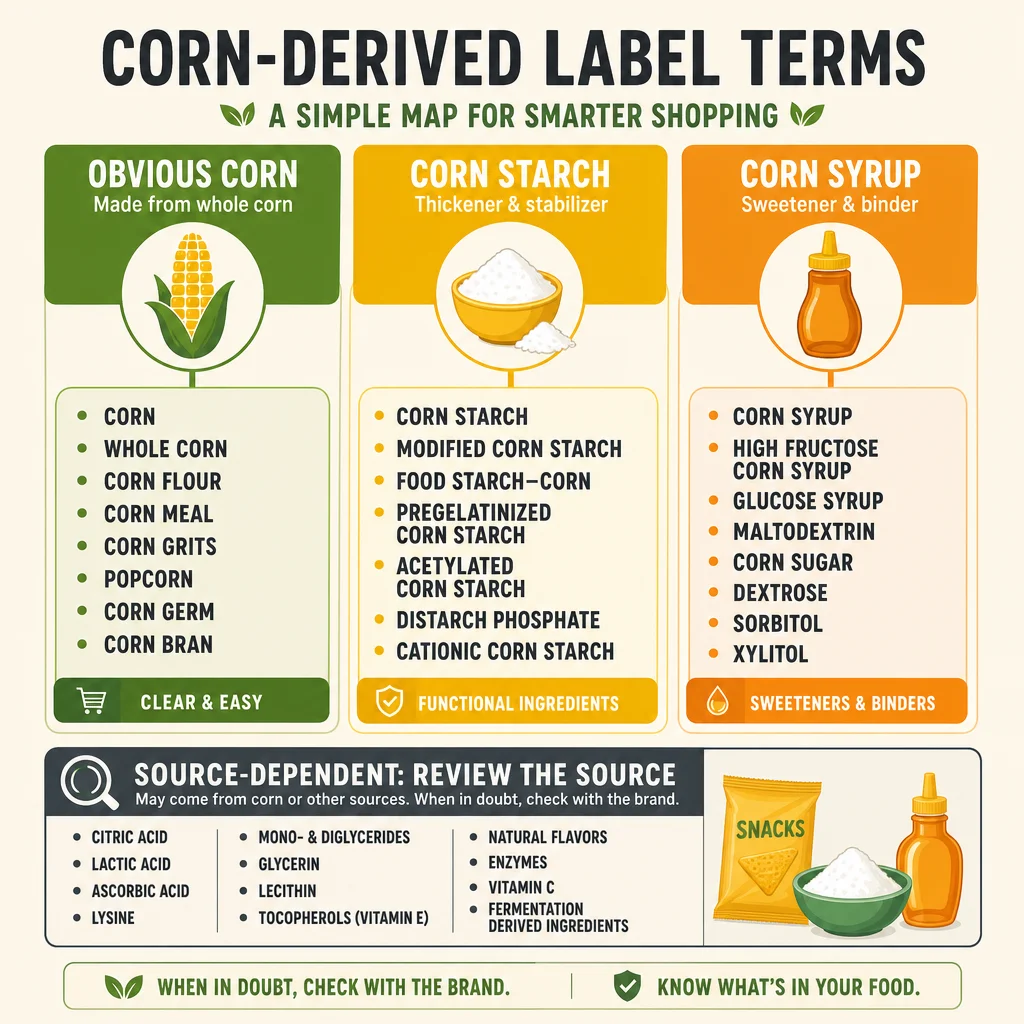
Some corn terms are obvious:

  • corn
  • maize
  • cornmeal
  • cornstarch
  • corn flour
  • popcorn
  • grits
  • hominy
  • polenta
  • corn syrup
  • high-fructose corn syrup

Others are context-dependent. They may be corn-derived, but the label may not always identify the source:

  • maltodextrin
  • dextrose
  • dextrin
  • glucose syrup
  • modified food starch
  • starch
  • vegetable oil
  • vegetable gum
  • citric acid
  • xanthan gum
  • natural flavors

That does not mean every shopper should automatically reject every product containing these terms. It means a strict corn-free rule often needs a needs review tier, especially when the source is not visible on the package.

Why Generic Barcode Scores Are Not Enough

A generic food score can miss what a corn-free shopper actually needs. Corn avoidance is not a single universal standard. One person may avoid obvious corn and corn syrup. Another may need to flag maltodextrin, dextrose, citric acid, or all unspecified starches.

That difference is exactly why saved rules matter.

A useful corn allergy scanner or corn-free app should let you decide:

  • whether to flag maltodextrin every time
  • whether to treat dextrose as a warning or only as a note
  • whether unspecified starch is enough to block the product
  • whether corn oil matters for your rule
  • whether manufacturer confirmation is required before purchase

This is also why a scanner should explain what it found. Possible corn-derived ingredient: maltodextrin is more useful than a vague unsafe score.

Where Corn Hides Most Often

Corn-derived ingredients are common in processed foods because corn starches and syrups solve several manufacturing problems at once. They can thicken, sweeten, bulk, bind, brown, carry flavors, or improve powder flow.

Check these categories carefully:

  • sauces, gravies, and marinades
  • salad dressings
  • cereal and snack bars
  • instant soups and seasoning packets
  • protein powders and meal replacements
  • candy and sweetened drinks
  • gluten-free baked goods
  • processed meats and breaded foods
  • frozen meals
  • powdered drink mixes

The point is not that every product in these categories is a problem. The point is that these categories make hidden starch and sweetener systems more likely.

When Source Confirmation Matters

A corn-free scan is strongest when the label term itself is explicit. Corn starch and corn syrup are straightforward. Maltodextrin, dextrose, modified food starch, and natural flavors are not always straightforward because the source may not be named.

That is why strict corn-free shopping often needs two outcomes:

  • avoid, when corn is clearly named
  • needs review, when the ingredient can be corn-derived but the source is not visible

This is not a software weakness. It is a label-information limit. If the package does not identify the source, the app can flag the uncertainty, but manufacturer confirmation may still be the only dependable way to resolve it.

That distinction keeps corn-free scanning useful without overpromising.

How IngrediCheck Helps

How IngrediCheck Helps

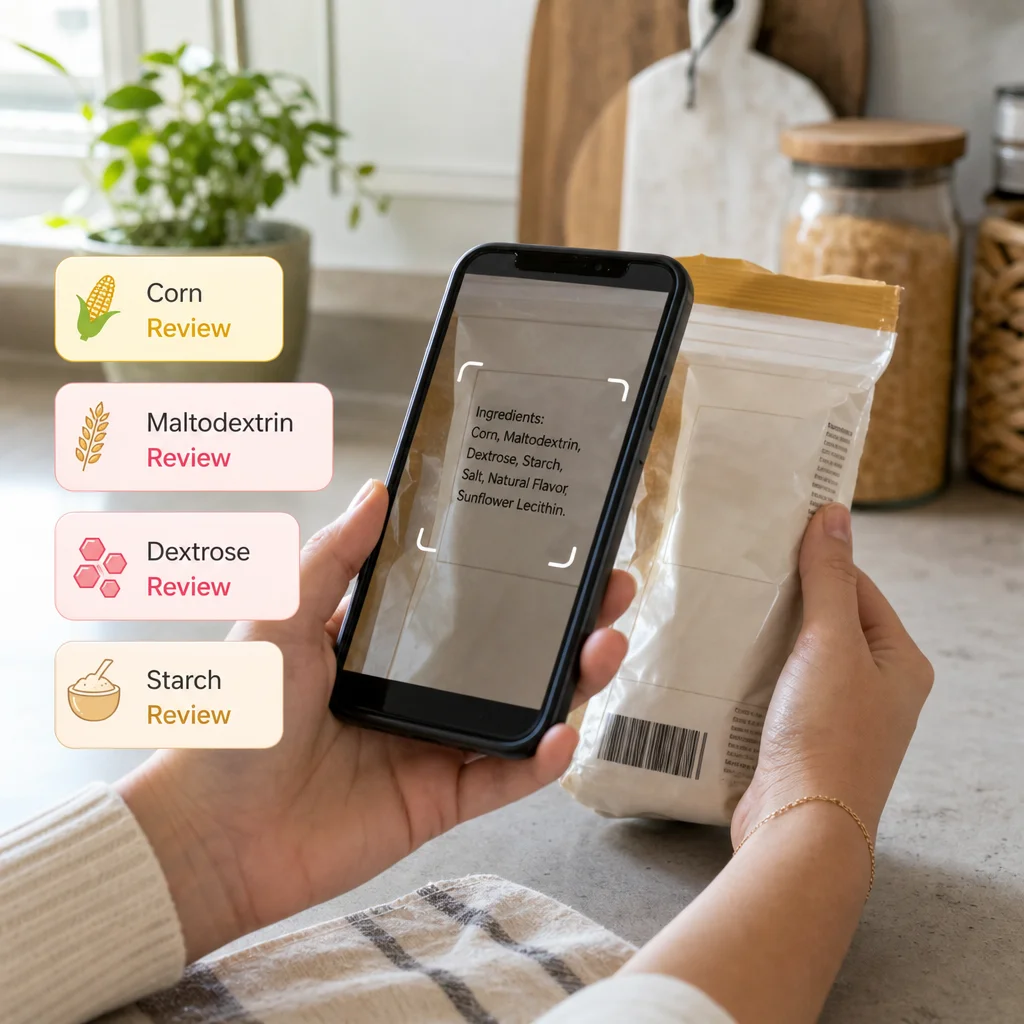
IngrediCheck lets you scan a barcode or ingredient list and compare the result against saved food notes. That makes it a good fit for corn-free shopping because you can build rules around your actual level of avoidance.

For example, a household might save:

  • avoid corn, maize, corn starch, corn flour, corn syrup
  • flag maltodextrin and dextrose for review
  • flag unspecified modified food starch
  • review natural flavors when the product is high risk

Then a scan can surface the relevant label text quickly instead of asking you to manually hunt through every line in the aisle.

For scanner comparisons, read the general ingredient checker app guide, the food allergy scanner app guide, and the full ingredient checker and food scanner guides hub. If your corn avoidance is part of broader allergy shopping, the food allergy ingredient checker is the closest use-case workflow.

A Practical Corn-Free Label Routine

Use three layers.

First, scan for obvious corn terms. These are the easy catches and should not require deep interpretation.

Second, review source-dependent ingredients. Maltodextrin, dextrose, modified food starch, and generic starches may deserve a saved-rule warning, especially for strict corn avoidance.

Third, decide when to contact the manufacturer. If the package does not reveal the source and the rule is medically important, an app cannot fill that gap reliably.

That routine keeps the scanner useful without asking it to know information the label does not provide.

Try It on a Corn-Free Grocery Trip

Corn-free shopping gets easier when your rules are written down and applied consistently. IngrediCheck helps by turning corn, starch, syrup, and review-only ingredients into visible flags so you can spend less time scanning every line by memory.

Next Label Check

Follow the scanner, hub, and ingredient paths connected to this guide

Frequently Asked Questions

Is corn one of the U.S. major food allergens?

No. FDA major allergen rules cover milk, egg, fish, crustacean shellfish, tree nuts, peanuts, wheat, soybeans, and sesame. Corn can still matter to people with diagnosed corn allergy or personal avoidance rules.

What should a corn-free scanner flag?

It should flag obvious corn terms such as corn, maize, corn starch, corn syrup, and cornmeal, plus saved-rule terms such as maltodextrin or dextrose when the shopper wants those reviewed.

Can IngrediCheck confirm that a product is fully corn-free?

No. IngrediCheck helps screen labels against saved rules. For strict corn allergy or medical elimination diets, the package and manufacturer confirmation may still be needed.

Get the app for clearer label decisions.

Scan labels, see what fits your food notes, and read the why in plain English.

IngrediCheck app