How to Actually Understand Food Labels in 5 Minutes

Learn to decode food labels in minutes. Understand serving sizes, spot hidden sugars, and make healthier choices with this simple guide.

Apr 10, 2026|10 min read
How to Actually Understand Food Labels in 5 Minutes

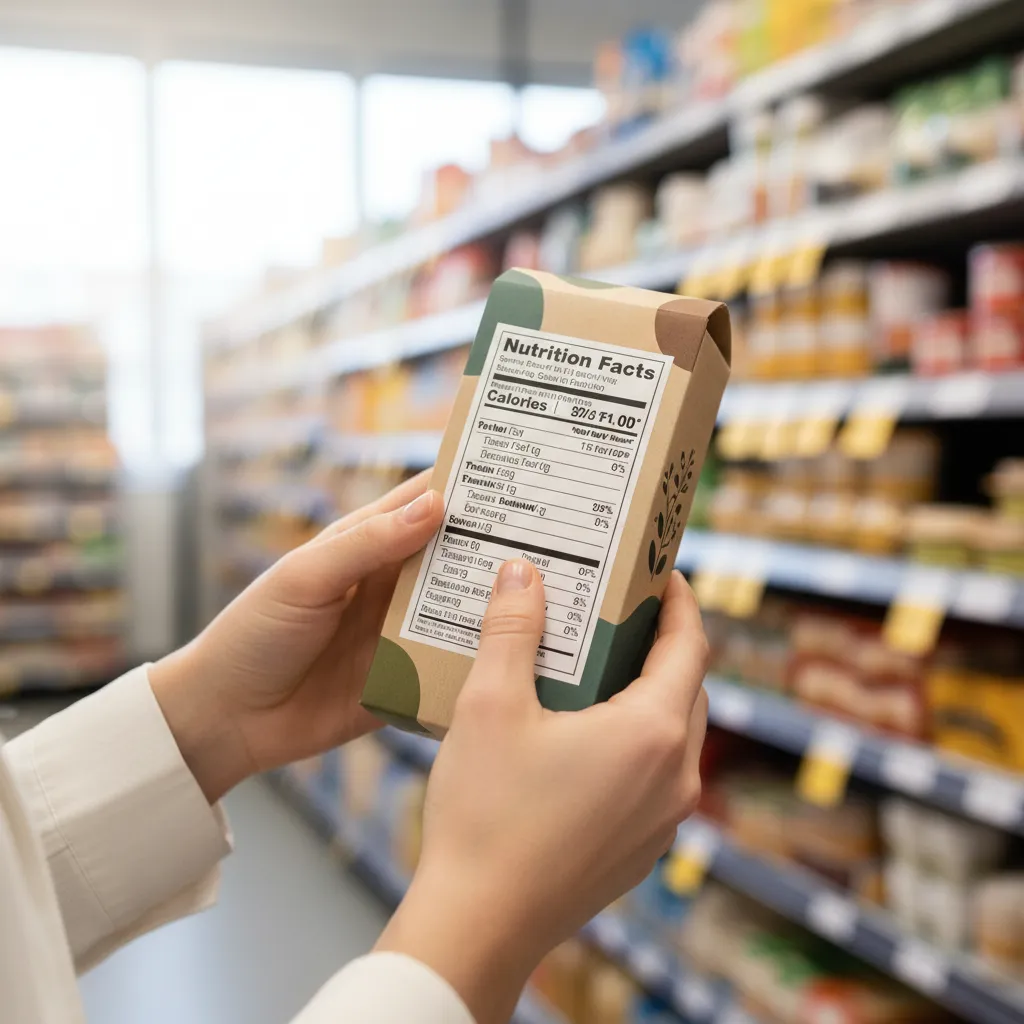
You are standing in a grocery store aisle, holding a box of cereal. The front screams "Heart Healthy!" and "Made with Whole Grains!" but the back looks like a chemistry exam. Serving sizes, percentages, ingredients you cannot pronounce. You have maybe thirty seconds before your kids start asking for cookies.

Sound familiar?

Nearly 80% of American adults use the Nutrition Facts panel when making food purchasing decisions. Yet one in five consumers still struggle to interpret what they are reading. The good news is that you do not need a nutrition degree to become a label-reading pro. You just need to know where to look and what actually matters.

Start with the Serving Size (It's Often Smaller Than You Think)

Start with the Serving Size (It's Often Smaller Than You Think)

The serving size is the foundation of everything else on the label. Every number, every percentage, every calorie count is based on this single measurement. And here is the catch: manufacturers often use serving sizes that are much smaller than what most people actually eat.

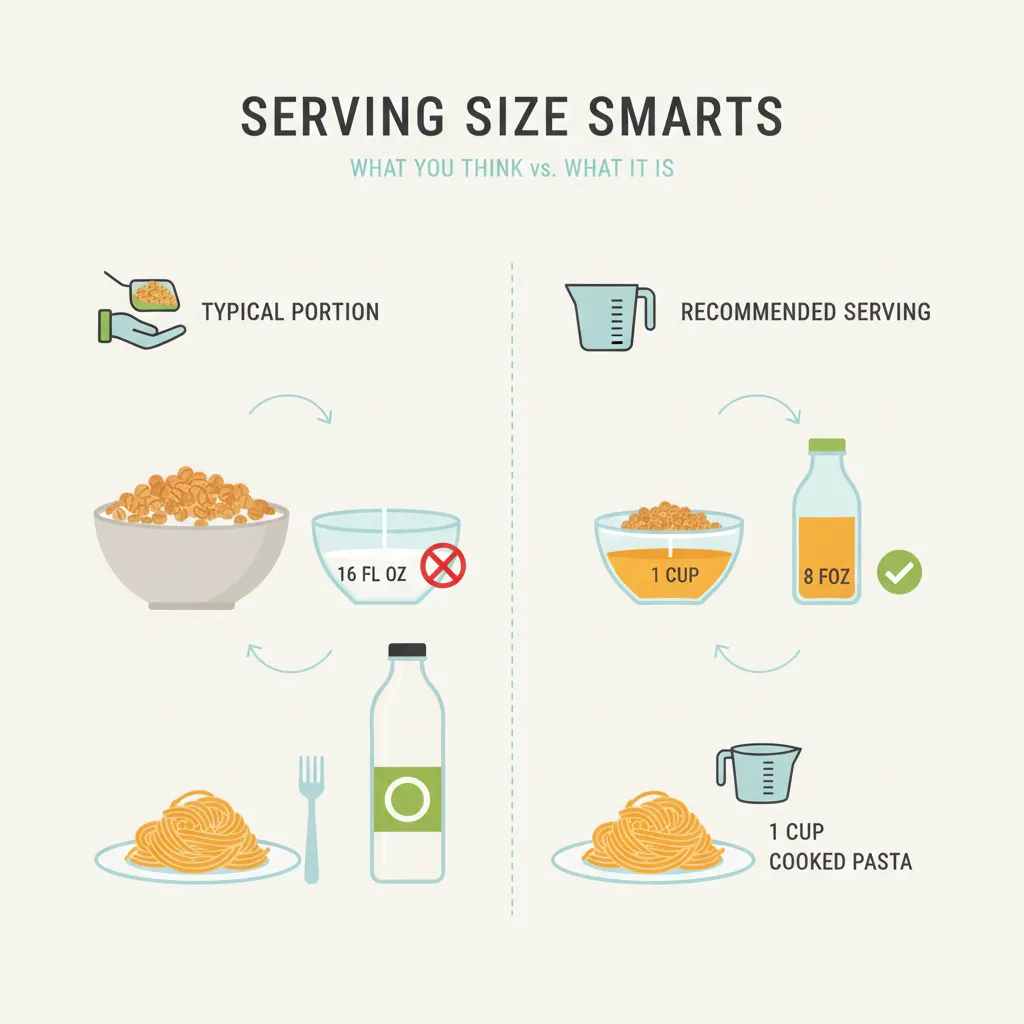
That 16-ounce bottle of green juice? The label might list 10 grams of sugar per serving. Sounds reasonable until you realize the serving size is 8 ounces. Drink the whole bottle (like most people do), and you have just consumed 20 grams of sugar.

The FDA updated serving sizes in 2016 to better reflect how people actually eat, but some products still use unrealistic portions. A single muffin from a bakery section might list nutrition for half a muffin. A bag of chips that looks like a single snack could contain 2.5 servings.

What to do:

Check the "servings per container" line first. If there are multiple servings in something you would normally eat in one sitting, mentally multiply everything on the label.

The 5/20 Rule for Percent Daily Value

The right side of the Nutrition Facts panel shows Percent Daily Value (%DV). This tells you how much of your recommended daily intake of each nutrient is in one serving. The numbers are based on a 2,000-calorie diet, which may not be your exact needs, but it works as a useful comparison tool.

The rule is simple. According to the FDA:

  • 5% DV or less is low
  • 20% DV or more is high

For nutrients you want to limit (saturated fat, sodium, added sugars), aim for products with 5% DV or less per serving. For nutrients you want more of (fiber, vitamin D, calcium, iron, potassium), look for 20% DV or higher.

Some dietitians recommend using 10% as a middle benchmark. Aim for less than 10% DV of things like sodium and saturated fat, and aim for at least 10% DV of beneficial nutrients like fiber.

Quick Reference:

NutrientGoal
Saturated FatLess than 5% DV
SodiumLess than 5% DV
Added SugarsLess than 5% DV
FiberMore than 20% DV
Vitamin DMore than 20% DV
CalciumMore than 20% DV

Note that protein, trans fat, and total sugars do not have a %DV listed. For these, use the gram amounts to compare products.

The Ingredient List Tells the Real Story

While the Nutrition Facts panel gives you the numbers, the ingredient list reveals what is actually in your food. Ingredients are listed by weight in descending order. The first ingredient makes up the largest portion of the product, and the last ingredient makes up the smallest.

This ordering is incredibly useful. If you are buying whole wheat bread, "whole wheat flour" should be the first ingredient, not "enriched wheat flour" (which is refined). If you are buying peanut butter, the first ingredient should be peanuts, not sugar or oil.

The First Three Rule

Focus on the first three to five ingredients. They make up the bulk of what you are eating. If sugar, corn syrup, or any oil appears in the top three, the product is likely not as healthy as the front of the package suggests.

Ingredients that make up 2% or less of the total product can be listed at the end in any order, often following the phrase "Contains 2% or less of." This is where you will find preservatives, flavorings, and minor additives.

Spotting Hidden Sugars: The 56 Names You Need to Know

Spotting Hidden Sugars: The 56 Names You Need to Know

Food manufacturers have become experts at disguising sugar. The CDC warns that sugar appears under more than 60 different names on ingredient lists. By spreading sugar across multiple ingredients under different names, manufacturers can push each sugar source further down the list, making the product appear healthier.

Common sugar aliases to watch for:

Ending in "-ose": glucose, fructose, dextrose, maltose, sucrose, lactose

Syrups: high-fructose corn syrup, rice syrup, malt syrup, maple syrup, agave syrup, golden syrup

Other names: cane juice, evaporated cane juice, fruit juice concentrate, honey, molasses, treacle, dextrin, maltodextrin, barley malt

A product might list "organic cane sugar" third, "honey" seventh, and "brown rice syrup" tenth. Each individual sugar is small, but together they can make up a significant portion of the product.

The Math That Matters

The Nutrition Facts panel now requires listing "Added Sugars" separately from "Total Sugars." This is a major win for consumers. Total sugars include naturally occurring sugars from fruit or milk, while added sugars are the ones manufacturers put in during processing.

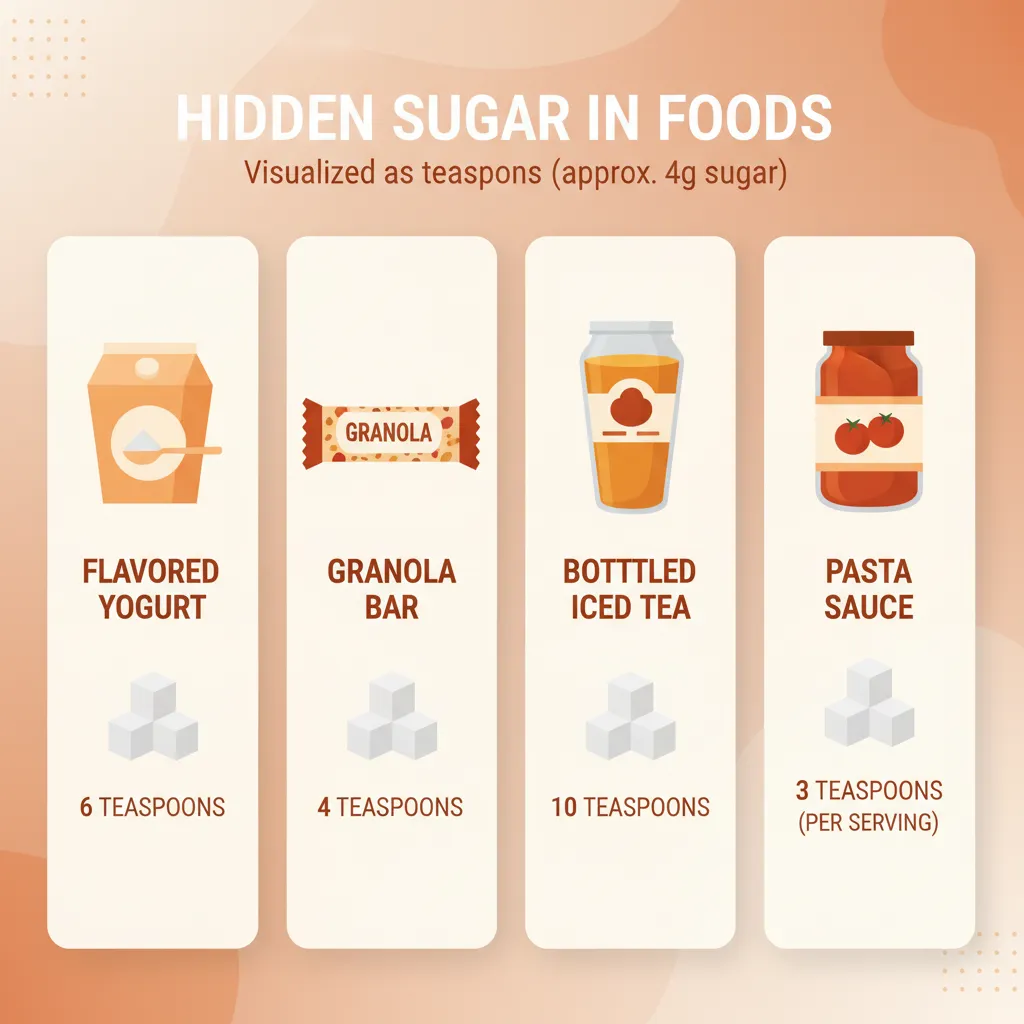
To visualize sugar content, remember: 4 grams of sugar equals 1 teaspoon. If a product has 24 grams of added sugar per serving, that is 6 teaspoons of added sugar. Would you add 6 teaspoons of sugar to your food at home?
Front-of-Package Claims: Marketing vs. Reality

The front of a food package is advertising space. Claims like "natural," "lightly sweetened," or "made with real fruit" are designed to sell, not to inform. Research from University Hospitals shows that even simple imagery, like a picture of fruit on packaging, can make consumers assume a product is healthier than it actually is.

Claims that often mislead:

"Natural" has no standard FDA definition for most foods. A product labeled natural can still contain high-fructose corn syrup, added colors, and preservatives.

"Multigrain" means the product contains more than one type of grain. It says nothing about whether those grains are whole or refined. A multigrain bread could be made entirely from refined flours.

"Made with whole grains" can mean as little as a sprinkle of whole grain in an otherwise refined product. Unless "whole grain" appears as the first ingredient, the amount may be negligible.

"Lightly sweetened" or "reduced sugar" means less sugar than the original version, not that the product is low in sugar. A "reduced sugar" cereal might still contain significant amounts of added sugars.

"Sugar-free" or "fat-free" does not mean calorie-free. Sugar-free products often replace sugar with artificial sweeteners or sugar alcohols. Fat-free products frequently add sugar to compensate for lost flavor.

What actually matters:

Look for claims with legal definitions. "Good source of" means the product provides 10-19% DV of a nutrient. "Excellent source of" means 20% DV or more. These terms are regulated by the FDA.

The Big 9 Allergens

If you or someone in your family has food allergies, allergen labeling is critical. The FDA requires that the nine major food allergens be clearly labeled on packaged foods. As of January 2023, sesame joined the list, expanding it from the "Big 8" to the "Big 9."

The Big 9 allergens are:

  1. Milk
  2. Eggs
  3. Fish
  4. Crustacean shellfish
  5. Tree nuts
  6. Peanuts
  7. Wheat
  8. Soybeans
  9. Sesame

These allergens must be declared either in the ingredient list (using plain English terms) or in a "Contains" statement immediately following the ingredients. For example: "Contains: milk, wheat, soy."

Keep in mind that "may contain" statements about cross-contamination are voluntary, not required. If you have a severe allergy, the absence of a "may contain" warning does not guarantee the product is free from traces of that allergen.

In 2025, the FDA updated its allergen guidance to clarify that milk includes milk from sheep and goats, and eggs include eggs from ducks and quail. Pine nuts were officially added to the tree nut category, while coconut was removed.

The 5-Minute Label Check

You do not need to analyze every number on every product. Here is a quick routine that takes less than a minute once you get the hang of it:

Step 1: Flip the package over. Ignore the front entirely.

Step 2: Check the serving size. Is it realistic for how you will actually eat this food?

Step 3: Scan the first three ingredients. Are they things you recognize and want to eat?

Step 4: Look at added sugars and sodium. Are they under 5% DV per serving?

Step 5: Check for any allergens if relevant to your household.

That is it. Five steps, five things to look at. With practice, this becomes automatic.

Common Mistakes to Avoid

Even label-literate shoppers fall into these traps:

Comparing different serving sizes. When comparing two products, make sure you are comparing equal amounts. One brand might list nutrition per cup while another lists it per half cup.

Ignoring "hidden" high-sodium foods. Bread, cereal, and condiments often contain surprising amounts of sodium. A single slice of bread can have 150mg or more.

Trusting "organic" to mean healthy. Organic cookies are still cookies. The organic label refers to farming practices, not nutritional value.

Overlooking liquid calories. Juices, smoothies, and flavored coffees often pack more sugar and calories than solid foods. A single bottle of sweetened iced tea can contain more added sugar than a candy bar.

Skipping ingredient lists on "healthy" products. Protein bars, granola, and yogurt parfaits often contain as much sugar as desserts. Always verify.

Reading Labels Gets Easier

The more you practice, the faster you become. What takes five minutes today will take thirty seconds in a few weeks. You will start recognizing patterns, spotting red flags instantly, and making confident choices without second-guessing yourself.

The food industry spends billions on packaging designed to influence your decisions. Understanding labels puts that power back in your hands. You do not need to memorize every additive or calculate every ratio. You just need to know where to look and what questions to ask.

With IngrediCheck, you can take label reading even further. Simply scan a product barcode or snap a photo of the ingredient list, and IngrediCheck instantly analyzes the contents against your dietary preferences and restrictions. Whether you are avoiding hidden sugars, tracking sodium, or managing food allergies, IngrediCheck helps you make informed decisions in seconds, no chemistry degree required.

Start making confident food choices today!

Scan food and understand what's right for you and your family, with AI.

IngrediCheck app