Future Food Allergies: Preparing Your Family with Proactive Scanning

Food allergies affect 33 million Americans and are rising fast. Learn how to protect your family with proactive scanning and smart ingredient awareness.

Apr 12, 2026|10 min read
Future Food Allergies: Preparing Your Family with Proactive Scanning

Food allergies are no longer a rare concern affecting a small subset of the population. They have become a defining health challenge of modern life, touching nearly every family in some way. Whether you have a child who cannot eat peanuts, a teenager who recently developed a shellfish reaction, or a parent who suddenly became allergic to tree nuts in their forties, the reality is clear: food allergies are on the rise, and they are not slowing down.

Understanding what is driving this increase, which allergens to watch for, and how to protect your family proactively can make the difference between confident grocery shopping and constant anxiety.

The Rising Tide of Food Allergies

The numbers tell a sobering story. According to FARE (Food Allergy Research & Education), approximately 33 million Americans live with a convincing food allergy. Each year, around 200,000 people seek emergency medical care due to allergic reactions to food.

The prevalence among children is particularly striking. One in 13 children now has a food allergy, and this rate has climbed dramatically over recent decades. Research shows that childhood food allergy prevalence increased by 50 percent between 1997 and 2011, then increased by another 50 percent between 2007 and 2021.

A World Allergy Organization international survey00100-0/fulltext) published in November 2025 found that 90% of responding medical centers worldwide reported an increase in food allergy prevalence over the last decade. This is not a localized phenomenon. It is a global trend affecting urban and rural populations alike.

The Economic Burden

The financial impact extends far beyond medical bills. A recent study estimated the societal costs of food allergy in the United States at $370.8 billion annually. That figure represents 15 times the estimate from just a decade earlier, reflecting not only rising prevalence but also the complex web of costs including emergency care, lost productivity, specialized foods, and the psychological burden on families.

Adult-Onset Allergies: A Growing Concern

Adult-Onset Allergies: A Growing Concern

Perhaps the most surprising trend in food allergy research is the rise of adult-onset allergies. The assumption that food allergies are something you outgrow, or at least something that starts in childhood, is increasingly outdated.

According to research published in JAMA Network Open, approximately 10.8% of U.S. adults have an IgE-mediated food allergy. More remarkably, among the 27 million adults with food allergies, nearly half developed at least one allergy during adulthood. About 5.7 million adults report that all of their food allergies began after age 18.

The Most Common Adult-Onset Allergens

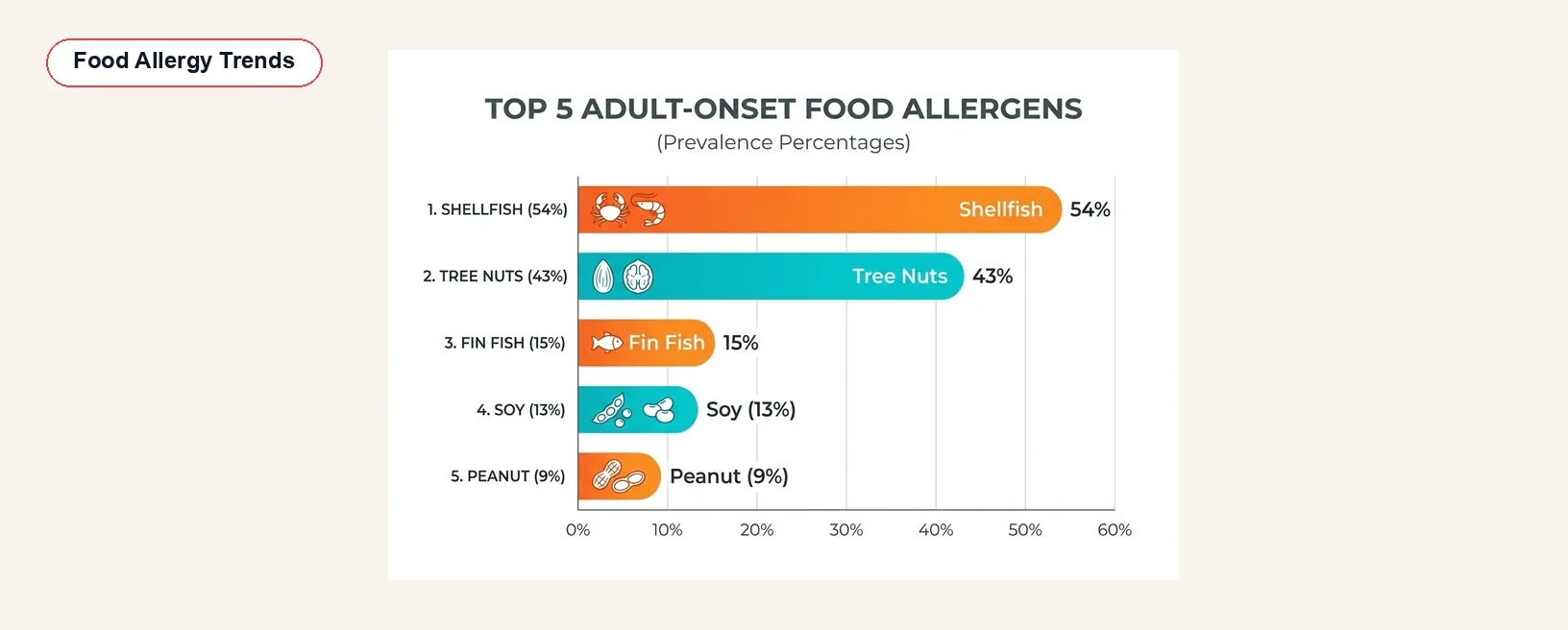
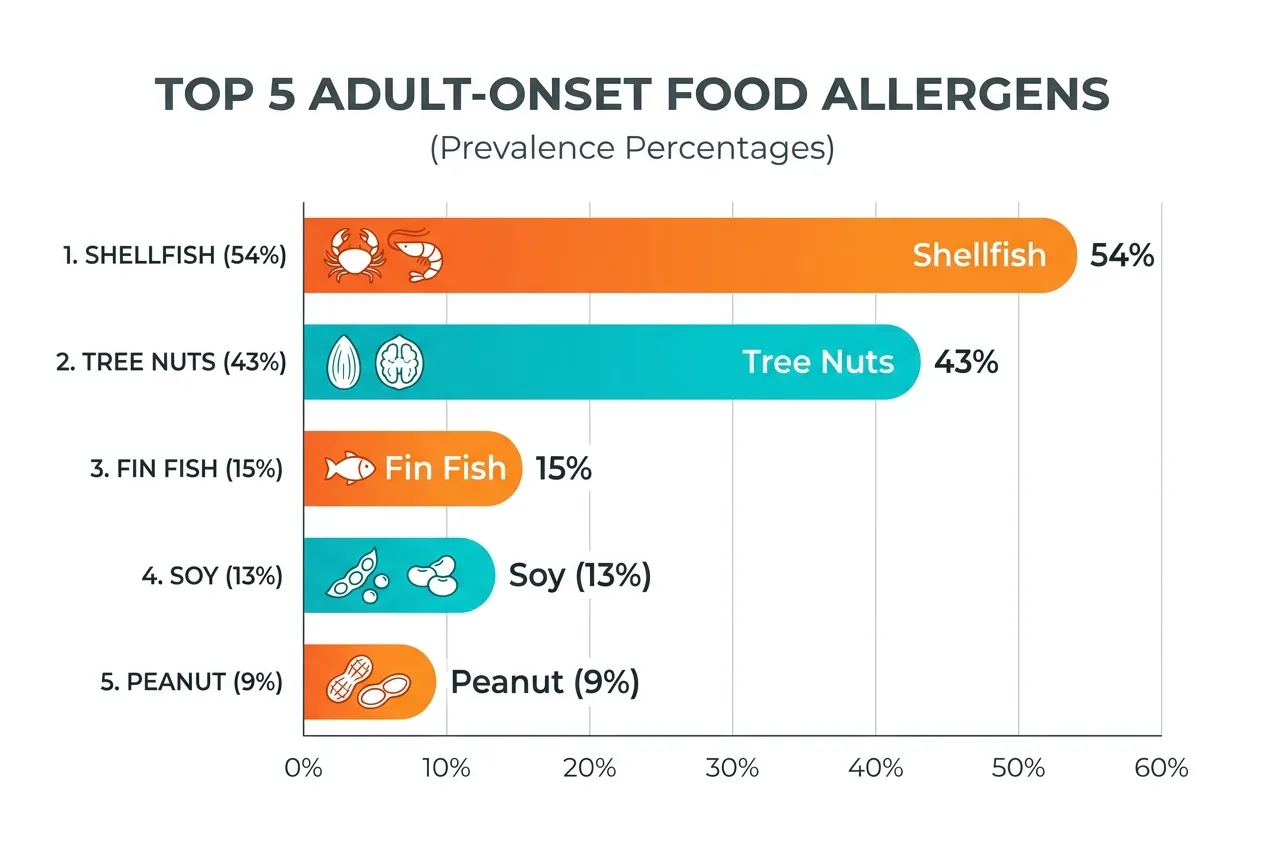
The allergens that trigger adult-onset reactions differ from those typically seen in children. A study in the Annals of Allergy, Asthma & Immunology01985-8/fulltext) identified the five most common adult-onset food allergies:

  1. Shellfish (54% of adult-onset cases)
  2. Tree nuts (43%)
  3. Fin fish (15%)
  4. Soy (13%)
  5. Peanut (9%)

This pattern contrasts sharply with childhood allergies, where egg, milk, and peanut dominate. The reasons why some adults suddenly lose tolerance to foods they have eaten safely for decades remain under investigation, but researchers point to factors including infections, environmental changes, hormonal shifts, and changes in gut microbiome composition.

Emerging Allergens to Watch

The nine major allergens recognized by the FDA include milk, eggs, fish, crustacean shellfish, tree nuts, peanuts, wheat, soybeans, and sesame. Sesame became the ninth major allergen in January 2023 following the FASTER Act, affecting an estimated 1 million Americans.

But the allergen landscape continues to evolve. Several emerging allergens deserve attention.

Insect Proteins

As sustainability concerns drive interest in alternative proteins, insect-based ingredients are appearing in more products. Cricket flour, mealworm protein, and similar ingredients offer environmental benefits but pose significant allergenic risks. Research published in Food Science of Animal Resources documents well-established cross-reactivity between insect proteins and common allergens from crustaceans and house dust mites, largely due to shared proteins like tropomyosin.

Health Canada now recommends advisory labeling for insect proteins due to this cross-reactivity with crustaceans.

Plant-Based Alternatives

The explosion of plant-based products has introduced new allergenic concerns. Pea protein, now ubiquitous in meat alternatives and protein supplements, can cross-react with peanuts. Lupin, a legume common in European baking, causes reactions in some people with peanut allergies. Mycoprotein, the fungal protein in products like Quorn, has triggered allergic reactions in sensitized individuals.

According to Food Allergy Canada research, the most commonly reported emerging allergens include fruits and vegetables (59%), seeds excluding sesame (22%), and legumes excluding peanuts (19%).

Fruits and Seeds

Kiwi, avocado, and banana allergies are increasing, often in connection with latex allergy due to cross-reactive proteins. Mustard seeds, chia seeds, and hemp seeds are also causing more reactions as they become more popular in health foods.
Prevention Strategies: What Science Tells Us

Prevention Strategies: What Science Tells Us

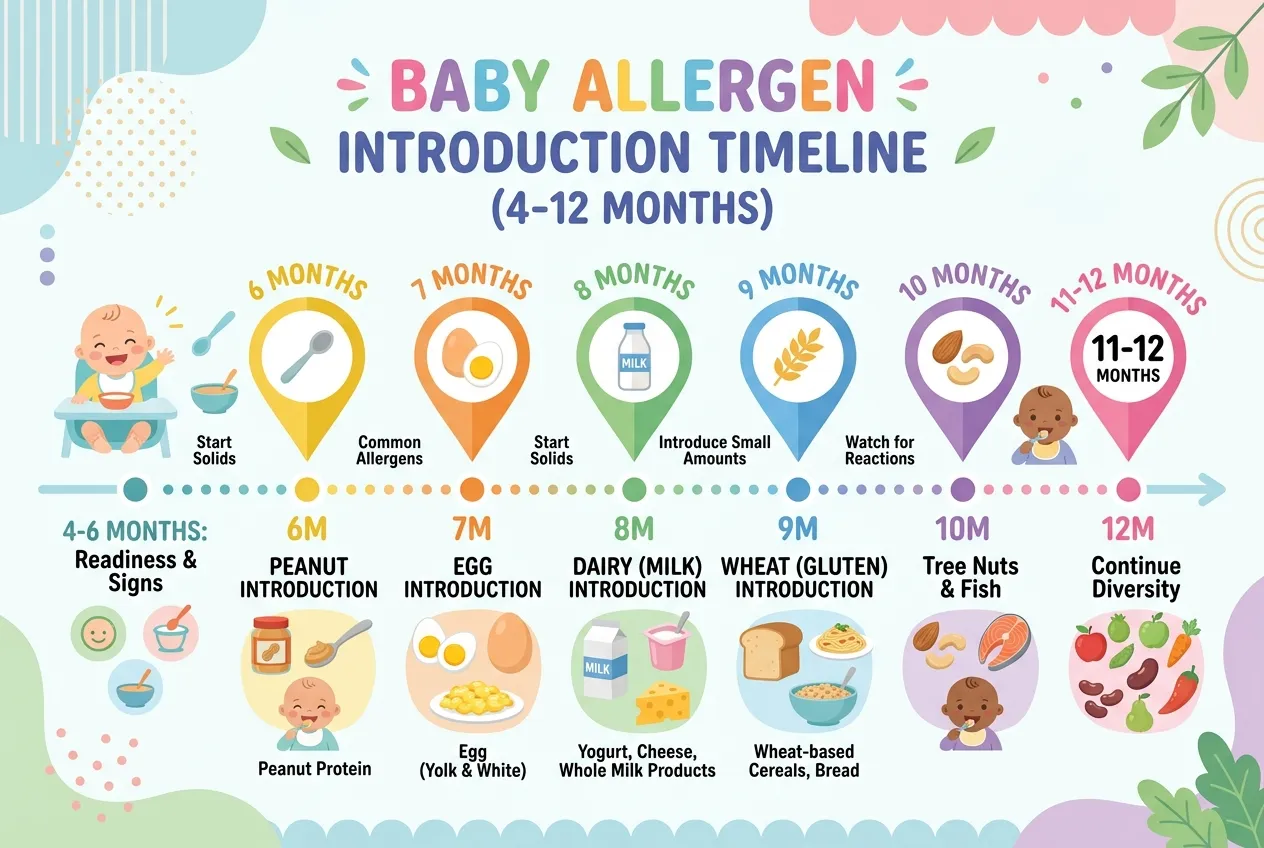
One of the most significant shifts in food allergy prevention has been the reversal of early introduction guidelines. Until 2008, the American Academy of Pediatrics recommended delaying allergenic foods until age three. Research has since shown this approach may have contributed to the rise in allergies rather than preventing them.

The LEAP Study Revolution

The landmark Learning Early About Peanut (LEAP) study demonstrated that introducing peanuts to high-risk infants between 4 and 11 months of age reduced the development of peanut allergy by up to 80 percent compared to avoidance. This protective effect persisted even when children stopped eating peanuts during their sixth year.

A 2024 study in Pediatrics confirmed that following early peanut introduction guidelines has led to measurable decreases in clinician-diagnosed peanut allergy among infants.

Current Recommendations

Based on this research, guidelines now recommend:

  • Introduce allergenic foods at 4 to 6 months of age, not later
  • Start with easily dissolvable forms like thinned peanut butter or peanut puffs for infants
  • Maintain regular exposure once foods are introduced, as ongoing consumption helps maintain tolerance
  • Consult an allergist first if your child has severe eczema or existing food allergies

The PreventADALL study from the University of Oslo found that children introduced to peanuts, eggs, milk, and wheat from three months of age had fewer allergies at age three than those following traditional delayed-introduction guidelines.

Understanding Food Labels in 2026

The regulatory landscape for allergen labeling continues to evolve. In February 2026, the FDA held a public meeting on food allergen thresholds, signaling a potential shift from zero-tolerance policies to science-based, risk-driven frameworks.

What the Law Requires

Currently, the nine major food allergens must be declared on food labels either in the ingredient list or in a separate "Contains" statement. For example, a product might list "Contains: milk, wheat, soy."

However, advisory statements like "may contain peanuts" or "produced in a facility that processes tree nuts" remain voluntary. These statements address cross-contact during manufacturing but are not standardized, leaving consumers to interpret varying language across products.

Recent Regulatory Updates

The FDA's January 2025 guidance expanded definitions in important ways:

  • Milk now includes milk from goats, sheep, and other domesticated ruminants, not just cows
  • Eggs now covers eggs from ducks, geese, quail, and other domesticated fowl, not just chickens
  • Tree nuts list was updated, removing coconut and several other nuts that pose minimal allergenic risk

The FDA also introduced reference doses for allergens, aligning with EFSA and FAO/WHO frameworks. For example, the WHO/FAO reference dose for peanut is 2 milligrams of peanut protein. If allergen residue stays below this threshold, the risk of reaction is considered extremely low for most allergic individuals.

Building a Proactive Scanning Habit

Building a Proactive Scanning Habit

Knowledge alone is not enough. Families dealing with food allergies need practical systems for checking every product, every time. Allergenic ingredients can hide in unexpected places, and formulations change without warning.

Why Scanning Matters

Cross-contact during manufacturing means allergens can appear in products that do not list them as ingredients. A chocolate bar made on shared equipment with peanuts may be perfectly safe for someone avoiding dairy but dangerous for someone with peanut allergy.

Ingredient lists can be long and use technical names. Casein is milk protein. Albumin often means egg. Natural flavors can derive from almost anything. Without systematic checking, it is easy to miss a problematic ingredient buried in a wall of text.

Creating Your Family's Allergy Profile

Effective scanning starts with clarity about what each family member needs to avoid. This means:

  • Listing all confirmed allergens for each person
  • Noting cross-reactive allergens (if shellfish allergic, watch for insect proteins)
  • Tracking ingredients that cause non-allergic sensitivities
  • Updating the list as new allergies develop or old ones resolve

Once you have a clear profile, you can scan products quickly against specific criteria rather than trying to evaluate every ingredient from scratch.

When to Scan

Every new product requires a full scan, even from trusted brands. Manufacturers change suppliers, reformulate recipes, and add seasonal variations. A product that was safe last month may not be safe today.

Even repeat purchases benefit from periodic re-scanning. Some families make it a habit to check their regular products monthly or whenever a new batch is purchased.

The Role of Technology

Mobile apps and digital tools have transformed how families manage food allergies. Instead of squinting at tiny ingredient lists under fluorescent grocery store lights, you can scan a barcode and get instant analysis.

The most useful tools allow you to:

  • Create profiles for each family member with their specific restrictions
  • Scan barcodes for instant ingredient analysis
  • Get clear verdicts rather than overwhelming data
  • Stay updated when formulations change

This proactive approach transforms the shopping experience from anxious guesswork into confident decision-making.

Looking Ahead

Food allergies will likely continue rising for the foreseeable future. Researchers are investigating why, exploring everything from changes in gut bacteria to environmental factors to modern food processing methods. New therapies including oral immunotherapy offer hope for some allergens, though they remain works in progress.

For families today, the most practical path forward combines awareness, prevention when possible, and systematic vigilance. Understanding which allergens are emerging, following evidence-based prevention strategies for infants, reading labels carefully, and using technology to scan ingredients consistently can significantly reduce risk and restore confidence at mealtimes.

Using IngrediCheck, you can create personalized food notes for each family member, scan product barcodes or ingredient lists instantly, and get clear guidance on whether a product is safe for your household. This proactive approach helps families navigate the complex world of food allergies with confidence, catching hidden allergens before they become problems.

Get the app for clearer label decisions.

Scan labels, see what fits your food notes, and read the why in plain English.

IngrediCheck app