Navigating Dairy-Free: Hidden Ingredients & Smart Swaps

Dairy hides under 40+ label names. Learn to spot hidden milk ingredients, navigate non-dairy vs. dairy-free, find smart swaps, and protect your nutrition.

Mar 18, 2026|10 min read
Navigating Dairy-Free: Hidden Ingredients & Smart Swaps

Avoiding dairy sounds straightforward until you're standing in the grocery aisle reading a label that lists "sodium caseinate," "lactoglobulin," and "whey protein concentrate" — and you're not sure which of those is the problem. Or until you reach for a product labeled "non-dairy" and later discover it legally contained milk protein the whole time.

Going dairy-free, whether you're managing a milk allergy, coping with lactose intolerance, or choosing a plant-based diet, is far more complicated than skipping cheese and switching to oat milk. Dairy hides under more than 40 different ingredient names. The regulatory framework has gaps that even well-informed shoppers don't know about. And the nutritional consequences of cutting out dairy without a plan can quietly catch up with you.

This guide covers all of it: how to read labels fluently, where dairy hides in unexpected foods, the smartest swaps for every dairy category, and how to protect your nutrition along the way.

This article is for informational purposes only and should not be considered medical advice. Consult a healthcare professional for personalized guidance.
Why So Many People Are Going Dairy-Free

The scale of dairy avoidance is larger than most people realize. Approximately 65–68% of the global adult population has some degree of lactose malabsorption — meaning the majority of humans, globally, produce insufficient lactase enzyme to comfortably digest dairy. Rates vary significantly by ethnicity: roughly 15% of white Americans are lactose intolerant, compared to around 80% of African Americans and similar rates across much of East Asia.

Milk allergy is a separate condition — an immune response to milk proteins rather than an enzyme deficiency. Research estimates that about 1.9% of the U.S. population has a convincing IgE-mediated milk allergy; cow's milk allergy is the most common food allergen in infants, affecting 2–3%. Unlike many childhood food allergies, milk allergy can persist into adulthood for some individuals.

Beyond medical reasons, consumer interest in plant-based eating has surged. As of 2025, roughly 45% of Americans are actively reducing dairy intake, driven by a mix of health consciousness, environmental concerns, and animal welfare considerations. The global dairy-free products market reflects this: valued at over $33 billion in 2025, it's projected to approach $80 billion by 2034.

All of this demand has produced a marketplace full of options — and a label landscape that requires careful navigation.

The "Non-Dairy" vs. "Dairy-Free" Problem

Before diving into ingredient lists, there's a labeling distinction that trips up even experienced dairy avoiders.

"Non-dairy" does not mean dairy-free. This is not a misconception — it is a legal reality embedded in FDA regulations.

The FDA permits products labeled "non-dairy" to contain caseinates (milk proteins) as long as they're present in amounts up to 0.5% by weight. When caseinate is used, the label must note "(a milk derivative)" after the ingredient — but the "non-dairy" claim on the front of the package remains valid. The result: products like non-dairy coffee creamers, non-dairy whipped toppings, and non-dairy frozen desserts can legally contain milk protein while displaying "non-dairy" on the front.

For someone managing a milk allergy — where even small amounts of milk protein can trigger anaphylaxis — a "non-dairy" label provides no safety assurance. The only reliable signal is "dairy-free," which, while also voluntary, is typically used by manufacturers who have specifically formulated without any milk-derived ingredients. Even then, reading the full ingredient list is essential.

Dairy by Any Other Name: The Full Hidden Ingredients List

Dairy by Any Other Name: The Full Hidden Ingredients List

This is the most important section for label readers. Dairy appears in ingredient lists under a wide range of technical and trade names — many of which give no obvious indication they come from milk.

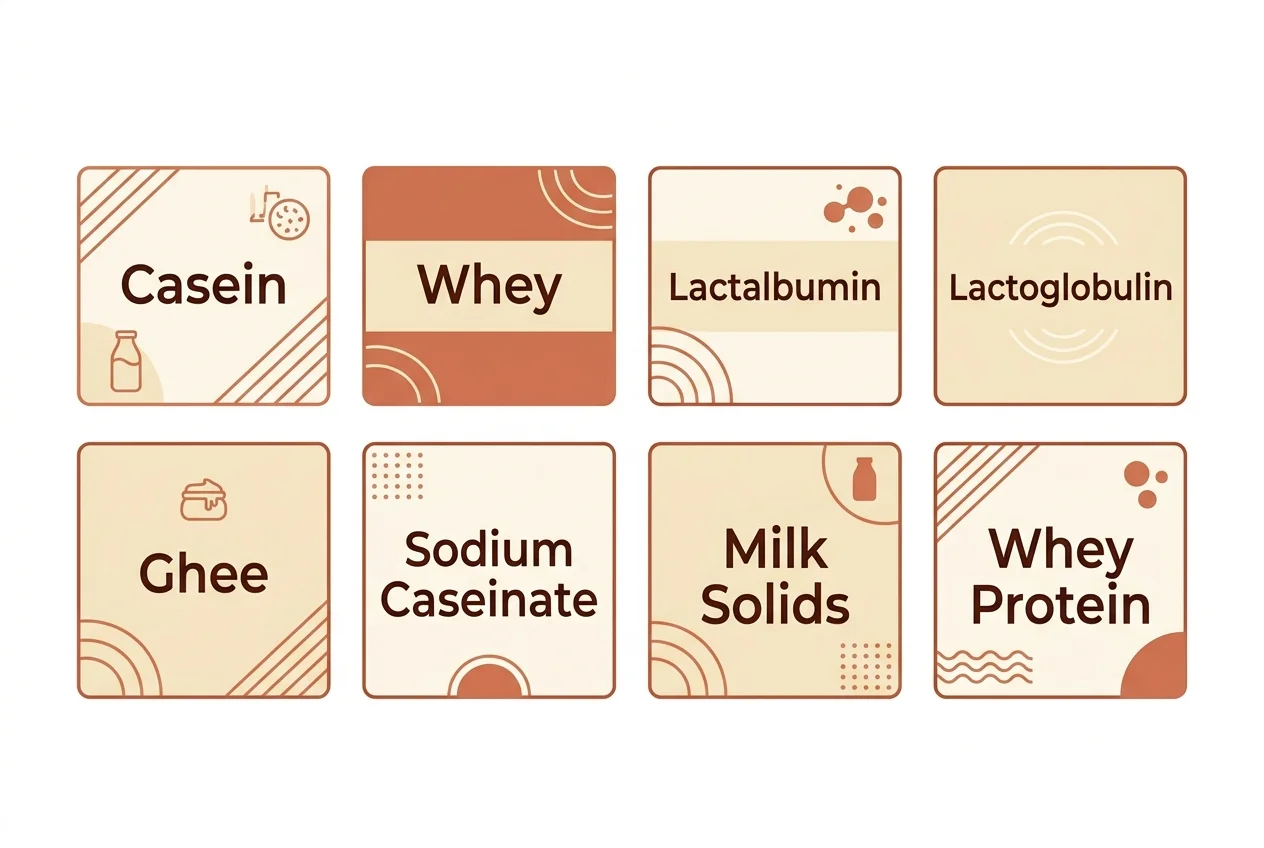
Casein and its derivatives — the primary protein in cow's milk — hide under:

  • Casein, casein hydrolysate, rennet casein
  • Ammonium caseinate, calcium caseinate, magnesium caseinate, potassium caseinate, sodium caseinate, zinc caseinate

Whey — the liquid byproduct of cheese-making — appears as:

  • Whey, sweet dairy whey, acid whey, cured whey
  • Whey protein, whey protein concentrate, whey protein hydrolysate
  • Delactosed whey, demineralized whey, reduced mineral whey, whey powder

Other milk proteins:

  • Lactalbumin, lactalbumin phosphate
  • Beta-lactoglobulin, lactoglobulin
  • Milk protein hydrolysate, protein hydrolysate (when from dairy source)

Other dairy-derived terms:

  • Ghee, anhydrous milk fat, milk fat, butter, butter oil, butterfat, buttermilk
  • Dairy product solids, milk solids, nonfat dry milk, dry milk powder
  • Lactose, lactulose, lactitol
  • Galactose (may be dairy-derived)
  • Simplesse (a fat replacer made from milk protein)
  • Recaldent (milk protein derivative used in some dental products and chewing gums)
  • Nougat (often contains milk)
  • Quark, fromage frais

A critical caveat about "lactose-free" products: Lactose-free dairy is real dairy with the lactose enzyme pre-added. It's appropriate for lactose intolerance but contains full milk protein — and is completely inappropriate for anyone with a milk allergy.

Where Dairy Hides in Unexpected Foods

Avoiding obvious dairy foods like cheese, yogurt, and milk is the easy part. The harder work is catching dairy in products where you'd never think to look.

Bread and baked goods — Rolls, brioche, croissants, and many sandwich breads contain milk, butter, or whey as softening agents. Even plain-looking bread can contain nonfat dry milk powder.

Processed and deli meats — Hot dogs, sausages, and deli meats often use nonfat dry milk as a binder and moisture-retainer. Canned meats and meat-based soups frequently contain milk derivatives.

Margarine and butter spreads — Many margarine brands contain whey to mimic the flavor of butter. This catches people who think they're successfully avoiding dairy by switching from butter to margarine.

Flavored chips and crackers — Sour cream and onion flavoring, cheese-flavored coatings, and "ranch" seasoning all typically contain dairy. Even some "plain" chips use whey as a flavor carrier.

Canned soups and gravies — Cream-based soups are obvious, but even non-cream soups often use milk derivatives as flavor enhancers or thickeners.

Chocolate — Milk chocolate contains milk, but even some dark chocolates include milk fat or milk solids. Confectionery coatings on candies and snack bars are a particularly common source.

Wine and beer — Milk and milk-derived fining agents (isinglass, casein) are used in production but are processed out before bottling. Allergen labeling is not required for alcoholic beverages in the U.S., so consumers with milk allergies navigating wine and beer should check with producers directly.

Medications and supplements — Some tablets and capsules use lactose as a filler or binder. Lactose-sensitive individuals should check with pharmacists about lactose content in their medications.

Smart Dairy-Free Swaps

Smart Dairy-Free Swaps

The dairy-free aisle has expanded dramatically. For nearly every dairy product, there's now a credible alternative — but not all are nutritionally equivalent, and some require closer reading.

Milk Alternatives

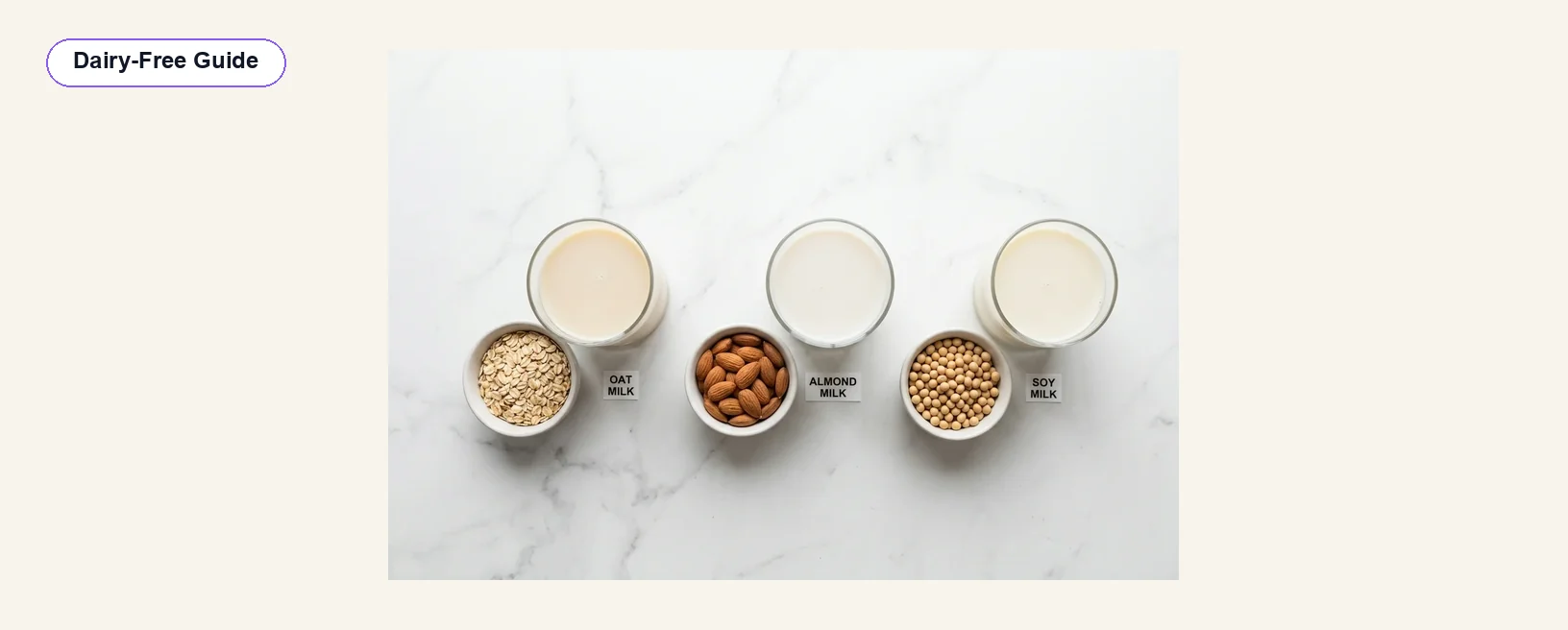
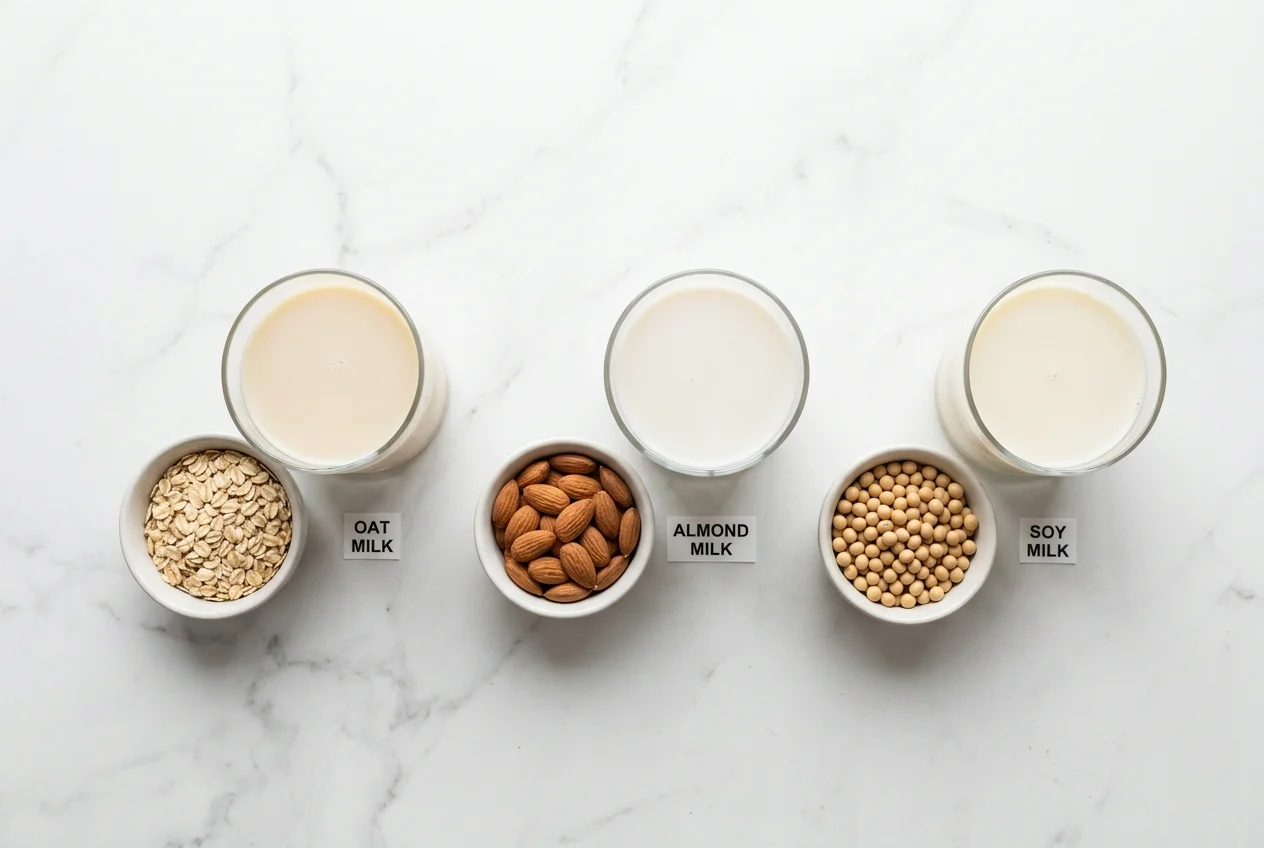
Soy milk is nutritionally the closest match to cow's milk, particularly when fortified. It provides comparable protein (7–8g per cup vs. 8g in dairy milk) and when calcium- and vitamin D-fortified, mirrors dairy's micronutrient profile.

Oat milk has become the most popular option for coffee drinks and everyday use due to its naturally creamy texture and mild flavor. It's lower in protein than soy but higher in carbohydrates — and many brands add calcium and vitamins.

Almond milk is low-calorie but also low in protein (1–2g per cup). It's best used as a lighter beverage or for recipes where creaminess isn't critical. Look for fortified versions.

Coconut milk (from cans or cartons) is rich and high-fat, working well for curries, soups, and desserts. The carton version is diluted and suitable for drinking.

What to look for in any plant milk: Fortification with calcium (aim for 25–30% daily value per serving), vitamin D, and vitamin B12. Without fortification, plant milks leave significant nutritional gaps.

Butter Alternatives

Plant-based butters made from coconut oil, palm oil, or avocado oil work well for baking and sautéing. Check labels carefully — some plant butters contain whey to mimic dairy butter's flavor. Look for those explicitly labeled "vegan" or "dairy-free."

Cheese Alternatives

Dairy-free cheeses have improved significantly in texture and meltability. Most are made from blended vegetable oils, tapioca starch, pea protein, or nut bases (cashew, macadamia). They typically melt and stretch reasonably well in cooked dishes. For fresh applications like spreading on bread, cashew-based cream cheeses are the most convincing alternatives.

Yogurt Alternatives

Coconut-based, almond-based, soy-based, and cashew-based yogurts are widely available. The key nutritional gap: most dairy-free yogurts contain significantly less protein than dairy yogurt — coconut-based varieties being the lowest. Choose fortified versions and supplement protein from other dietary sources.

Protecting Your Nutrition Without Dairy

Dairy provides several key nutrients that require intentional replacement when removed from the diet.

Calcium is the most commonly discussed concern. The U.S. recommended daily intake is 1,000–1,200 mg depending on age and sex. Dairy-free sources include:

  • Calcium-fortified plant milks (usually 25–35% DV per cup)
  • Calcium-set tofu (check labels — only tofu made with calcium sulfate is a significant source)
  • Low-oxalate dark leafy greens: kale, bok choy, turnip greens, broccoli (absorbed at 40–60% efficiency, compared to spinach at only 5% due to high oxalate content)
  • Fortified orange juice and cereals

Without at least one or two daily servings of fortified foods or calcium-set tofu, meeting calcium needs from whole foods alone is difficult for most people.

Vitamin D is frequently low in both dairy and dairy-free diets. Fortified plant milks are a reliable source; fatty fish, egg yolks (for those who eat them), and supplements fill additional gaps. Most adults benefit from supplementation regardless of diet.

Vitamin B12 is absent from all plant foods. For those avoiding dairy entirely, a supplement providing at least 250 mcg/day of cyanocobalamin is the standard recommendation. Research shows that average B12 intake in fully plant-based diets (0.24–0.49 µg/day) falls far short of the 2.4 µg/day recommendation.

Understanding Cross-Contamination Warnings

If you have a milk allergy, "may contain milk" and "processed in a facility with milk" warnings deserve serious attention — but the current system makes them difficult to interpret.

These Precautionary Allergen Labels (PALs) are entirely voluntary in the U.S. There is no standardized format, no required risk threshold, and no independent verification. Some manufacturers apply them as blanket liability disclaimers without any actual cross-contact risk assessment. Others use them only when a genuine contamination risk exists.

The U.K.'s Food Standards Agency takes a stronger position: PAL statements should only appear after a documented risk assessment, not as a precautionary catch-all. A product cannot carry both a "dairy-free" claim and a "may contain milk" statement — they are legally contradictory.

For allergy management, approach any product with a "may contain milk" warning as potentially unsafe. Conversely, the absence of a PAL warning doesn't guarantee a product is free from cross-contact — it may simply mean the manufacturer didn't perform the assessment.

The Regulatory Landscape

In the U.S., the Food Allergen Labeling and Consumer Protection Act (FALCPA) requires milk to be declared whenever it appears as a major allergen — but this applies to intentionally added milk only, not to incidental cross-contact. Milk from all domesticated ruminants (cows, goats, sheep) must be labeled as "milk," so goat whey would appear as "whey (goat milk)."

The FDA issued draft guidance in 2023 recommending that plant-based milks voluntarily disclose how their nutrient profile compares to dairy milk — covering calcium, protein, vitamins A and D, and several B vitamins. This guidance remains in draft stage as of 2026, but represents growing regulatory awareness of the nutritional differences between plant milks and dairy.

In the EU, Regulation 1169/2011 requires all 14 major allergens — including milk and lactose — to be visually emphasized (bold, italic, or contrasting color) within ingredient lists. Critically, this labeling requirement extends to non-prepacked foods sold in restaurants and cafes, giving EU consumers stronger protection in food service settings than their U.S. counterparts.

How IngrediCheck Makes Dairy-Free Shopping Manageable

Given the sheer number of names dairy can hide under — caseinates, whey variants, lactalbumin, and more — manually cross-referencing every ingredient on every product is exhausting and error-prone. IngrediCheck simplifies this by scanning a product's barcode and instantly analyzing the full ingredient list against a comprehensive dairy ingredient database. Whether the label says "sodium caseinate," "whey protein hydrolysate," or simply "milk solids," IngrediCheck flags it — so you spend less time decoding fine print and more time shopping with confidence.

Start making confident food choices today!

Scan food and understand what's right for you and your family, with AI.

IngrediCheck app