Cereulide
Cereulide food safety guide: why this Bacillus cereus heat-stable toxin can survive reheating and how to store leftovers safely.
Aliases and label clues
Related topics
Overview
Cereulide is the heat-stable toxin produced by emetic strains of Bacillus cereus, most famously in mishandled rice dishes. It matters because reheating, cooking, or boiling does not reliably destroy the toxin once it has already formed.
Diet snapshot
What It Does in Food
Cereulide is most commonly used as foodborne toxin and heat-stable emetic compound in packaged food.
Category
Toxin
Evidence and Regulatory Summary
Cereulide is not a label ingredient at all, but it belongs in an ingredient-intelligence system because food safety decisions often depend on understanding compounds that consumers never see on packaging. EFSA's 2026 infant-formula assessment and USDA Bacillus cereus prevention guidance both point back to the same practical control: prevent toxin formation through time and temperature management.
Diet Notes
Dietary identity does not protect against cereulide. The key variables are time, temperature, and how leftovers are cooled, stored, and reheated after cooking.
Shopper Guidance
Think of cereulide as a kitchen-handling cue. When rice, pasta, or starchy prepared food sits out too long, reheating is not a rescue plan, so prevention matters more than salvage.
Next Label Check
Use Cereulide in the scanner and topic paths around it
Related topic hubs
Related ingredient profiles
Mercury
Mercury reaches seafood through environmental contamination and then concentrates up the food chain. It matters because exposure depends heavily on fish species, frequency, and life stage rather than on one universal seafood rule.
PFAS
PFAS are persistent synthetic chemicals that can reach food through contaminated water, soil, processing equipment, or food packaging. They are not food additives in the normal sense, but they still show up in food-safety conversations.
Nitrates and nitrites
Nitrates and nitrites are curing agents used in processed meats to control microbes, preserve color, and deliver the familiar flavor profile of bacon, deli meat, and sausages. They are functional ingredients, not just cosmetic extras.
Related Guides
Read the connected explainers
Ingredient Deep Dives
Mar 25, 2026 | 9 min read
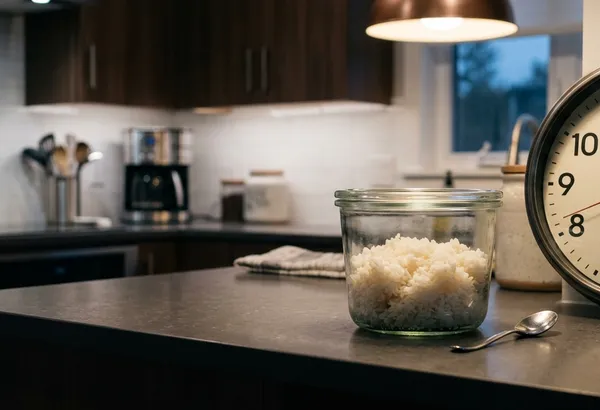
Bacillus cereus Toxin in Reheated Rice: Is It Safe?
Bacillus cereus toxin in reheated rice can survive cooking once cereulide forms. Learn the symptoms, risky foods, and safe storage rules.
Label Reading Guides
Apr 10, 2026 | 10 min read
How to Actually Understand Food Labels in 5 Minutes
A practical guide to reading nutrition labels, spotting hidden sugars, and making healthier food choices without getting overwhelmed by the fine print.

Label Reading Guides
Apr 13, 2026 | 8 min read
Food Allergy Scanner App: Scan Labels Faster and Shop Safer
A food allergy scanner app or food allergen checker helps families catch allergens, ingredient derivatives, and label risks faster than manual label reading. Here's what to look for and how IngrediCheck works.
FAQ
Common questions
What is cereulide?
Cereulide is a heat-stable toxin produced by some Bacillus cereus strains, most often discussed in relation to mishandled rice and starchy foods.
Does reheating rice destroy cereulide?
No. Once cereulide has formed, reheating is not a reliable fix because the toxin is heat-stable.
Is Bacillus cereus toxin heat-stable?
The emetic Bacillus cereus toxin cereulide is heat-stable, which is why cooking or reheating contaminated rice may kill bacteria without removing the toxin.
How do I reduce cereulide risk?
Cool cooked rice and starchy foods quickly, refrigerate promptly, avoid long room-temperature holding, and discard leftovers that were stored unsafely.
Sources
This profile uses journal and regulatory sources and follows the IngrediCheck editorial policy.
Get the app for clearer label decisions.
Scan labels, see what fits your food notes, and read the why in plain English.