Ultra-Processed Foods: The 55% Problem Hiding in Your Kitchen

Americans get 55% of their calories from ultra-processed foods. New research links them to a 47% higher risk of heart attack. Here's what you need to know.

Mar 9, 2026|11 min read
Ultra-Processed Foods: The 55% Problem Hiding in Your Kitchen

More than half of every calorie the average American eats comes from food that was engineered in a factory. Not cooked. Not prepared. Engineered — with ingredients that no home kitchen would ever stock. According to CDC data published in August 2025, ultra-processed foods account for 55% of total daily calories consumed in the United States. For children between ages 6 and 11, that number climbs to nearly 65%.

These are not foods that have simply been canned, frozen, or preserved. Ultra-processed foods are industrial formulations — products manufactured from substances extracted from foods or derived from food constituents, combined with additives designed to make the final product hyper-palatable, shelf-stable, and profitable. And a rapidly growing body of research suggests they are making us sick.

What Counts as Ultra-Processed?

The term "ultra-processed" comes from the NOVA classification system, developed by researchers at the University of São Paulo in Brazil. NOVA divides all food into four groups based on the extent and purpose of processing:

Group 1 — Unprocessed or minimally processed foods: Fresh fruits, vegetables, eggs, plain meat, milk, grains, legumes. Processing is limited to removal of inedible parts, drying, pasteurization, or freezing.

Group 2 — Processed culinary ingredients: Oils, butter, sugar, salt, flour. These are substances extracted from Group 1 foods, used in cooking but rarely eaten on their own.

Group 3 — Processed foods: Canned vegetables, artisan bread, simple cheeses, cured meats. These are Group 1 foods altered by adding Group 2 ingredients — think canned beans in salted water or freshly baked sourdough.

Group 4 — Ultra-processed foods: Industrial formulations typically made with five or more ingredients, many of which you would never find in a home kitchen. These include high-fructose corn syrup, hydrogenated oils, hydrolyzed proteins, modified starches, emulsifiers, humectants, flavor enhancers, and cosmetic additives like colorants and glazing agents.

The practical test is simple: look at the ingredient list. If it contains substances you would not use when cooking at home — maltodextrin, carrageenan, sodium stearoyl lactylate, tertiary butylhydroquinone — you are looking at an ultra-processed product.

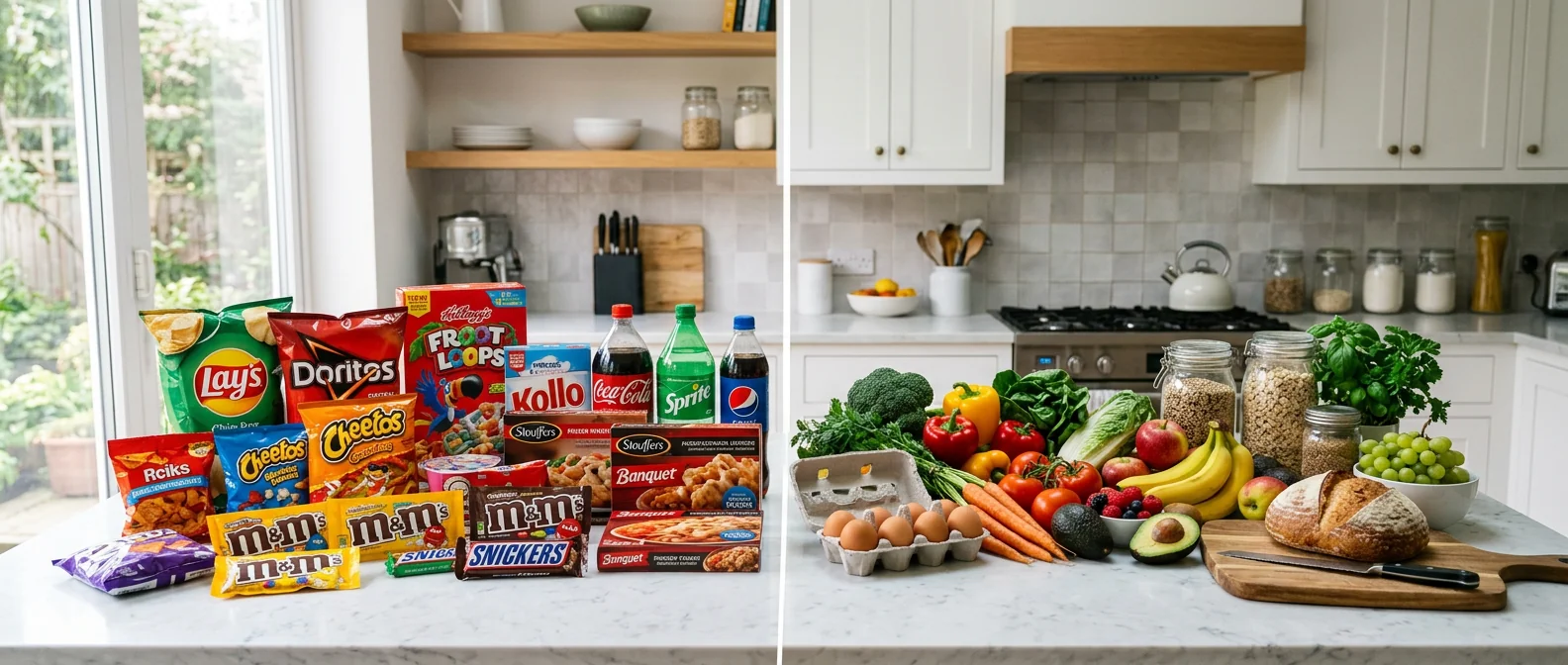
Common examples include soft drinks, packaged snacks, candy, ice cream, mass-produced bread, breakfast cereals, instant noodles, chicken nuggets, hot dogs, flavored yogurts, energy bars, and most frozen ready-to-eat meals.
The 47% Finding That Changed the Conversation

The 47% Finding That Changed the Conversation

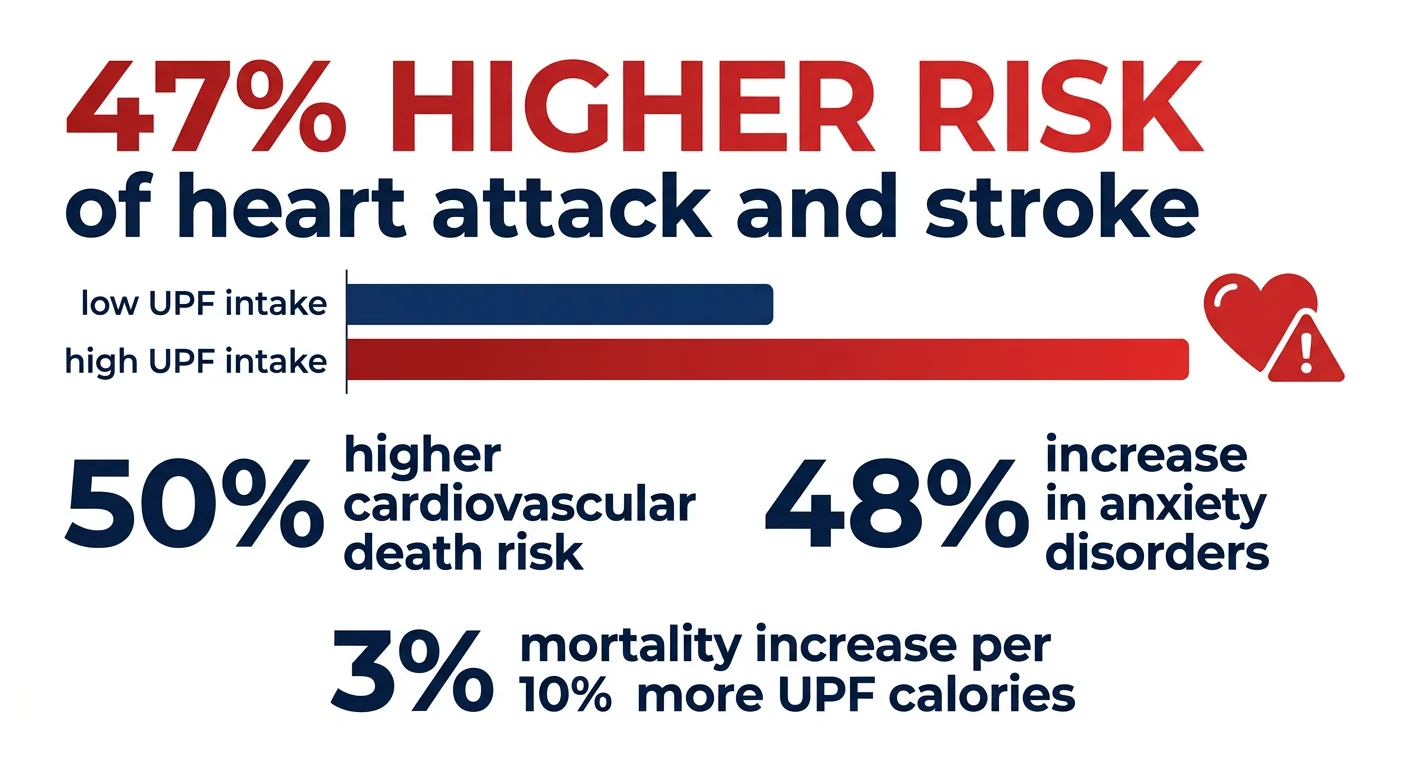
In February 2026, researchers at Florida Atlantic University published findings in The American Journal of Medicine that sent shockwaves through the nutrition world. Analyzing data from nearly 4,800 adults in the National Health and Nutrition Examination Survey, they found that people who consumed the most ultra-processed foods had a 47% higher risk of heart attack or stroke compared with those who consumed the least.

The result held even after adjusting for age, sex, race, ethnicity, smoking status, and income. This was not a case of ultra-processed food consumption being a proxy for poverty or poor lifestyle choices. The foods themselves appeared to carry independent cardiovascular risk.

This study arrived on the heels of a landmark Lancet series published in November 2025 — three papers by more than 40 leading health experts that reviewed decades of evidence and concluded that the global rise of ultra-processed foods is driving chronic disease at a population level. Among the most striking findings:

Each 10% increase in the proportion of total calories from ultra-processed foods increased the relative risk of all-cause mortality by 3%.

In the United States and United Kingdom, where ultra-processed food consumption has exceeded 50% of total calories for over two decades, the researchers estimated that ultra-processed food consumption was responsible for 14% of premature deaths in 2018.

A separate umbrella review published in the BMJ in 2024, encompassing 45 meta-analyses and approximately 10 million participants, found "convincing" evidence linking ultra-processed food consumption to a 50% higher risk of cardiovascular disease-related death, a 48% increase in anxiety disorders, and significantly elevated risks of type 2 diabetes, obesity, and depression.

Why Ultra-Processed Foods Are Different

The obvious question is: why would a packaged cereal bar be more harmful than a homemade one with the same macronutrient profile? Researchers have identified several mechanisms that go beyond simple calorie counts.

They make you eat more. A landmark 2019 NIH clinical trial — one of the few randomized controlled trials on the subject — found that participants consumed an average of 500 more calories per day when given an ultra-processed diet compared with an unprocessed diet, even though both diets were matched for total calories, sugar, fat, fiber, and macronutrients offered. The ultra-processed group gained weight; the unprocessed group lost it.

Industrial additives may cause direct harm. Emulsifiers like polysorbate 80 and carboxymethylcellulose have been shown in animal studies to disrupt the gut mucus barrier, promote intestinal inflammation, and alter the gut microbiome. Artificial sweeteners may impair glucose tolerance. Certain colorants and preservatives carry their own documented health risks.

The processing itself changes the food. Ultra-processing breaks down the cellular structure of food, making nutrients more rapidly available for absorption. This can spike blood sugar more than the same food in a less processed form. A whole apple, apple sauce, and apple juice may contain similar sugars — but the metabolic response to each is dramatically different.

Nutrient displacement. Every calorie from an ultra-processed product is a calorie not consumed from whole foods. At 55% of total intake, ultra-processed foods crowd out fruits, vegetables, legumes, and whole grains — the foods consistently associated with better health outcomes.

Children Are Hit Hardest

Children Are Hit Hardest

The CDC data tells a particularly troubling story for young people. Children ages 6 to 11 get nearly 65% of their daily calories from ultra-processed foods — the highest of any age group. Even toddlers ages 1 to 5 are already at 56%.

The top sources of ultra-processed calories for American children are sandwiches (including fast-food burgers), sweet bakery products, savory snacks like chips and crackers, and sweetened beverages. For many kids, these are not occasional treats — they are the foundation of daily nutrition.

Research published in 2025 links high ultra-processed food consumption in children to obesity, insulin resistance, metabolic dysfunction-associated liver disease, gut microbiome disruption, and mental health concerns. Children who consume more ultra-processed foods have up to a 50% higher risk of developing obesity compared to those who eat less of these products.

The design of these products is not accidental. Ultra-processed foods are engineered for what the industry calls "bliss point" optimization — the precise combination of sugar, salt, fat, and texture that maximizes palatability and encourages overconsumption. For developing brains, this engineering creates powerful reward pathways that shape food preferences for years to come.

Washington Is Starting to Pay Attention

The federal government has taken its most significant steps on ultra-processed foods in 2025 and 2026.

In July 2025, the FDA and USDA jointly issued a Request for Information seeking public input to help develop a federally recognized definition of ultra-processed foods. The comment period closed in September 2025, and HHS Secretary Robert F. Kennedy Jr. has stated that a formal federal definition could arrive as early as April 2026.

This matters because the United States currently has no official definition of ultra-processed food. Without a definition, you cannot regulate, label, or restrict. A federal definition would open the door to front-of-pack warning labels, restrictions on marketing to children, and compositional standards for school meals.

The FDA's 2026 priority deliverables also include advancing front-of-pack labeling, reforming the GRAS (Generally Recognized as Safe) pathway for food additives, and continuing post-market chemical reassessments — all of which intersect with the ultra-processed food issue.

At the state level, California and Arizona have already passed laws defining and restricting ultra-processed foods in school meals. In 2025 alone, 15 states introduced bills targeting UPF definitions. Brazil's national school feeding program, often cited as a global model, will require 90% of school food to be fresh or minimally processed by 2026.

How to Read Labels for Ultra-Processing

Until regulation catches up, the burden of identifying ultra-processed foods falls on consumers. Here is what to look for on ingredient lists:

Red-flag ingredients that signal ultra-processing:

  • Modified starches and sugars: high-fructose corn syrup, maltodextrin, dextrose, invert sugar, isoglucose
  • Hydrogenated or interesterified oils
  • Protein isolates: soy protein isolate, whey protein, hydrolyzed proteins, casein, gluten
  • Emulsifiers: lecithins (when used in non-cooking products), mono- and diglycerides, polysorbate 80, carrageenan, sodium stearoyl lactylate
  • Humectants, thickeners, and stabilizers: xanthan gum, guar gum (in industrial context), cellulose gel
  • Artificial flavors, flavor enhancers, and colorants
  • Non-sugar sweeteners: aspartame, sucralose, acesulfame potassium

The practical rule: If the ingredient list is long and contains substances you would not find in a kitchen pantry, the product is almost certainly ultra-processed.

This does not mean all processing is bad. Pasteurized milk, canned tomatoes, frozen vegetables, and simple whole-grain bread are all processed — but they are not ultra-processed. The distinction lies in the industrial additives and the degree of transformation.

The Path Forward

The scientific consensus is strengthening rapidly. The Lancet series concluded with a direct call to action: governments must treat ultra-processed foods as a public health threat comparable to tobacco, with policy responses that include mandatory labeling, marketing restrictions, taxes, and compositional standards.

Whether the United States will follow through remains an open question. The federal definition expected in 2026 will be a critical first step. But history suggests that meaningful change comes from the combination of scientific evidence, regulatory pressure, and informed consumer choices — all happening simultaneously.

For now, the most powerful tool available to any consumer is the ingredient label. Understanding what ultra-processed means, recognizing the industrial additives that define it, and making deliberate choices about what goes into your body and your family's bodies is the single most impactful step you can take.

Using IngrediCheck, you can scan any packaged food and instantly identify ultra-processed ingredients — emulsifiers, hydrogenated oils, artificial sweeteners, and other industrial additives — helping you make informed choices and reduce your family's reliance on foods engineered in a factory rather than prepared in a kitchen.

Start making confident food choices today !

Scan food and understand what's right for you and your family, with AI.

IngrediCheck app