The health debate around synthetic food dyes has been contentious for decades, but the scientific picture has become clearer.
The pivotal study came in 2007, when British researchers published a randomized, double-blind, placebo-controlled trial in The Lancet, funded with £750,000 from the UK's Food Standards Agency. The study enrolled 153 three-year-olds and 144 eight-and-nine-year-olds. Children who consumed drinks containing a mixture of artificial food colors and the preservative sodium benzoate showed significantly increased hyperactivity scores compared with those given placebo drinks. The finding that applied to children in the general population, not just those with ADHD, was the detail that changed the regulatory conversation.
"The effect was seen in the general population, not just in those who are hyperactive." — McCann et al., The Lancet, 2007
A 2012 review concluded that synthetic dyes "affect children regardless of whether or not they have ADHD," and that aggregate effects at a classroom or population level could be significant even if per-child effects are relatively modest. Restriction diets excluding artificial food colors have been shown in multiple trials to benefit some children with ADHD symptoms.
The current scientific consensus is carefully worded: synthetic dyes do not cause ADHD, but they can worsen hyperactivity and attention in sensitive children. A 2011 FDA advisory committee acknowledged that while evidence was insufficient to mandate labels for the general population, a subgroup of children (potentially tens of thousands or more in the US) do respond behaviorally to these dyes.
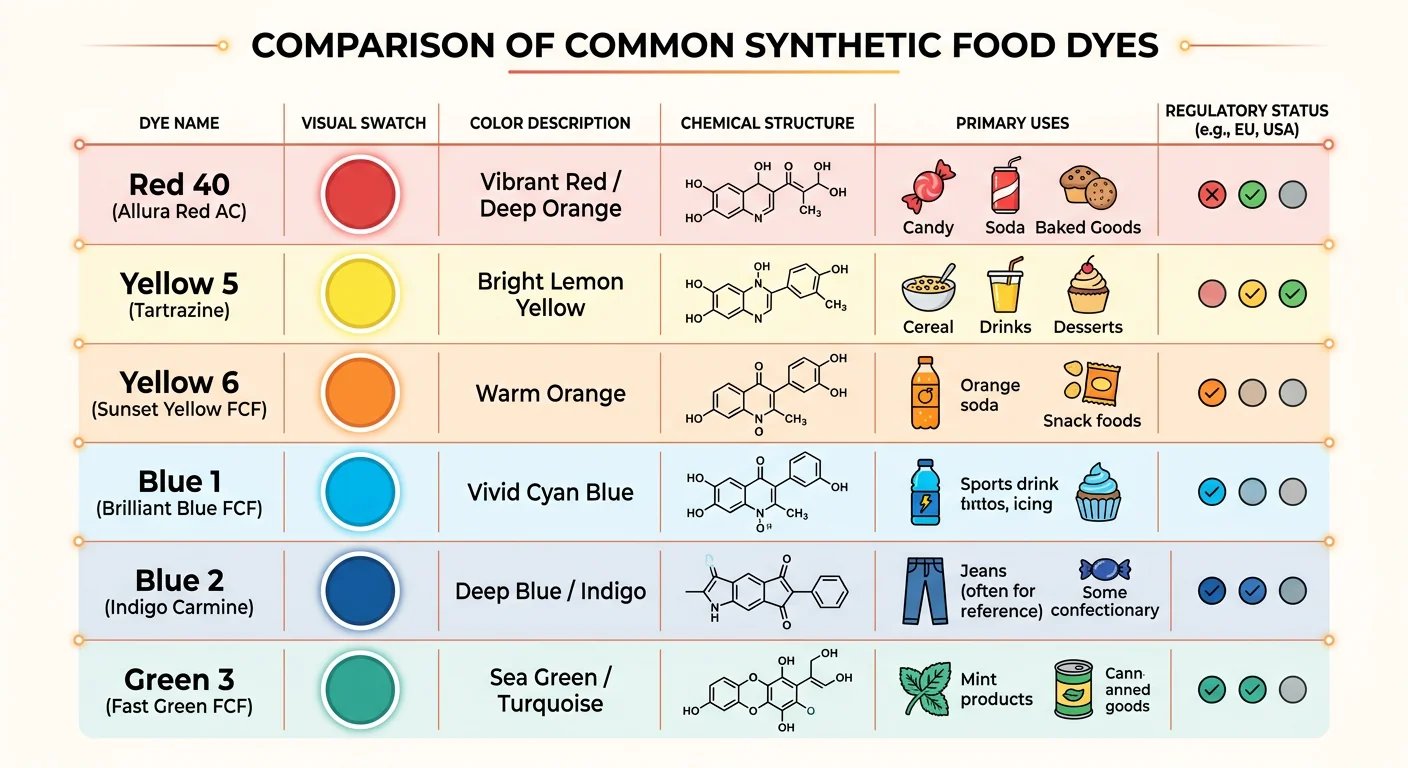
Beyond behavior, there are structural concerns about the dyes themselves. California state scientists have concluded that exposure to Red No. 40, Yellow No. 5, and Yellow No. 6 results in "various changes and harm to the brain" in animal studies. Red No. 40 contains trace impurities of p-Cresidine, considered a probable carcinogen, and benzene, a known human carcinogen. These are trace-level concerns, not acute poisoning risks. But they are the kind of concerns that, in the European Union, are enough to trigger warning labels.