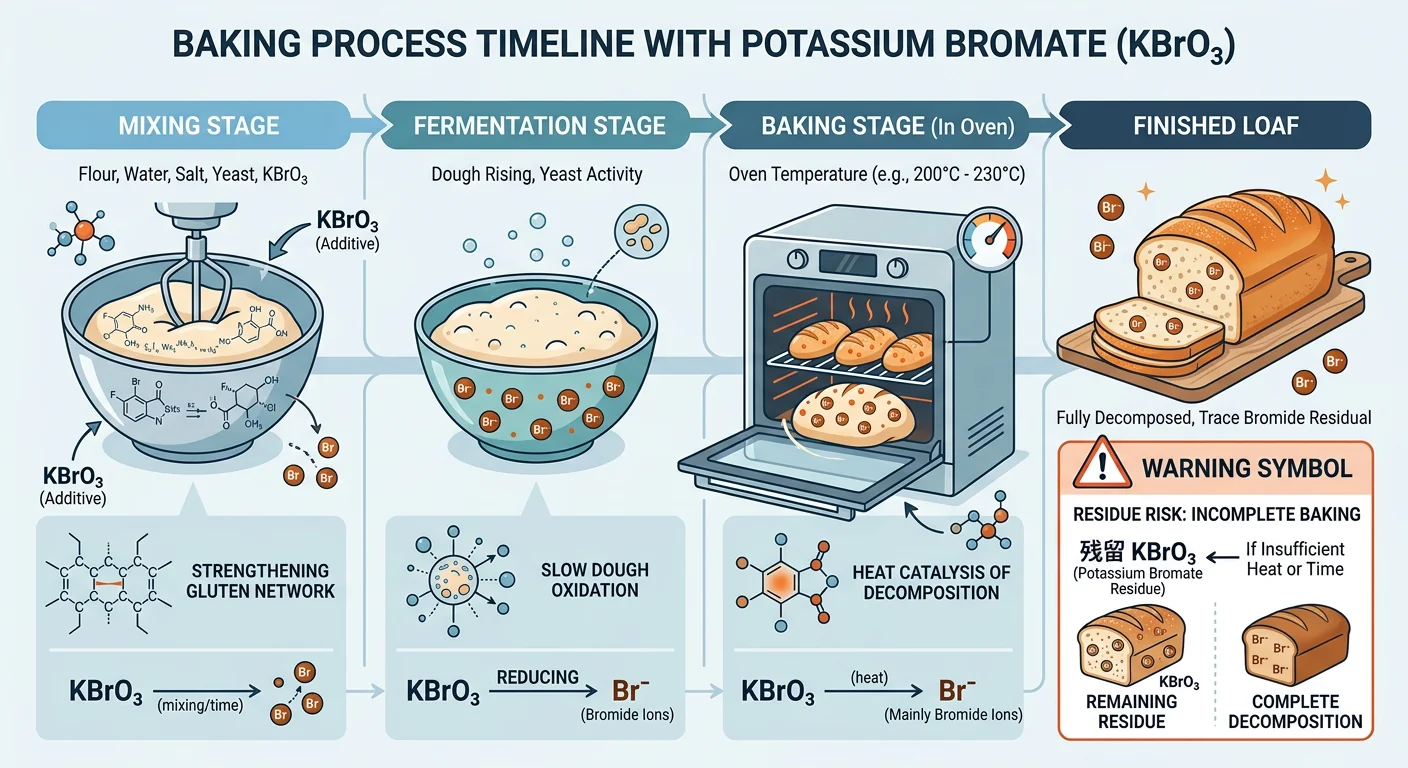
Quick answer: Potassium bromate is a dough improver used in some bread, but many countries ban it because of cancer-risk evidence and residue concerns. In the U.S., the practical label check is to look for "potassium bromate" or "bromated flour" and choose bread without potassium bromate when available.
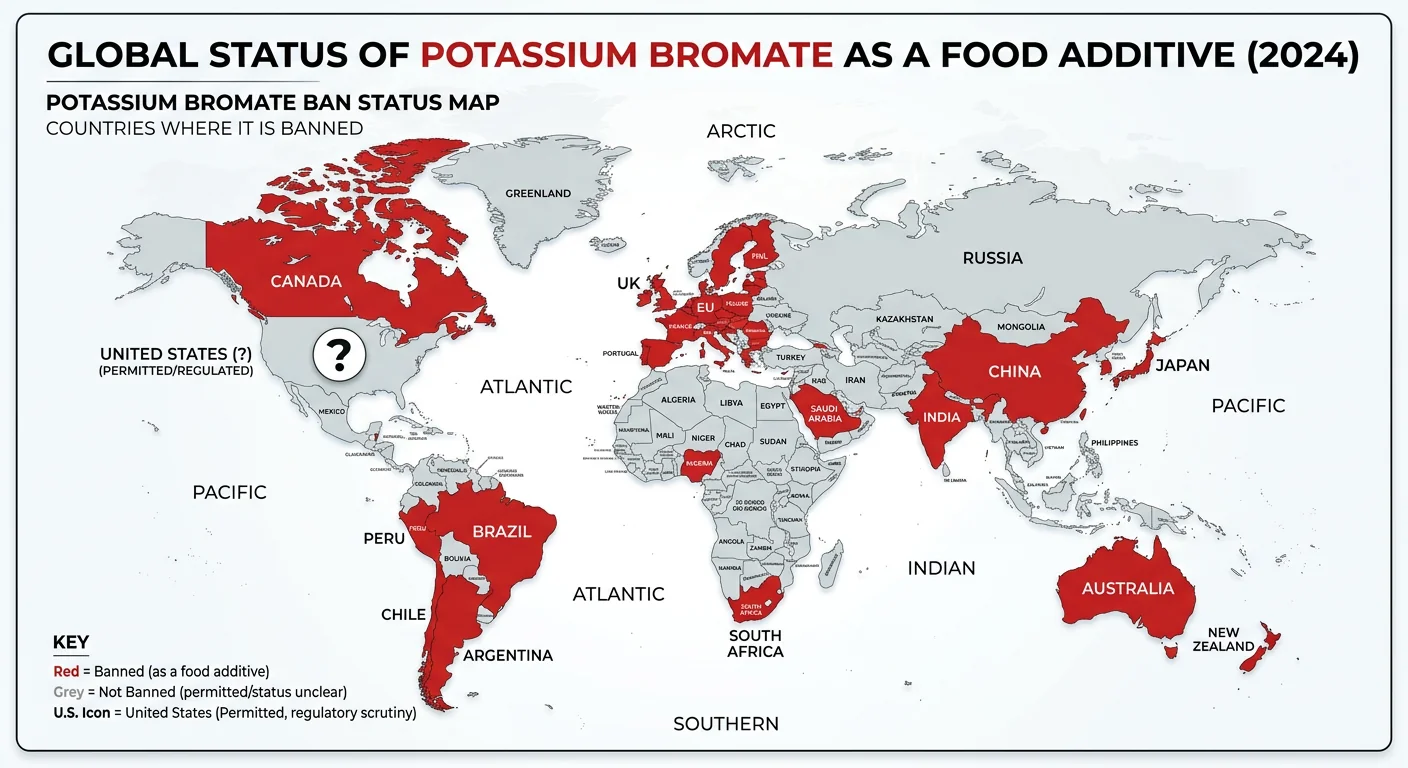
Pick up a loaf of bread from an American grocery store and read the ingredient list. Most will look familiar: flour, water, yeast, salt. But in some breads, tucked near the end of the list, is a chemical that the European Union banned in 1990, that Canada banned in 1994, that India banned in 2016, and that more than 40 countries have prohibited from their food supplies entirely.
Potassium bromate, also listed as KBrO₃ on some labels, is a flour-improving agent that has been permitted in American bread since 1941. The FDA last formally reviewed its safety in 1973. In the five-plus decades since, hundreds of peer-reviewed studies have been published documenting its carcinogenic effects in animals. The International Agency for Research on Cancer classifies it as a Group 2B possible human carcinogen. California has banned it from all food effective January 2027.
It is still legal in most of the United States.