Propylparaben: Why Europe Banned It and the US Hasn't Yet

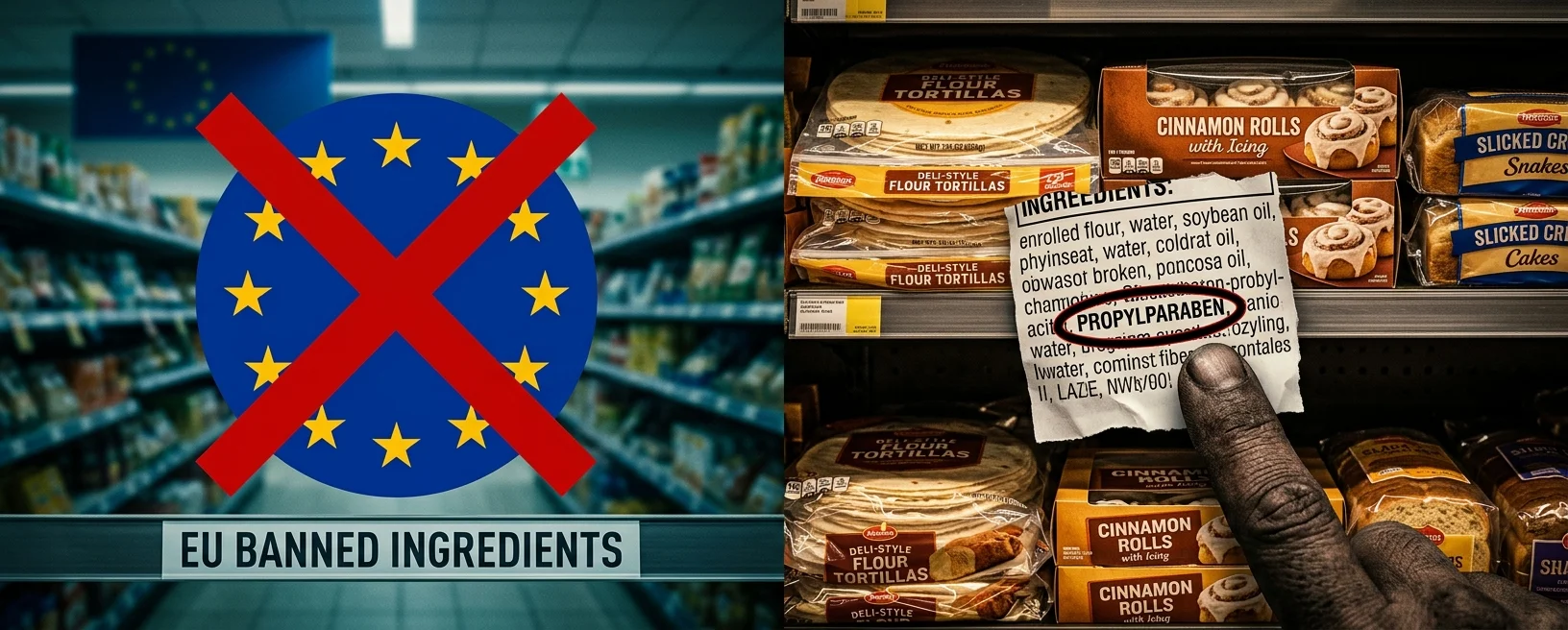
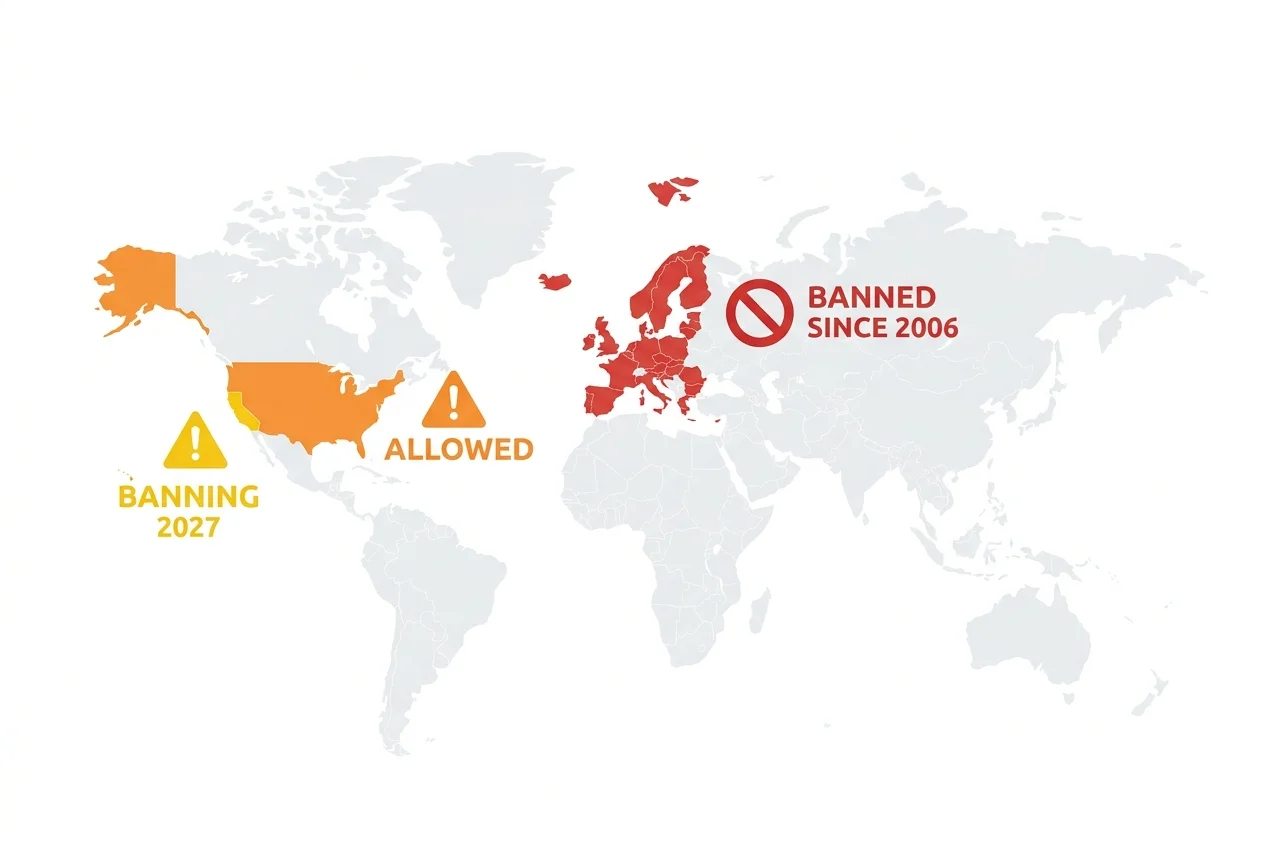
The EU banned propylparaben from food in 2006. California bans it in 2027. The FDA still allows it. Here's why that gap exists — and what's in your pantry.

Mar 28, 2026|8 min read
Propylparaben: Why Europe Banned It and the US Hasn't Yet

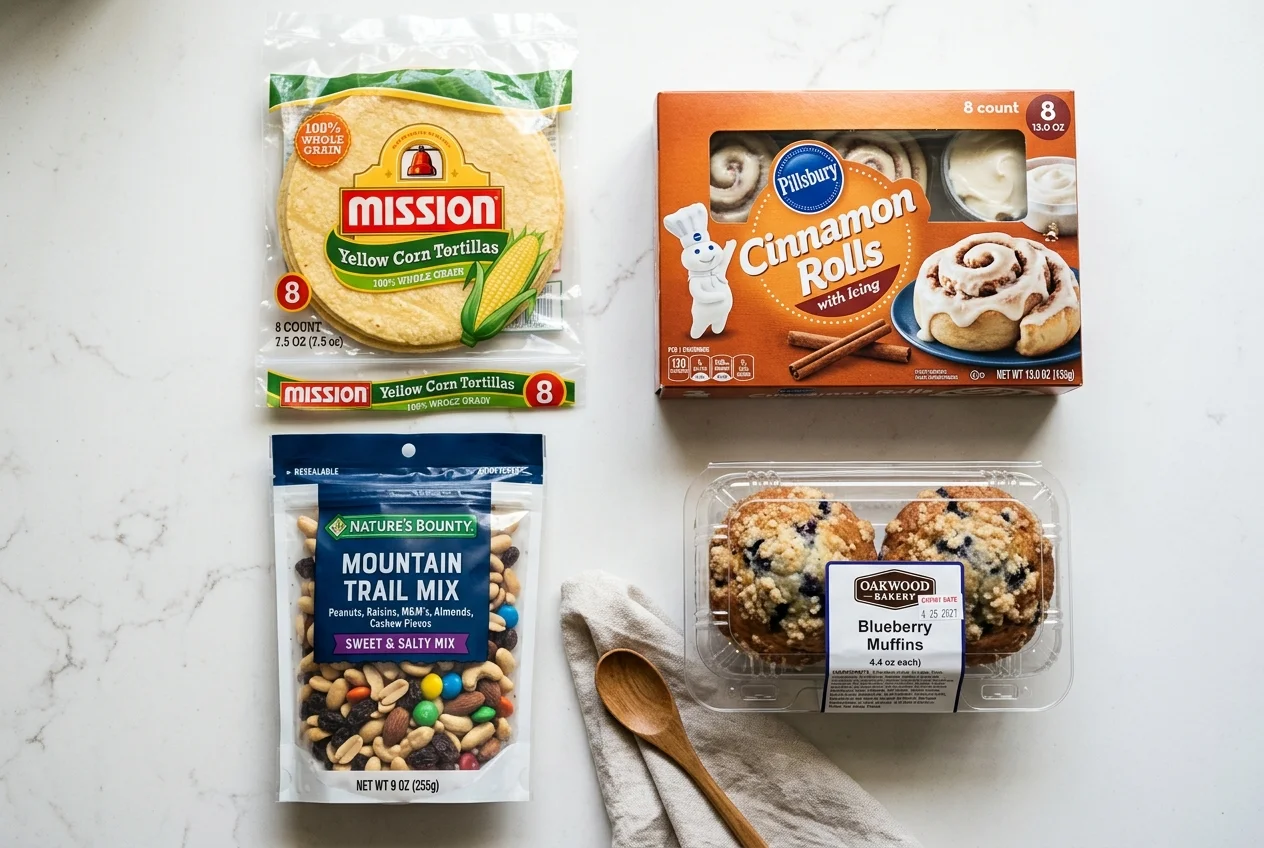
If you've eaten packaged corn tortillas, store-bought cinnamon rolls, or trail mix in the United States recently, there's a reasonable chance you've consumed propylparaben, a chemical preservative the European Union banned from food back in 2006.

Twenty years later, it still has GRAS (Generally Recognized As Safe) status with the FDA and appears in roughly 50 food products on US grocery shelves. California is banning it effective January 2027. The FDA has placed it on its list of chemicals to reassess in 2026. But for most American consumers, propylparaben remains invisible: unlabeled in any meaningful way, and largely unknown outside of food science circles.

That gap between what European and American regulators have decided about the same ingredient, and why it exists, is worth understanding.
What Is Propylparaben?

Propylparaben is a synthetic ester of para-hydroxybenzoic acid, belonging to a family of chemicals called parabens. Its job in food is simple: it prevents the growth of bacteria, mold, and yeast, extending the shelf life of packaged products. The food industry has used it since the 1920s, and the FDA formally classified it as GRAS in 1977.

In food, it's most commonly found in:

  • Packaged corn and flour tortillas
  • Baked goods: cakes, muffins, pastries, cinnamon rolls
  • Icing, frostings, and cake toppings
  • Packaged dry sausage and processed meats
  • Trail mixes and snack mixes
  • Jams, jellies, and preserves
  • Olives and pickles

On a US ingredient label, it appears simply as "propylparaben." In the EU, where it's now prohibited in food, it was previously listed as "E216."

Why the EU Banned It in 2006

Why the EU Banned It in 2006

The sequence of events that led to Europe's ban is a useful window into how different regulatory philosophies handle the same scientific evidence.

In 2002, researchers at the Tokyo Metropolitan Institute of Public Health published findings showing that propylparaben decreased sperm counts in young male rats at concentrations at or below what the FDA considers safe in food. The effect was on male reproductive organs and sex hormones, not at extreme doses, but at exposures comparable to what a human might receive from normal consumption.

Two years later, in 2004, the European Food Safety Authority (EFSA) issued an advisory concluding that the existing acceptable daily intake (ADI) for propylparaben in food was no longer valid based on these findings. EFSA's position was that the evidence of hormonal effects was sufficient to invalidate the safety assumption, even without definitive proof of harm in humans.

By 2006, propylparaben was removed from the EU's list of authorized food additives. European manufacturers reformulated their products.

The FDA, working from the same underlying science, reached no equivalent conclusion. Its GRAS classification, established in 1977 years before this reproductive research existed, was never formally revisited.

The Science Behind the Concern

Propylparaben is classified as an endocrine-disrupting chemical, meaning it interferes with the body's hormone signaling system. It acts as a weak synthetic estrogen, capable of binding to estrogen receptors and altering gene expression related to reproductive development and function.

The Environmental Working Group summarizes the documented risks:

  • In men: linked to reduced sperm count, decreased sperm quality, and lower testosterone levels
  • For pregnant people and developing fetuses: potential disruption of hormonal development during critical windows
  • Breast cancer associations: some studies have detected parabens in breast tissue and linked them to hormone-sensitive cancer pathways, though causation remains debated
  • Propylparaben is detectable in blood, urine, and breast milk, indicating it is absorbed and circulates in the body

A 2021 peer-reviewed analysis published in Current Environmental Health Reports by researchers at the University of Massachusetts School of Public Health concluded that "inadequate evidence has been provided for the safe use of propylparaben in food, cosmetics, and consumer products." The researchers noted large data gaps in existing hazard assessments and challenged the assumption that decades of use automatically equals safety, calling that circular reasoning.

The concern isn't primarily about acute toxicity. Propylparaben isn't going to make someone immediately ill. The worry is cumulative, low-level exposure over years, particularly during critical developmental stages: pregnancy, infancy, and puberty.

What's Actually in Your Pantry

What's Actually in Your Pantry

The Environmental Working Group found propylparaben in nearly 50 widely available US food products. Specific examples include:

  • Sara Lee cinnamon rolls
  • Café Valley muffins
  • La Banderita corn tortillas
  • Goya corn tortillas
  • Publix Nut and Chocolatey Trail Mix
  • Weight Watchers branded cakes

These aren't obscure specialty items. They're mainstream grocery staples. The prevalence in tortillas is particularly notable given how frequently corn and flour tortillas appear in everyday meals for many American households.

Worth knowing: Propylparaben can appear in products that don't carry any special warning and are marketed as everyday foods. Unlike allergens, preservatives don't require front-of-pack disclosure.

The GRAS Loophole Problem

Part of why propylparaben's GRAS status has persisted lies in the structure of US food chemical regulation itself. The FDA's GRAS system, as discussed at length in the ongoing debate about food chemical oversight, allows manufacturers to self-certify the safety of ingredients without notifying the FDA. More significantly, legacy GRAS determinations made decades ago are not automatically revisited when new science emerges.

Propylparaben's 1977 classification predates all the reproductive and endocrine-disruption research that prompted Europe's ban. The FDA has no automatic mechanism to reopen a GRAS file when new studies are published.

The FDA's 2026 Human Foods Program priority deliverables specifically listed propylparaben (alongside phthalates, BHA, and BHT) as a chemical whose safety it intends to reassess this year. Whether that assessment leads to regulatory action remains to be seen; the BHA reassessment, which has been underway longer, still hasn't concluded.

The State-Level Pressure Campaign

With federal action slow, states have moved ahead.

California signed the California Food Safety Act (AB 418) into law in October 2023. The law bans the manufacture, distribution, and sale of food products containing propylparaben in California, effective January 1, 2027, along with brominated vegetable oil (BVO), potassium bromate, and Red Dye No. 3. Civil penalties of up to $5,000 per first violation and $10,000 for subsequent violations provide enforcement teeth.

Because California is the largest US state by population and many manufacturers produce nationally unified product lines, the California ban effectively pressures companies to reformulate for the entire US market. This is sometimes called the "California effect": state regulation driving national reformulation.

California isn't alone. At least a dozen states including West Virginia and New York have introduced or passed legislation targeting similar food additives. The patchwork is growing.

The Regulatory Divide in Plain Terms

The EU and the US apply fundamentally different standards when evaluating food chemicals. The EU applies something closer to a precautionary approach: if credible evidence suggests harm is plausible and the ingredient is not essential, it loses authorization until safety can be affirmatively demonstrated. The US tends to require evidence of harm before acting, and existing GRAS determinations are not automatically reopened.

Neither approach is without tradeoffs. The US system allowed for broad food ingredient innovation; the EU system has produced a cleaner food supply with fewer controversial additives. On propylparaben specifically, the EU made a regulatory call in 2006 that the US hasn't matched 20 years later, even as the science has only grown more concerning.

The practical takeaway for consumers is this: the FDA's GRAS designation is not a guarantee of safety. It means the ingredient was evaluated and deemed acceptable under the standards that existed at the time. In propylparaben's case, those standards are four decades old.

This article is for informational purposes only and should not be considered medical advice. Consult a healthcare professional for personalized dietary guidance.

Is Propylparaben in Your Food?

Reading ingredient labels is the most reliable way to know. Look for "propylparaben." It's typically listed near the end of the ingredient list, alongside other preservatives. If it's there, it's there.

IngrediCheck instantly flags propylparaben and other controversial preservatives when you scan a product. If you want to know what's in the baked goods, tortillas, or snacks in your cart before they end up in your kitchen, scanning takes seconds and shows you exactly what you're buying, including the ingredients that don't make the front of the pack.

Start making confident food choices today!

Scan food and understand what's right for you and your family, with AI.

IngrediCheck app