Ingredient Deep Dives

Propylene Oxide: The Food Treatment Agent the EU Doesn't Allow

Propylene oxide is used in the U.S. to fumigate some spices, nuts, cocoa, and dried foods. The EU treats it very differently, making it a label-blind additive issue.

Apr 26, 2026|8 min read
Propylene Oxide: The Food Treatment Agent the EU Doesn't Allow

Propylene oxide is not the kind of ingredient most shoppers can find by reading a label. That is exactly why it now belongs in the ingredient-deep-dive branch of the additives cluster instead of staying only as a policy explainer.

In the United States, propylene oxide can be used as a postharvest fumigant on certain foods, including dried herbs and spices, tree nuts, cocoa, dried garlic and onion, figs, prunes, and raisins. The EPA tolerance rule sets residue limits for propylene oxide on those foods. In Europe, industry testing labs warn that propylene oxide is not allowed as a plant-protection or food-decontamination treatment in the same way, so a default pesticide-residue limit applies when no specific maximum is set.

That split also helps explain why propylene oxide now appears on the expanded ALDI Restricted Ingredients List. It is the sort of upstream treatment chemical a clean-label retailer may want to eliminate even when the average shopper will never see it printed the way they would see Blue 1 or BHT.

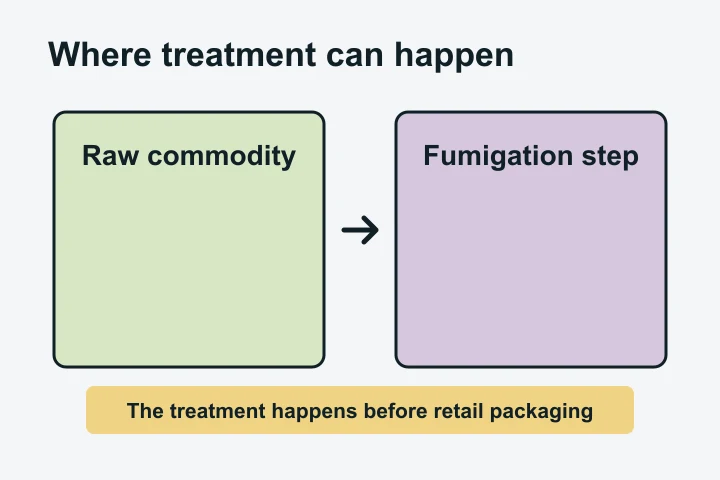
That makes propylene oxide different from potassium iodate or bleached flour. Those are label-reading problems. Propylene oxide is often a supply-chain treatment problem. The food may be treated before it ever reaches a retail package, and the shopper may never see the treatment named.
What Propylene Oxide Is Used For

What Propylene Oxide Is Used For

Propylene oxide, also known as methyloxirane, is a volatile chemical used in industry and agriculture. In food handling, its relevant role is fumigation: reducing insects, mold, bacteria, and other microbial risks in products that are difficult to sterilize without damaging flavor or texture.

The FAO JMPR evaluation describes propylene oxide as an insecticidal fumigant and sterilant used to control bacterial contamination, mold contamination, insect infestations, and microbial spoilage. The submitted residue studies covered commodities such as tree nuts, cocoa, herbs and spices, dried fruit, dried onion, and dried garlic.

That technical function is real. Spices and nuts can carry pathogens. Low-moisture foods are not automatically risk-free. Heat, steam, irradiation, and other treatments can affect quality differently. Propylene oxide became one tool in that food-safety toolbox.

The controversy is not whether contamination control matters. It does. The controversy is whether this chemical is the right tool, especially when other regions avoid it.

The U.S. Allows Residues on Specific Foods

EPA pesticide tolerances define the maximum amount of a pesticide residue that can remain in or on food. EPA explains that these tolerances are the legal maximum residue levels for food commodities.

For propylene oxide, 40 CFR 180.491 establishes residue tolerances for use as a postharvest fumigant. The listed limits include:

  • 300 ppm for dried herbs and spices, tree nuts, dried garlic, and dried onion
  • 200 ppm for cocoa powder and dried cocoa beans
  • 3 ppm for dried figs
  • 2 ppm for dried prunes
  • 1 ppm for raisins

Those numbers do not mean every product contains residues near the limit. They define what is legally permitted after treatment. The point for shoppers is that the U.S. system explicitly allows propylene oxide residues on certain commodities.

The National Toxicology Program lists propylene oxide as reasonably anticipated to be a human carcinogen, based on sufficient evidence from animal studies. The same profile notes that consumers may be exposed by ingestion of residues in foods resulting from its use as a food fumigant.

This is the tension: the treatment is permitted for food safety and commodity protection, while the chemical itself carries a serious toxicology classification.

Why Europe Treats It Differently

Why Europe Treats It Differently

The EU comparison is less visible because propylene oxide is not a normal retail additive. It is not like titanium dioxide, where an E-number was removed from the additive list. It is closer to a pesticide-residue and treatment-status issue.

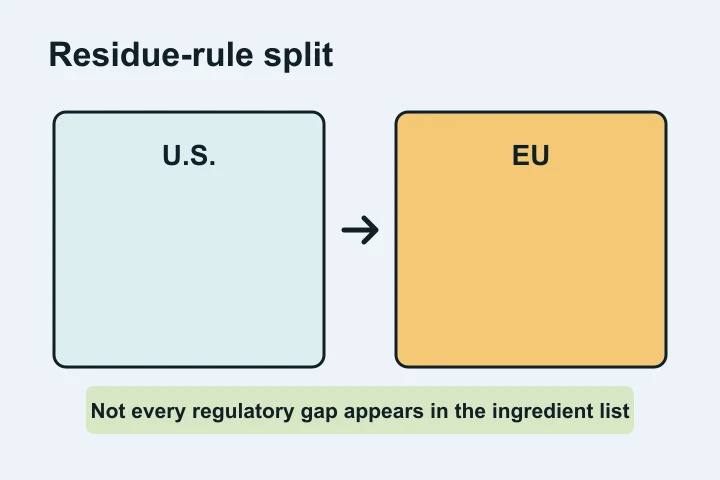
Testing and compliance firms that work with EU import rules describe the practical status clearly. Merieux NutriSciences says propylene oxide is allowed in the U.S. as a microbial-reduction technique for certain foods, while Europe does not allow its use in plant-protection products. Where no specific maximum residue level exists, the default limit under EU pesticide-residue law is generally applied.

The legal details matter for importers more than consumers, but the consumer meaning is straightforward. A U.S. spice, nut, or cocoa ingredient may come from a supply chain where propylene oxide treatment is legal. A comparable EU-market product is operating under a much tighter treatment expectation.

Why Spices and Nuts Are Hard Cases

Propylene oxide persists in the food-safety conversation because the foods involved are genuinely hard to treat. Dried spices, cocoa, and tree nuts can carry microbes, but they also contain volatile aromas, oils, and textures that consumers notice quickly. A treatment that makes pepper taste flat, makes almonds stale, or changes cocoa aroma can solve one problem while creating another.

Low-moisture foods also behave differently from fresh produce or raw meat. They may not support the same kind of rapid microbial growth, but pathogens can survive dry conditions and later become a problem when the ingredient is added to a ready-to-eat food. That is why processors look for validated kill steps even in foods that feel shelf-stable.

This context does not excuse every fumigant. It explains why the replacement conversation is technical. The best alternative depends on the commodity, the target pathogen, the supplier, and the product quality standard. Europe and the U.S. have landed in different places on propylene oxide, but both systems are trying to balance microbial risk, chemical residue risk, and food quality.

Why You Usually Will Not See It on a Label

This is the hardest part of propylene oxide for shoppers. It may not appear as a named ingredient because it is not added for flavor, texture, color, or preservation in the finished retail formula. It is used as a postharvest fumigant on commodity inputs.

That is why the propylene oxide ingredient profile needs to be read a little differently from a normal additive page. The goal is not simply to catch a printed label word. It is to understand which food categories, supplier practices, and sourcing questions make the chemical relevant in the first place.

That means the package may list:

  • black pepper
  • paprika
  • dried garlic
  • onion powder
  • cocoa powder
  • almonds
  • walnuts
  • pistachios

without telling you whether any input was treated with propylene oxide. The ingredient list tells you what the food contains. It usually does not tell you every postharvest treatment used upstream.

This is why propylene oxide is a weaker label-visible post than bread additives, but still a useful article. It explains a blind spot. Some regulatory differences do not show up as a clean ingredient name.

Where the Exposure Question Lives

The risk discussion should stay precise. Propylene oxide's strongest toxicology concerns come from animal evidence and occupational or industrial exposure contexts. Food exposure is about residues after fumigation, not direct handling of concentrated chemical.

Still, residues are exactly what the EPA tolerance table regulates. That means food exposure is not imaginary. It is controlled through legal residue limits.

The practical questions are:

  1. Was the commodity treated?
  2. What residue remained after treatment and storage?
  3. Does the final food contain treated inputs often enough to matter for a given person's preferences?

For most consumers, those questions cannot be answered from the package alone. That pushes the decision toward category-level habits rather than product-by-product certainty.

More Practical Alternatives

Food companies have other microbial-reduction options, though each has tradeoffs:

  • steam treatment, often used for spices and nuts but capable of changing aroma or texture
  • dry heat, useful for some commodities but not all
  • irradiation, effective but still resisted by some consumers and brands
  • validated supplier controls, which reduce contamination risk before a kill step is needed
  • smaller-batch sourcing and tighter storage controls, which can reduce but not eliminate risk

No alternative is perfect. The right treatment depends on the commodity and the hazard. But the EU-U.S. split shows that propylene oxide is not the only possible approach.

How Shoppers Can Use This Information

Because propylene oxide is usually not label-visible, the best shopping strategy is indirect:

  • choose brands that publish treatment or sourcing standards for spices and nuts
  • look for steam-treated spice claims when they are available
  • favor products with transparent supplier or organic practices if this issue matters to you
  • avoid assuming an ingredient is untreated just because the label does not name a fumigant
  • use propylene oxide as a reminder that some food-safety choices happen before packaging

Organic status may reduce some treatment pathways, but it is not a universal guarantee for every concern. If propylene oxide avoidance is important to you, supplier transparency is stronger than vague front-label language.

Why This Belongs in the Additives Cluster

Propylene oxide broadens the EU-vs-U.S. additive conversation beyond the usual bread, dyes, and preservatives. It shows that "banned abroad" is not always an ingredient-list problem. Sometimes it is a processing-aid or residue issue.

That is why it belongs beside 44 Food Additives Banned Abroad: Texas's Warning Label List, the broader Food Additives Banned in the EU but Still Allowed in the U.S. guide, and the retailer-specific ALDI Restricted Ingredients List. It helps readers understand why a single giant list of banned chemicals can mix very different categories.

IngrediCheck is most powerful when a concern is visible on the ingredient list, but it also helps organize the foods you scan and the ingredient patterns you care about. For propylene oxide, use the app to track high-risk categories like spice mixes, cocoa products, nut snacks, and dried-food-heavy packaged products, then combine that with brand-level sourcing information when the treatment itself is not printed on the label.

For more label-visible examples in the same policy cluster, read Potassium Iodate: The Bread Additive Europe Rejected, Bleached Flour: Why Europe Rejected Chemical Flour Bleaching, and the Additives Banned Abroad hub.

Get the app for clearer label decisions.

Scan labels, see what fits your food notes, and read the why in plain English.

IngrediCheck app