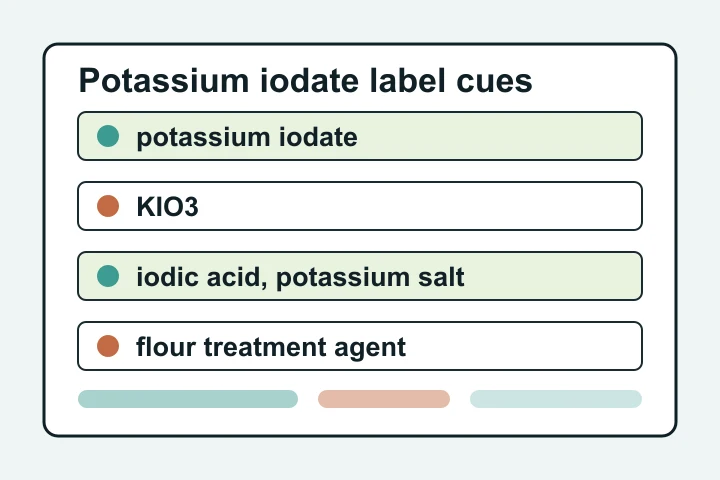
Potassium iodate is one of the quieter bread additives in the U.S. regulatory debate. It does not have the name recognition of potassium bromate, and it never became a pop-culture shorthand like azodicarbonamide. But it belongs in the same flour-treatment family: an oxidizing agent used to strengthen dough and help commercial bread behave predictably.
The international split is what makes it worth a dedicated look. The FDA lists potassium iodate as a dough strengthener, flour treating agent, nutrient supplement, and oxidizing or reducing agent. U.S. rules allow it in bread up to a defined limit. By contrast, the Joint FAO/WHO Expert Committee on Food Additives says potassium iodate is not recommended for use in flour treatment, while still recognizing iodate and iodide as sources of dietary iodine in other contexts.
That distinction matters. Potassium iodate is not simply "iodine," and bread is not the same delivery vehicle as iodized salt.