Bleached Flour: Why Europe Rejected Chemical Flour Bleaching

Bleached flour sounds ordinary because American shoppers have seen the phrase for decades. A bag of all-purpose flour may say "bleached enriched flour" in large type, and many packaged cookies, crackers, cakes, tortillas, buns, and breaded foods use flour that has been chemically whitened or treated.

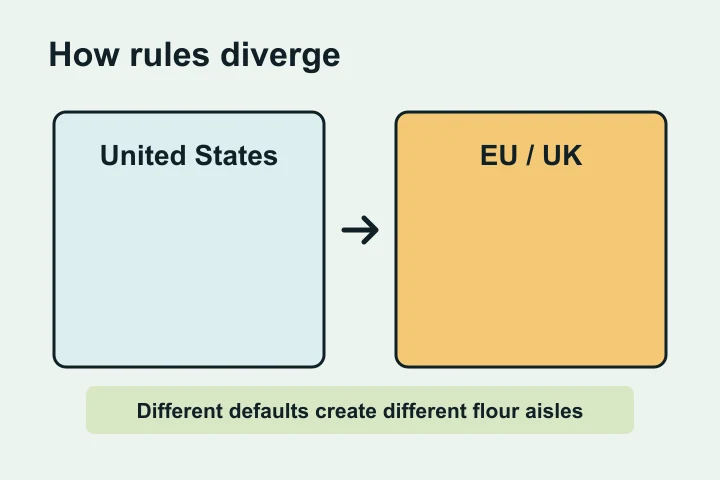
That familiarity hides a real policy gap. Under U.S. rules, flour can be bleached with several optional agents. Under the EU-style positive-list approach and UK bread-and-flour rules, chemical flour bleaching has been treated much more restrictively. The result is a quiet split in the bakery aisle: an ingredient practice that still looks normal on U.S. labels is largely unnecessary or unavailable in many peer markets.

This is not the same story as potassium bromate or azodicarbonamide, where one named additive carries most of the headline. Bleached flour is a category problem. The label may tell you the flour was bleached, but the chemical route behind that bleaching can be harder to see at a glance.
What Flour Bleaching Actually Does

What Flour Bleaching Actually Does

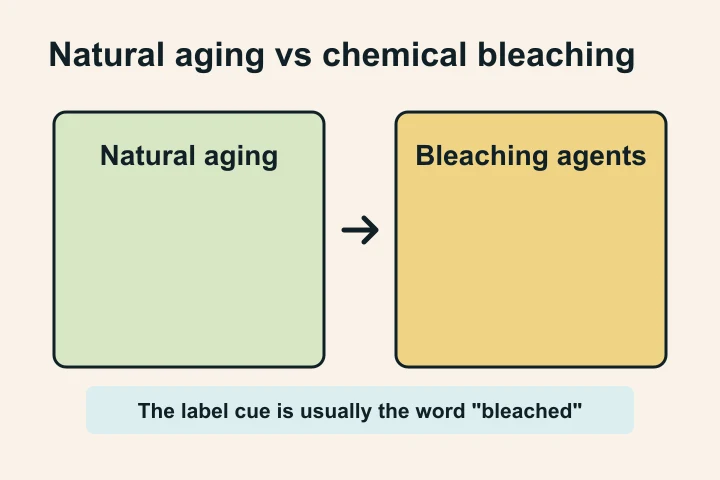
Freshly milled flour is not bright white. It has a pale yellow cast from natural pigments in wheat, and it changes as it rests. Traditionally, flour aged over time. Oxygen in the air slowly whitened it and altered how it behaved in doughs and batters.

Chemical bleaching speeds that up. Flour bleaching agents can whiten flour, change protein behavior, affect starch and lipid components, and create more predictable performance for specific products. That matters in high-volume baking because different flour lots can behave differently. A cake flour, cookie flour, and bread flour may be treated for different performance goals.

The FDA standard for flour lists several optional bleaching ingredients, including oxides of nitrogen, chlorine, nitrosyl chloride, chlorine dioxide, benzoyl peroxide, acetone peroxides, and azodicarbonamide when it meets its separate limit. The same rule says that when an optional bleaching ingredient is used, the label must bear the word Bleached.

So "bleached flour" is not just a color description. It is a processing disclosure.

The U.S. Still Allows It

U.S. flour rules are explicit. Bleaching ingredients can be used in flour as long as the addition does not conceal damage or make the flour appear better or more valuable than it is, and as long as the amount is not more than enough for the intended bleaching or aging effect.

Some individual agents also have their own U.S. rules. Benzoyl peroxide, for example, is affirmed as generally recognized as safe for certain uses, including as a bleaching agent in flour under current good manufacturing practice.

This is why U.S. labels may openly use phrases like:

  • bleached wheat flour
  • enriched bleached flour
  • bleached enriched wheat flour
  • bleached cake flour

The word "bleached" is the main shopper cue. In some contexts the specific bleaching agent may be listed too, but many shoppers will not see a simple front-of-pack explanation of which chemical treatment was used.

Why Europe and the UK Treat This Differently

European additive law works from a positive list. The European Commission explains that additives must be authorized and listed with conditions of use, including flour treatment agents. That is a different default from assuming an older U.S. allowance remains acceptable until withdrawn.

UK bread-and-flour rules are more direct. The Bread and Flour Regulations 1998 say that a person must not use a flour bleaching agent or flour treatment agent in the preparation of flour or bread unless that agent is specified in the regulation and used within its permitted conditions. Modern UK guidance continues to treat flour bleaching agents as restricted in ordinary flour and bread.

Industry summaries often state the result plainly: BAKERpedia notes that flour bleaching agents are banned in the EU, Canada, the UK, and China. The precise legal mechanics vary by jurisdiction, but the shopper-facing difference is clear. Chemically bleached flour is a normal U.S. label phrase. In many other markets, it is not.

This Is Not Just About Whiteness

This Is Not Just About Whiteness

It is tempting to frame bleached flour as a cosmetic issue. That is partly true. Whiter flour historically signaled refinement, and millers had a commercial incentive to produce a brighter, more uniform product.

But bleaching also changes performance. Chlorine treatment, for example, can affect cake flour functionality. Benzoyl peroxide is primarily a whitening agent. Azodicarbonamide can act as both a bleaching and dough-conditioning ingredient. The chemistry depends on the agent and the product.

That is why the ingredient belongs in the same cluster as other bread and flour treatment agents. Food Additives Banned in the EU but Still Allowed in the U.S. separates these cases because "banned abroad" can mean several different things. With bleached flour, the issue is not one single contaminant. It is a processing approach that U.S. rules still normalize and other systems largely reject.

Why Cake Flour Complicates the Conversation

Cake flour is the example that keeps this topic from being only a clean-label slogan. Chlorinated cake flour behaves differently in high-sugar, high-fat batters. It can help batter hold structure and produce a fine, tender crumb in cakes that might otherwise collapse or spread. That is a real technical function, not just a cosmetic trick.

The consumer question is whether that technical function justifies keeping chemical bleaching normal across the flour aisle. For a specialty cake flour used occasionally, some bakers may decide the performance benefit matters. For everyday bread, crackers, tortillas, and general baking flour, the case is weaker. Those products often have unbleached alternatives that perform well enough for home and commercial use.

That distinction helps avoid overstatement. A serious article should not pretend all bleached flour uses are identical. It should ask whether the label gives shoppers enough information to understand the treatment and whether the treatment is necessary for the food they are buying. In most packaged-food situations, "bleached flour" is a useful sign to pause and compare.

Does Bleached Flour Mean a Product Is Unsafe?

No single label phrase can answer that. A cookie made with bleached flour is not automatically dangerous, and unbleached flour is not automatically a health food. Flour type does not erase the rest of the product: sugar, fat, sodium, fiber, serving size, and overall diet still matter.

The stronger argument for avoiding bleached flour is that the treatment is usually optional. Many breads, crackers, tortillas, pastries, and baking flours work without chemical bleaching agents. If two similar products are available and one uses unbleached flour, the unbleached option is often the simpler choice.

This is a label-transparency decision as much as a risk decision. Shoppers who prefer fewer older processing aids may treat "bleached" as a reason to compare alternatives, especially when the product is a weekly staple.

How to Spot It on Labels

The easiest cue is the word bleached. Look in both the product name and ingredient list.

Common label patterns include:

  • bleached flour
  • bleached wheat flour
  • enriched bleached flour
  • bleached enriched wheat flour
  • bleached cake flour
  • ingredient lists that pair flour with named agents such as benzoyl peroxide or chlorine dioxide

The opposite cue is unbleached. A product that says "unbleached flour" is telling you the flour was not chemically bleached. That does not mean the entire food is minimally processed, but it does answer this specific question.

Be especially careful with composite foods. A frozen meal, breaded chicken, packaged cookie, cake mix, or tortilla may not look like a flour product from the front of the package, but the ingredient list can still start with bleached flour.

What Replaces Chemical Bleaching

The cleanest replacement is time. Flour naturally whitens and matures as it ages. Modern milling, flour selection, and bakery formulation can also do a lot of the work without relying on chemical bleaching.

Other approaches include:

  • choosing flour with the right protein profile for the product
  • using ascorbic acid or enzymes for dough performance when appropriate
  • changing fermentation or mixing methods
  • reformulating products around unbleached flour

There may be technical differences, especially in cake flour and high-sugar batters where chlorinated flour has historically been used for specific texture goals. But the existence of broad unbleached product lines shows that chemical bleaching is not an unavoidable part of packaged food.

The Practical Shopping Rule

Treat "bleached" as a comparison signal. It is not a diagnosis, and it is not a full nutrition review. It is one specific marker that a flour was chemically treated in a way that many peer markets do not treat as standard.

If the product is an occasional dessert, the label may not matter much to you. If it is bread, tortillas, crackers, or baking flour that your household eats every week, choosing unbleached versions can be a simple way to reduce exposure to older flour-processing practices.

IngrediCheck helps make that check routine. When you scan packaged bread, baking mixes, tortillas, snacks, or frozen foods, you can see whether the ingredient list names bleached flour or related flour treatment agents, then decide whether that product fits your ingredient preferences.

For the rest of the bread-additive cluster, read Potassium Iodate: The Bread Additive Europe Rejected, Potassium Bromate: Banned in 40 Countries, Still in US Bread, and the Additives Banned Abroad hub.

Get the app for clearer label decisions.

Scan labels, see what fits your food notes, and read the why in plain English.

IngrediCheck app