Misconception
Calcium propionate is banned in Europe
No. Calcium propionate is permitted as E282. The cleaner concern is usually retailer standards, personal preservative rules, or whether a bread product needs mold inhibitors at all.
Check which food additives are banned in Europe, the UK, U.S. states, or still allowed, including E211, bromate, titanium dioxide, and dyes.
Intro
This banned food additives list compares ingredients that are banned, not authorized, revoked, restricted, or still permitted across EU, UK, U.S., California, and state-level rules. Use it to check bleached flour, calcium propionate, sodium benzoate E211, azodicarbonamide, potassium bromate, titanium dioxide, synthetic dyes, and other high-signal additives.
Why It Matters
Searches like "why is bleached flour banned in Europe," "is calcium propionate banned in Europe," "sodium benzoate ban," and "azodicarbonamide banned countries" need a status snapshot before a deep article. A dedicated lookup table helps shoppers compare the rulebook, label names, and product categories quickly, then move into sourced ingredient profiles for the details.
Free tool
Paste an ingredient list and check it against every additive on this page at once.
Fast answer
There is no single global banned additives list. Some ingredients are banned from food commerce, some are no longer authorized, some are permitted with limits, and some are only restricted by states or retailers. Start by checking the exact ingredient name, E-number or label cue, then compare EU, UK, U.S., and state status before treating a search result as a true ban.
Country and state tracker
Use these rows as a fast orientation layer. Some answer true ban questions; others clarify when a searched ingredient is revoked, not authorized, permitted with limits, retailer-excluded, or only restricted in certain states or categories.
Rule status
Permitted in U.S. flour standards when the underlying bleaching agents are allowed; treated much more restrictively in EU and UK-style flour rules.
Country or state tracker
This is usually a category-status query, not one single banned ingredient. The cleaner comparison is chemically bleached flour versus unbleached flour.
Label cues
Rule status
Not banned in the EU or U.S.; permitted as E282 in the EU additive system and allowed under U.S. food rules.
Country or state tracker
Often confused with retailer clean-label exclusions, especially for bread and tortilla products. Treat this as permitted-use plus personal preference, not a ban.
Label cues
Rule status
Not banned in the EU or U.S.; permitted as E211 in the EU additive system and allowed under U.S. preservative rules.
Country or state tracker
The practical concern is usually the benzoate-plus-vitamin-C beverage context, not a direct sodium benzoate ban.
Label cues
Rule status
Permitted for limited U.S. flour and bread use up to 45 ppm; not authorized for food use in the EU, where EFSA has described ADA dough-improver use as illegal.
Country or state tracker
Use official positive lists for exact country checks. Lack of authorization can be the practical answer even when a country does not use the word banned.
Label cues
Rule status
Permitted in specified U.S. flour and bread standards, under FDA review, and banned from California food commerce starting January 1, 2027.
Country or state tracker
Many non-U.S. markets do not permit food use, while the U.S. still allows bromated flour and related bread-standard uses. Label searches should include both potassium bromate and bromated flour.
Label cues
Rule status
EU food use is no longer authorized; FDA still permits titanium dioxide as a color additive within U.S. limits.
Country or state tracker
Best known as the E171 EU-ban query, with separate U.S. review and state school-food restrictions to watch.
Label cues
Rule status
No longer authorized for EU food use; U.S. federal status differs, while California bans it from food commerce starting January 1, 2027.
Country or state tracker
Useful for EU-versus-U.S. preservative comparisons and state-law tracking.
Label cues
Rule status
FDA revoked the rule that allowed BVO in food; California also includes it in the Food Safety Act.
Country or state tracker
A high-signal U.S. revocation and state-law example rather than a simple abroad-only ban story.
Label cues
Rule status
FDA revoked authorization for food and ingested drugs with a transition period; California also bans it from 2027.
Country or state tracker
A clear synthetic-dye precedent for shoppers tracking federal action, state bans, and reformulation timing.
Label cues
Rule status
U.S. residue tolerances allow use on selected treated foods; Europe treats the chemical more restrictively.
Country or state tracker
A supply-chain treatment issue where the status question is real even when the ingredient is not obvious on the package.
Label cues
Misconception checks
Searchers often use banned as shorthand for several different statuses. These rows keep the hub precise before readers move into ingredient profiles or long-form explainers.
Misconception
No. Calcium propionate is permitted as E282. The cleaner concern is usually retailer standards, personal preservative rules, or whether a bread product needs mold inhibitors at all.
Misconception
No. Sodium benzoate is still permitted in the U.S. and EU systems. The high-signal shopper issue is usually E211 label lookup or benzene-formation context in acidic drinks with vitamin C.
Misconception
Bromated flour is flour treated with potassium bromate under U.S. flour standards. For shopping, both terms belong in the same bread-additive check.
Misconception
Not always. A country can block use through positive-list rules, revoked authorization, category limits, or explicit statutory bans. The shopper result may be similar, but the legal wording is different.
Related Hubs
Ingredient Safety
Explore IngrediCheck's ingredient safety hub for additives, contaminants, preservatives, and evidence-based label guidance.
Bread Additives
Compare bread additives like potassium bromate, azodicarbonamide, iodate, calcium propionate, and bleached flour label clues.
Where Ingredients Appear
Look up where additives like Blue 1, Yellow 5, BHA, potassium bromate, sodium benzoate, and calcium propionate appear in foods.
E-Number Glossary
Look up E-number food additive codes like E211, INS 211, E171, E415, and E950, with plain-English names and label checks from IngrediCheck.
Featured Ingredients
additive
Bleached flour is flour treated with optional bleaching or aging agents so it looks whiter and behaves more predictably in certain baked goods. The shopper cue is usually the word bleached, not a single additive name.
preservative
Calcium propionate is a mold-inhibiting preservative commonly used in bread, buns, tortillas, and other packaged baked goods. It matters because it sits at the center of a real shelf-life tradeoff between softer bread products and simpler ingredient decks.
preservative
E211 preservative, preservative 211, and INS 211 all mean sodium benzoate. It appears most often in acidic beverages, sauces, condiments, and shelf-stable products, where it helps keep bacteria, yeasts, and moulds from growing.
additive
Azodicarbonamide is a flour treatment agent used to strengthen dough handling and promote a more uniform crumb in commercial bread products. It is more famous in public debate for where it is banned than for what bakers use it to do.
additive
Potassium bromate is a flour improver that can strengthen dough and improve loaf volume in commercial baking. It is one of the clearest examples of an ingredient that remains legal in parts of the U.S. while many other markets have already rejected it.
dye
Titanium dioxide is a whitening and opacity agent used to make icings, candies, sauces, and supplements look brighter and more uniform. It became a household ingredient topic after Europe decided food use was no longer acceptable.
preservative
Propylparaben is a preservative used to slow spoilage in certain processed foods, especially where fat and moisture make shelf life fragile. It draws attention because the United States and Europe have treated the ingredient very differently.
emulsifier
Brominated vegetable oil is a beverage emulsifier once used to keep citrus flavor oils suspended in soft drinks and flavored beverages. It matters because it became one of the rare additive stories that mainstream shoppers could easily understand and that regulators, states, and retailers all eventually moved against.
dye
Red Dye No. 3 is a synthetic food color historically used in candies, cake decorations, and bright red processed foods. It became the most important petroleum-based dye story once the FDA finally moved to revoke its food authorization.
additive
Propylene oxide is a postharvest fumigant used on selected spices, nuts, cocoa, dried fruits, and dried flavor ingredients. It matters because shoppers usually cannot spot it directly on a label even though it reflects a real supply-chain treatment difference between markets like the U.S. and EU.
Related Blog Guides
Food Policy Watch
Jul 13, 2026 | 12 min read
Unlike most of the world, the FDA keeps an explicit list of substances prohibited from human food. Here is the full 21 CFR Part 189 list plus the additives and flavorings the FDA has since revoked, with the label names to watch for.
Food Policy Watch
Apr 24, 2026 | 11 min read
A careful guide to the additives Americans describe as banned in Europe, what that phrase actually means, and which ingredients still show up on U.S. labels.
Food Policy Watch
Apr 24, 2026 | 10 min read
Why do some additives disappear from the EU first and linger in American food longer? The answer is less about vibes and more about how the systems are built.
Food Policy Watch
Mar 23, 2026 | 10 min read
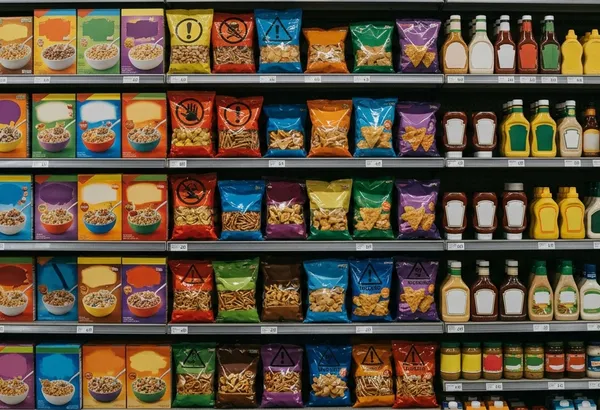
Texas passed a law requiring warning labels on foods containing 44 ingredients banned in the EU, Australia, Canada, or the UK. Here's what's on the list and why it matters.

Food Policy Watch
Apr 29, 2026 | 9 min read
A focused guide to U.S. bread additives Europe rejected, including potassium bromate, azodicarbonamide, potassium iodate, and chemically bleached flour.
Food Policy Watch
Apr 29, 2026 | 9 min read
A careful guide to flavoring chemicals, smoke flavorings, and why natural flavors or artificial flavors can hide EU-vs-U.S. regulatory differences.
Ingredient Deep Dives
Apr 27, 2026 | 8 min read
Calcium propionate helps packaged bread last longer without visible mold, which is exactly why Aldi now treats it as a clean-label tradeoff worth removing.
Ingredient Deep Dives
Apr 7, 2026 | 9 min read
Preservative 211, INS 211, and E211 are sodium benzoate. Learn where it appears, when vitamin C can form benzene, and which label names to check.

Label Reading Guides
Jul 26, 2026 | 9 min read
Compare bread brands and products using current manufacturer policies or ingredient lists that do not show potassium bromate or bromated flour.

Ingredient Deep Dives
May 23, 2026 | 9 min read
Potassium bromate and bromated flour are connected but not identical. Use this label guide to understand the wording, rules, and bread-aisle checks.

Ingredient Deep Dives
Mar 9, 2026 | 10 min read
See why potassium bromate is used in bread, what the toxicology evidence shows, and how its legal status differs across the US, Canada, UK, and EU.
Ingredient Deep Dives
Apr 23, 2026 | 8 min read
Potassium iodate can strengthen bread dough, but global regulators have treated it very differently from the U.S. Here is what it does and how to spot it.
Ingredient Deep Dives
Apr 25, 2026 | 8 min read
Bleached flour is still common in the U.S., but chemical flour bleaching is treated very differently abroad. Learn what bleaching does and how labels reveal it.
Ingredient Deep Dives
Apr 26, 2026 | 8 min read
Propylene oxide is used in the U.S. to fumigate some spices, nuts, cocoa, and dried foods. The EU treats it very differently, making it a label-blind additive issue.
Ingredient Deep Dives
Mar 9, 2026 | 11 min read
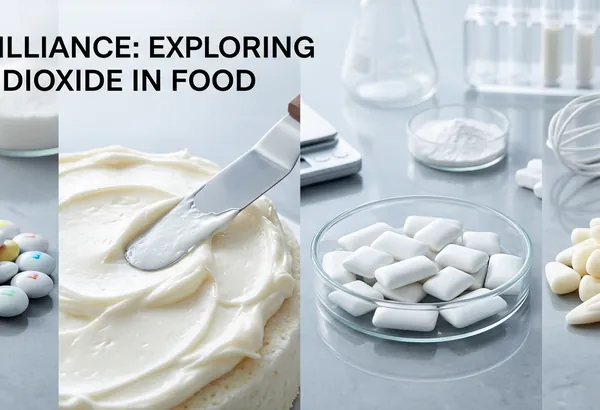
The EU banned titanium dioxide (E171) in 2022 over genotoxicity concerns. The FDA still allows it in candy, gum, and frosting across the US. Here's how to spot it on labels.

Ingredient Deep Dives
Mar 10, 2026 | 10 min read
Azodicarbonamide, or ADA, is a bread dough conditioner still allowed in the U.S. Learn EU status, banned-country claims, and label names.
Ingredient Deep Dives
Apr 27, 2026 | 8 min read
Brominated vegetable oil helped citrus flavor stay suspended in soft drinks for decades. Now the FDA, California, and retailers like Aldi have all moved away from it.
Ingredient Deep Dives
Mar 28, 2026 | 8 min read
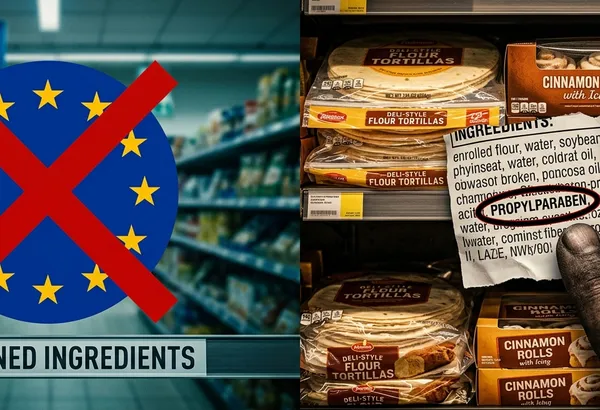
Propylparaben is a common preservative in US tortillas, baked goods, and snacks — but the EU banned it from food in 2006 over hormone-disruption concerns. California follows in 2027. Here's what you need to know.
Aug 1, 2026 | 8 min read
EU rules allow specified surface treatments on kiwis, passion fruit, and cassava without requiring an ingredient list. Here is what that narrow exception means for shoppers.
Jun 3, 2026 | 9 min read
Mineral oil hydrocarbons from recycled cardboard packaging and food processing machinery are turning up in cereals, pasta, vegetable oils, and spices. EFSA's 2023 risk assessment found one type may be genotoxic and carcinogenic, and the EU is now moving to set limits.
May 29, 2026 | 12 min read
A plain-English guide to the most common food additives by category, what the science says about each, and which ones the EU has banned while the US still allows.
May 23, 2026 | 9 min read
New York's legislature passed a bill banning potassium bromate from all food sold in the state. Here's what the law does, why this additive is controversial, and what consumers should check on labels right now.
May 20, 2026 | 10 min read
The EU bans PFAS in food-contact packaging from August 12, 2026. Here is what forever chemicals are, which products are affected, and what it means for everyday shoppers.
May 2, 2026 | 9 min read
A 2026 HiPP recall has put celery and celeriac back in the spotlight. Here is why this overlooked allergen matters, where it hides, and how to spot it on a label.
Apr 28, 2026 | 8 min read
Aldi flags potassium bromate, calcium bromate, and bromated flour separately. Here is why shoppers need the grouped bromate picture, especially in bread and baking products.
Apr 27, 2026 | 8 min read
Cyclamates sit in a strange regulatory position: banned from use in U.S. food but still relevant in global formulation and retailer exclusion lists. Here is why Aldi still bothers naming them.
Apr 27, 2026 | 8 min read
Olestra was once sold as the future of guilt-free snack food. It is now mostly remembered as a warning-label-era experiment that retailers still prefer to avoid.
Apr 14, 2026 | 10 min read
FSSAI's April 2026 advisory tells food businesses to stop using ashwagandha leaves in any form. Here's the science behind the decision and what it means for shoppers.
Apr 12, 2026 | 10 min read
The FDA's Human Foods Program released its 2026 Priority Deliverables, targeting food dyes, chemical additives, GRAS reform, and ultra-processed foods. Here is what consumers and families should expect.
Related Collection Links
Blog Collection
Regulatory shifts, outbreaks, recalls, and policy changes that shape how food gets labeled, marketed, and sold.
Blog Collection
Long-form explainers on additives, preservatives, contaminants, and the ingredients that deserve a closer look.
Blog Collection
Practical guides for decoding ingredient lists, spotting hidden red flags, and shopping with more confidence.
Scan labels, see what fits your food notes, and read the why in plain English.