MOSH and MOAH: The Petroleum Residues Found in Your Pantry

Mineral oil hydrocarbons from recycled cardboard packaging and food processing machinery are turning up in cereals, pasta, vegetable oils, and spices. EFSA's 2023 risk assessment found one type may be genotoxic and carcinogenic, and the EU is now moving to set limits.

Jun 3, 2026|9 min read
By Sanket Patel|Updated 2026-06-03|3 sources|Editorial standards
MOSH and MOAH: The Petroleum Residues Found in Your Pantry

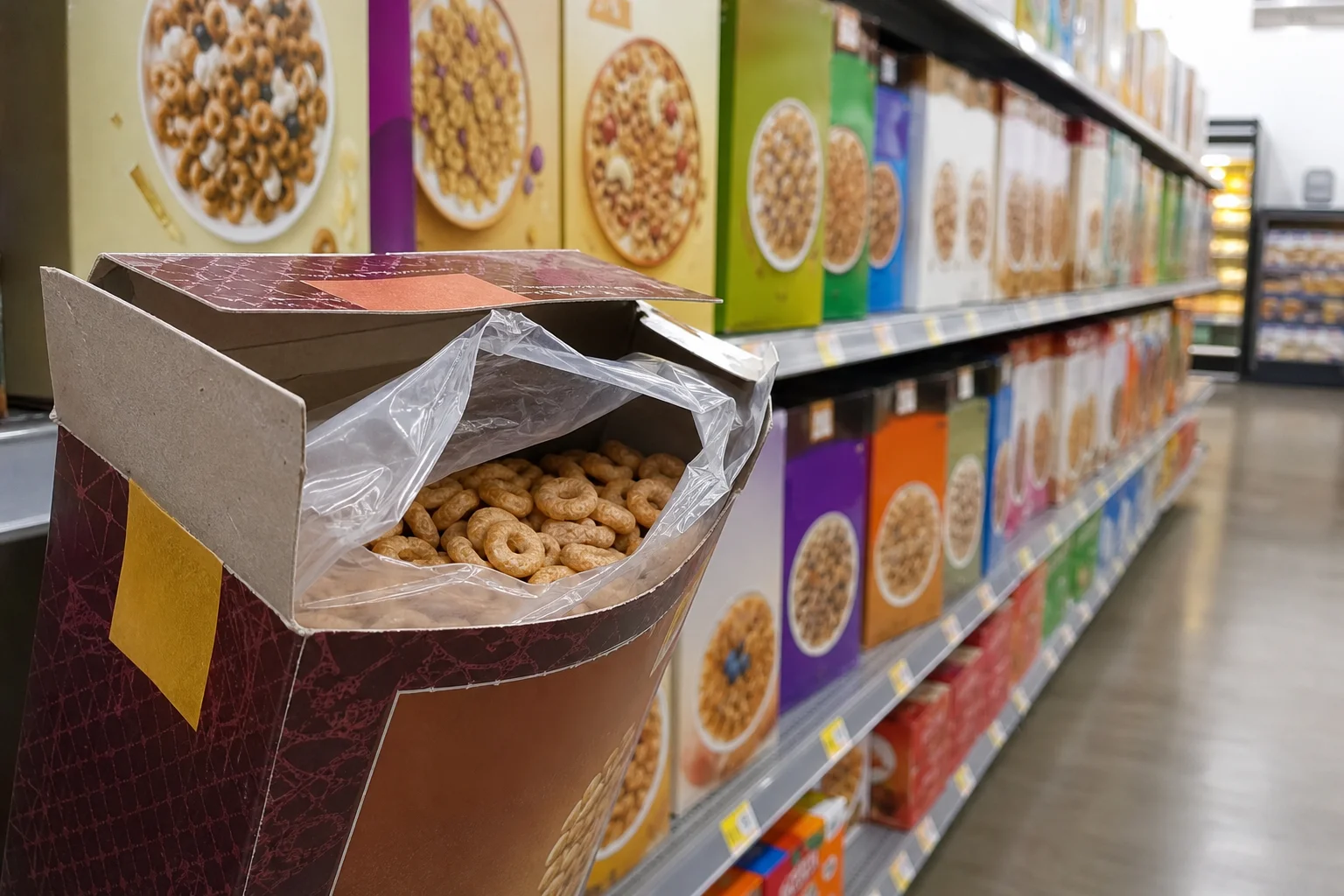
The cereal box sitting on your kitchen shelf was almost certainly made from recycled paperboard. Recycling cardboard is a widely endorsed environmental practice. But recycled paper fibers often carry traces of mineral oils from the printing inks and coatings used in previous lifetimes as newspapers, catalogs, and packaging. Those mineral oils can migrate from the box wall through the inner bag and into the food inside.

The compounds involved are called mineral oil saturated hydrocarbons (MOSH) and mineral oil aromatic hydrocarbons (MOAH). They are found in pasta, rice, breakfast cereals, vegetable oils, cocoa, spices, coffee, and chocolate. Most consumers have never heard of them. The European Food Safety Authority assessed the risk in 2023 and found that one group, MOAH, is "extremely likely" to be a health concern for toddlers and "likely" to be a concern for other age groups due to potential genotoxic and carcinogenic properties.

The EU is now in the final stages of setting maximum limits. The US has no equivalent regulatory effort underway.
What Are MOSH and MOAH?

Mineral oil hydrocarbons are a large family of chemical compounds produced mainly from the distillation and refining of crude oil. They are also produced synthetically from coal, natural gas, and biomass. MOSH and MOAH are the two main categories, classified by their chemical structure.

MOSH (Mineral Oil Saturated Hydrocarbons) are long-chain saturated molecules. They accumulate in human tissues, particularly the liver and lymphoid system. In animal studies, certain MOSH fractions have caused liver effects, though EFSA's 2023 analysis concluded that these specific effects are not relevant in humans. The current assessment is that dietary exposure to MOSH at present levels does not raise concern for human health.

MOAH (Mineral Oil Aromatic Hydrocarbons) contain aromatic ring structures. Some MOAH subfractions, particularly those with three or more aromatic rings, are considered potentially genotoxic and carcinogenic. For genotoxic carcinogens, it is not possible to establish a safe exposure level. The scientific principle applied in such cases is that exposure should be kept as low as reasonably achievable (ALARA).

Both types can enter food through multiple routes. The European Commission's food safety catalogue identifies the main pathways as environmental contamination, machinery lubricants used in food processing, release agents, processing aids, food contact materials, and migration from packaging.

How Recycled Cardboard Becomes a Contamination Route

The largest contributor to consumer exposure is migration from recycled paperboard packaging. When cardboard is recycled, the de-inking process does not fully remove all the mineral oil compounds from printing inks. The resulting recycled fiber retains traces of these compounds. When the recycled board is formed into cereal boxes, pasta packaging, rice bags, or similar food containers, the mineral oils can volatilize and migrate through the inner liner into the food.

The rate of migration depends on the thickness and composition of the barrier between the recycled board and the food. Many manufacturers use an inner plastic bag inside a cardboard outer box. The barrier is imperfect. Studies have measured MOSH concentrations in breakfast cereals, pasta, and cocoa powder at levels that exceed the indicative limits now being set in draft EU regulations.

Migration can also occur in vapor form. Mineral oil molecules can evaporate from the cardboard, travel through the headspace inside the package, and condense on the food surface without direct contact ever occurring.

Other contamination routes include:

  • Machinery lubricants that leak or contact food during processing
  • Jute sacks treated with mineral oil-based batching agents, historically used to transport cocoa, coffee, and grains
  • Food-grade white mineral oils used as glazing and release agents in some applications
  • Environmental deposition during crop cultivation and harvest

Which Foods Carry the Highest Levels?

Which Foods Carry the Highest Levels?

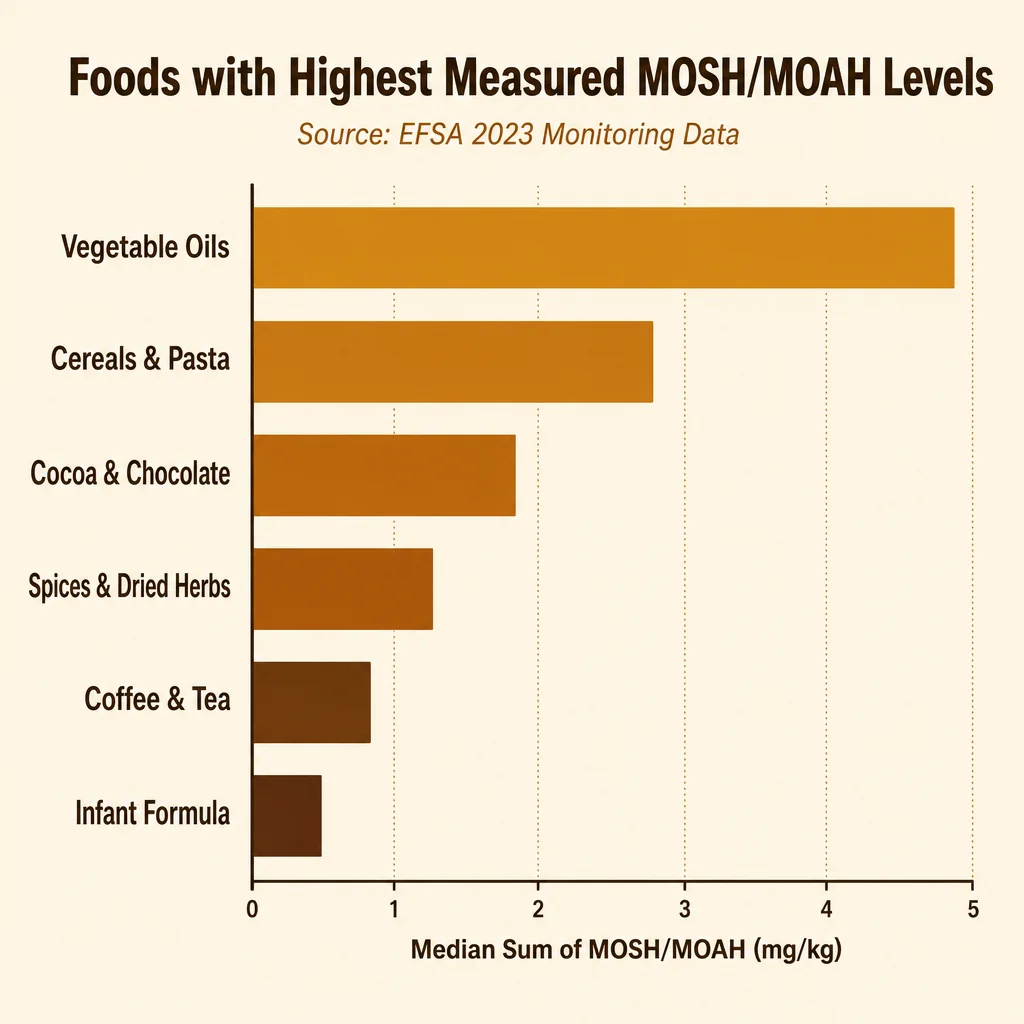
EFSA's 2023 risk assessment identified vegetable oils as the food category with the highest measured MOSH levels. Among packaged foods, cereals, pasta, cocoa powder, chocolate, coffee, and spices consistently show elevated readings in monitoring data.

Infants and young children are the age group with the highest dietary exposure to MOSH, largely because infant formula can contain elevated levels from oils used in manufacturing. EFSA identified toddlers as the population at greatest concern for MOAH specifically, both because of higher food-relative-to-body-weight consumption and because of developing organ systems.

Dried herbs and spices deserve particular attention. They are often stored and transported in paper-based materials, and the drying and concentration process can amplify contamination levels. The draft EU regulation's proposed maximum limit for MOAH in spices and dried herbs reflects this elevated concern.

What EFSA's 2023 Assessment Found

What EFSA's 2023 Assessment Found

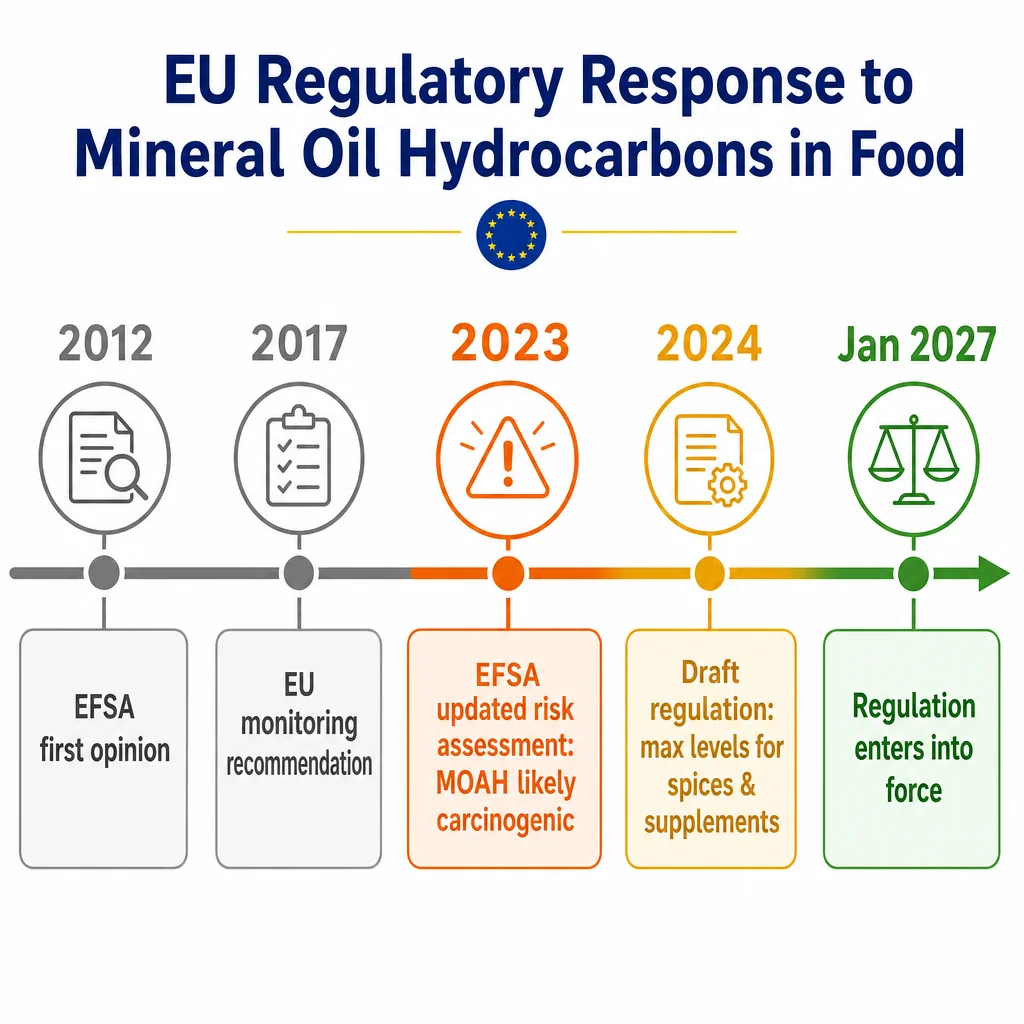
The September 2023 EFSA CONTAM Panel opinion updated the authority's earlier 2012 assessment based on a decade of new monitoring data and toxicological research.

The conclusions separated MOSH and MOAH clearly.

For MOSH, the Panel concluded that accumulated liver and spleen effects observed in Fischer 344 rats are not relevant to humans and that the margin of exposure at current dietary intake is sufficient. The current dietary exposure to MOSH "does not raise concern for human health" for any age group.

For MOAH, the assessment was considerably less reassuring. MOAH with three or more aromatic rings are associated with genotoxicity and carcinogenicity. The Panel stated that it is "extremely likely" (99 to 100% certain) that dietary exposure to MOAH is a concern for toddlers. For other age groups, including adults, exposure to MOAH raises a "possible concern." Because a safe intake threshold cannot be defined for genotoxic carcinogens, the recommendation is to minimize exposure as much as possible.

The Panel acknowledged significant data gaps. Information on the specific types of MOAH present in food is limited, and toxicity data for MOAH with one and two aromatic rings is insufficient to complete a full assessment. This uncertainty is itself a reason for regulatory caution.

The EU's Regulatory Response

The European Commission's response to the 2023 EFSA opinion has moved through several stages. In December 2023, the Commission published a first draft regulation to establish maximum levels for MOAH in specific food categories, to be integrated into the existing EU Contaminants Regulation (EU) 2023/915. A revised draft followed in July 2024.

The July 2024 draft set specific MOAH maximum levels for high-risk categories:

  • Spices and dried herbs: 5.0 mg/kg
  • Food supplements: 10.0 mg/kg from January 1, 2026, tightening to 5.0 mg/kg from January 1, 2030

Alongside the maximum levels regulation, two companion regulations were also drafted. One covers methods for sampling and analyzing mineral oils in food. The second invites EU member states and food business operators to monitor both MOSH and MOAH levels across a wider range of food categories during the period 2026 to 2029. The broader monitoring is intended to inform the next phase of risk mitigation measures across the supply chain.

The final regulation is expected to enter into force on January 1, 2027. The EU's approach is a phased one: setting limits in the highest-risk categories first, gathering monitoring data on others, and tightening limits as the evidence base improves.

No comparable federal regulatory framework exists in the United States, and the FDA has not published a specific risk assessment on MOSH/MOAH in food. Germany has operated under voluntary industry guidelines for years, with the German Food Federation applying informal maximum levels of 13 mg/kg for MOSH and 1 mg/kg for MOAH. These are not legally binding.

What Consumers Can Do Now

No label currently informs consumers about the MOSH or MOAH content of a packaged food product. These compounds are contaminants, not intentionally added ingredients, so they do not appear in ingredient lists. Avoiding them entirely through label reading is not possible. This is a broader pattern in food safety regulation: contaminants and packaging-derived hazards often receive less attention than additives, even when the risk evidence is comparable. For a related example involving food packaging, see PFAS in Food Packaging: What the August 2026 EU Ban Means for You.

What practical steps exist:

Reduce recycled-cardboard contact with dry foods. When buying pasta, rice, or breakfast cereals packaged in cardboard boxes, transfer the contents to a sealed container at home as soon as possible, minimizing the time loose food sits in direct contact with the packaging.

Consider food category risk. Vegetable oils, spices, dried herbs, and cocoa-based products carry the highest documented MOSH and MOAH levels across monitoring datasets. In those categories especially, glass or metal packaging eliminates the primary migration route from recycled fiber.

Pay attention to spice packaging. Dried herbs and spices in paper-based sachets or kraft bags represent a higher-risk format than spices sold in glass jars with sealed inner bags.

Look for manufacturers with active MOSH/MOAH monitoring. Some manufacturers in the EU are now publishing their testing protocols and results. This is a voluntary practice, but it signals a supply chain commitment to managing the contamination route.

There is no dietary equivalent to avoiding an allergen. MOSH and MOAH are background contaminants whose levels can be reduced but not eliminated through food selection alone. The regulatory work to establish limits is the more consequential intervention.

A Contaminant That Warrants Attention

MOSH and MOAH sit in an uncomfortable regulatory space: significant concern from food safety authorities, minimal consumer awareness, and an ongoing process of limit-setting that has taken years to reach the draft stage.

The EFSA 2023 conclusion that MOAH is "extremely likely" a health concern for toddlers is a strong statement from a major food safety body. The fact that the regulatory response is still being finalized in 2026, with limits not entering force until 2027, reflects both the complexity of the science and the scale of supply chain changes required.

IngrediCheck tracks ingredient and food safety regulatory developments including contaminant standards and EU regulation changes. As the MOSH/MOAH framework matures, IngrediCheck will flag packaging-related safety updates in the food categories most affected, so you can make informed decisions at the point of purchase.

Next Label Check

Follow the scanner, hub, and ingredient paths connected to this guide

Get the app for clearer label decisions.

Scan labels, see what fits your food notes, and read the why in plain English.

IngrediCheck app