Microplastics in Food: What EFSA's Research Actually Tells Us

EFSA published its latest research on microplastics from food packaging in 2025 and will publish full scientific advice by 2027. Here is what the evidence actually shows — and what you can do now.

May 21, 2026|9 min read
By Sanket Patel|Updated 2026-05-21|3 sources|Editorial standards
Microplastics in Food: What EFSA's Research Actually Tells Us

There is a contaminant in your food that appears on no ingredient list in any country.

It is not an additive. It is not intentionally added. Regulators have not approved it and have not set limits on it, because the science to do so is still being assembled. It arrives through the packaging, the cooking equipment, the water, and sometimes the food itself.

It is microplastic. And 2025 and 2026 have seen significant new research from the European Food Safety Authority that clarifies what we do and do not know.

In May 2026, EFSA highlighted microplastics and nanoplastics as a key ongoing research priority. The agency published a preliminary literature review on micro- and nanoplastics released from food contact materials in October 2025 and has committed to publishing full scientific advice by the end of 2027. The findings from that review are more nuanced than most headlines suggest.
What Microplastics and Nanoplastics Are

What Microplastics and Nanoplastics Are

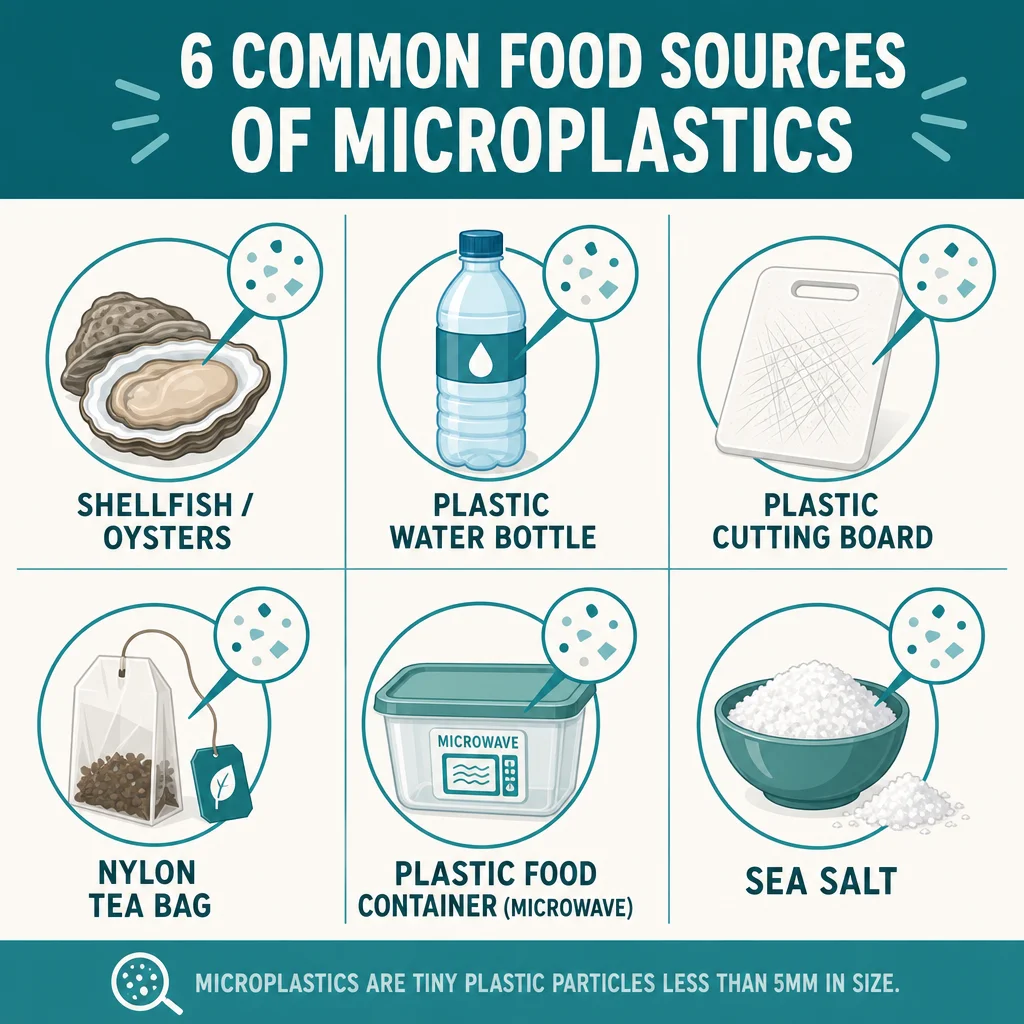
Microplastics are plastic particles smaller than 5 millimeters. Many are invisible to the naked eye. They form when larger plastic items break down through UV exposure, mechanical wear, and environmental weathering. Nanoplastics are a subset smaller than 1 micrometer and require specialized analytical equipment to detect.

Both have been found in:

  • Seafood, particularly shellfish that filter-feed from seawater
  • Tap water and bottled water
  • Salt, beer, honey, and tea
  • Fruits and vegetables irrigated with treated wastewater or grown in plastic-mulched fields
  • Human blood, lung tissue, placentas, and breast milk

The presence of microplastics in human tissue is not scientifically contested. What remains under active investigation is what, if anything, that presence does to health.

What EFSA's October 2025 Literature Review Found

The October 2025 EFSA technical report focused specifically on microplastics released from food contact materials during normal use. Food contact materials include plastic food packaging, plastic containers, plastic-lined cups, non-stick cookware, and plastic cutting boards.

The primary finding: scientific evidence confirms that microplastics are released from food contact materials during use. Mechanical stress is the main driver. Friction from opening and closing packages, cutting on plastic surfaces, and abrasion from utensils all release particles. Aging and UV exposure make plastic more brittle, increasing particle release over time.

The finding that received less attention: the actual quantities reaching food may be substantially lower than many published studies suggest. As Exponent's regulatory analysis of the EFSA report notes, "most of the studies address microplastics with little data on nanoplastics and many methodological shortcomings." Many studies may overestimate release because particles from air, laboratory handling, and the food itself are mistakenly counted as originating from the packaging. The most robust studies in the review found lower particle transfer than earlier research had indicated.

EFSA also found no significant evidence of microplastics diffusing into food at room temperature or forming new particles from packaging surfaces during normal use. The concern is mechanical release, not chemical migration of plastic molecules.

EFSA's conclusion: it currently has "no sufficient basis at this stage to estimate MNP exposure from food contact materials during their use." That is a statement about the limits of current data, not a declaration that microplastics from food packaging are harmless.

What WHO and the FDA Have Said

The European findings are consistent with positions taken by other major health bodies.

The World Health Organization's 2022 assessment reviewed evidence on dietary and inhalation exposure to micro- and nanoplastics through December 2021. Its conclusion: the available data are insufficient to determine whether exposure to microplastics causes direct adverse health effects. WHO highlighted specific gaps, including the lack of standardized detection methods across studies, uncertainty about how much ingested microplastic is absorbed versus excreted, and especially limited data on nanoplastics specifically.

The FDA's position in 2024 was equally measured: "Current scientific evidence does not demonstrate that levels of microplastics or nanoplastics detected in foods pose a risk to human health."

Three major bodies, one shared position: the evidence for harm exists primarily in laboratory settings, not in human epidemiological studies. That is not the same as safety. It reflects an evidence gap that the next several years of research are intended to fill.

Where Microplastics Actually Come From in Food

Understanding the primary exposure routes helps identify where precautionary changes matter most.

Shellfish

Oysters, mussels, clams, and scallops are filter feeders that accumulate microplastics from seawater. Unlike fish, where the digestive tract is removed before consumption, shellfish are typically eaten whole. Studies consistently find higher microplastic concentrations in shellfish than in any other food category. This is not a reason to stop eating shellfish, but it is why shellfish feature prominently in exposure estimates.

Plastic Food Contact During Cooking

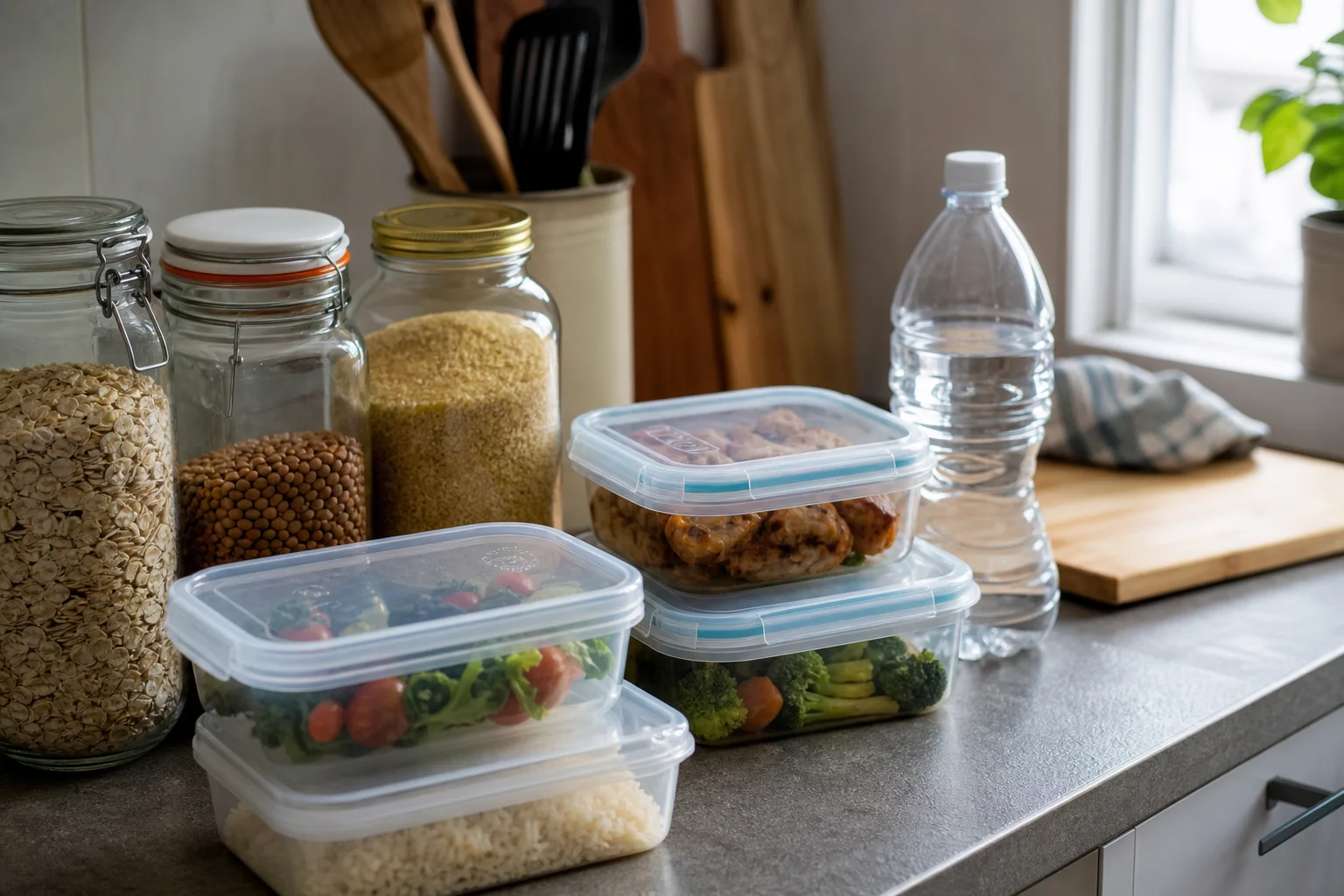
Scratching a non-stick pan with metal utensils, cutting on a worn plastic cutting board, microwaving food in plastic containers, and storing fatty or acidic foods in soft plastic packaging all contribute to particle transfer. Heat and fat accelerate extraction from plastic surfaces into food. A container described as "microwave-safe" means it will not melt or deform. It does not mean no particles transfer.

Tea Bags

Single-use nylon and polypropylene tea bags release particles into hot water during steeping. Studies have found that a single steep of a nylon tea bag releases billions of microplastic particles into the cup. This is one of the higher per-serving sources identified in the literature and an easy one to address.

Drinking Water

Both tap water and bottled water contain microplastics. Bottled water tends to have higher counts, partly because the bottling and handling process itself introduces particles from plastic containers. Filtering tap water removes a portion of particles depending on filter type.

Salt and Processed Foods

Sea salt harvested from ocean water contains microplastics at measurable concentrations. Soft plastic packaging used for processed foods contributes additional particles over time, particularly for fatty products that interact more readily with plastic surfaces.

The Health Picture: What We Know and Do Not Know

The potential mechanisms for harm from microplastics are understood at a cellular level. Particles that cross biological membranes can carry chemical additives and adsorbed pollutants from the environment. In laboratory settings, microplastics and their associated chemicals have been linked to oxidative stress, inflammatory responses, and disruption of cellular function.

What has not been established is a clear dose-response relationship in humans. Epidemiological studies have not yet confirmed that real-world levels of microplastic exposure cause specific diseases. The research challenge is significant: microplastics are a heterogeneous category (different polymer types, sizes, and chemical profiles), detection methods are not yet standardized, and chronic health effects take time to appear and study.

EFSA has committed to publishing its comprehensive scientific advice on microplastics in food by the end of 2027. That work will include updated dietary exposure estimates, toxicological characterization, and risk assessment. It will not resolve all uncertainty, but it will provide a more complete foundation for regulatory action.

Practical Steps for Reducing Exposure

Practical Steps for Reducing Exposure

Given that no regulatory body has set limits on microplastics in food, the practical question becomes: what is worth doing now?

The precautionary principle suggests reducing exposure at high-concentration sources while accepting that elimination is neither possible nor necessary.

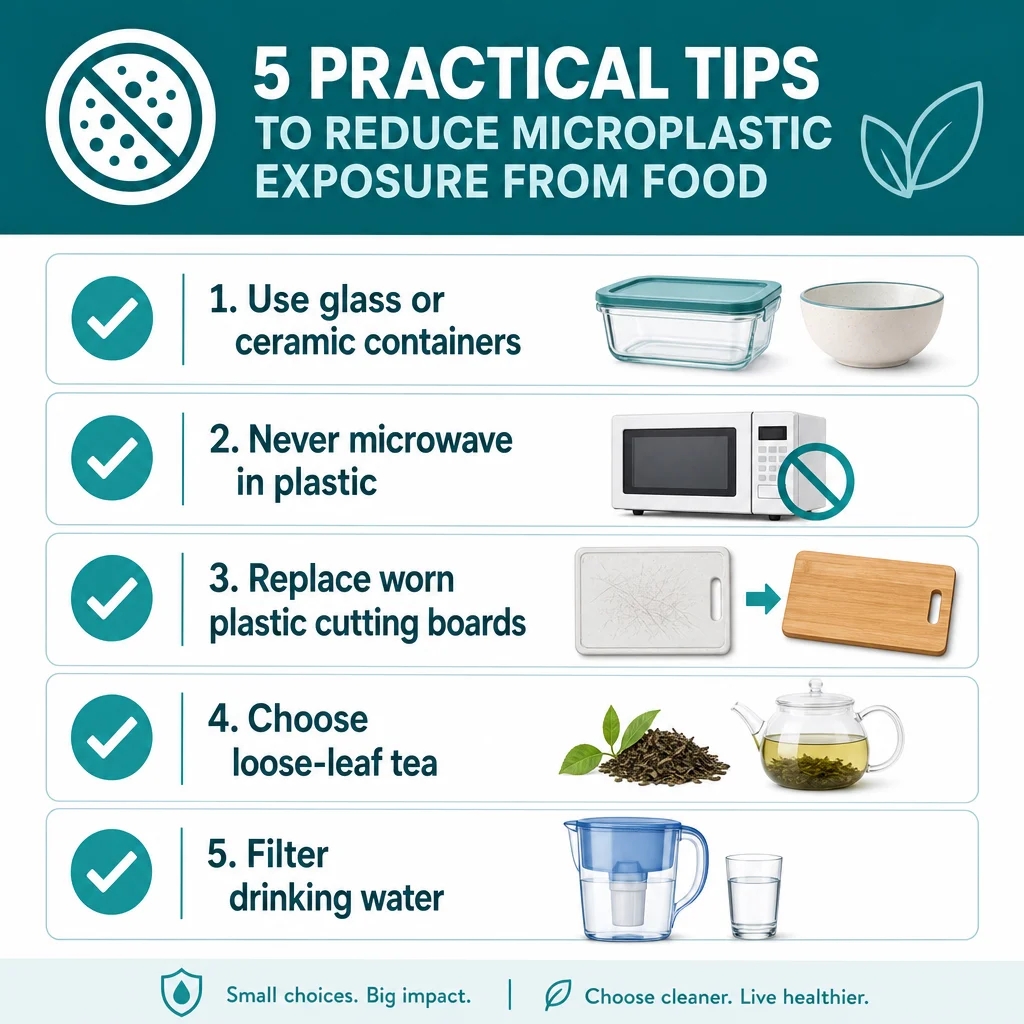
Switch to glass, ceramic, or stainless steel for food storage. These surfaces do not release microplastic particles. The benefit is largest when storing fatty foods, acidic foods, or hot food, which are all conditions that accelerate extraction from plastic.

Do not heat food in plastic containers. Even containers described as microwave-safe can release particles when heated. Transfer food to glass or ceramic before microwaving.

Replace worn plastic cutting boards. Deep knife grooves in plastic boards release substantially more particles than smooth surfaces. A bamboo, wood, or glass cutting board eliminates this source entirely.

Switch to loose-leaf tea. If you drink multiple cups from nylon or polypropylene tea bags per day, using a stainless steel or ceramic infuser removes one of the higher-concentration microplastic sources from your routine.

Filter your drinking water. Reverse osmosis and activated carbon filters remove a meaningful proportion of microplastic particles from tap water. The improvement in tap water quality often reduces total particle exposure compared to bottled water.

Choose glass or cardboard packaging where practical. Buying whole foods with minimal packaging, choosing glass jars over soft plastic containers, and avoiding products sold in flexible plastic pouches all reduce contact-based exposure.

These are not radical changes. They are targeted at the highest-contribution sources identified in the current literature.

Where Regulation Is Heading

The EU is already moving on related issues. Regulation (EU) 2025/40, which bans per- and polyfluoroalkyl substances (PFAS) from food contact packaging starting August 12, 2026, reflects a broader regulatory direction: reducing the chemical load of food packaging. We covered the full scope of that ban in PFAS in Food Packaging: What the August 2026 EU Ban Means for You. Microplastics are a separate category from PFAS, but the regulatory appetite for action on food packaging contaminants has clearly grown.

In the US, no federal action on microplastics in food is currently scheduled, though FDA monitoring continues and several states have pursued restrictions on specific packaging materials.

EFSA's 2027 scientific advice will be a significant moment. It will either confirm that current exposure levels are not a public health concern, identify specific exposure routes or populations warranting action, or conclude that the evidence still cannot support a definitive risk characterization. All three outcomes are plausible.

In the meantime, the absence of a regulatory limit is not the same as an absence of concern.

What IngrediCheck Can Help With

Microplastics are not an ingredient and do not appear on any food label. IngrediCheck's scanning and ingredient checking tools focus on what is declared in the ingredients list — allergens, additives, preservatives, and the many other substances that are intentionally added to food and required to be disclosed.

For the unlisted contaminants that arrive through packaging and processing, IngrediCheck helps you stay informed about the labeled contents of the products you buy. Choosing products with fewer processed ingredients, cleaner packaging materials, and known supply chains is part of the same broader approach to food safety that reducing plastic contact supports. Every layer of awareness matters.

Next Label Check

Follow the scanner, hub, and ingredient paths connected to this guide

Get the app for clearer label decisions.

Scan labels, see what fits your food notes, and read the why in plain English.

IngrediCheck app