PFAS in Food Packaging: What the August 2026 EU Ban Means for You

The EU bans PFAS in food-contact packaging from August 12, 2026. Here is what forever chemicals are, which products are affected, and what it means for everyday shoppers.

May 20, 2026|10 min read
By Sanket Patel|Updated 2026-05-20|4 sources|Editorial standards
PFAS in Food Packaging: What the August 2026 EU Ban Means for You

On August 12, 2026, the European Union will begin enforcing the strictest rules on "forever chemicals" in food packaging ever enacted anywhere in the world. Under Article 5 of the new Packaging and Packaging Waste Regulation (PPWR), food-contact packaging containing PFAS above specified limits will no longer be permitted on the EU market. No transitional period. No grandfather clause for stock manufactured before the deadline.

If you buy food in the EU, the pizza boxes, microwave bags, and greaseproof wrappers you encounter this summer are likely the last generation of products allowed to contain these chemicals. Understanding what PFAS are, why this ban matters, and what it changes for everyday shoppers is worth a few minutes of your time.

What Are PFAS?

PFAS stands for per- and polyfluoroalkyl substances. The group covers thousands of synthetic chemicals that share one defining property: they contain chains of carbon-fluorine bonds. Carbon-fluorine bonds are among the strongest in organic chemistry. This strength is what makes PFAS so useful industrially. It is also why they do not break down.

In the environment, PFAS persist indefinitely, accumulating in soil, groundwater, and the bodies of animals and humans. They earned the name "forever chemicals" because no natural process degrades them on any human-relevant timescale.

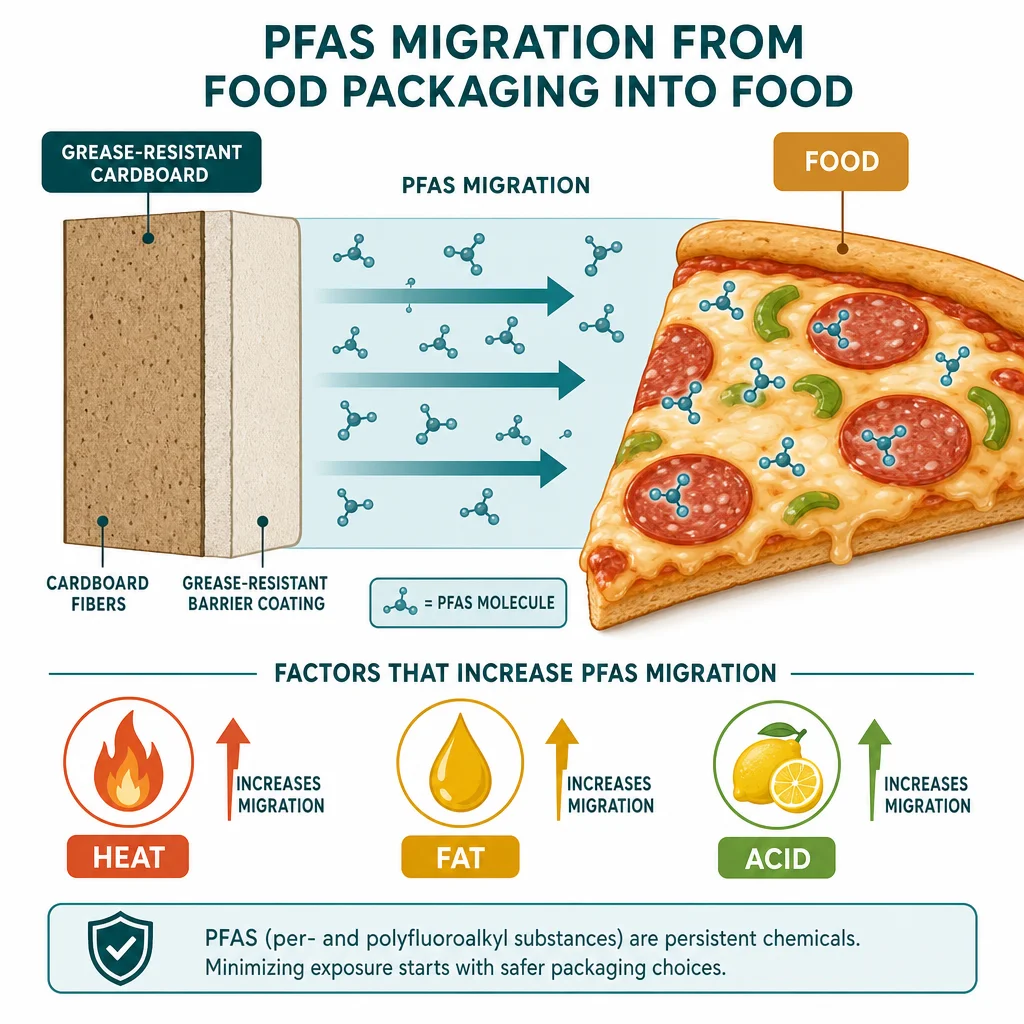
In food packaging specifically, PFAS were historically prized for their ability to resist grease, oil, and moisture. A pizza box that does not absorb oil through the cardboard, a microwave popcorn bag with a heat-resistant inner lining, a fast food wrapper that keeps french fries from soaking through the paper: all of these functions have traditionally relied on PFAS coatings or treatments.

The Health Concern

Decades of research have established that PFAS exposure is not benign. The European Food Safety Authority (EFSA) completed a comprehensive assessment of dietary PFAS exposure in 2020, setting a tolerable weekly intake for the four most studied compounds (PFOS, PFOA, PFNA, and PFHxS) combined at 4.4 nanograms per kilogram of body weight. EFSA concluded that a significant proportion of the European population was already exceeding this threshold through food, water, and environmental exposure.

Food-contact packaging is one of the routes through which PFAS migrate into food. PFAS in packaging coatings can transfer into food during contact, particularly when the food is hot, fatty, or acidic. A 2021 study that tested food packaging from fast food chains and supermarkets across Europe found PFAS in the vast majority of samples.

The documented health effects associated with long-term PFAS exposure include:

  • Thyroid disruption: PFAS interfere with thyroid hormone function, affecting metabolism, development, and cardiovascular health
  • Immune system suppression: studies have found associations between PFAS exposure and reduced vaccine response in children, suggesting broader immune function impacts
  • Liver effects: elevated liver enzymes and non-alcoholic liver disease have been associated with PFAS exposure in epidemiological studies
  • Developmental effects: prenatal and early-life exposure has been linked to lower birth weight and altered developmental trajectories
  • Cancer: PFOA and PFOS, two of the most extensively studied PFAS compounds, have been classified as possibly or probably carcinogenic to humans by the International Agency for Research on Cancer

None of these effects result from a single exposure. The concern is chronic, low-level accumulation over years and decades, combined with the fact that PFAS do not leave the body readily once ingested.
The EU Rule in Detail

The PPWR (Regulation (EU) 2025/40) entered into force in February 2025. It replaces the old EU Packaging Directive that had been in place since 1994. Unlike a directive, which requires each member state to pass its own national law, the PPWR applies directly and uniformly across all 27 EU member states simultaneously.

What the Limits Mean

Article 5 sets three PFAS thresholds for food-contact packaging placed on the EU market from August 12, 2026 onward:

MeasureMaximum limit
Any single PFAS (targeted analysis)25 ppb
Sum of all targeted PFAS250 ppb
Total PFAS including polymeric PFAS50 ppm

These thresholds are among the most stringent globally. The regulation covers any packaging that directly contacts food, including paper and cardboard coatings, inner liners, wrappers, trays, and containers.

The Commission guidance published in March 2026 confirmed one critical point: there is no provision for existing stock. Packaging manufactured before August 12 that is placed on the market (meaning filled with food or offered for sale) on or after August 12 must comply with the limits. Manufacturers and importers cannot sell down pre-August inventory that contains PFAS above the thresholds.

Who Bears the Obligation

The PPWR places compliance responsibility on whoever places the packaged product on the EU market. For most consumer food products, this means the food manufacturer or brand owner, not the packaging supplier. This is a significant shift: brand owners now need documented evidence from their packaging supply chains, not just general assurances.

If you are in Poland, France, Germany, Spain, or any other EU country, the packaging regulations your local supermarket must follow are the same. The rule is designed precisely to prevent regulatory arbitrage across member states.

Which Packaging Is Affected

Not all packaging uses PFAS, but the categories most likely to have relied on PFAS treatments are those where grease resistance, oil resistance, or moisture resistance is a functional requirement.

High-Risk Packaging Types

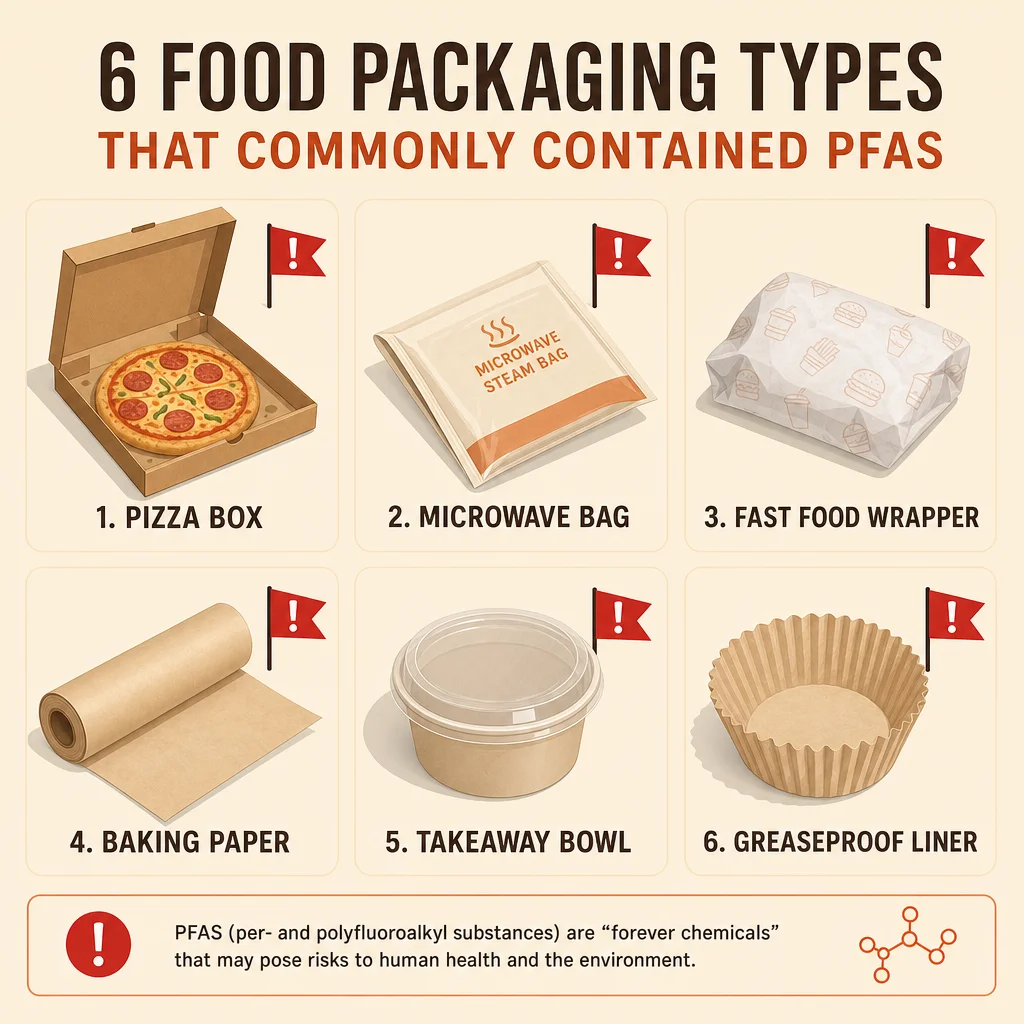
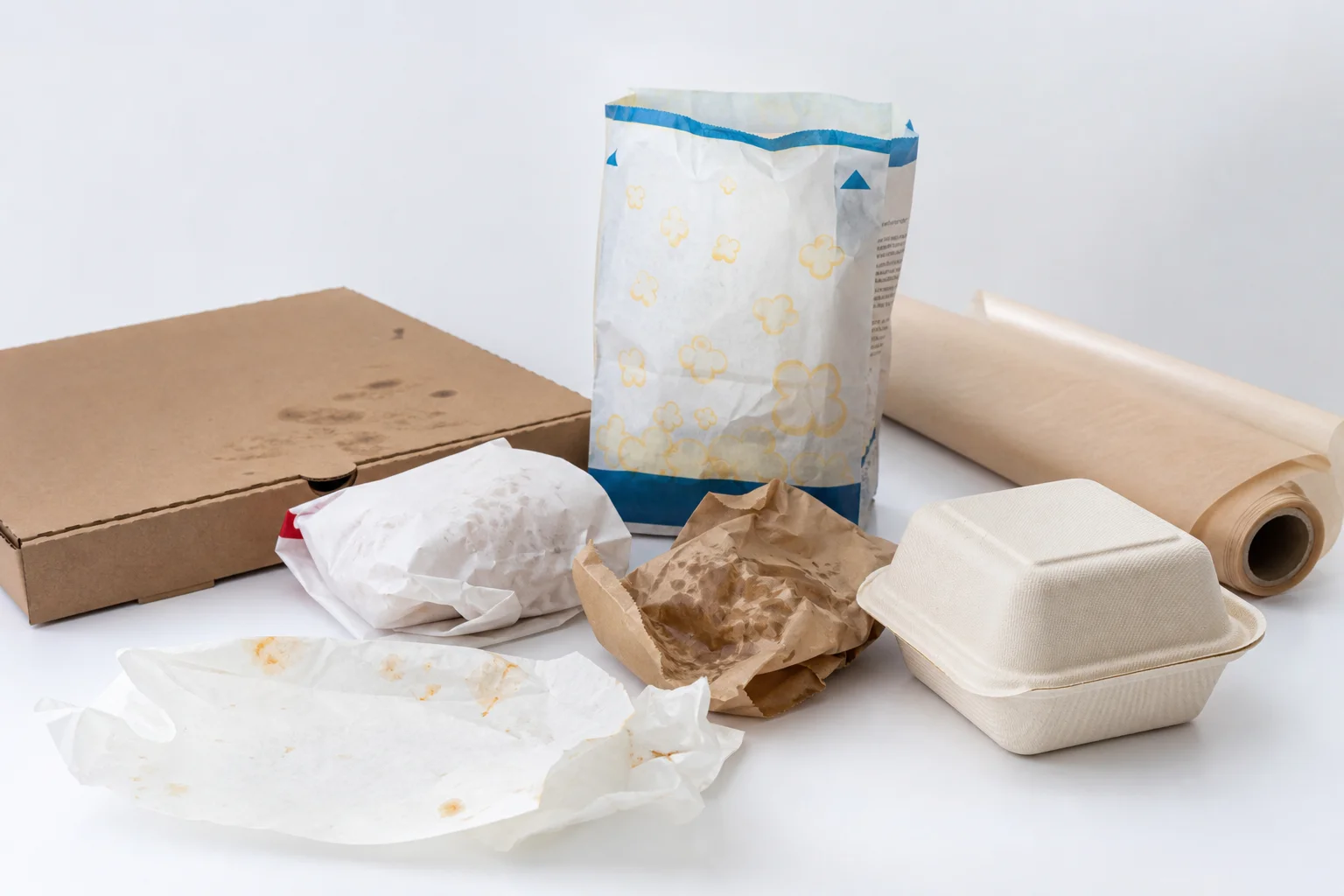
Pizza boxes and bakery bags: pizza boxes have traditionally been coated to prevent grease migration from cheese and oil into the cardboard. Most leading pizza chains and ready-meal producers have been transitioning away from PFAS, but artisan bakeries and smaller pizza operations may still use coated materials sourced from suppliers who have not yet reformulated.

Microwave food packaging: the inner lining of microwave popcorn bags, microwave pasta trays, and similar products was historically one of the most consistent uses of PFAS in food packaging. High heat accelerates migration from packaging into food, making this category particularly relevant from a health perspective.

Fast food wrappers and burger bags: the greaseproof paper wrapping around burgers, sandwiches, and fried foods in fast food contexts was a widespread application for PFAS treatments.

Greaseproof baking paper: the non-stick paper used in home and commercial baking often relies on silicone coatings, but PFAS-treated versions exist and remain in use.

Takeaway containers: the coated cardboard bowls, plates, and clamshell containers used extensively in food delivery packaging were among the first categories targeted by state-level PFAS bans in the United States.

Lower-Risk Packaging

Glass jars, aluminium tins, and uncoated plastic containers generally do not use PFAS. Rigid plastic bottles for drinks and condiments are also generally lower risk. The concern is concentrated in flexible, paper-based, and composite packaging where grease or moisture resistance was engineered into the material.

The US Picture: Slower Progress

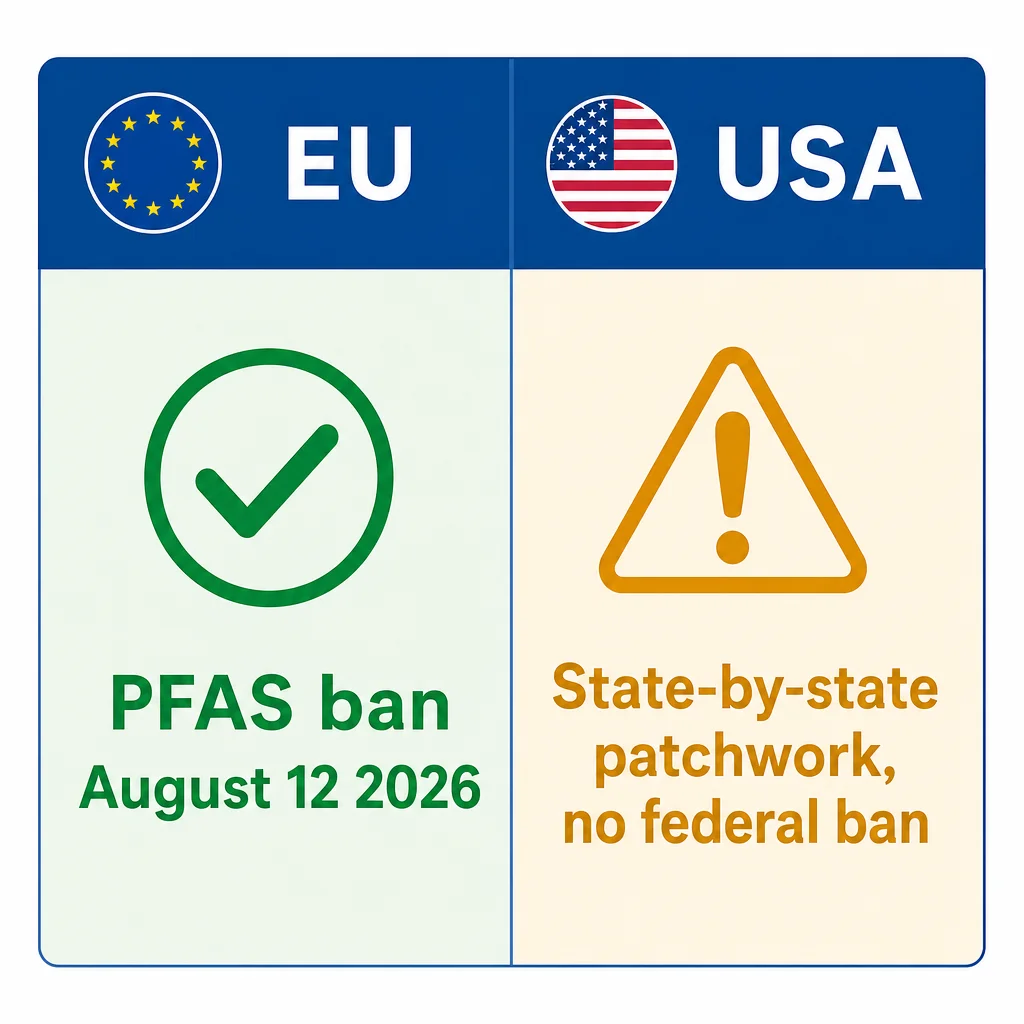
The EU is moving faster than most other major markets. In the United States, there is no federal ban on PFAS in food packaging. The FDA has relied primarily on manufacturers voluntarily discontinuing certain long-chain PFAS uses, and does not have comprehensive PFAS limits for food-contact applications.

The regulatory action in the US has come at the state level. California's SB 682 bans PFAS in food packaging by January 2028, making it one of the most ambitious state-level measures. New Jersey enacted the Protecting Against Forever Chemicals Act in April 2026, restricting PFAS in several categories including food packaging. A growing number of states have passed or proposed similar legislation, but the patchwork of state rules creates compliance complexity without achieving a national floor.

For consumers in the US, the practical implication is that the packaging transition happening in the EU by August 2026 will lag by several years domestically, and will vary by product category and state.

What Changes for Shoppers

In the EU

Starting in August 2026, food placed on the market in EU packaging must comply with the PFAS limits. You will not see a label that says "PFAS-free" on most products, because the ban applies across the board and there is no specific certification scheme for consumers. The change is in the supply chain, not the label.

Practically, this means:

  • Pizza boxes, microwave meal packaging, fast food wrappers, and similar products sold in the EU from mid-August should no longer use PFAS coatings above the thresholds
  • Products imported into the EU that do not comply cannot be placed on the market, so non-EU manufacturers exporting to Europe must also meet the standard
  • Some products may change slightly in appearance or performance: a cardboard tray that previously used a PFAS grease barrier may use a different material or coating that performs somewhat differently

For Everyone

The broader transition reflects a permanent shift in what food packaging should be. The EU rule establishes a baseline that other jurisdictions are likely to follow over time. Manufacturers who reformulate for EU compliance often implement those changes globally, because running different formulations for different markets is expensive.

If you want to reduce your current PFAS exposure from packaging:

  • Choose products packaged in glass, metal, or rigid uncoated plastic when practical
  • Avoid microwaving food directly in packaging unless the packaging specifies it is PFAS-free and microwave-safe
  • Reduce intake from heavily packaged fast food and takeaway, where grease-resistant paper is common
  • When buying baking paper, look for silicone-coated or uncoated alternatives

Why This Matters Beyond the Label

Food packaging regulation tends to get less attention than food ingredient regulation. The chemicals in packaging are not listed on any ingredient label. They do not appear on the nutrition facts panel. Consumers have had no practical way to know whether the box their frozen dinner came in, or the wrapper around their lunch sandwich, was contributing to their PFAS load.

The EU's decision to set binding limits reflects the scientific and regulatory consensus that PFAS in food-contact packaging represents an unacceptable and avoidable risk, one that can be reduced through available technology. Alternatives such as water-based barrier coatings, bio-based waxes, and PFAS-free silicone treatments already exist and are commercially available.

The August 12 deadline is not a distant aspiration. It is three months away. The packaging supply chain has been responding to it for more than a year. By the time you buy pizza in Berlin or croissants in Barcelona this autumn, the packaging that held them should be PFAS-free.

Tracking What Is in Your Food and Its Packaging

Ingredient-level transparency is only one part of understanding what you eat. The chemicals that migrate from packaging into food are harder to track because they are invisible to any standard label read. Using IngrediCheck, you can scan packaged food products to surface information about ingredients, allergens, and additives. For more on how EU and US food safety rules diverge, see Why Europe Bans Some Food Additives the US Allows. As regulatory databases and product certifications evolve to include packaging chemical data, IngrediCheck is built to integrate those signals so you can make better-informed choices, not just about what goes into the food, but about the materials that contained it.

Next Label Check

Follow the scanner, hub, and ingredient paths connected to this guide

Get the app for clearer label decisions.

Scan labels, see what fits your food notes, and read the why in plain English.

IngrediCheck app