PFAS in Food: Forever Chemicals, Real Risks, and What to Do

PFAS forever chemicals are in 7% of FDA-tested foods, highest in seafood and fast food packaging. Here's the science and how to reduce your exposure.

Mar 31, 2026|10 min read
PFAS in Food: Forever Chemicals, Real Risks, and What to Do

They're called "forever chemicals" for good reason. PFAS (per- and polyfluoroalkyl substances) are a family of nearly 15,000 synthetic compounds built around some of the strongest chemical bonds in organic chemistry. Heat doesn't break them down. Soil doesn't absorb them. Bacteria can't digest them. They accumulate in water, animals, and people.

The CDC has detected measurable PFAS in the blood of more than 97% of Americans. That figure is striking, but it raises an immediate question: how did these chemicals get there? Drinking water and industrial exposure are well-documented pathways. Food, though, is increasingly recognized as a significant and underappreciated route.

What PFAS Are and Why They're Everywhere

PFAS were invented in the 1940s. Their chemical properties — heat resistance, oil repellency, extreme durability — made them useful across an enormous range of products: nonstick cookware, waterproof clothing, stain-resistant carpets, food packaging, firefighting foam, and industrial processes. For decades, manufacturers added them to products without meaningful regulatory oversight.

Two of the most studied PFAS compounds are PFOA (perfluorooctanoic acid) and PFOS (perfluorooctane sulfonic acid). Both have been phased out of production in the US. Both are still present in the environment, soil, and waterways because they accumulated over decades and won't disappear on any human-scale timeline.

When PFAS enter water or soil, they cycle into crops and livestock. Fish absorb them through contaminated water over their lifetimes. Food packaging materials treated with PFAS transfer chemicals into food during storage, heating, and transit — a process that accelerates with temperature.

What the FDA's Own Food Testing Found

What the FDA's Own Food Testing Found

The FDA's Total Diet Study tested 542 food samples for PFAS contamination. PFAS were detected in 39 of those samples, roughly 7% of all foods tested. Since 2019, 95% of the samples the FDA has collected showed no detectable levels. That's the reassuring part.

The less reassuring part: the foods that tested positive include some of the most commonly consumed items in the American diet.

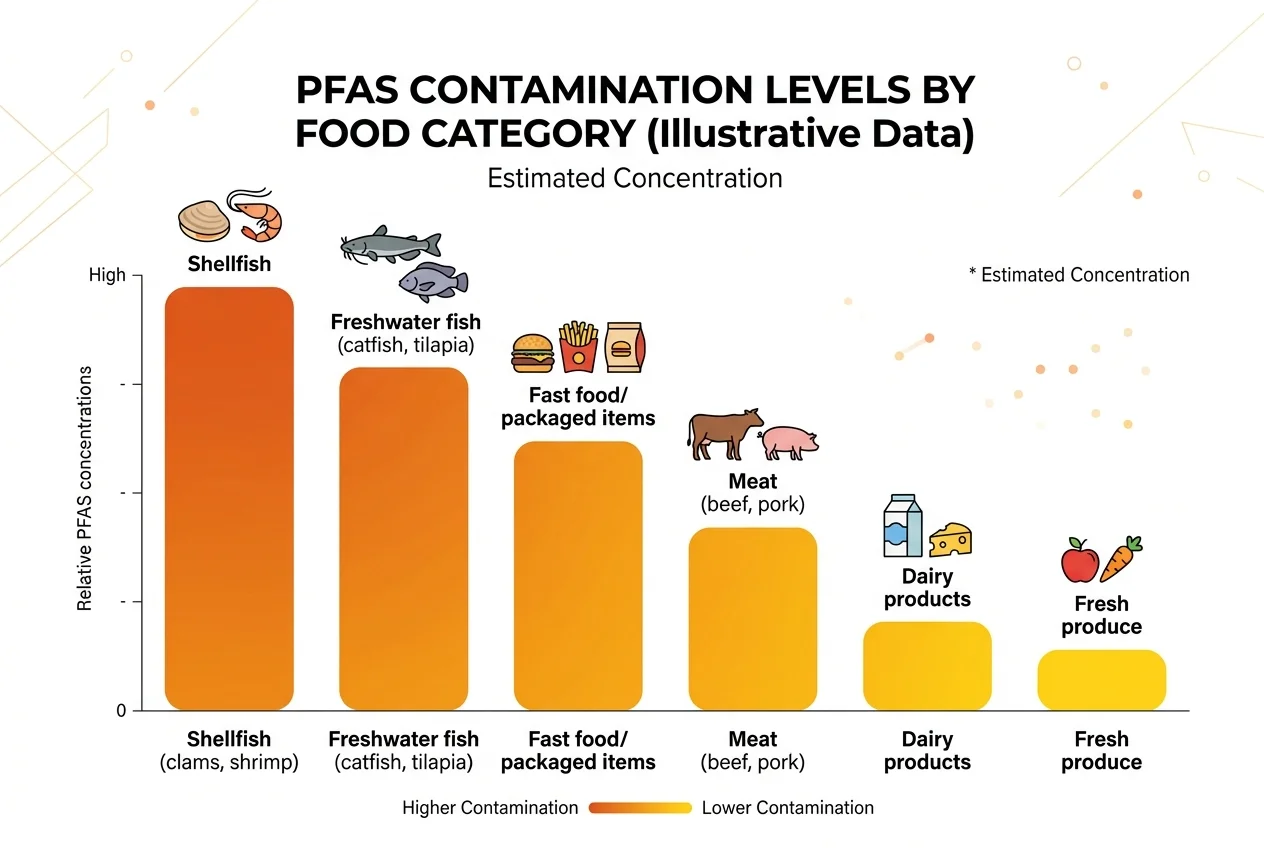
Contaminated samples included shrimp, clams, catfish, and tilapia — which showed the highest concentrations — along with beef, chicken, chocolate milk, chocolate cake with icing, pineapple, and sweet potato.

The seafood findings are consistent with broader research. Fish absorb PFAS from contaminated water throughout their lives, and shellfish are particularly efficient at concentrating these chemicals. A 2022 study in PMC analyzing widely consumed US seafood found measurable PFAS across multiple species, with shellfish consistently showing the highest burden.

The chocolate cake finding was less expected. It reflects a broader dynamic: PFAS migrate from food packaging into food, particularly when packaging is heated or when the food is fatty or high in moisture.

The Fast Food and Microwave Popcorn Problem

If you regularly eat fast food, you're likely getting additional PFAS exposure beyond what the Total Diet Study captures. A study in PMC found that people who frequently ate fast food and pizza had significantly higher PFAS blood levels than those who didn't.

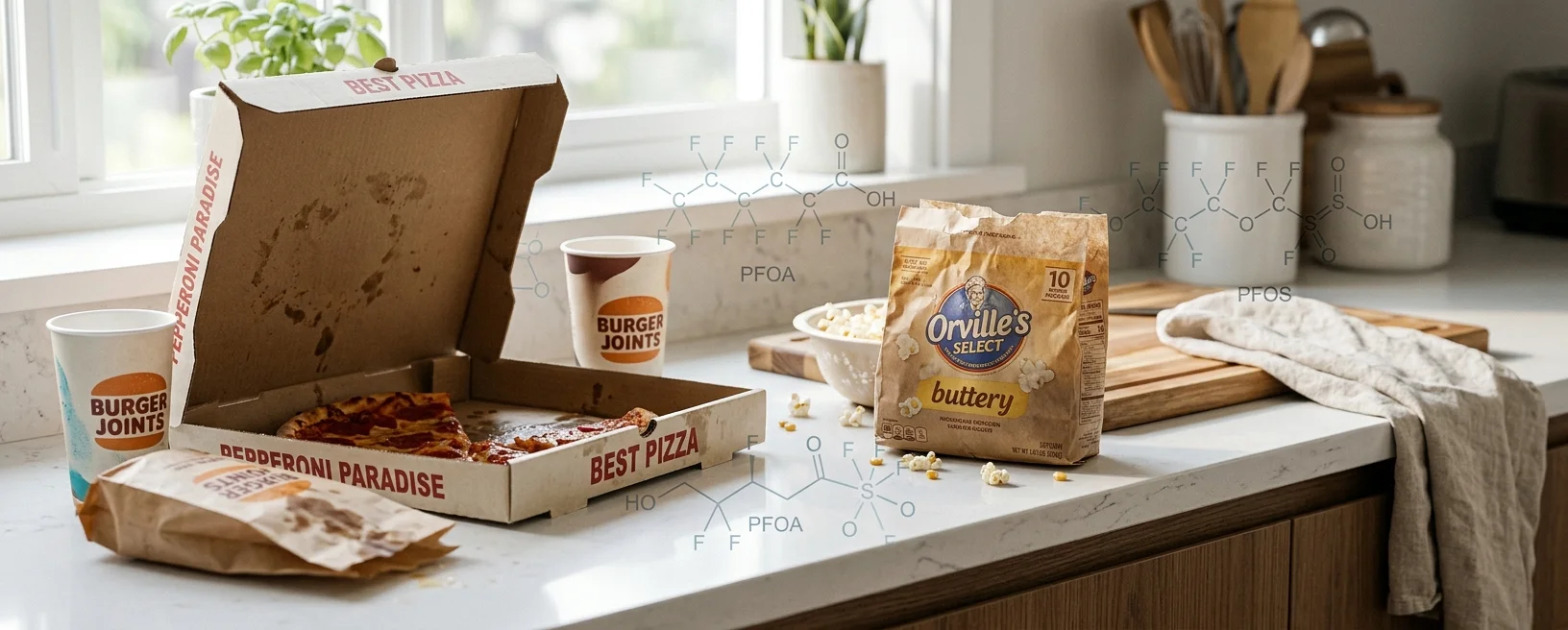
The mechanism is direct. Paper wrappers, cardboard containers, and pizza boxes have historically been treated with PFAS to make them grease-resistant. Heat accelerates the transfer of PFAS from packaging into food. The longer food sits in PFAS-containing packaging, the more the chemicals migrate.

Microwave popcorn bags follow the same logic. They're designed to handle both high heat and grease, making them one of the more concentrated sources of dietary PFAS exposure in the average American kitchen.

Some major chains — including Chipotle, Sweetgreen, and Wendy's — have committed to phasing PFAS out of their packaging. Most have not, and there is currently no requirement to disclose which packaging contains PFAS.

What the Health Research Shows

The science here is both compelling and genuinely complex. PFAS is a category of nearly 15,000 compounds. Most have been studied minimally. The strongest research base covers PFOA and PFOS, the legacy compounds, and even there the picture has important nuances.

Cancer risk: The International Agency for Research on Cancer upgraded PFOA to a Group 1 human carcinogen in 2023, its highest classification. The evidence is strongest for kidney and testicular cancer. PFOS exposure has been associated with a 56% increased risk of thyroid cancer in epidemiological studies, according to research published in eBioMedicine00432-2/fulltext).

Thyroid disruption: In March 2026, Vanderbilt University researchers published the first direct mechanistic evidence showing that PFOA, PFOS, and a newer PFAS compound called GenX altered thyroid cellular structure and function in mice. They disrupted multiple signaling pathways, including several involved in cancer. Thyroid cancer is one of the fastest-rising cancers across many countries.

Broader effects: PFAS have been linked to elevated cholesterol, reduced vaccine immune response, changes in liver enzymes, and pregnancy complications including hypertension and preeclampsia. These findings come from human epidemiological studies backed by animal research.

The important caveat: Findings from PFOA and PFOS don't automatically extend to all 15,000 PFAS compounds. Newer replacement chemicals were developed specifically to avoid the properties that drew regulatory attention to the legacy compounds — but many of those replacements have been studied far less. Regulators and researchers have flagged this repeatedly as a critical blind spot.

This article is for informational purposes only and should not be considered medical advice. Consult a healthcare professional for personalized guidance.

The Regulatory Gap: EU vs. US

The Regulatory Gap: EU vs. US

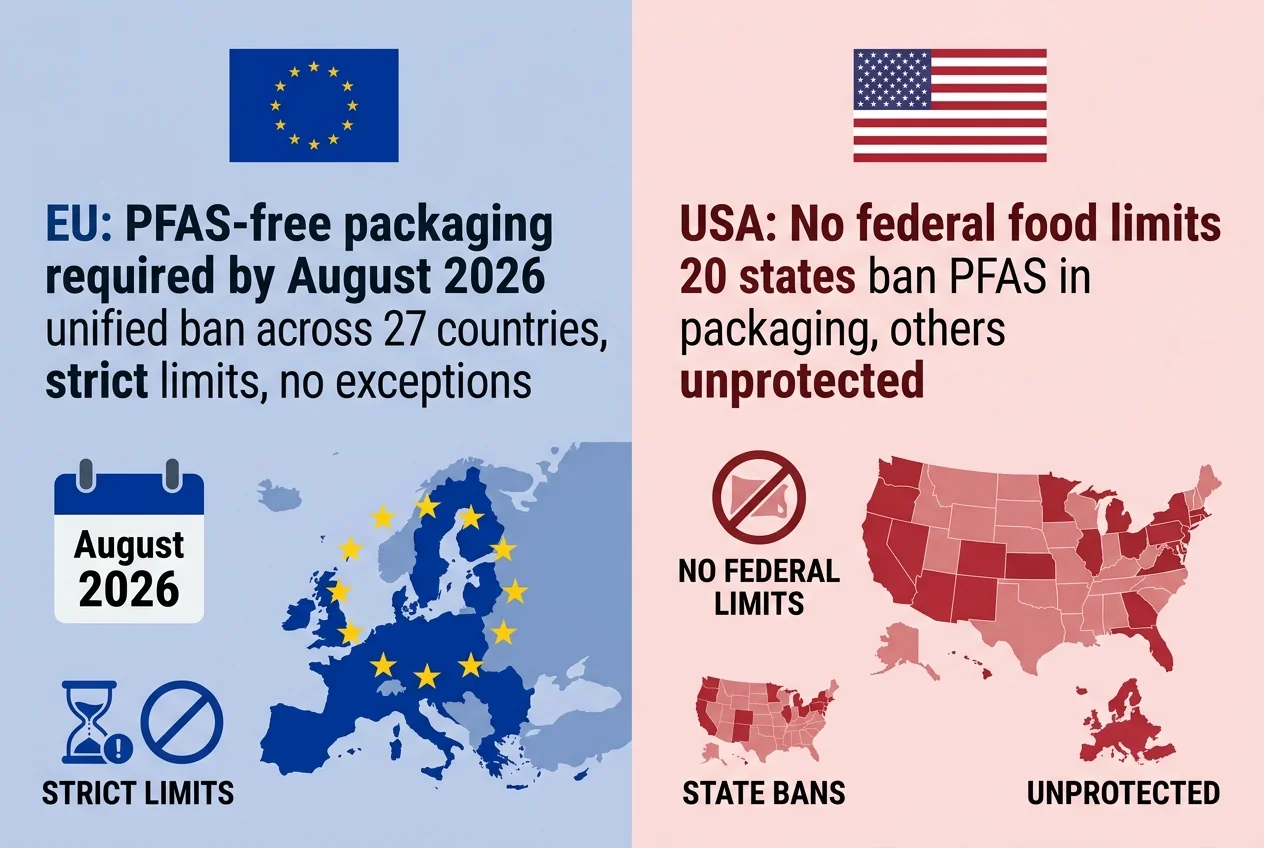
The difference in how the EU and US have responded to PFAS in food is substantial.

EU: The EU's Packaging and Packaging Waste Regulation requires all food-contact packaging to be PFAS-free by August 12, 2026. The limits are strict: no more than 25 ppb for any individual PFAS compound, 250 ppb for the sum of all PFAS, and 50 ppm for total fluorine from PFAS sources. There is no grandfathering provision — packaging manufactured before the deadline cannot enter the EU market if it exceeds these thresholds.

US: The FDA removed authorization for PFAS-based grease-proofers in food packaging in January 2025, following a voluntary phase-out agreement with manufacturers. That was a meaningful step, but it covers only one category of PFAS in one type of food contact material. The FDA has not established enforceable limits for PFAS in food itself.

Twenty US states now ban PFAS in paper food packaging. The patchwork approach means your level of protection depends significantly on where you buy your food and which supply chains you're drawing from.

Where the Contamination Actually Comes From

Food packaging is the most visible PFAS source, but it's not the only one.

Contaminated water: PFAS-contaminated groundwater used for irrigation or livestock watering transfers chemicals into crops and animal products. This is particularly common near military bases and industrial facilities that used PFAS-containing firefighting foam for decades.

Agricultural soil: PFAS persist in soil for generations. Crops grown in contaminated soil absorb them through root systems.

Bioaccumulation in fish: Fish concentrate PFAS throughout their lives. Larger, longer-lived predatory fish tend to carry higher PFAS burdens than smaller, shorter-lived species.

A March 2026 study found that nearly 40% of California produce samples contained PFAS residues from pesticides — a previously underexamined pathway suggesting that contamination routes are even broader than packaging research had indicated.

What You Can Actually Do

The goal here is not to make you afraid to eat. Most food contains no detectable PFAS, and for most people, current food-derived PFAS exposure is below levels shown to cause acute harm. But meaningful reduction is achievable without dramatic changes to how you eat.

Cut back on fast food and microwave popcorn. These carry the most consistent evidence of elevated PFAS exposure through packaging. Eating at home or choosing restaurants that have committed to PFAS-free packaging makes a real difference.

Transfer food from packaging promptly. Heat accelerates PFAS migration. Don't reheat food in takeout containers. Transfer packaged food into glass or stainless steel when it will be stored for any length of time.

Choose lower-risk seafood. The FDA's data consistently shows shellfish and certain finfish at higher PFAS levels. Wild salmon, sardines, and trout tend to show lower concentrations and are widely available.

Retire scratched nonstick cookware. If your pans have a worn nonstick coating, the surface itself may be a PFAS source. Cast iron, stainless steel, and ceramic are the recommended replacements.

Don't over-restrict based on single-item findings. The FDA detected PFAS in a chocolate cake sample and a sweet potato sample. Those results reflect specific supply chains, not an indictment of every chocolate cake or sweet potato in existence.

The practical summary is this: cook at home more, avoid microwave popcorn, skip or reduce fast food, and use glass and metal containers instead of PFAS-treated packaging. These steps will reduce your exposure more than any single dietary restriction.

IngrediCheck can't detect PFAS directly — they're environmental contaminants, not declared label ingredients — but it helps you make smarter choices about the packaged foods you buy. Scanning any product's barcode surfaces its full ingredient list and flags additives worth knowing about, putting more information in your hands before something ends up in your cart.

Start making confident food choices today!

Scan food and understand what's right for you and your family, with AI.

IngrediCheck app