Carrageenan Explained: Why It Matters for Your Gut

Carrageenan is in ice cream, plant milks, and deli meats. New research links it to gut inflammation. Find out what the science says and who should avoid it.

Mar 18, 2026|10 min read
Carrageenan Explained: Why It Matters for Your Gut

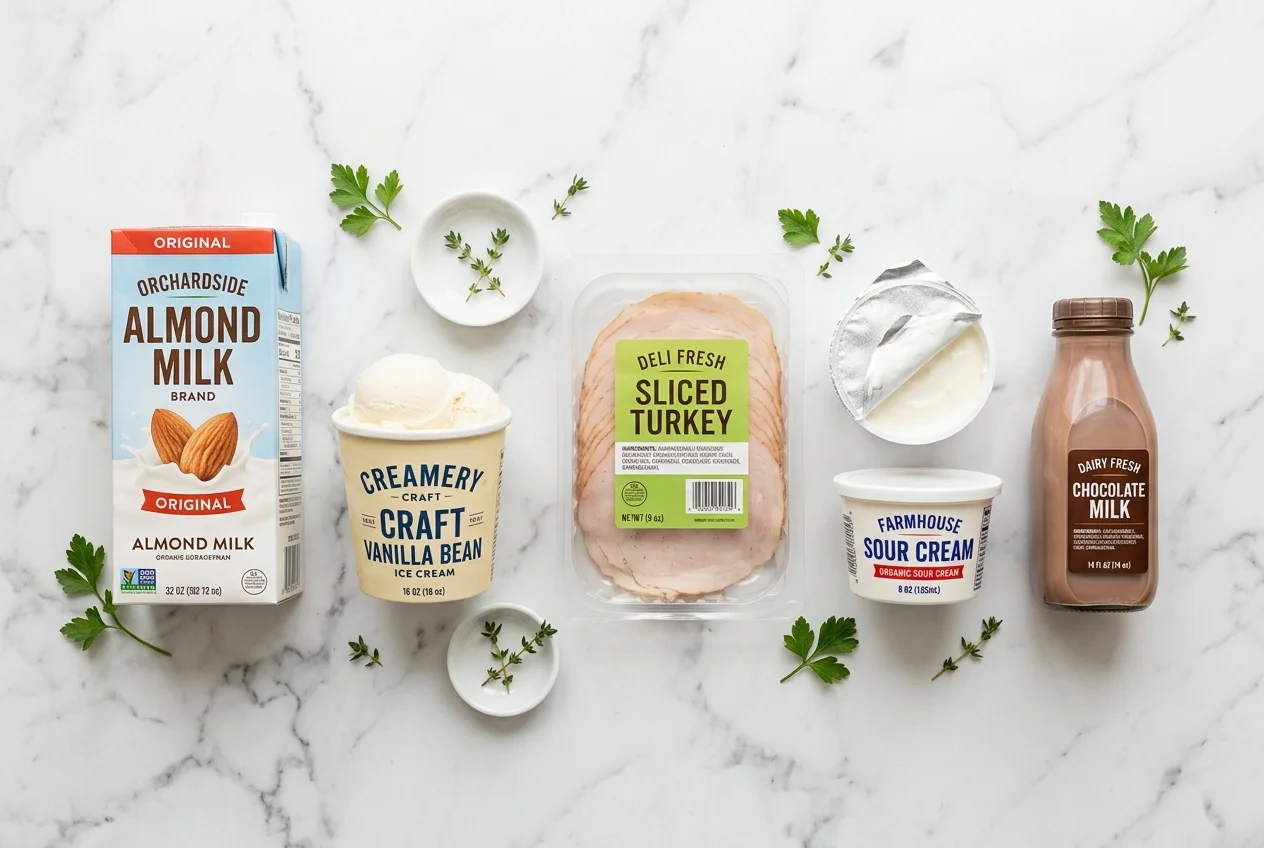
You've probably never bought a product because it contains carrageenan. But there's a good chance you've eaten it today. It's in your almond milk, possibly your ice cream, likely your chocolate milk, and quite possibly the deli turkey you put in your sandwich. It's one of the most widely used food additives you've never heard of — and in 2024 and 2025, a growing body of research started connecting it to gut inflammation, microbiome disruption, and even insulin resistance.

So what is carrageenan, what does the science actually say, and should you be trying to avoid it? The answer is more nuanced than either the food industry or the wellness world would have you believe.

This article is for informational purposes only and should not be considered medical advice. Consult a healthcare professional for personalized guidance.

What Is Carrageenan?

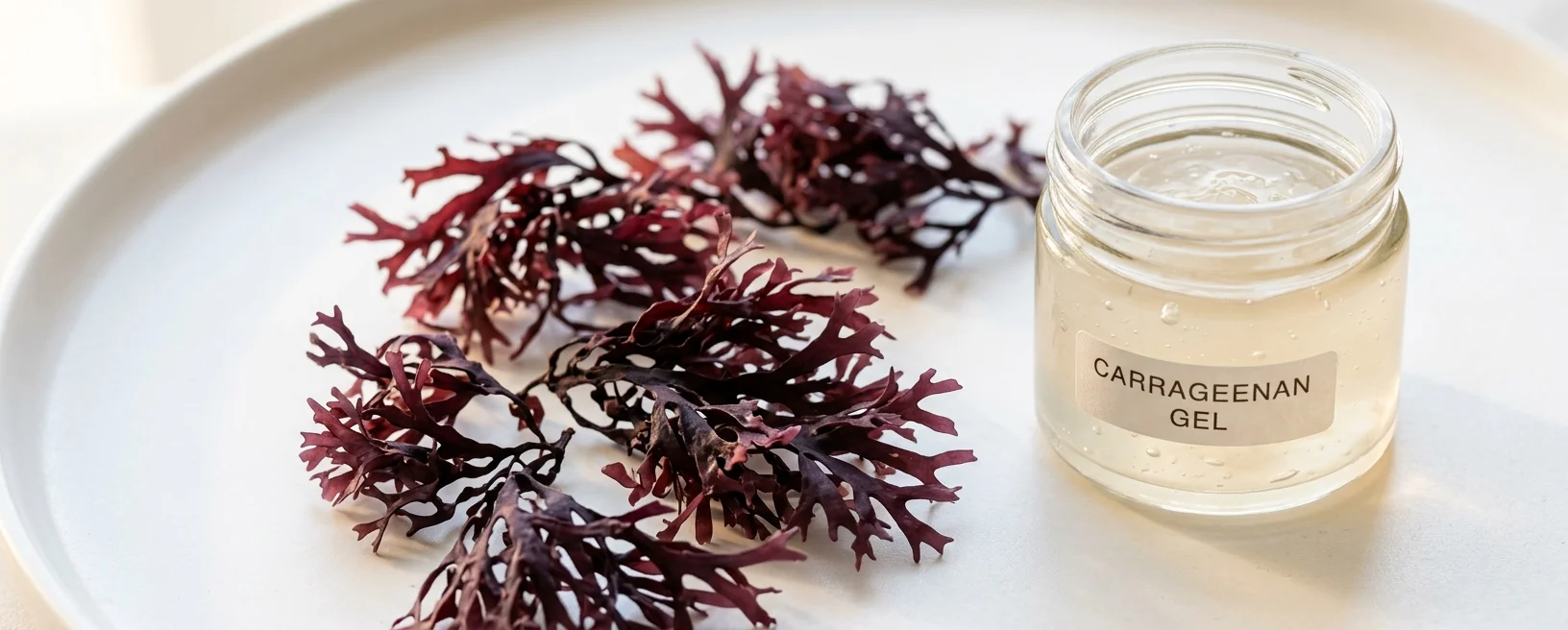
Carrageenan is a family of natural polysaccharides — long-chain carbohydrate molecules — extracted from red seaweed (Rhodophyta). The primary species used commercially are Eucheuma and Kappaphycus, which together account for over 90% of global production and are grown via aquaculture in Southeast Asia, Africa, and South America.

The extraction process involves harvesting and washing the seaweed, then cooking it in an alkaline solution, filtering it, and drying it into a fine powder. The resulting additive comes in three main structural types: kappa-carrageenan (forms firm, brittle gels — used in dairy), iota-carrageenan (forms soft, elastic gels), and lambda-carrageenan (thickens but doesn't gel — used in beverages and plant milks).

What makes carrageenan valuable to food manufacturers is its ability to improve texture, prevent separation, extend shelf life, and create a creamier mouthfeel — all without animal-derived ingredients, which makes it popular in plant-based products.

The Ingredient That Appears Under E407

In the EU, carrageenan carries the additive code E407 (refined carrageenan) or E407a (processed Eucheuma seaweed, or PES — a semi-refined version). In the U.S., it appears in ingredient lists simply as "carrageenan."

On labels it rarely announces itself prominently. You'll find it listed after the main ingredients, often near the end of a long list. The lack of visibility is part of why consumer awareness remains low despite its ubiquity.

The Crucial Distinction: Food-Grade vs. Degraded Carrageenan

The Crucial Distinction: Food-Grade vs. Degraded Carrageenan

The single most important thing to understand about carrageenan is that not all carrageenan is the same — and this distinction has been the source of decades of scientific confusion.

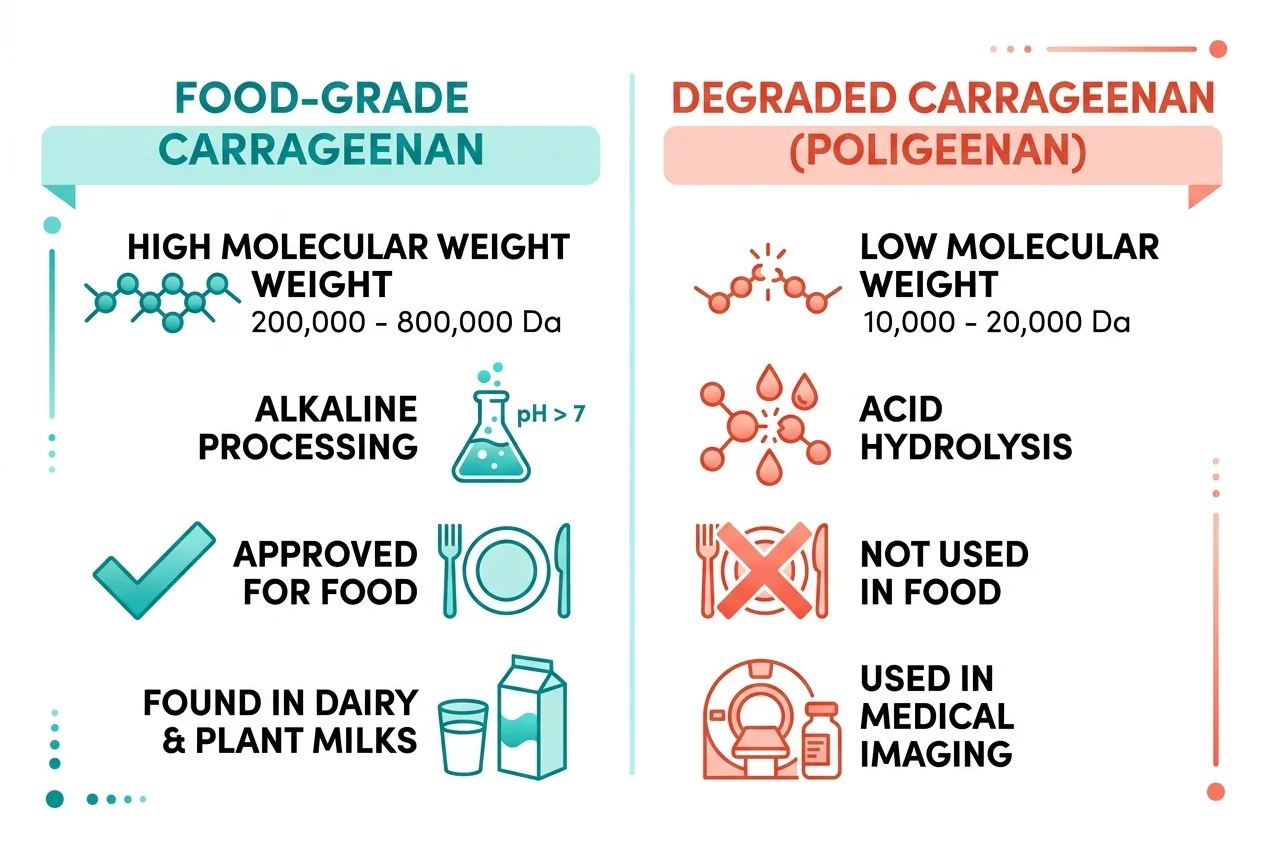
Food-grade carrageenan — the kind in your food — has a high molecular weight of 200,000–800,000 daltons. It's produced using alkaline processing and is approved for food use by both the FDA and EFSA.

Degraded carrageenan (also called poligeenan) has a much lower molecular weight of 10,000–20,000 daltons. It's produced only through harsh acid hydrolysis under laboratory conditions — low pH combined with high heat — a process that doesn't occur during normal food manufacturing. Poligeenan has never been approved for use in food. It's used in medical and industrial contexts such as radiographic imaging preparation.

Many of the alarming animal studies that linked carrageenan to intestinal lesions, ulcers, and tumors used poligeenan or degraded carrageenan — not food-grade carrageenan. When researchers reviewed the literature, they found that GI damage in animal studies occurred almost exclusively when animals were exposed to degraded forms, or when concentrations far exceeded anything a human would consume from food.

This confusion contaminated the public discourse for years. But it doesn't mean food-grade carrageenan is entirely off the hook — because more recent, carefully designed research is painting a more complex picture.

What Newer Research Actually Shows

The Gut Microbiome Connection

A 2021 study in ScienceDirect found that kappa-carrageenan, at doses relevant to human consumption, didn't cause overt inflammatory symptoms — but it did alter the gut microbiome in notable ways. It reduced populations of Bifidobacterium catenulatum, a beneficial bacterial species, while increasing pro-inflammatory bacterial strains and decreasing the production of short-chain fatty acids (SCFAs), which are key regulators of gut barrier integrity and immune function.

A 2024 review published in PMC identified two primary mechanisms by which carrageenan may contribute to inflammatory bowel conditions:

  1. Microbiome disruption — carrageenan reduces Akkermansia muciniphila, a keystone species that maintains the mucosal gut barrier. Loss of this species is associated with increased intestinal permeability and heightened inflammatory immune responses.
  2. Direct cellular activation — carrageenan appears to interact with receptors on intestinal epithelial cells, activating the NF-κB pathway, a central driver of chronic inflammation.

A 2025 study examined how food-grade carrageenan affects the intestinal barrier through microbiome-mediated mechanisms — and found that higher doses correlated with increased pro-inflammatory bacterial populations and decreased beneficial bacteria.

Amplified Effects in People with IBD

A 2025 study in the IBD Journal (Oxford) used a patient-derived epithelial cell model from people with Crohn's disease. It found that carrageenan amplified the inflammatory signaling profile in Crohn's cells — and that the effect was more pronounced in cells from patients with active disease compared to those in remission.

Critically, the study found no effect on intestinal permeability in this specific model — meaning carrageenan appears to worsen inflammation signaling, not necessarily "punch holes" in the gut lining, at least in this experimental setup. That's an important nuance that gets lost in simplistic headlines about "leaky gut."

The 2024 Human RCT

The most significant recent development is a 2024 randomized, double-blind, placebo-controlled crossover trial published in BMC Medicine — the first of its kind in humans. Twenty healthy males received 250 mg of carrageenan (or placebo) twice daily for two weeks.

The results showed that in overweight participants, carrageenan reduced whole-body and hepatic insulin sensitivity, elevated inflammatory markers (CRP and IL-6), and increased intestinal permeability. There was also a trend toward increased brain inflammation. The researchers concluded that carrageenan may contribute to insulin resistance and subclinical inflammation through gut pro-inflammatory mechanisms — particularly in individuals with higher BMI.

This is the first human trial demonstrating these effects, and while it's a small study (20 participants), it's an important signal. An additional large epidemiological cohort of over 100,000 participants found that higher carrageenan intake was associated with increased risk of type 2 diabetes — the first population-level study to examine this specific link.

These are still early findings. Two weeks is a short exposure window, and the sample size is small. But the convergence of multiple lines of evidence — microbiome studies, cell models, and now a human trial — is moving the conversation beyond "this is only an issue with degraded carrageenan."
Where Carrageenan Hides in Your Food

Where Carrageenan Hides in Your Food

Carrageenan is broadly permitted and shows up in a wide range of processed foods:

Dairy and dairy alternatives:

  • Ice cream, chocolate milk, flavored milks, whipped cream
  • Yogurt, sour cream, cream cheese, cottage cheese, condensed milk
  • Plant-based milks: almond, soy, oat, coconut, rice, hemp, and cashew milk (often used to prevent separation)

Processed meats:

  • Deli turkey, ham, and chicken — carrageenan is injected or added to improve texture and water retention
  • Hot dogs, sausages, canned meats

Other common sources:

  • Salad dressings and sauces (as an emulsifier/stabilizer)
  • Infant formula — permitted in the U.S., restricted in the EU
  • Meal replacement shakes and protein drinks
  • Canned pet food (where it's used extensively)
  • Meat alternatives and plant-based processed foods
  • Some medications and nutritional supplements (as a binder or filler)

It does not appear in fresh, unprocessed foods. It is exclusively an additive introduced during manufacturing.

The Regulatory Divide: US vs. EU

The regulatory positions of the FDA and EFSA reveal a meaningful difference in how each body weighs precautionary evidence.

In the U.S., carrageenan is classified as GRAS (Generally Recognized as Safe) and regulated under 21 CFR 172.620. It has been permitted in food for over 50 years, including in infant formula. The FDA has reviewed the evidence periodically and maintained its approval, noting that studies showing harm have predominantly used degraded forms or unrealistic dosage levels.

In the EU, EFSA conducted a comprehensive re-evaluation of carrageenan in 2018 and concluded there was "no evidence of any adverse effects in humans from exposure to food-grade carrageenan at current dietary intakes." It established a temporary Acceptable Daily Intake (ADI) of 75 mg per kilogram of body weight per day, pending additional data. However — critically — the EU bans carrageenan in infant formula for children under 12 months, applying a precautionary approach to the most vulnerable population. The USDA's organic program has also faced repeated pressure to remove carrageenan from the approved organic additives list; the National Organic Standards Board voted to recommend its removal from organic foods in 2016, and the ingredient is again up for review in 2026.

Who Should Pay the Most Attention

Most healthy adults consuming carrageenan at typical dietary levels are unlikely to experience noticeable effects. But certain groups have more reason to be watchful:

  • People with IBD (Crohn's disease, ulcerative colitis) — the 2025 Crohn's research found amplified inflammatory signaling in patient-derived cells, suggesting those with active gut inflammation may be more susceptible.
  • People with IBS or irritable gut conditions — the microbiome disruption and reduced SCFA production documented in research are mechanisms that can worsen IBS symptoms.
  • Overweight individuals or those at risk for insulin resistance — the 2024 human RCT showed these effects were specific to participants with higher BMI, not lean participants.
  • Infants — the EU's precautionary ban on carrageenan in infant formula for children under 12 months reflects concern about a developing gut microbiome and immune system.
  • People with alpha-gal syndrome — a 2026 presentation at the AAAAI annual meeting flagged carrageenan as the second most commonly self-reported allergy among individuals with alpha-gal syndrome. Despite being derived from seaweed, carrageenan carries the alpha-gal epitope, which can trigger reactions in sensitized individuals.

A Practical Framework

If you want to reduce your carrageenan exposure, the most effective strategy is straightforward: buy products without it. Since carrageenan must be listed by name in the ingredient list in both the U.S. and EU, it's detectable — but you have to look.

A few practical notes:

  • "Organic" doesn't mean carrageenan-free — it remains permitted in most certified organic products in the U.S.
  • Plant milks are a major source — most conventional almond, oat, and coconut milks contain it. Look for versions that use only the nut/grain, water, salt, and vitamins.
  • Deli meats are frequently overlooked — carrageenan is injected into many poultry and processed meat products without being prominent on the front label.
  • You don't have to eliminate it entirely — for most people, occasional exposure is unlikely to cause problems. The concern is primarily around habitual, daily consumption, especially from multiple sources.

How IngrediCheck Helps You Spot Carrageenan

Carrageenan appears in ingredient lists under one name in the U.S. — "carrageenan" — but also under E407 and E407a in international products, and sometimes within compound ingredients. IngrediCheck scans a product's full ingredient list and flags carrageenan and its variants instantly, so you can make an informed choice at the shelf rather than squinting at small print in the dairy aisle. If you're managing IBD, watching your metabolic health, or simply trying to reduce your additive load, IngrediCheck gives you the visibility to do it consistently.

Start making confident food choices today!

Scan food and understand what's right for you and your family, with AI.

IngrediCheck app