Titanium Dioxide: The White Colorant Banned in Europe

Titanium dioxide (E171) was banned in the EU in 2022 over genotoxicity concerns. The FDA still allows it. Here's what it is, where it hides, and what's changing.

Mar 9, 2026|11 min read
Titanium Dioxide: The White Colorant Banned in Europe

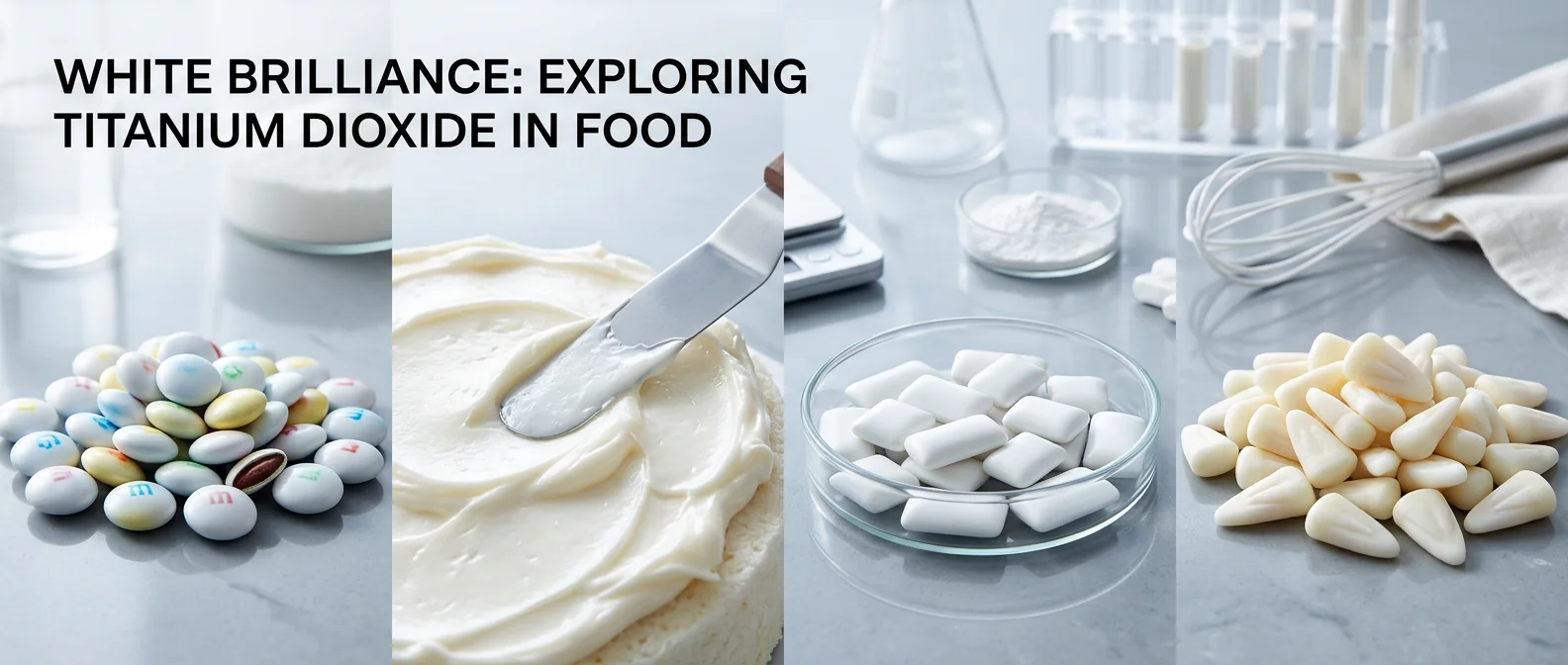
There is an ingredient in many white-coated candies, chewing gums, frostings, coffee creamers, and salad dressings whose sole purpose is to make food look whiter. It has no flavor, no nutritional value, and no function beyond appearance. It is the same compound that makes white paint opaque, sunscreen white, and toothpaste bright.

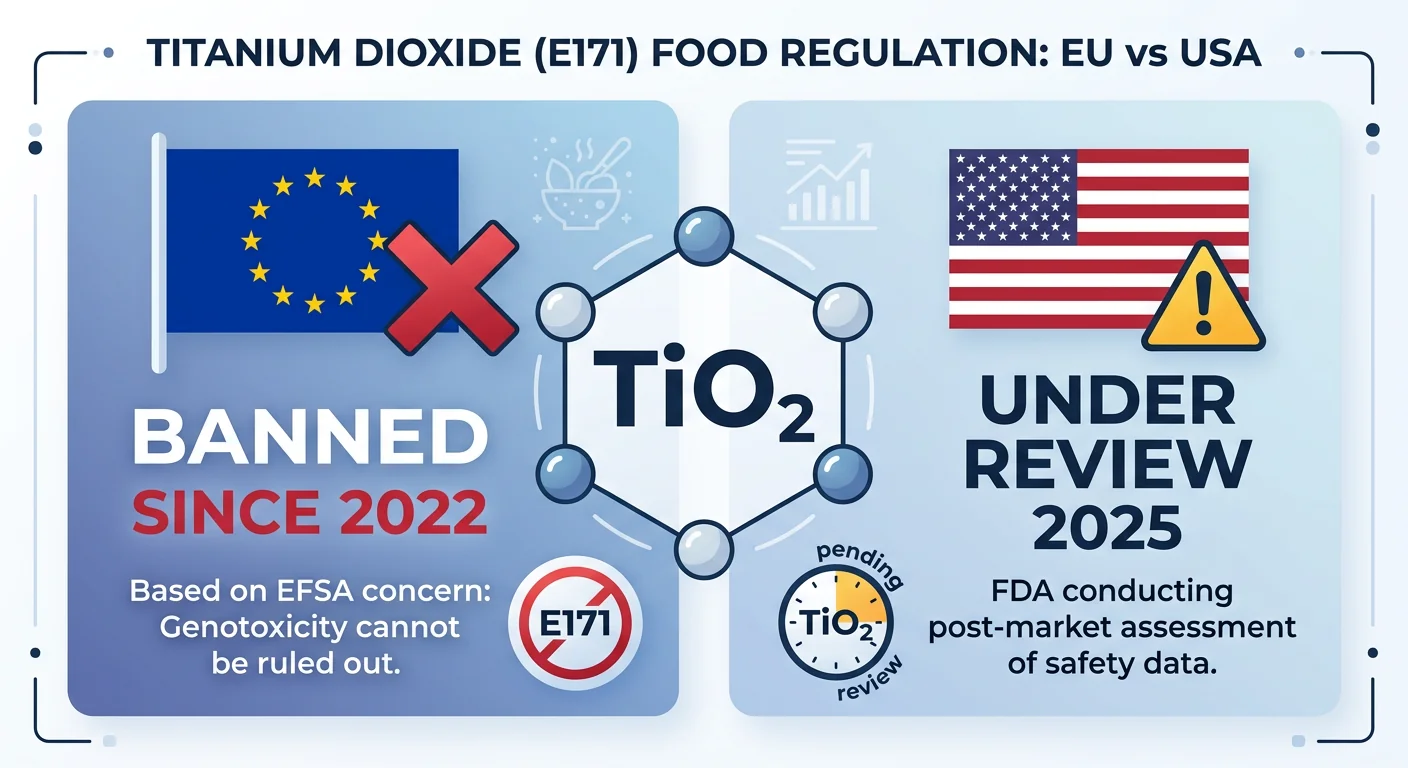
That ingredient is titanium dioxide — listed on labels as TiO2, E171, or simply "titanium dioxide." The European Union banned it from all food products in February 2022, after its food safety authority concluded it could no longer be considered safe. The United States Food and Drug Administration still permits it. The FDA received a citizen petition requesting its revocation in 2023, and in May 2025 announced that titanium dioxide is under accelerated post-market safety review. In the meantime, it remains in the American food supply.

What Titanium Dioxide Does in Food

Titanium dioxide is a white, powdery mineral compound with extraordinary light-scattering properties. When added to food, it creates a brilliantly white, opaque appearance — the kind that makes candy coating look porcelain-white rather than off-white, that makes vanilla frosting look snow-bright rather than cream-colored, and that makes some salad dressings appear uniformly white rather than slightly translucent.

It achieves this not by adding color in the conventional sense, but by physically scattering and reflecting light. The same optical properties that make it useful in paint, sunscreen, and industrial coatings have made it attractive to food manufacturers seeking cosmetic enhancement.

The FDA classifies it as a color additive and allows its use at a maximum concentration of 1% by weight of the finished food product under 21 CFR 73.575. It has been on the FDA's permitted color additives list for decades.

Titanium dioxide serves no nutritional purpose. Unlike some food additives that preserve shelf life, prevent spoilage, or enhance texture, TiO2's function is purely cosmetic — to make food look more vivid and appealing than it would in its natural state.

Where It Appears in US Foods

Titanium dioxide is found in a wide range of packaged foods in the United States. The Center for Science in the Public Interest identified it in hundreds of products, including:

  • Candy and confectionery: White candy-coated products, candy corn, certain varieties of gummy candies, ring pops, and sugar-shelled chocolates
  • Chewing gum: Trident White peppermint gum, Mentos Freshmint Gum, and other gums where whiteness is a product feature
  • Baked goods and frosting: Duncan Hines creamy vanilla frosting and similar packaged frostings, some cookie cream fillings
  • Dairy and coffee products: Non-dairy coffee creamers, certain cream-based dressings
  • Pharmaceuticals and supplements: Pills, capsules, and coatings — a category that remains a permitted use even in the EU

Skittles, long one of the most publicly identified examples, removed titanium dioxide from their US formulation in June 2025, following years of consumer pressure. Tyson Foods announced the same month that it would eliminate TiO2 from its product lines by the end of 2025. But these are voluntary reformulations — the ingredient remains legal, and many manufacturers continue to use it.

The Science That Changed the Conversation

The Science That Changed the Conversation

The concern about titanium dioxide in food is not about toxicity in the conventional sense — eating a single piece of candy with TiO2 does not cause acute harm. The concern is more subtle: the possibility that long-term, chronic exposure at even low levels may cause DNA damage, and that some of the particles involved are nanoscale.

Genotoxicity: The Key Concern

Modern food-grade titanium dioxide is a mixture of particle sizes, a significant portion of which fall into the nanoscale range (below 100 nanometers). Nanoparticles behave differently from larger particles — they can penetrate cells, cross biological barriers, and interact with cellular machinery in ways that larger particles cannot.

The European Food Safety Authority's 2021 updated safety assessment — the most comprehensive review to date — concluded:

"Taking into account all available scientific studies and data, the Panel concluded that titanium dioxide can no longer be considered safe as a food additive. A concern for genotoxicity cannot be ruled out."

EFSA did not conclude that E171 is definitively harmful or that it causes cancer. What it concluded was that it could not rule out the possibility that TiO2 damages DNA or chromosomes. Under EU food safety law, uncertainty about genotoxicity is sufficient grounds for removal from the market. If regulators cannot establish a safe intake level — because genotoxic effects theoretically have no safe threshold — authorization cannot be maintained.

The International Agency for Research on Cancer (IARC) has classified titanium dioxide as Group 2B — possibly carcinogenic to humans, primarily based on inhalation studies in occupational settings. The food ingestion route involves different exposure dynamics, but the IARC classification reflects the broader scientific caution around the compound.

Gut Health and the Microbiome

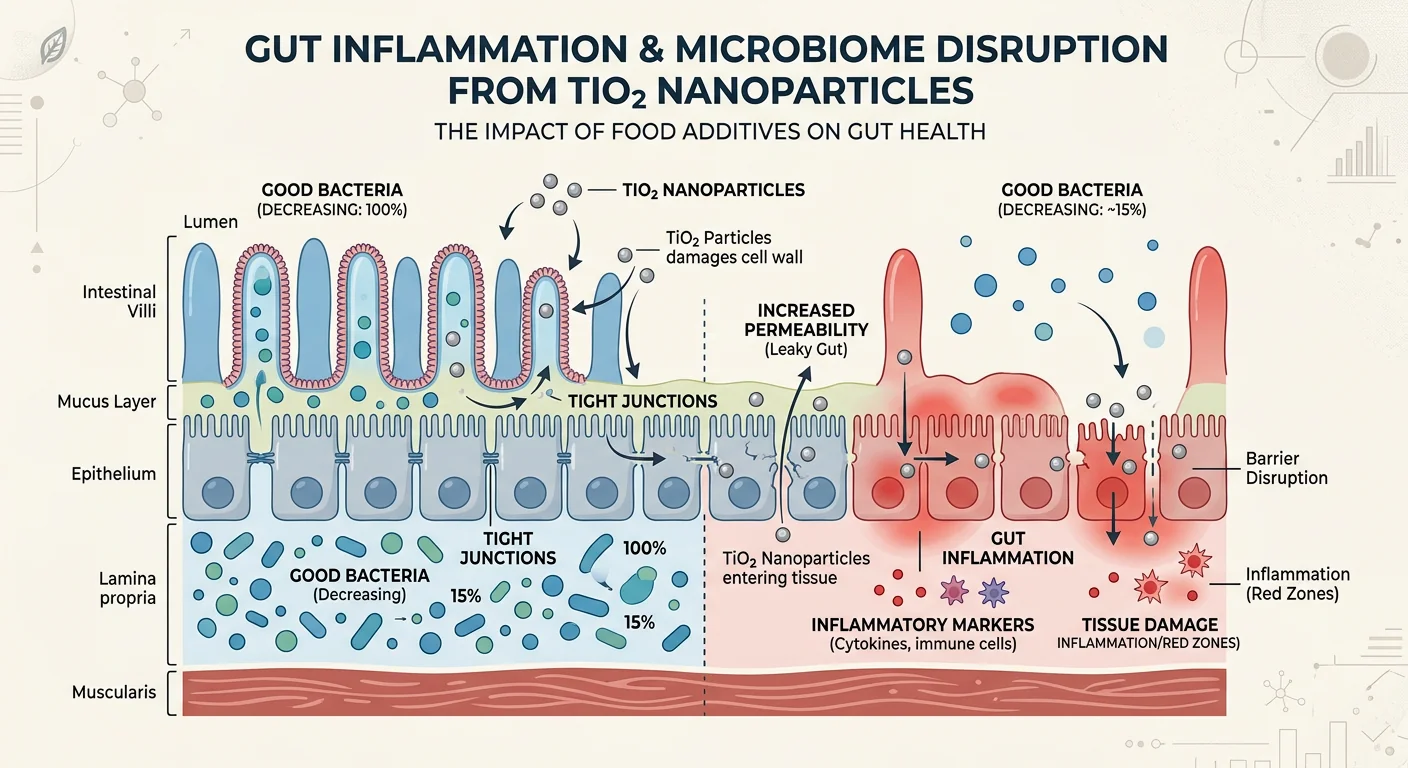
A separate body of research has examined what happens to the gut when titanium dioxide nanoparticles pass through the digestive system. Rodent studies have consistently shown:

  • Gut microbiota disruption: TiO2 nanoparticles alter the composition of intestinal bacteria, reducing beneficial species such as Bifidobacterium and Lactobacillus while increasing pro-inflammatory bacterial populations
  • Intestinal inflammation: Multiple studies found increased levels of inflammatory markers in the colonic mucosa following dietary TiO2 exposure
  • Reduction in short-chain fatty acids (SCFAs): SCFAs are key metabolites produced by gut bacteria that support colon health and immune regulation; TiO2 exposure has been associated with their decrease
  • Intestinal barrier disruption: Studies found reduced mucus production and damage to the cells lining the gut wall

A 2021 systematic review of animal studies published in Nutrients concluded that TiO2 at food-relevant doses "may promote intestinal inflammation, alter microbiota composition and metabolic activity, and affect gut barrier integrity."

The caveat is that most of this research has been conducted in rodents, and the particle sizes and doses used do not always match real-world human food exposure. Human studies remain limited. This scientific uncertainty is precisely why regulatory bodies disagree on what to do about it.
The EU's Decision: Precaution Over Proof

The EU banned titanium dioxide as a food additive through Commission Regulation (EU) 2022/63, which entered into force on February 7, 2022, with a six-month transition period for manufacturers to reformulate.

The regulatory logic was precautionary: when EFSA concluded it could not establish a safe daily intake — because it could not rule out genotoxicity — the EU's legal framework required removal from the authorized additives list. The ban is not a statement that TiO2 definitely causes cancer. It is a statement that the safety case is insufficiently established to allow continued use.

The ban applies to all food products sold in EU member states. The only exceptions are certain medicinal products, where alternatives have not yet been validated and where removing TiO2 could create supply shortages for essential medicines. Even for medicines, the EU has signaled this is a temporary exception.

The result has been a significant reformulation push across the global food industry, since manufacturers who sell in both EU and US markets often choose to reformulate once for both rather than maintaining separate production lines.

The FDA's Position — And How It's Shifting

The FDA's Position — And How It's Shifting

In August 2022, shortly after the EU ban took effect, the FDA reaffirmed that titanium dioxide is "safe for use as a color additive in foods" under its existing authorization. The agency pointed to the 2023 re-evaluation by JECFA (the Joint FAO/WHO Expert Committee on Food Additives), which concluded that TiO2 added to food is safe at current use levels.

The FDA and JECFA share the position that the animal and in vitro studies driving EFSA's concern do not translate directly to human food safety conclusions, and that the dose levels in most concerning studies exceed what consumers typically ingest.

However, the FDA's position has begun to evolve. In May 2025, as part of a broader overhaul of its post-market chemical review program, the FDA announced that titanium dioxide is under accelerated safety review — one of the first substances to be formally added to the new review queue. The FDA also received a citizen petition in 2023 requesting revocation of TiO2's color additive authorization, which it has not yet resolved.

The FDA's 2026 Human Foods Program priorities explicitly list titanium dioxide as a chemical under active assessment. Whether this review results in restriction, additional labeling requirements, or a reaffirmation of safety remains to be determined.

States Acting Ahead of Federal Review

With federal action proceeding slowly, states have moved to restrict titanium dioxide in school food — the same channel used for food dyes and BHA.

Arizona: Governor Katie Hobbs signed House Bill 2164 (the Arizona Healthy Schools Act) on April 14, 2025. The law bans foods containing titanium dioxide and several other additives from school meals and school vending machines. Compliance is required by the 2026–2027 school year.

Texas: Senate Bill 314 targets a list of food additives in school nutrition programs that includes titanium dioxide alongside BHA, Red No. 3, propylparaben, and azodicarbonamide.

More broadly, 2025 saw a surge in state food additive legislation: over 140 bills introduced across 38 states, with 11 enacted specifically targeting additives in school food. The pattern mirrors what happened with synthetic food dyes — state school bans creating pressure that drives national reformulation, often ahead of any federal mandate.

What Industry Is Doing

The reformulation pressure created by the EU ban and state legislation has produced real market movement. Several major manufacturers have announced or completed TiO2 removal:

  • Mars (Skittles): Removed E171 from the US Skittles formulation in June 2025, four years after the EU reformulation
  • Tyson Foods: Announced elimination of TiO2 from its product lines by end of 2025
  • Nestlé and Unilever: Had already reformulated EU products after 2022 and in many cases applied changes globally

Natural alternatives now available to manufacturers include calcium carbonate (a mineral-based opacifier), rice starch, silicon dioxide, and concentrated plant-based color systems. These alternatives carry higher costs and in some formulations deliver slightly different visual effects, but the technology has advanced significantly since the EU ban.

How to Identify Titanium Dioxide on a Label

US ingredient labels are required to disclose titanium dioxide when it is used as a color additive. Look for:

  • Titanium dioxide — the most common listing in the US
  • E171 — the European additive number, which may appear on imported products
  • TiO2 — less common, but used by some manufacturers

Unlike synthetic food dyes, which are always listed by their certified names, titanium dioxide does not have a familiar color name (like "Red 40") that most consumers recognize. It reads like a mineral compound — which it is — making it easy to overlook in a long ingredient list.

Products that have removed TiO2 often signal this through "no artificial colors" or "clean label" claims, and may list calcium carbonate or similar alternatives instead.

The FDA review now underway may eventually result in restriction or removal — but that process takes years. Until it concludes, titanium dioxide remains legal and present in many everyday packaged foods sold in the United States.

Using IngrediCheck, you can scan any packaged food and immediately see whether it contains titanium dioxide — along with regulatory context, EU status, and what natural alternatives brands have switched to — so you know exactly what's in your food before you buy it.

Start making confident food choices today !

Scan food and understand what's right for you and your family, with AI.

IngrediCheck app