The FDA's 2026 Synthetic Dye Phase-Out: What It Means for Your Family

The FDA is removing synthetic food dyes from the US food supply by 2026. Here's what parents need to know about the ban and how to protect your family.

Apr 13, 2026|11 min read
The FDA's 2026 Synthetic Dye Phase-Out: What It Means for Your Family

The brightly colored cereals, candies, and snacks lining grocery store shelves are about to undergo a significant transformation. In one of the most sweeping food safety actions in decades, the U.S. government has announced plans to eliminate petroleum-based synthetic dyes from the nation's food supply by the end of 2026.

For parents who have long worried about what their children are eating, this represents a major victory. For food manufacturers, it means scrambling to reformulate thousands of products. And for consumers everywhere, it raises important questions: Which dyes are being removed? Why now? And what should you be looking for on labels in the meantime?
The Announcement That Changed Everything

On April 22, 2025, Health and Human Services Secretary Robert F. Kennedy Jr. stood alongside FDA officials to announce a historic plan to phase out all petroleum-based synthetic dyes from the American food supply.

"For too long, some food producers have been feeding Americans petroleum-based chemicals without their knowledge or consent," Kennedy said. "These poisonous compounds offer no nutritional benefit and pose real, measurable dangers to our children's health and development."

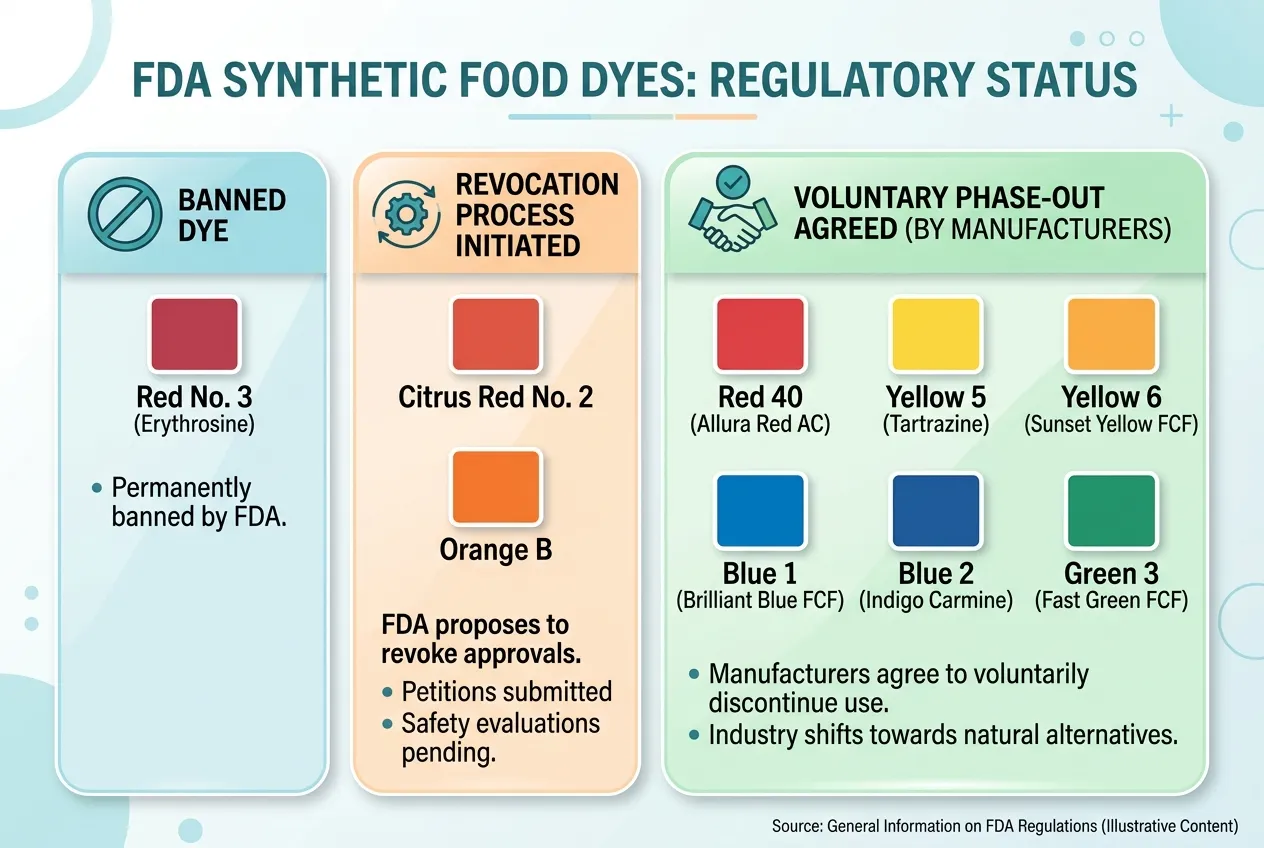
The announcement built on an earlier FDA decision. In January 2025, the agency revoked authorization for Red No. 3, giving manufacturers until January 2027 to remove it from foods and until January 2028 to remove it from drugs. The April announcement expanded this action to cover nearly all remaining synthetic dyes.

Which Dyes Are Being Removed?

Which Dyes Are Being Removed?

The phase-out targets nine synthetic dyes currently approved for use in American food:

Already Banned

Red No. 3 (Erythrosine): This cherry-red dye was the first to fall. The FDA banned it based on studies showing it caused thyroid tumors in male rats. You can find it in candy corn, maraschino cherries, certain frostings, and some strawberry-flavored beverages. More than 9,200 food items contain this dye, according to Agriculture Department data cited by the Center for Science in the Public Interest.

Being Revoked

Citrus Red No. 2: Used primarily to color orange peels, this dye is expected to face final revocation in 2026.

Orange B: Used in sausage casings, this dye is also being formally revoked.

Voluntary Phase-Out by End of 2026

The FDA is working with industry to voluntarily eliminate six additional dyes:

  • Red No. 40 (Allura Red): The most widely used food dye in America, found in everything from sports drinks to candies to breakfast cereals
  • Yellow No. 5 (Tartrazine): Common in chips, pickles, and yellow-colored beverages
  • Yellow No. 6 (Sunset Yellow): Found in many orange-colored foods and beverages
  • Blue No. 1 (Brilliant Blue): Used in candies, beverages, and ice creams
  • Blue No. 2 (Indigo Carmine): Found in candies and some baked goods
  • Green No. 3 (Fast Green): Used in some candies and canned vegetables

Together, Red 40, Yellow 5, and Yellow 6 account for over 90% of all food dyes used in the United States.

Why Now? The Science Behind the Ban

Why Now? The Science Behind the Ban

The concerns about synthetic food dyes are not new. What has changed is the accumulation of evidence and the political will to act on it.

The Cancer Connection

Red No. 3 was actually banned from cosmetics back in 1990 after studies linked it to thyroid cancer in rats. Yet it remained legal in food for another 35 years. The 1958 Delaney Clause of the Federal Food, Drug and Cosmetic Act mandates a ban on any food additive shown to cause cancer in humans or animals. The FDA finally applied this standard to Red No. 3 in food.

For other dyes, the cancer evidence is more nuanced. A toxicology review found that Red 40, Yellow 5, and Yellow 6 have been contaminated with benzidine, a known carcinogen. A 2001 animal study found colon DNA damage in mice exposed to Red 40, and more recent research suggests the dye may disrupt biological processes involved in colorectal cancer.

Behavioral Effects in Children

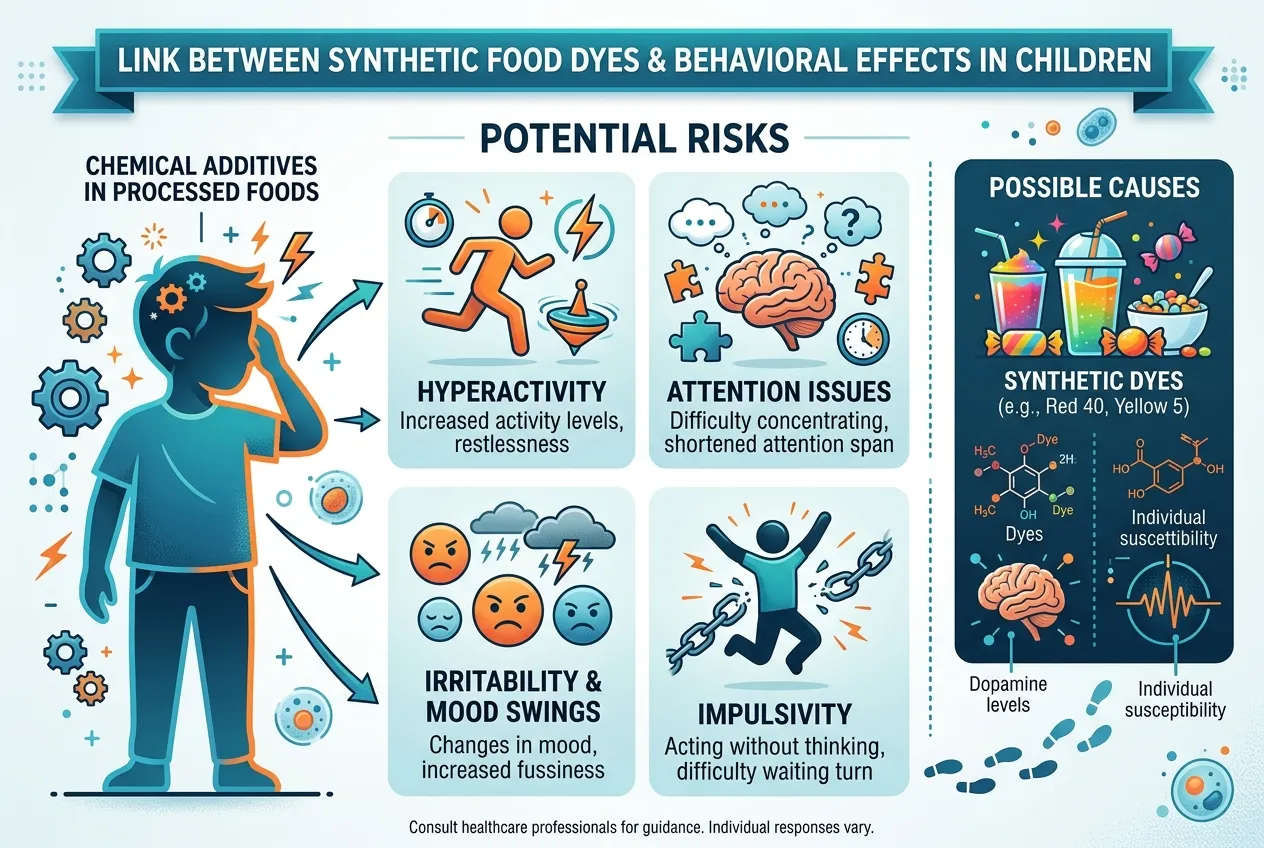
Perhaps more compelling to parents is the growing body of research on behavioral effects. The California Office of Environmental Health Hazard Assessment (OEHHA) conducted a comprehensive two-year evaluation of seven synthetic food dyes. Their conclusion: "Evidence shows that synthetic food dyes are associated with adverse neurobehavioral outcomes in some children."

The research is striking. A high-quality meta-analysis found statistically significant associations between synthetic food dye exposure and behavioral changes in children. Effect sizes ranged from one-sixth to one-third of those seen with ADHD medications. Some researchers estimate that 8% of children with ADHD may have symptoms related to synthetic food dyes.

The percentage of American children diagnosed with ADHD has climbed from 6.1% to 10.2% over the past two decades. While food dyes are not the sole cause, the correlation has drawn attention from researchers and regulators alike.

Outdated Safety Standards

One troubling finding from the California review: all of the FDA's Acceptable Daily Intake levels for synthetic food dyes are based on studies conducted 35 to 70 years ago. These older studies were not designed to detect behavioral effects in children. Modern research suggests current safety thresholds may not adequately protect developing brains.

America Finally Catching Up to Europe

The United States has long lagged behind other developed nations on food dye regulation. The European Union requires warning labels on foods containing certain synthetic dyes, stating that they "may have an adverse effect on activity and attention in children." This requirement has been in place since 2010.

The regulatory philosophies differ fundamentally. Europe uses the precautionary principle: if a food product's safety is uncertain, it can be banned or restricted until proven safe. The United States has relied on the Generally Recognized As Safe (GRAS) system, which allows manufacturers to determine the safety of certain additives without FDA preapproval.

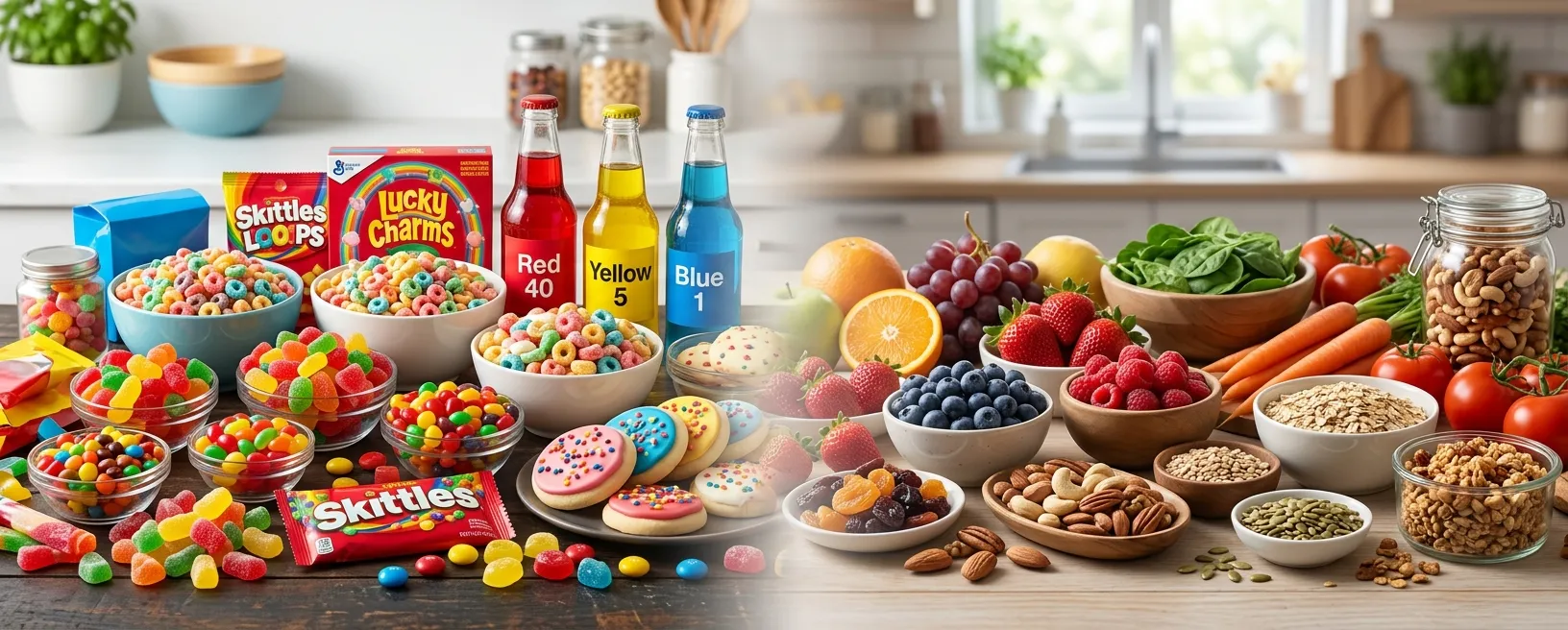
The results are visible in any international supermarket comparison. Skittles sold in Europe contain no synthetic dyes and no titanium dioxide. Kellogg's Froot Loops in Canada achieve their rainbow colors using plant-based concentrates, while the American version still relies on four petroleum-derived synthetic colorings.

This disparity has frustrated American consumers who wondered why their children could not have the same cleaner formulations available overseas. The 2026 phase-out represents a major step toward closing that gap.

What the Phase-Out Actually Means

It is important to understand what the FDA announcement does and does not accomplish.

What It Does

The phase-out establishes a clear national standard and timeline for transitioning away from synthetic dyes. The FDA is also fast-tracking approval of natural alternatives including calcium phosphate, Galdieria extract blue, gardenia blue, and butterfly pea flower extract.

The International Dairy Foods Association has already announced that its members will voluntarily eliminate artificial colors from milk, cheese, and yogurt products sold to U.S. school meal programs by July 2026.

What It Does Not Do

For the six remaining dyes beyond Red No. 3, the phase-out is voluntary rather than mandatory. When asked about enforcement, Kennedy acknowledged: "We don't have an agreement; we have an understanding."

The International Association of Color Manufacturers has pushed back, stating that requiring reformulation by the end of 2026 "ignores scientific evidence and underestimates the complexity of food production."

This means some products may still contain synthetic dyes after the 2026 deadline. Consumers will need to remain vigilant.

State Laws Are Filling the Gap

State Laws Are Filling the Gap

While the federal government moves toward voluntary phase-out, several states have taken more aggressive action.

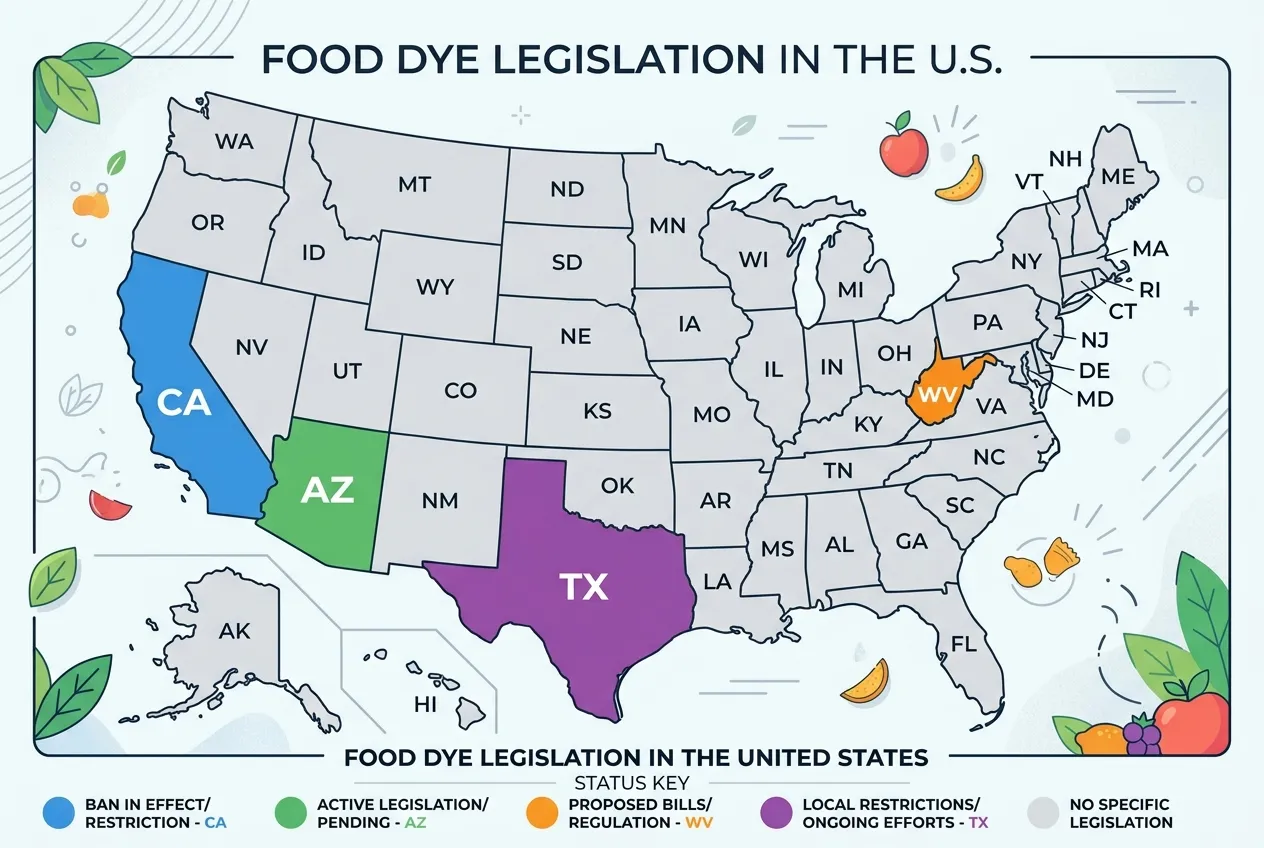
California's 2023 ban on Red 3, along with potassium bromate, propylparaben, and brominated vegetable oil, takes effect in 2027. This law effectively forces reformulation nationwide, since manufacturers typically do not create separate products for a single state.

Arizona has gone further. The Arizona Healthy School Act (HB 2164) prohibits public schools from selling ultra-processed foods containing eleven specific ingredients starting in the 2026-2027 school year. The banned list includes potassium bromate, propylparaben, titanium dioxide, brominated vegetable oil, and various dyes.

West Virginia enacted HB 2354, which prohibits the sale of foods containing certain synthetic dyes, including Red 3, Red 40, Yellow 5, Yellow 6, Blue 1, Blue 2, and Green 3, beginning January 1, 2028.

Texas requires warning labels on foods containing any of 44 specified ingredients if the product label is developed or copyrighted after January 1, 2027.

How to Identify Synthetic Dyes on Labels

Until the phase-out is complete, knowing how to spot synthetic dyes on ingredient labels remains essential.

Names to Watch For

Synthetic dyes appear on labels with their official names:

  • Red 3 (also called Erythrosine or E127)
  • Red 40 (also called Allura Red AC or E129)
  • Yellow 5 (also called Tartrazine or E102)
  • Yellow 6 (also called Sunset Yellow FCF or E110)
  • Blue 1 (also called Brilliant Blue FCF or E133)
  • Blue 2 (also called Indigo Carmine or E132)
  • Green 3 (also called Fast Green FCF or E143)

The "E" numbers are European designations that sometimes appear on imported products or those formulated for international markets.

Common Foods to Check

Synthetic dyes hide in many unexpected places:

  • Breakfast cereals: Especially brightly colored varieties
  • Candy: Particularly gummies, hard candies, and candy corn
  • Sports drinks and sodas: Many get their vibrant colors from dyes
  • Flavored yogurts: Some brands use dyes for color consistency
  • Pickles: Yellow 5 often appears in pickle juice
  • Maraschino cherries: Traditionally colored with Red 3 or Red 40
  • Frosting and baking decorations: Often heavily dyed
  • Some medications and vitamins: Gummy vitamins are common culprits

Natural Alternatives

As manufacturers reformulate, you will see more products using natural colorants:

  • Beta-carotene: For orange and yellow hues
  • Beet juice: For red and pink colors
  • Turmeric: For yellow shades
  • Spirulina: For blue and green colors
  • Annatto: For orange tones
  • Paprika extract: For red-orange shades

These natural alternatives may produce slightly less vivid colors, but they come without the health concerns associated with synthetic dyes.

What Parents Should Do Now

The phase-out will take time, and some products may never fully comply with voluntary guidelines. Here is how to protect your family in the meantime.

Read Labels Consistently

Make ingredient checking a habit. Even products you have purchased for years may contain synthetic dyes you never noticed. Formulations can also change without warning, so check labels regularly.

Focus on Whole Foods

The simplest way to avoid synthetic dyes is to eat foods that do not need ingredient labels. Fruits, vegetables, whole grains, and unprocessed proteins naturally contain no artificial additives.

Look for "No Artificial Colors" Claims

Many manufacturers already offer dye-free versions of popular products. Look for explicit claims on packaging, but verify by checking the ingredient list.

Consider European Versions

For some products, European formulations available at international grocery stores use natural colorants. These can be good alternatives while American versions catch up.

Talk to Your Pediatrician

If you have noticed behavioral changes in your child that correlate with consuming brightly colored foods, discuss this with your healthcare provider. Some children are more sensitive to food dyes than others.

The Bigger Picture

The synthetic dye phase-out represents more than just a single regulatory action. It signals a broader shift in how Americans think about food safety.

For decades, the assumption was that if something was on the market, it must be safe. The dye phase-out challenges that assumption. It acknowledges that approval decades ago, based on limited studies, does not guarantee safety by today's standards.

The FDA has also announced plans to reassess other food additives, including BHA, BHT, and phthalates. The GRAS system itself may be reformed, with new rules requiring companies to notify the FDA before introducing new ingredients rather than self-affirming their safety.

These changes reflect growing consumer demand for cleaner, more transparent food. The companies that adapt quickly will earn consumer trust. Those that resist may find themselves left behind.

Looking Ahead

By the end of 2026, the American food landscape should look noticeably different. Candies, cereals, and snacks that have relied on petroleum-based dyes for generations will sport new formulations. Some may look slightly different. Most will taste the same.

For families concerned about what they are eating, this transition offers a rare moment of optimism. The bright artificial colors that have defined processed foods for decades are finally fading, replaced by safer alternatives that do not require a chemistry degree to evaluate.

Using IngrediCheck, you can scan any product to instantly identify synthetic dyes and other additives of concern. The app flags Red 40, Yellow 5, Yellow 6, and other petroleum-based colorants, helping you make informed choices for your family until the phase-out is complete and beyond.

Get the app for clearer label decisions.

Scan labels, see what fits your food notes, and read the why in plain English.

IngrediCheck app