Quick answer: Blue 1 is a synthetic certified food dye, also listed as FD&C Blue No. 1, Brilliant Blue FCF, or E133. It is used for bright blue and blue-green color in drinks, candy, frosting, freezer pops, and novelty snacks; it does not add nutrition or flavor.
Blue 1 is the kind of ingredient shoppers rarely search for until they start paying closer attention to labels. Then it becomes hard to miss. It is in sports drinks, freezer pops, cake frosting, brightly colored candy, and the kinds of novelty snacks that lean on an electric blue shade no natural ingredient really matches.
That visibility is exactly why Blue 1 matters in the current additive conversation. It is not the single most controversial dye in the American food supply. That distinction still belongs more clearly to Red 3, Red 40, and Yellow 5. But Blue 1 is part of the same petroleum-based dye system that retailers, states, and the FDA are increasingly trying to unwind.
If you are reading the full ALDI Restricted Ingredients List, Blue 1 is one of the legacy 13 ingredients Aldi removed years ago from its exclusive products. That makes it a good example of how retailer clean-label policy often starts with the most obviously artificial colors on the shelf.
What Is Blue 1 Food Dye?
Blue 1 names and foods: what to check at the shelf
| Label or product clue | What it tells you | What it does not tell you |
|---|
| Blue 1 or FD&C Blue No. 1 | The product declares this synthetic blue dye. | It is not a flavor or nutrient. |
| Brilliant Blue FCF or E133 | Another name or number for Blue 1. | It is not a separate natural alternative. |
| A green or purple drink or sweet | Blue dye may be blended with other colors. | Appearance alone cannot identify the coloring. |
| A blue raspberry flavor | A flavor description. | It does not establish whether Blue 1 is present. |
| A different color source on the label | The formula may use another coloring. | It does not establish that the whole product meets every dietary restriction. |
Start with the ingredient list, not the package color. Compare equivalent drinks, sweets, or frostings and check each current label rather than assuming all flavors of a brand share a formula. For a compact identity reference, see the Blue 1 ingredient profile; this guide focuses on recognizing it in foods and evaluating the surrounding claims.
Blue 1 is a synthetic certified color additive. It is also called Brilliant Blue FCF, and on labels it may appear as:
Blue 1FD&C Blue No. 1Brilliant Blue FCFE133 on some imported products
Its job is simple. It makes food look vividly blue, or it helps create blended colors like green and purple when combined with yellow or red dyes. Manufacturers use it because it is stable, inexpensive, and visually strong even at low doses.
That is why it shows up so often in:
- sports drinks and hydration powders
- blue raspberry candy
- frostings and cake decorations
- freezer pops and gelatin desserts
- flavored syrups and novelty beverages
- some cereals and snack coatings
The issue is not that Blue 1 adds nutrition or flavor. It does not. Its value is almost entirely cosmetic.
Why Blue 1 Still Matters Even If It Is Not the Main Headline Dye
The synthetic dye story is often told through Red 40 and Yellow 5 because they are more widespread and more studied in the child-behavior debate. But shopper decisions are not made one dye at a time. Families looking for cleaner labels usually treat the petroleum-based dye family as one broader problem.
That is exactly how current policy is moving too.
The FDA's 2025 synthetic dye phase-out announcement grouped Blue 1 with the other remaining petroleum-based certified colors. West Virginia's dye law does the same. So do retailer exclusion lists. Blue 1 is not being judged as a totally separate conversation. It is being swept into a broader conclusion: brightly colored processed foods do not need petroleum-derived dyes to stay commercially viable.
That is why The FDA's 2026 Synthetic Dye Phase-Out and Red 40, Yellow 5, and the Dyes the FDA Is Finally Phasing Out matter here even when Blue 1 is not the leading actor in those pieces.
What the Evidence Actually Says
Blue 1 is not the cleanest one-to-one cancer story in the way Red 3 became. It is also not the most studied dye in the hyperactivity literature. The right way to describe Blue 1 is as part of a color-additive category that is increasingly under pressure, not as a uniquely singled-out emergency.
That distinction matters because the evidence base around synthetic dyes is uneven.
California's OEHHA review concluded that synthetic food dyes as a class are associated with adverse neurobehavioral outcomes in some children. The strongest concern in public discussion still centers on the broader family effect, not only one isolated dye. Reviews of human and animal evidence also keep returning to the same practical point: some children appear more sensitive than others, and the total dyed-food pattern matters more than obsessing over a single bite.
The strongest shopper takeaway is not that Blue 1 alone explains every concern. It is that heavily dyed foods are being judged more critically than they were a decade ago.
That helps explain why retailers moved before a clean federal ban ever arrived.
Blue 1 Is a Label-Visible Problem
One reason Blue 1 is useful for shoppers is that it is easy to spot. Unlike an upstream processing aid or a fumigant, this is a front-line ingredient list problem. If it is in the product, you will usually see it.
That makes Blue 1 easier to act on than something like propylene oxide, where the bigger issue is supply-chain treatment you may never see printed on the package.
If Blue 1 matters to your household, scan the label for its formal name and then look at the product category around it. A blue sports drink with Blue 1 is not surprising. A frosting, yogurt topping, or snack coating with Blue 1 tells you something about how much the product depends on cosmetic additives for shelf appeal.
Why Aldi and Other Retailers Dropped It Early
Aldi's older restricted list already treated Blue 1 as expendable. That decision makes sense commercially even if you ignore the toxicology debate for a moment.
Blue 1 is one of the easiest additives for shoppers to interpret as "artificial." It sounds like a lab code because it is a lab code. There is no wellness halo around it, no consumer confusion about whether it might be naturally present, and no persuasive argument that it is there for anything other than appearance.
That is why retailer clean-label moves often start with the obvious dyes first:
- they are easy to explain
- they are easy to spot on labels
- they create clear before-and-after reformulation stories
- they signal a more trustworthy ingredient deck to shoppers
In other words, Blue 1 is strategically low-hanging fruit for a retailer trying to prove that reformulation is real.
How To Read Blue 1 in Context
The smartest way to use a Blue 1 ingredient profile is not as a panic trigger. It is as a sorting tool.
Ask:
- Is this product aimed at kids or novelty snacking?
- Is the color doing most of the selling work?
- Is there a similar version without the dye?
- Is this part of a bigger synthetic-dye pattern across the foods I buy repeatedly?
That frame is more useful than pretending Blue 1 alone answers the whole safety question. It turns label reading into a practical tradeoff instead of a vague fear.
Blue 1 is still legal. It is still common. It is also one of the clearest signals that a product depends on old-school synthetic color chemistry rather than a cleaner formulation direction. That is why Aldi moved on it early, and why more manufacturers will likely keep doing the same.
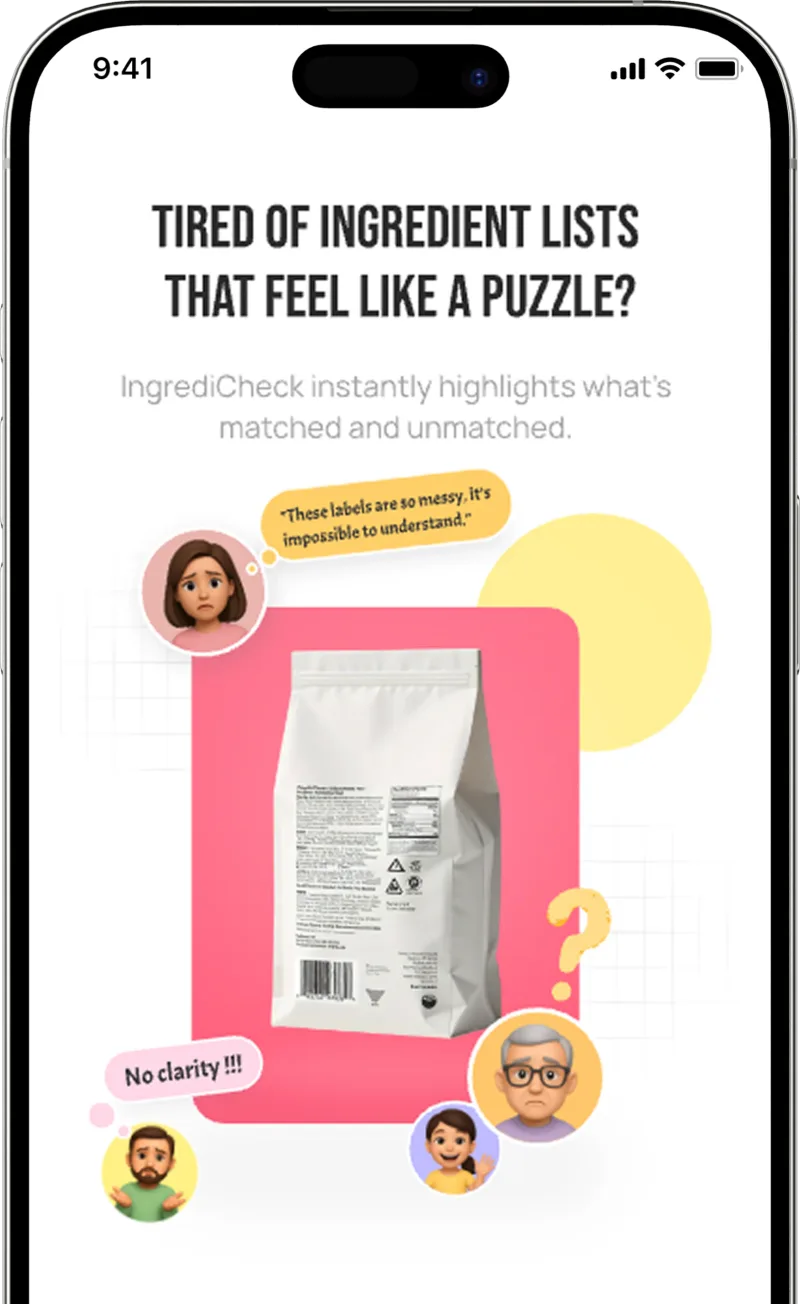
Using IngrediCheck, you can scan a product and immediately see when Blue 1 shows up alongside other synthetic dyes, then compare that label against cleaner alternatives before you buy. That makes it easier to reduce dyed-food exposure without trying to memorize every color-additive alias in the aisle.
For the broader dye cluster, compare this page with The FDA's 2026 Synthetic Dye Phase-Out: What It Means for Your Family, Red 40, Yellow 5, and the Dyes the FDA Is Finally Phasing Out, the E-Number Glossary for E133 and other dye-code lookups, and the full ALDI Restricted Ingredients List: All 57 Ingredients.