How 'FDA Approved' Food Additives Are Still Making People Sick

The GRAS loophole allows food companies to add chemicals to your food without FDA review. Learn which 'approved' additives pose real risks — and how to avoid them.

Mar 26, 2026|10 min read
How 'FDA Approved' Food Additives Are Still Making People Sick

You pick up a product, scan the label, and see an ingredient you don't recognise. You pause, then move on — if the FDA approved it, it must be safe, right?

This is one of the most consequential assumptions in modern food shopping, and it's not quite true.

The reality is that a significant portion of the chemicals in packaged food today were never formally reviewed by the FDA at all. They were declared safe by the companies that profit from selling them. Under a legal framework known as GRAS — Generally Recognized as Safe — food manufacturers can introduce new ingredients into the food supply without telling regulators, without independent testing, and without public disclosure. The approval happens in private, and sometimes not at all.

This isn't a conspiracy theory. It's a structural feature of how US food regulation works, and it has allowed ingredients linked to hormone disruption, liver injury, and carcinogenicity to remain in the food supply for decades while regulators conduct "reassessments."

Here's what you need to know.
The GRAS Loophole: How It Works

The GRAS designation dates back to the 1958 Food Additives Amendment. Congress wanted to give the FDA authority over new food chemicals, but built in an exception: substances that are "generally recognized as safe" by qualified scientific experts don't need formal FDA approval. The intent was to exempt well-established ingredients like salt, vinegar, and baking powder from lengthy regulatory review.

What Congress didn't anticipate was how broadly industry would interpret the exception.

Over the following decades, a system evolved in which companies can declare their own ingredients GRAS through a process called "self-affirmation." This means convening a panel of scientists — often consultants paid by the company — reviewing the available evidence, and concluding internally that an ingredient is safe. The FDA doesn't have to be notified. No public comment period is required. No independent verification occurs.

According to an analysis by the Environmental Working Group, nearly 99% of new food chemicals introduced since 2000 were approved through the GRAS process rather than through formal FDA food additive review. Experts estimate more than 1,000 GRAS substances have entered the food supply without FDA or public knowledge. The agency itself, when asked how many GRAS substances are currently in use, cannot give a definitive number.

That's not a regulatory system. That's a honour system with billion-dollar incentives on one side.

The Tara Flour Case: A Warning About What Happens Next

In 2022, a company called Daily Harvest launched a product containing tara flour — a protein-rich flour made from the seeds of the Caesalpinia spinosa tree. It was declared GRAS by the company. The FDA was not involved.

Within weeks, hundreds of customers reported severe gastrointestinal illness, acute liver injury, and hospitalisation. By June 2022, Food Safety News reported approximately 500 people had been sickened in the US and Canada. Chemical analysis later identified a non-protein amino acid called baikiain in the flour, which appears to have caused the liver damage.

The Daily Harvest recall happened. But the FDA didn't formally declare tara flour unsafe until May 2024 — nearly two years after the outbreak. In that two-year window, the ingredient remained in the food supply.

This is the pattern with GRAS: harm happens, the company recalls, regulators investigate, a formal determination comes years later. The product is already sold, already eaten, and the damage is already done.

Propyl Paraben: In Your Food Since 1977, Banned in the EU Since 2006

Propyl paraben (E217) is a preservative used in tortillas, muffins, and some dairy products. The FDA granted it GRAS status in 1977. It has remained in the American food supply ever since.

The European Union banned it as a food additive in 2006, citing evidence of endocrine disruption — the ability of a chemical to interfere with hormone signalling. Research published as early as 2002 found that propyl paraben decreased sperm counts in young rats at concentrations the FDA considers safe for humans. The EWG flags it as linked to reproductive harm and increased breast cancer risk through estrogenic activity.

California, under its Food Safety Act, will ban propyl paraben from food starting January 2027 — making it the first US state to act. The FDA has not moved.

The gap between what the EU deemed unacceptable in 2006 and what the FDA considers GRAS today is not explained by new science. It reflects different standards for what counts as sufficient evidence of harm before action is taken.

BHA: Probable Carcinogen, Still on Your Chip Bag

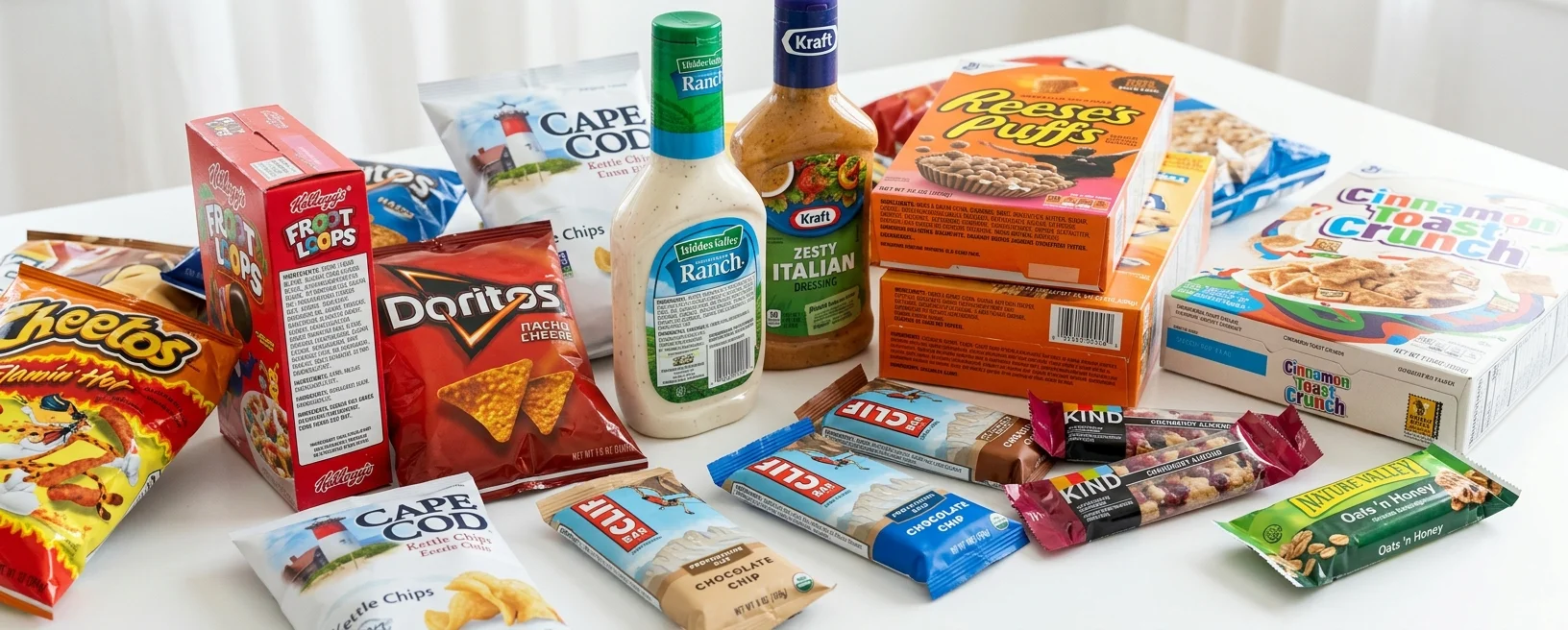
BHA (butylated hydroxyanisole) is a synthetic antioxidant added to oils, cereals, chips, and baked goods to prevent rancidity. The FDA declared it GRAS in 1958 and approved it as a food additive in 1961.

The US National Toxicology Program has listed BHA as "reasonably anticipated to be a human carcinogen" based on evidence it causes forestomach tumours in rats, mice, and hamsters at dietary doses. That designation has been in place for decades.

In February 2026, FoodNavigator reported that the FDA issued a Request for Information on BHA's safety as part of its post-market food chemical assessment programme — effectively beginning a reassessment that should have happened years ago.

BHA appears in tens of thousands of products. The FDA hasn't removed it. A government toxicology programme says it's a probable carcinogen. Both things are true simultaneously.

"GRAS" does not mean independently verified. It does not mean rigorously tested. In practice, it often means the company that makes money selling the ingredient decided it was safe.

The Regulatory Wake-Up Call

The Regulatory Wake-Up Call

This isn't going unnoticed. In March 2025, HHS Secretary Robert F. Kennedy Jr. directed the FDA to explore rulemaking that would eliminate the self-affirmation pathway entirely — forcing companies to submit mandatory notifications to the FDA rather than making private safety determinations. According to a March 2026 report from Chemical & Engineering News, a draft rule is expected in late spring or early summer 2026.

If enacted, the rule would require any company declaring an ingredient GRAS to notify the FDA — creating a public record and an opportunity for independent scrutiny. The agency could then object to determinations it finds insufficient.

This would be the most significant structural reform to food additive law in decades. But it's not law yet, and even if it passes, it won't retroactively require reassessment of the thousands of substances already in the food supply.

"Natural Flavors" and Other Label Sleight of Hand

The GRAS problem is compounded by labelling rules that provide little transparency about what you're actually consuming.

"Natural flavors" is the fourth most common ingredient on US food labels, appearing in everything from protein bars to salad dressings. Under FDA rules, a natural flavour is derived from a plant, animal, seafood, dairy, or fermentation product — but the regulation says nothing about the dozens of processing aids, carrier solvents, and preservatives that may accompany the active flavour compound. A "natural strawberry flavor" may contain more than 50 chemical components.

More critically for allergy sufferers: "natural flavors" can legally contain fish, shellfish, dairy, and other common allergens without any specific allergen declaration, because natural flavors are considered a single ingredient. This creates a genuine safety hazard for people with food allergies who read labels carefully but still don't know what they're eating.

Sugar under many names. Food manufacturers have expanded the vocabulary around sugar in ways that obscure how much is present. High-fructose corn syrup, fruit juice concentrate, dextrose, maltodextrin, cane syrup, agave nectar, coconut sugar, and rice syrup are all forms of added sugar. They are listed separately, which allows each to appear lower on the ingredient list than if they were consolidated into a single "added sugar" entry.

Serving size manipulation. The FDA standardised some serving sizes in 2020 after decades of manufacturers declaring implausibly small servings. But discretion remains. A product with 24g of sugar per 100g can carry a front-of-pack "low sugar" claim if the serving size is defined as a single tablespoon.

What "No Additives" Claims Actually Mean

What "No Additives" Claims Actually Mean

Front-of-pack claims like "no artificial flavors," "no preservatives," and "made with real ingredients" are unregulated marketing terms — they carry no legal definition and no independent verification.

A product claiming "no artificial preservatives" may still contain propyl paraben (which it doesn't classify as a preservative if declared under a different functional category) or BHA. A "clean label" product may contain dozens of GRAS-self-affirmed substances the manufacturer never disclosed to regulators.

This isn't necessarily deceptive in a legal sense. But it creates a gap between what consumers infer from front-of-pack language and what the actual ingredient list contains.

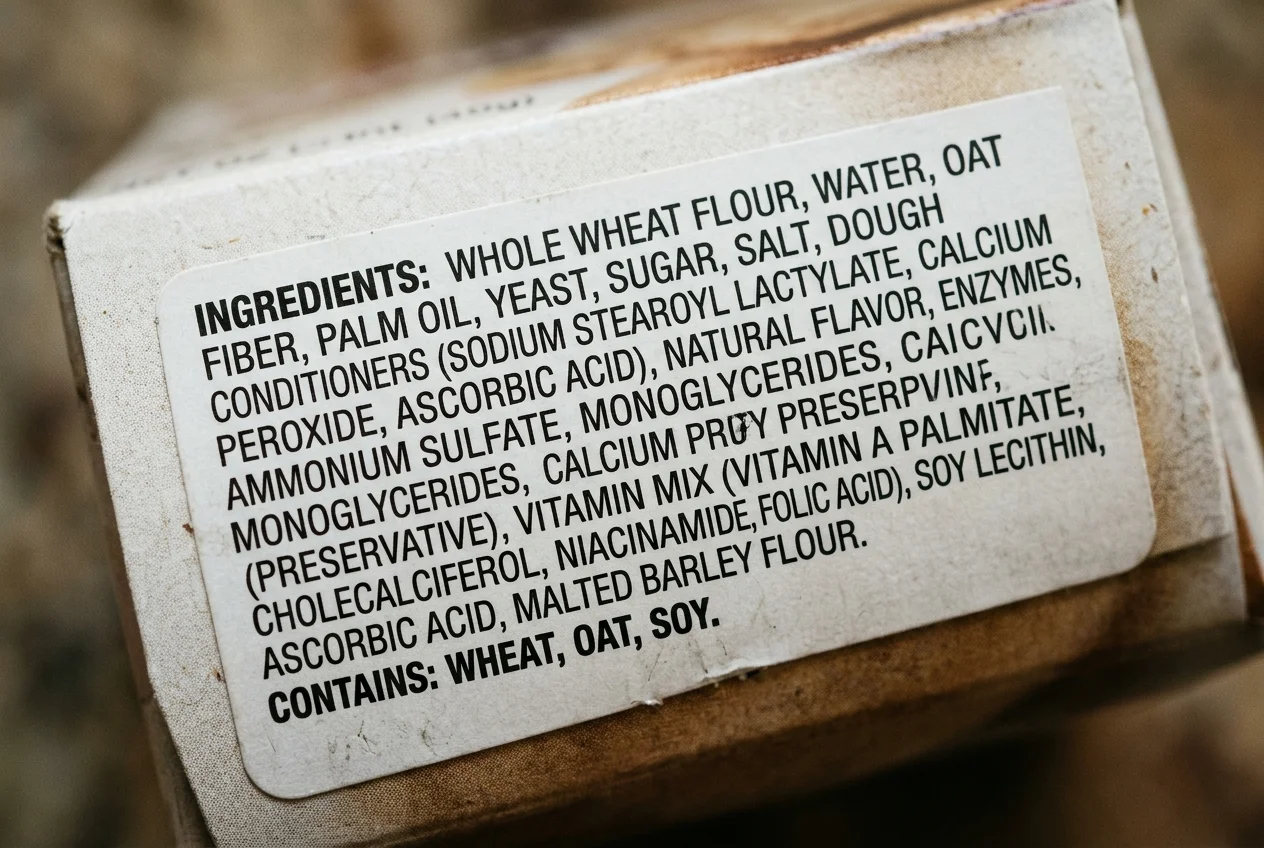
The solution is always the ingredient list itself — specifically the full list, read carefully, with knowledge of what the common terms actually mean.

What You Can Actually Do

The regulatory situation is genuinely complex, and the realistic options for consumers are limited. You cannot audit the GRAS dossiers that companies keep private. You cannot independently verify whether a self-affirmed ingredient has been through rigorous testing.

What you can do:

Read ingredient lists, not health claims. Ignore front-of-pack marketing language. Scan for BHA, BHT, propyl paraben (E217), and other additives that regulatory agencies in other countries have restricted. Their presence doesn't mean certain harm, but it warrants awareness.

Check for regional regulatory differences. If an ingredient is banned in the EU or the UK but permitted in the US, that asymmetry is informative. It usually reflects a precautionary standard, not a settled scientific consensus that it's safe.

Pay attention to product recalls. When the FDA formally declares a GRAS-certified ingredient unsafe — as it did with tara flour in 2024 — that decision often follows harm to real people. Staying informed about recalls helps you act quickly if a product you've been eating is under review.

Minimise ultra-processed food intake. The more ingredients a product contains, the more GRAS substances it likely includes. Whole foods and minimally processed products have shorter ingredient lists and fewer opportunities for obscure additives to accumulate.

The Bottom Line

The label "FDA Approved" implies a level of scrutiny that often doesn't exist. A substance doesn't need FDA approval to enter your food — it needs to be GRAS, and under current rules, the company selling the substance decides whether it qualifies.

This system has allowed propyl paraben to remain in American food for 20 years after the EU banned it. It allowed tara flour to reach half a thousand people before regulators acted. It leaves BHA — listed as a probable carcinogen by the US government's own toxicology programme — in chips and packaged baked goods while reassessments are underway.

The proposed 2026 GRAS reform is a meaningful step toward transparency. But it won't solve the backlog of chemicals already approved under opaque private processes. For now, the burden of scrutiny falls on consumers.

IngrediCheck can help carry some of that burden. It flags ingredients like BHA, BHT, propyl paraben, and synthetic food dyes across packaged food labels, cross-references products with active FDA recalls, and highlights additive categories that face regulatory restrictions in other countries — giving you the context to make genuinely informed decisions, not just the reassurance that something is "generally recognized as safe."

Start making confident food choices today!

Scan food and understand what's right for you and your family, with AI.

IngrediCheck app