Food Policy Watch

Enoki Mushrooms and Listeria: Why These Imports Keep Getting Recalled

Two more enoki mushroom recalls hit the FDA list on May 14, 2026, continuing a pattern that began with a multistate outbreak in 2020. Here is why these delicate mushrooms pose a persistent Listeria risk and what consumers should know.

May 15, 2026|10 min read
By Sanket Patel|Updated 2026-05-15|3 sources|Editorial standards
Enoki Mushrooms and Listeria: Why These Imports Keep Getting Recalled

On May 14, 2026, the FDA posted two new recalls. HH Fresh Trading recalled its 150-gram packages of enoki mushrooms. IQ Produce LLC recalled its 150-gram packages of the same product. Both recalls cited the same reason: product found positive for Listeria monocytogenes. Both products were imported.

If this sounds familiar, it should. These two recalls are the latest entries in a pattern that has now stretched across six years, two confirmed multistate outbreaks, more than 20 individual recalls, and import alerts covering two entire countries.

The enoki mushroom, a staple of East Asian cuisine prized for its delicate texture and mild flavor, has become one of the most persistently recalled food products in the United States. Understanding why reveals something important about the modern global food supply and the gaps that pathogens can exploit.

The 2020 Outbreak That Started Everything

The 2020 Outbreak That Started Everything

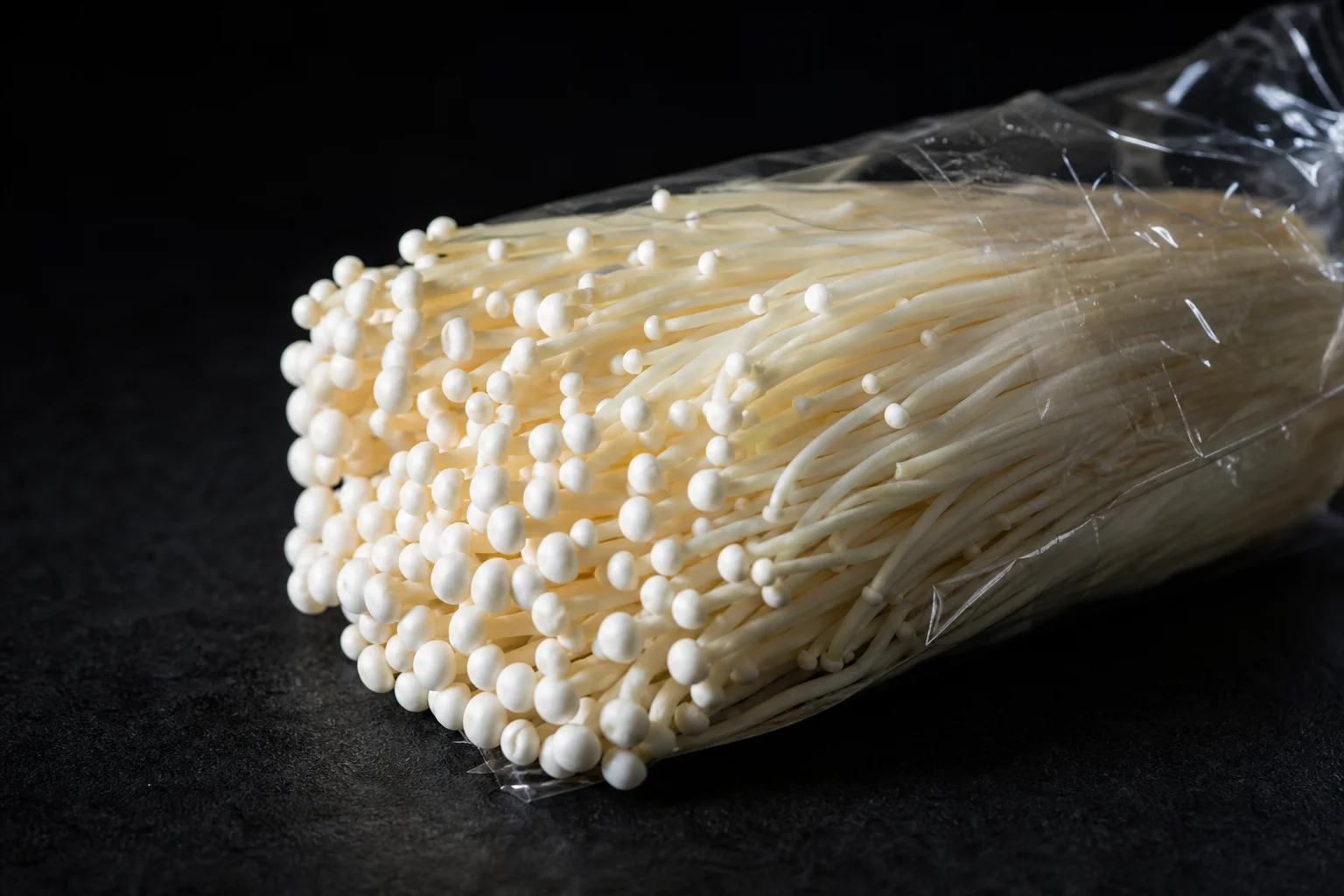
Before 2020, enoki mushrooms were not on the radar of American food safety investigators. The mushrooms, long, thin, and white, typically sold in clusters bound by a rubber band, were consumed primarily in Asian American communities and had never been linked to a foodborne illness outbreak in the United States.

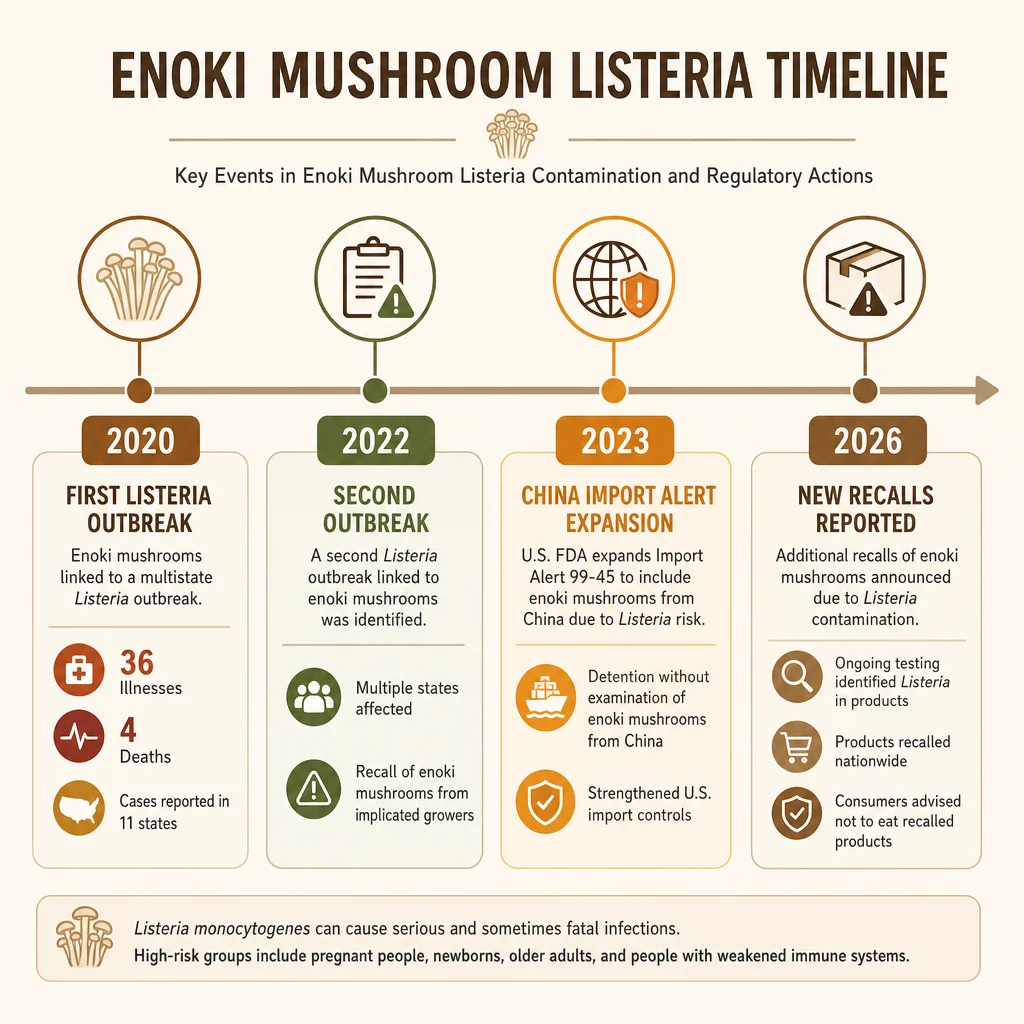
That changed in March 2020. The CDC and FDA, investigating a cluster of Listeria monocytogenes infections that had been quietly building since 2016, traced the outbreak to enoki mushrooms imported from the Republic of Korea. The numbers were devastating: 36 confirmed illnesses across 17 states, 31 hospitalizations, and four deaths. Six pregnant women became ill, and two experienced fetal loss.

The investigation revealed something striking about how difficult it was to identify enoki mushrooms as the culprit. Standard food history questionnaires did not include enoki mushrooms. Investigators had to conduct multiple rounds of re-interviews with patients to establish the link. Without the genetic fingerprinting capability of whole genome sequencing, which matched bacterial samples from patients to samples found in imported mushrooms, the outbreak might never have been solved.

The source was traced to Green Co. LTD, a manufacturer in the Republic of Korea.

The company was placed under FDA import alerts, and its products were detained at the border without physical examination. But the problem was bigger than one company. In fiscal year 2021, FDA testing revealed that 43% of enoki mushroom samples from Korea were contaminated with Listeria monocytogenes.

A Second Outbreak and an Expanding Dragnet

In 2022, a second binational outbreak occurred. This time, the strain was linked to enoki mushrooms imported from China. The U.S. and Canada investigated jointly through the Signal and Response for International Outbreak Investigations framework, a mechanism designed for exactly this kind of cross-border food safety challenge. The outbreak caused six confirmed illnesses.

The FDA responded by expanding its country-wide import alert. In January 2023, enoki mushrooms from China joined those from the Republic of Korea on the detention-without-physical-examination list. Between October 2020 and February 2023, state public health authorities conducted sampling of enoki mushrooms from retail locations across the U.S. Those tests led to 18 recalls. Eight were linked to mushrooms from Korea, 10 from China.

The FDA sampled and analyzed 127 shipments of enoki mushrooms imported from China. Eighteen were violative, a violation rate of over 14%. Fifteen different firms were identified with violative product.

In 2024, the Australian authorities reported enoki mushroom Listeria contamination at Concordia Traders. The recall, posted on April 30, 2026, covered 350-gram packages sold in Victoria, New South Wales, and South Australia.

The pattern extends globally. A 2023 scientific review published in PMC identified the 2020 U.S.-Canada outbreak as linked to 48 total illnesses: 36 in the United States and 12 in Canada. Concurrently, Australian health officials investigated six listeriosis illnesses with isolates related to the same outbreak strain, with illness onset dates stretching from 2017 to 2020.

Why Enoki Mushrooms Are Especially Vulnerable

Enoki mushrooms present a perfect storm of food safety challenges.

First, they are grown in warm, humid conditions that also happen to be ideal for Listeria growth. The growing medium and the tightly clustered growth pattern of the mushrooms create environments where bacteria can thrive.

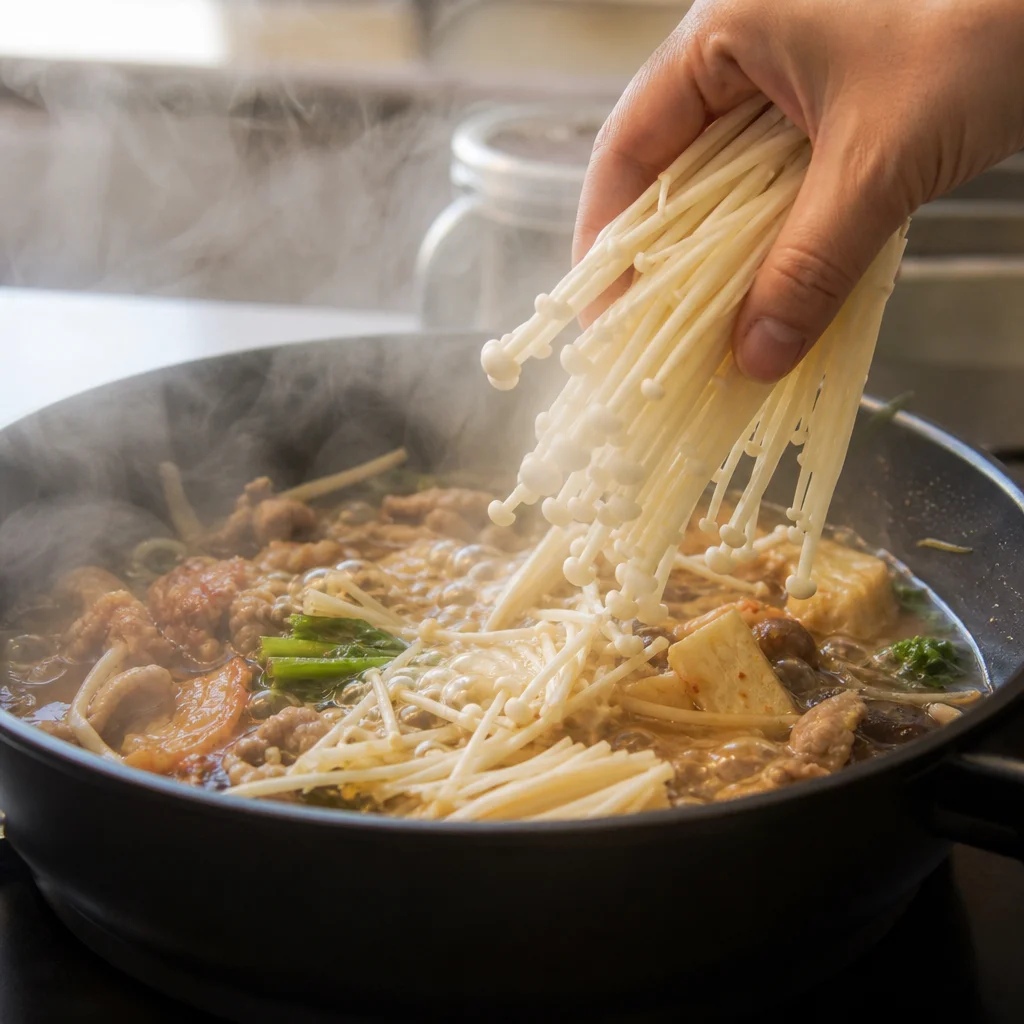
Second, they are often consumed raw or only lightly cooked. Traditional East Asian preparations frequently add enoki mushrooms to soups and hot pots at the end of cooking, where they may not reach temperatures high enough to kill Listeria. In salads and cold dishes, they are consumed entirely raw.

Third, the import supply chain is long and complex. Enoki mushrooms are harvested, packed, and shipped from facilities in East Asia, arriving at U.S. ports days or weeks later. Listeria is psychrotrophic, meaning it can grow at refrigeration temperatures. The cold chain that preserves freshness also preserves the pathogen.

Fourth, testing and traceability are difficult. Enoki mushrooms are a relatively low-volume specialty import. They do not receive the same level of scrutiny as high-volume commodities. When contamination is detected, tracing it back through distributors, importers, and foreign manufacturers is slow and complicated. The FDA's warning letters to importers repeatedly cite failures to develop and maintain Foreign Supplier Verification Programs, a requirement under the Food Safety Modernization Act.

Who Is Most at Risk

Listeria monocytogenes is not an equal-opportunity pathogen. For most healthy adults, ingestion of the bacteria causes mild or no symptoms. But for certain groups, listeriosis is a serious and potentially fatal illness.

Pregnant women are roughly 10 times more likely to get listeriosis than the general population. Infection during pregnancy can cause miscarriage, stillbirth, premature delivery, or life-threatening infection of the newborn. In the 2020 enoki mushroom outbreak, six of the 36 cases were pregnancy-associated, and two ended in fetal loss.

Adults aged 65 and older are also at elevated risk. The immune system weakens with age, and listeriosis in older adults frequently requires hospitalization. In the 2020 outbreak, the median age of patients was 67.

People with weakened immune systems from conditions like cancer, diabetes, kidney disease, or immunosuppressive medications face similarly elevated risk. The same applies to transplant recipients and people living with HIV.

Symptoms of listeriosis typically develop within two weeks of consuming contaminated food but can appear as early as the same day or as late as 10 weeks afterward. They include fever, muscle aches, nausea, and diarrhea. If the infection spreads to the nervous system, symptoms can include headache, stiff neck, confusion, loss of balance, and convulsions.

The CDC and FDA now explicitly advise people who are pregnant, aged 65 or older, or have weakened immune systems to avoid eating enoki mushrooms raw entirely. The agencies also recommend that all consumers cook enoki mushrooms thoroughly, keep raw enoki mushrooms separate from foods that will not be cooked, and wash hands, utensils, and surfaces that have touched raw enoki mushrooms.
How to Handle Enoki Mushrooms Safely

How to Handle Enoki Mushrooms Safely

If you enjoy enoki mushrooms and are not in a high-risk group, you can reduce your risk significantly with proper handling. Cook them thoroughly. Listeria is killed by heating food to an internal temperature of 74 degrees Celsius.

In practice, this means sauteing or simmering enoki mushrooms for several minutes, not just briefly wilting them at the end of cooking.

Keep them refrigerated and use them quickly. Enoki mushrooms have a short shelf life, and Listeria can multiply even at refrigerator temperatures. Do not keep them past their use-by date.

Wash your hands after handling raw enoki mushrooms. Clean cutting boards, knives, and any surfaces the mushrooms touched with hot, soapy water. Keep raw enoki mushrooms away from other foods in your refrigerator, especially ready-to-eat items like salads, cheese, and cooked meats.

Check for recalls. The FDA maintains a searchable recall database at fda.gov.

You can also sign up for email alerts. Given the frequency of enoki mushroom recalls, checking before you use them is a prudent habit.

For high-risk individuals, the safest choice is to avoid raw enoki mushrooms entirely and to be cautious even with cooked enoki mushrooms from unknown sources. Restaurants may not always cook them to safe temperatures.

The Bigger Picture

The enoki mushroom saga illustrates a structural challenge in food safety. The global food supply chain has become so interconnected that pathogens introduced in a growing facility in East Asia can cause illness in 17 American states, multiple Canadian provinces, and Australia. The detection systems work, eventually, but they rely on patients getting sick, seeking care, having samples collected and sequenced, and investigators connecting the dots.

Prevention is harder. The FDA's import alert system can detain products from known problematic sources, but it is reactive, not proactive. A new supplier from a country not under alert can still ship contaminated product until testing catches it. The Foreign Supplier Verification Program requirements place the burden on importers to verify their suppliers' safety practices, but enforcement is inconsistent.

For consumers, the most practical defense is awareness. Know which foods carry elevated risk. Know whether you or someone you are cooking for is in a high-risk group. And cook food thoroughly. These are simple measures, but they work. For a broader look at how food recalls are handled across borders, read our guide on undeclared allergens and why food recalls keep missing the label.

Using IngrediCheck, you can stay informed about food recalls as they happen. When a product you might buy is recalled for pathogen contamination, knowing quickly can make the difference. The app helps you identify products at the point of purchase, reducing the chance that a recalled item ends up in your kitchen.

Get the app for clearer label decisions.

Scan labels, see what fits your food notes, and read the why in plain English.

IngrediCheck app