If you have never worked in a food manufacturing facility, it is easy to imagine allergen control as a straightforward task. Write the recipe, list the ingredients, print the label. Match them up. Done.
The reality is messier. Undeclared allergens typically enter the food supply through one of five failure points.
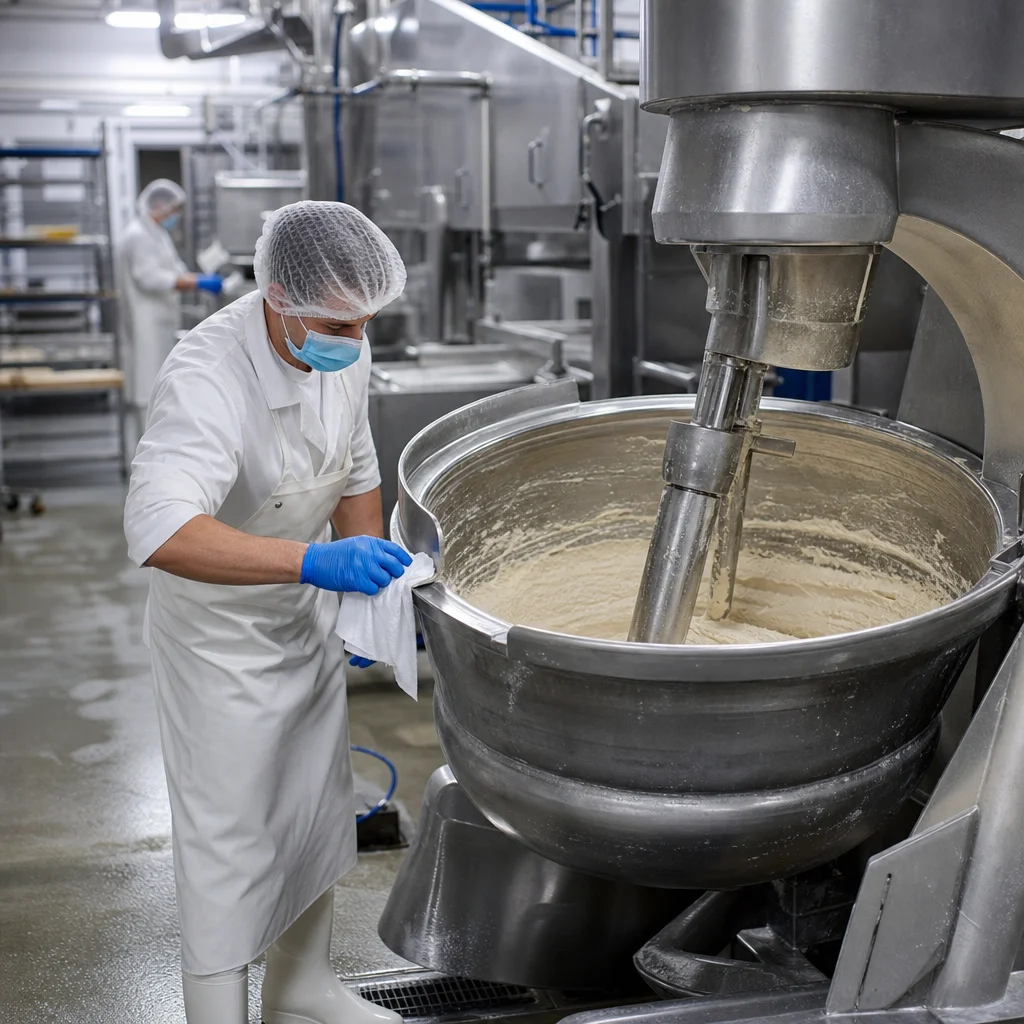
Most food manufacturing facilities produce multiple products on the same production lines. Between runs, equipment must be cleaned. But complete allergen removal is not always achieved. Powdered milk and peanut dust can become airborne and settle on adjacent lines. Employees moving between production areas can carry residue on clothing. And rework, the common practice of reincorporating trimmed or excess product from one run into another, can introduce allergens without anyone tracking the change.
Packaging and Labeling Errors
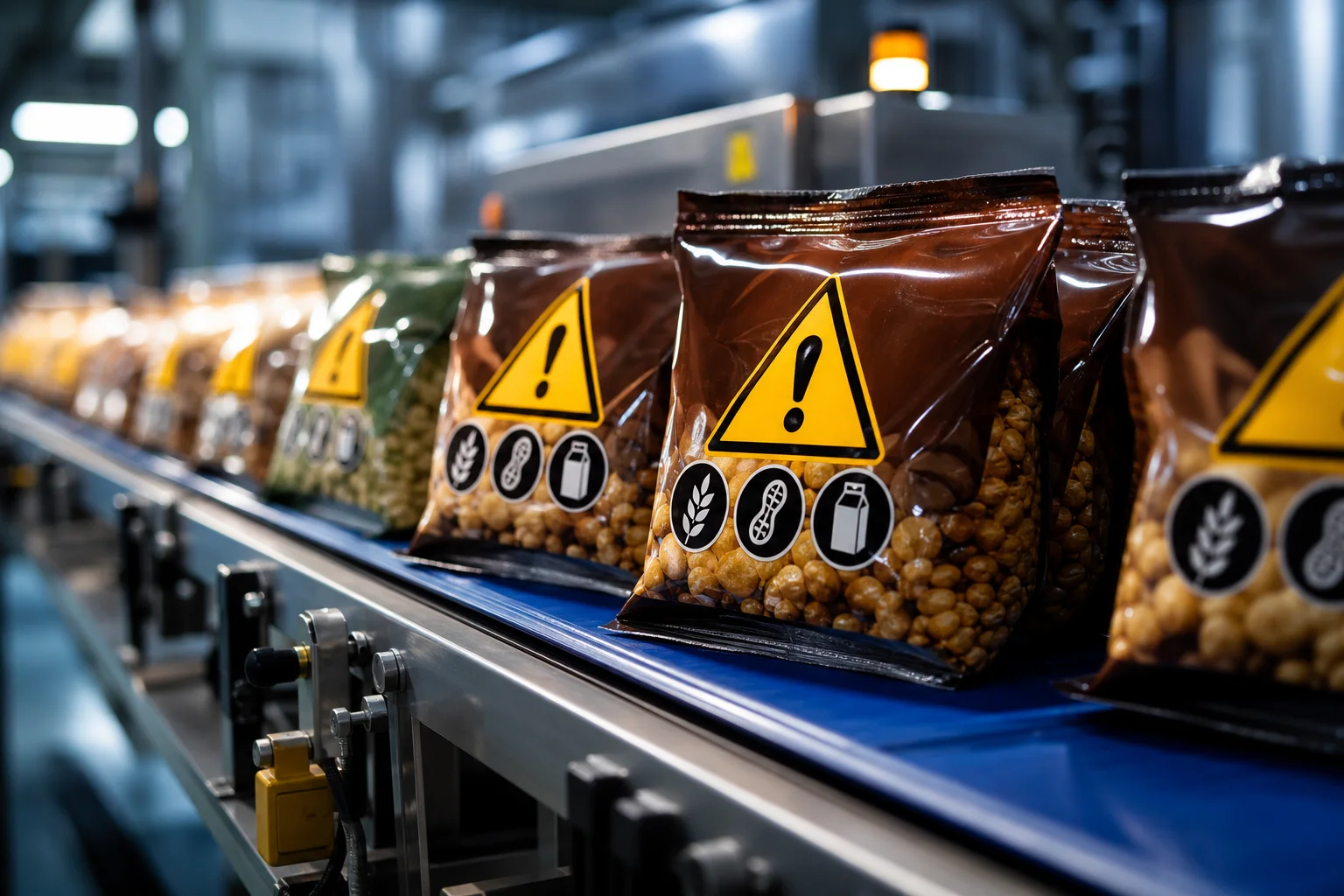
The wrong label applied to the right product is a shockingly common error, especially on shared packaging lines where multiple stock-keeping units run in sequence. Pre-printed label inventories can become commingled in storage. An allergen-containing ingredient may simply never be transferred from the formulation document to the consumer-facing label. In some cases, product is sold in entirely the wrong package.
Missing Ingredient Panels
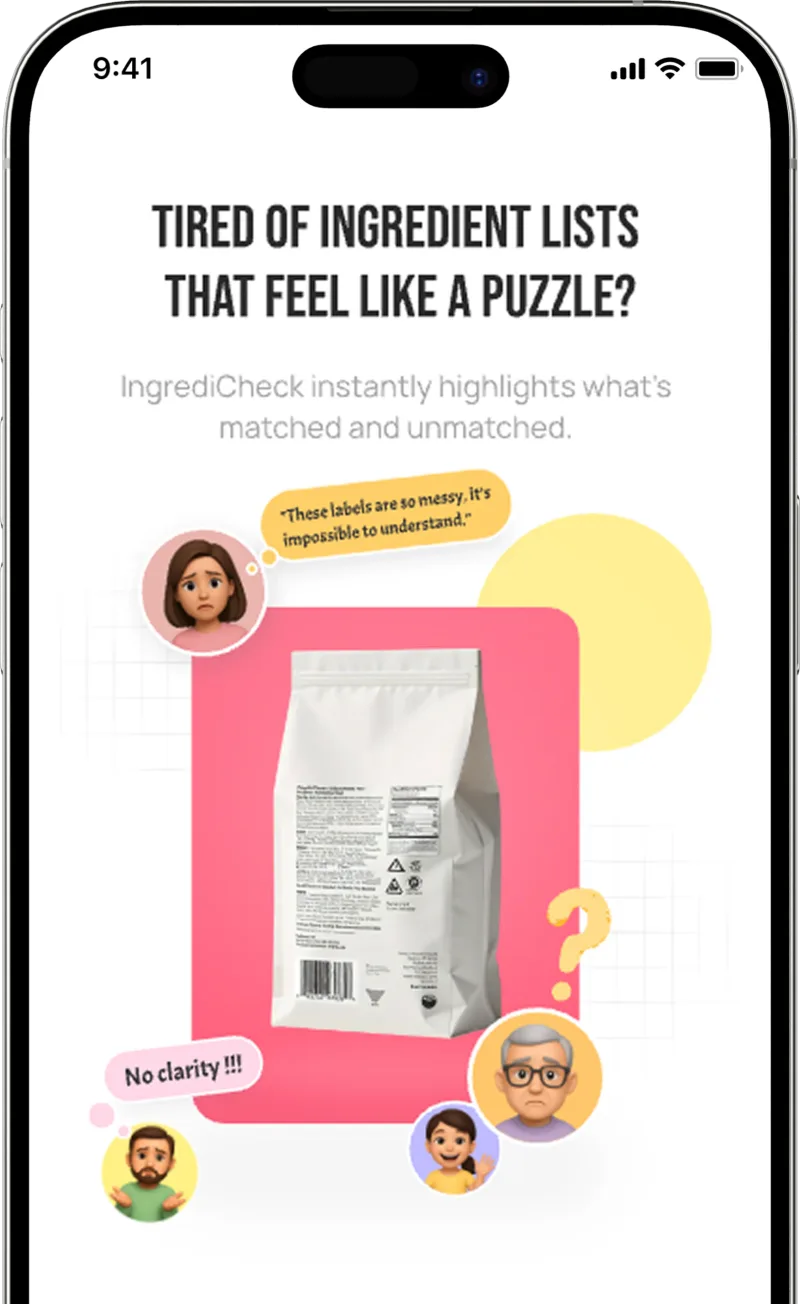
The most visible version of a labeling failure is a retail package with no ingredient or allergen panel at all. This can happen when foodservice packaging is moved into retail sale, unfinished artwork reaches production, or a growing operation outpaces its label controls. For an allergy decision, missing information is not a neutral result: do not infer ingredients from the flavor name, front artwork, barcode, or a similar product. Leave the product unapproved until the current manufacturer can provide the complete label.
Supply Chain Opacity
Food manufacturers rely on ingredient suppliers. When a supplier changes sources, reformulates an ingredient, or substitutes a material during a shortage, the new allergen profile does not always make it downstream. Private-label products are especially vulnerable because they pass through multiple tiers of contract manufacturing, each with its own supply chain.
When a product is reformulated to improve taste, reduce cost, or achieve a clean label positioning, the new ingredient list must pass through an internal label review process. That process sometimes fails. The new formula launches, but the old label stays in circulation.
Regulatory Gaps
The FDA's own guidance makes clear that cross-contact allergens are not legally required to be declared on the label. The "Contains" statement and ingredient list are for intentionally added ingredients only. If milk protein ends up in a dark chocolate bar because the same equipment ran a milk chocolate batch earlier, the label does not have to mention it.
"May contain" and similar advisory statements are voluntary. They are not standardized. They are not enforceable. A consumer with a peanut allergy has no way to distinguish between a "may contain peanut" warning that reflects meaningful risk and one that is added as a blanket legal protection.
Further complicating matters, USDA-regulated products including meat, poultry, and processed egg products follow different labeling rules. Alcohol regulated by the TTB is exempt from FALCPA and FASTER Act requirements entirely. Restaurant and food-service items face no packaged-food allergen labeling obligations at all.