Sesame in Raw Meat: Why USDA Just Issued a Public Health Alert

FSIS just flagged raw beef and pork for undeclared sesame. Three years after the FASTER Act, the allergen keeps slipping into categories nobody expects to scan.

Apr 17, 2026|9 min read
By Sanket Patel|Updated 2026-04-17|4 sources|Editorial standards
Sesame in Raw Meat: Why USDA Just Issued a Public Health Alert

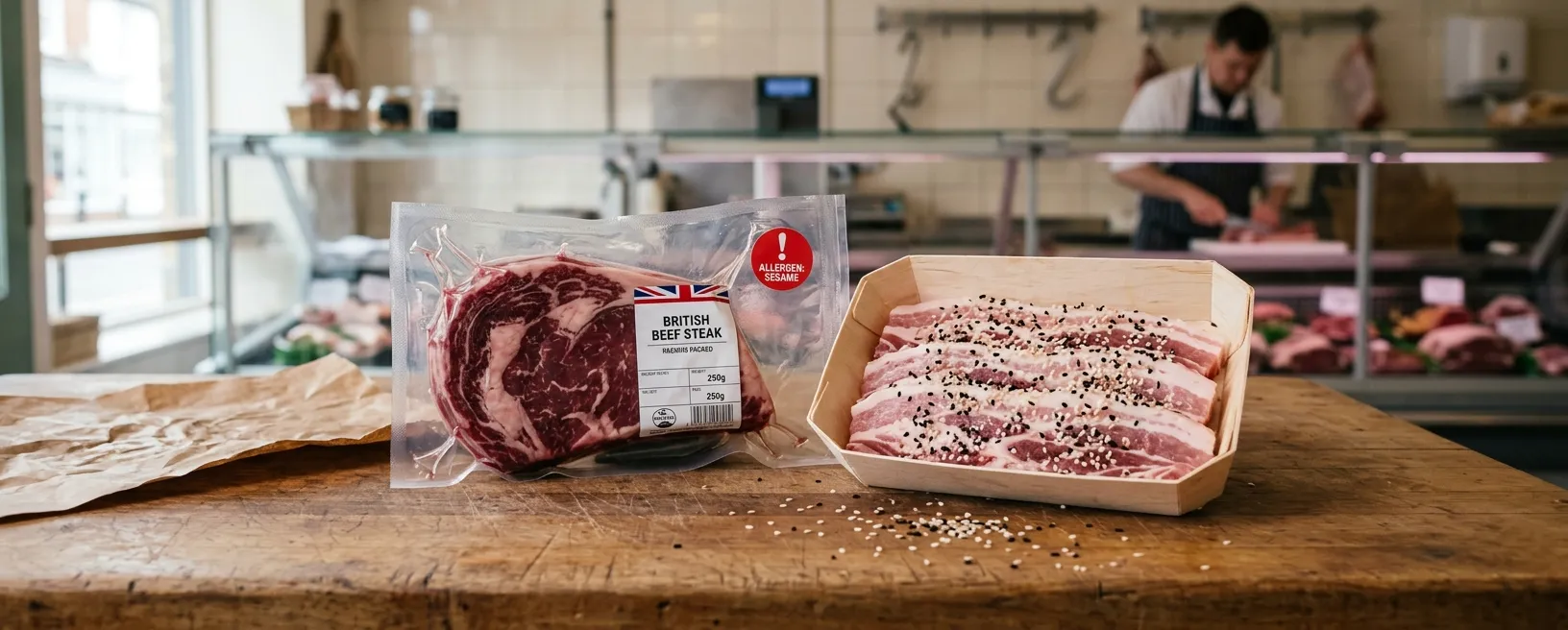
On 9 April 2026, the USDA's Food Safety and Inspection Service issued a public health alert that surprised even seasoned allergen-watchers. The product in question was not a cookie, a hummus tub, or a salad dressing. It was raw beef and pork from Sky Ranch Meat LLC, distributed across Florida, Maryland, New Jersey, and Virginia. The reason for the alert was misbranding and an undeclared allergen: sesame.

The problem that prompted the alert was not the meat itself but the trail of seasonings, marinades, and pre-portioned blends that travel with it. Three years after sesame became the ninth major US food allergen, this is the kind of category where it still catches shoppers off guard.

Why sesame in raw meat at all?

Most shoppers think of raw beef and pork as single-ingredient foods. In a USDA-regulated plant they often are not. Marinated steaks, pre-seasoned chops, breakfast sausage, jerky, and "ready to cook" trays carry spice rubs, marinades, and binders. Many of those carry sesame.

Sesame seed, sesame oil, sesame flour, and tahini all appear in:

  • Asian-style marinades (teriyaki, Korean BBQ, hoisin glazes) used on pork ribs, chicken thighs, and beef short rib
  • Dry rubs and spice blends, where sesame seed is a common flavour and texture component
  • Burger seasoning mixes, where sesame flour can act as a low-cost filler or binder
  • Sausage and meatball recipes that imitate Mediterranean styles

When a small USDA-regulated meat plant uses a blended seasoning sourced from an FDA-regulated spice supplier, sesame can travel with the spice mix and not show up in the meat product's allergen statement. That is exactly the kind of paperwork gap that the Sky Ranch alert points to.

The FSIS-FDA jurisdiction gap

Most US shoppers do not realise that two different agencies regulate their food. The FDA covers about 80% of the food supply: packaged foods, produce, seafood, dairy, eggs in shell. The USDA's FSIS covers meat, poultry, and processed egg products. Both agencies enforce the Food Allergen Labeling and Consumer Protection Act and its FASTER Act amendment, but they run separate inspection regimes, separate recall systems, and separate compliance histories.

When a packaged cookie has undeclared sesame, the FDA classifies it and posts it on a recall dashboard. When a vacuum-packed pork product has undeclared sesame, FSIS posts it on its own dashboard, often as a "public health alert" rather than a recall. Consumers with sesame allergy who only follow FDA news can miss the FSIS alerts entirely, and vice versa.

This split also creates supply-chain blind spots. A meat processor relies on its spice supplier's allergen disclosure. If the spice supplier (regulated by FDA) updates its formula and notifies its FDA-regulated downstream customers but does not loop in its USDA-regulated meat customers in the same way, the meat label may stay outdated for months.

Three years after the FASTER Act

Three years after the FASTER Act

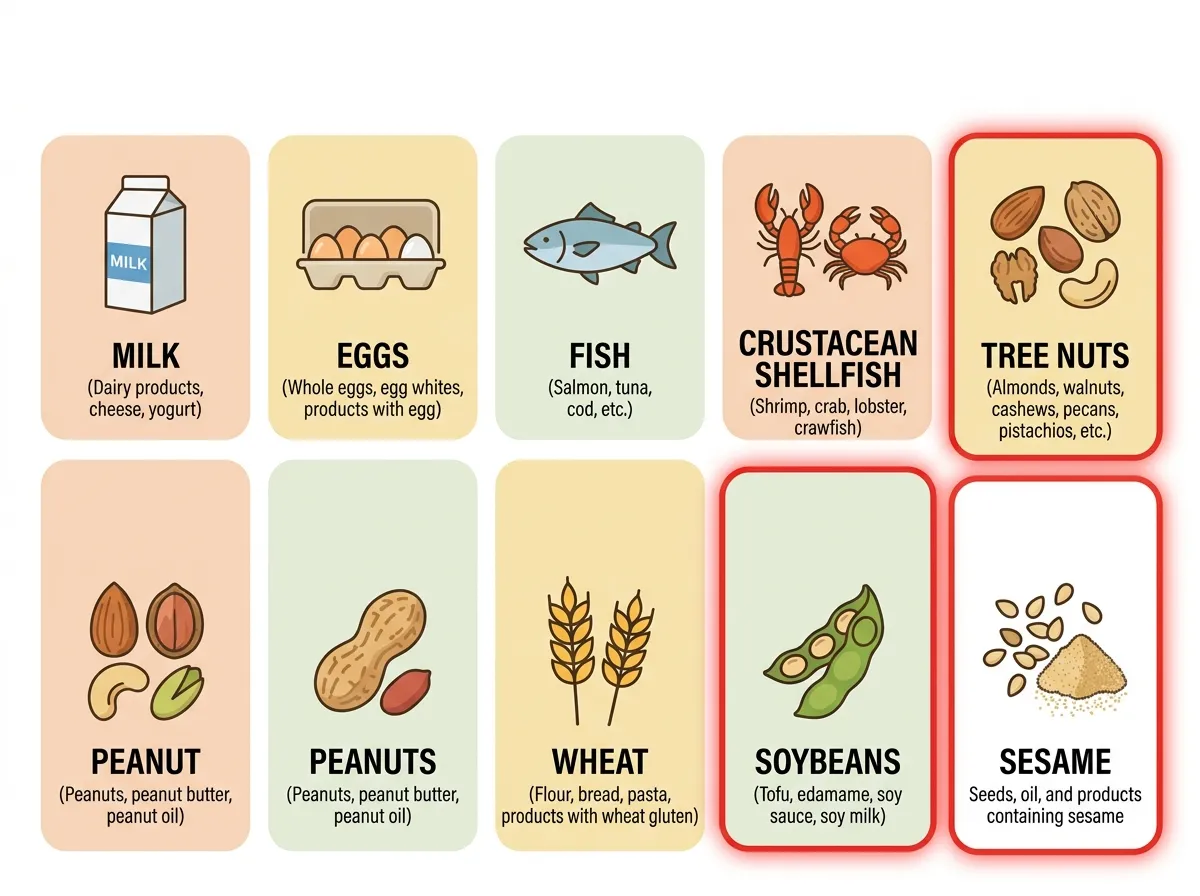
The FASTER Act took effect on 1 January 2023. According to the FDA, the law made sesame the ninth major US food allergen, joining milk, eggs, fish, crustacean shellfish, tree nuts, peanuts, wheat, and soybeans. From that date forward, packaged foods and dietary supplements containing sesame were required to declare it on the ingredient list, in a "Contains" statement, or in parentheses next to a derived ingredient.

For an estimated 1.6 million Americans with sesame allergy, this was meant to be the moment shopping became safer. Reactions to sesame are often severe. The seed is one of the most likely allergens to cause anaphylaxis at first known exposure, especially in children.

The first year after the law showed why the work was needed. According to Acheson Food Safety Consulting, 154 of the 313 FDA/USDA food recalls in 2023 (49%) were tied to undeclared allergens. Nearly 40% of those allergen recalls involved undeclared sesame, despite sesame's regulated status only beginning that year.

By 2024, the PIRG Education Fund's "Food for Thought" report noted that allergen-related recalls had fallen back, in part because more producers had absorbed the new sesame disclosure requirements. The April 2026 FSIS alert is a reminder that "fewer recalls" does not mean "no problem". It just means the long tail moves into less-watched categories.

The "sesame loophole" that wouldn't go away

The "sesame loophole" that wouldn't go away

The most uncomfortable surprise of the FASTER Act was not non-compliance. It was a particular form of compliance.

In the months leading up to January 2023, the Food Allergy Research and Education (FARE) advocacy group began hearing from families that products previously safe for sesame-allergic children were suddenly listing sesame on the label. Major commercial bakeries, including suppliers to chains like Olive Garden, Wendy's, and Chick-fil-A, had begun intentionally adding sesame flour to bread products. The reason was economic: cleaning shared production lines to credibly claim "no sesame" was more expensive than blending sesame into every product and labelling it.

Senators Chris Murphy and Richard Blumenthal led an eight-lawmaker letter to the American Bakers Association in May 2023 calling the practice "dangerous" and saying it "undercuts the purpose and intent of the FASTER Act". NPR's coverage found that families who used to rely on familiar bread brands now had fewer safe choices, not more.

The bakery loophole is now well known. The 2026 FSIS alert points to a quieter version of the same dynamic in the meat supply chain. When a meat processor's spice supplier reformulates a rub to include sesame oil or sesame seed, it is cheaper for the supplier to keep the sesame in the blend and notify customers than to maintain a separate sesame-free version. The notification step is exactly where mistakes happen.

Where sesame still surprises shoppers

Where sesame still surprises shoppers

Three years in, the categories where sesame still slips through tend to share a profile: products that look "single-ingredient" or "savoury", and products where the consumer expects the allergen risk to be wheat or soy, not sesame.

The most common surprise categories include:

Pre-marinated and "heat-and-eat" meats

Teriyaki chicken thighs, Korean BBQ short rib, gochujang pork. The marinade is the allergen carrier, and a busy shopper may never read past "marinated chicken".

Sausages, meatballs, and seasoned ground meats

Mediterranean and Middle Eastern style products often use sesame seeds, sumac blends, or za'atar that contains sesame.

Jerky, biltong, and dried meat snacks

Asian-style soy-ginger flavours frequently include sesame oil for finish, and small craft producers may not always carry it through to the printed ingredient panel.

Spice blends, dry rubs, and "everything bagel" seasoning

"Everything" seasoning is the most obvious case. Many supermarket dry rubs and BBQ spices also contain sesame, especially blends marketed as Asian-fusion.

Salad dressings and dip mixes attached to deli items

Many deli-counter pasta salads, slaws, and prepared chicken salads are dressed with sesame oil or topped with sesame seed.

What consumers can do

Until the supply chain catches up, the practical safety job stays on the buyer. A few habits help.

Read the panel even on "single-ingredient" foods

Marinated meats, deli salads, and trail mixes have ingredient panels. They reward a 30-second scan.

Treat new packaging like a new product

A redesigned bag is often a recipe change in disguise. After the FASTER Act, even long-trusted bread and bun brands silently added sesame flour to their formulas. Re-check products you have bought safely in the past.

Watch for sesame's many names

Tahini, sesame seed, sesame seed oil, sesame flour, gomashio, til, benne, halvah. A product can declare "tahini" without "sesame" appearing anywhere else on the label.

Track FSIS alerts, not only FDA recalls

FSIS posts public health alerts at fsis.usda.gov/recalls. If your sesame-allergic household eats meat, sign up for both the FDA recall feed and the FSIS feed.

Be cautious with prepared meals from meat departments

Pre-seasoned trays and grocery-store-prepared dishes often carry the same allergens as a restaurant kitchen but with less mature labelling discipline. Ask the meat counter what is in the marinade.

Where IngrediCheck fits in

The Sky Ranch alert happened because a sesame line never made it from the spice supplier's data sheet to the meat package's allergen panel. That is the exact kind of supply-chain-driven mislabelling no shopper can reasonably catch by reading the label faster or harder.

Using IngrediCheck, you can scan a barcode at the meat counter, the snack aisle, or the bakery shelf and get a clear yes or no answer about whether a product contains sesame, tahini, sesame oil, sesame flour, or any of the seed's other names. The same scan flags any other allergen on your profile. If you are setting up a household with multiple allergies, our food allergy scanner guide walks through how to add every form of sesame and other allergens in a few minutes. For a parent of a sesame-allergic child, that means the safety check happens before the package leaves the store, not after a reaction at home.

Next Label Check

Follow the scanner, hub, and ingredient paths connected to this guide

Get the app for clearer label decisions.

Scan labels, see what fits your food notes, and read the why in plain English.

IngrediCheck app