Hidden Sources of Dairy: A Checklist for Milk Allergies

Dairy hides on labels under names like casein, whey, ghee, and caseinate. Use this checklist to spot hidden milk in deli meats, breads, and 'non-dairy' products.

Apr 18, 2026|9 min read
By Sanket Patel|Updated 2026-04-18|4 sources|Editorial standards
Hidden Sources of Dairy: A Checklist for Milk Allergies

For families managing a milk allergy, reading the ingredient list is part of every grocery trip. The challenge is that dairy does not always show up as "milk." It hides under technical names like sodium caseinate, lactalbumin, and lactose, and it shows up in products you would not expect, including deli meats, hot dogs, canned tuna, and even some "non-dairy" creamers.

This checklist breaks down every dairy alias to watch for, the categories where milk most often hides, and the specific labeling rules that can either protect or trip up an allergic shopper.

How Common Is Milk Allergy?

How Common Is Milk Allergy?

Cow's milk is the most common food allergen in young children. Roughly 2 to 3 percent of infants and toddlers have a confirmed milk allergy. Most outgrow it by school age, but a meaningful share carry the allergy into adulthood. A 2022 World Allergy Organization Journal study00020-5/pdf) on the U.S. population-level burden of cow's milk allergy found prevalence of about 2 percent in children and 2.6 percent in adults, with significant healthcare costs and quality-of-life impact.

Milk allergy is an immune response, not a digestive issue. Even small amounts of dairy protein can trigger reactions ranging from hives and vomiting to anaphylaxis.

This is different from lactose intolerance. Lactose intolerance is a digestive issue caused by reduced lactase enzyme activity. It can cause discomfort but is not life-threatening. A milk-allergic person reacts to the proteins in milk (primarily casein and whey), not to lactose itself, and lactose-free dairy is still off limits.

That distinction matters at the label, because some "lactose-free" products advertise themselves as gentler on digestion while still containing the milk proteins that trigger an allergic reaction.

What FDA Labeling Law Requires

Milk is one of the nine major allergens recognized under the Food Allergen Labeling and Consumer Protection Act (FALCPA). FALCPA requires packaged foods sold in the United States to declare milk on the label in plain English, either by including the word "milk" within the ingredient list (e.g., "whey (milk)") or in a separate "Contains: Milk" statement.

In theory, this makes label reading straightforward. In practice, three issues complicate things.

First, FALCPA does not cover all foods. Fresh, unpackaged items at the deli counter, in-store bakeries, and prepared foods sold without a label are outside its scope. Restaurant menus and food service operations follow different rules.

Second, "may contain" or "produced in a facility with milk" precautionary statements are voluntary and inconsistent. A product without such a statement is not necessarily safe, and a product with one is not necessarily unsafe. Families with severe allergies typically avoid all precautionary-statement products.

Third, FALCPA covers ingredients, not all chemical derivatives. Some highly processed milk derivatives (such as certain types of whey-based natural flavorings) can land in gray areas, and "natural flavor" is a notoriously opaque term.

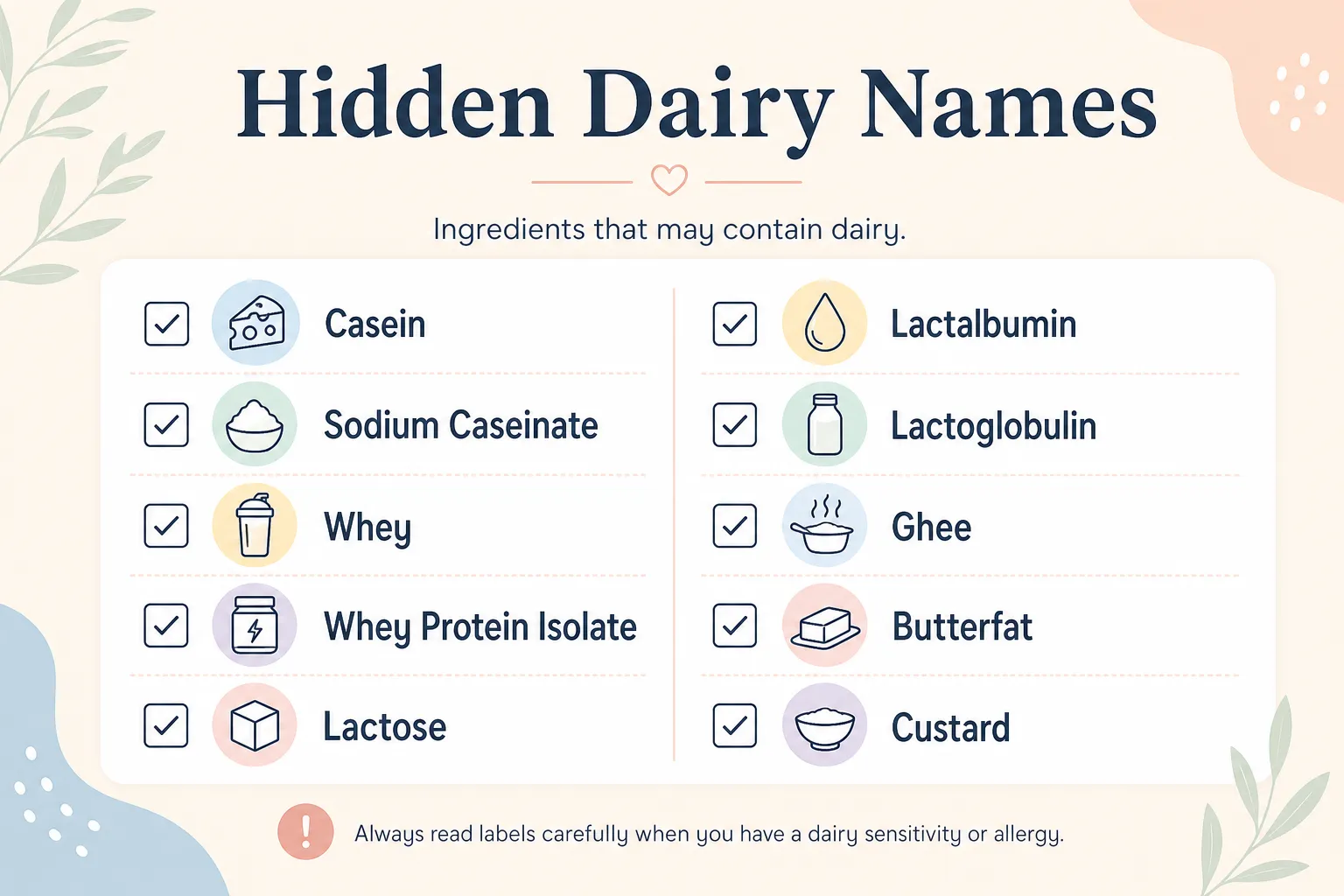
The Hidden Dairy Checklist

The Hidden Dairy Checklist

Use this list to scan an ingredient panel. Any of these terms indicates the product contains or may contain milk-derived components.

Direct dairy ingredients

These are obvious milk products. Manufacturers list them by their familiar names.

  • Milk (whole, skim, evaporated, condensed, dry, malted, buttermilk)
  • Butter, butterfat, butter oil, ghee, clarified butter
  • Cream, half-and-half, heavy cream, light cream, sour cream
  • Cheese (any variety)
  • Cottage cheese, ricotta, curds
  • Yogurt, kefir
  • Custard, pudding
  • Ice cream, gelato, frozen yogurt

Casein and casein derivatives

Casein is the primary protein in milk. It is a common ingredient in many processed foods because it improves texture, binding, and shelf life.

  • Casein
  • Caseinate (sodium caseinate, calcium caseinate, potassium caseinate, magnesium caseinate, ammonium caseinate)
  • Hydrolyzed casein
  • Hydrolyzed milk protein
  • Rennet casein
  • Paracasein
  • Acid casein

Caseinate is one of the most common hidden dairy ingredients. It shows up in products that carry "non-dairy" claims, including some coffee creamers and whipped toppings, because of an FDA labeling quirk that lets caseinate appear in a product labeled "non-dairy" as long as the source is disclosed in the ingredient list.

Whey and whey derivatives

Whey is the liquid that separates from milk during cheese production. It is concentrated into protein powders and used in countless processed foods.

  • Whey
  • Whey protein concentrate
  • Whey protein isolate
  • Hydrolyzed whey protein
  • Sweet whey
  • Acid whey
  • Demineralized whey
  • Whey powder

Lactose and lactose derivatives

These are milk sugars and their breakdown products.

  • Lactose
  • Lactalbumin
  • Lactalbumin phosphate
  • Lactoglobulin
  • Lactoferrin
  • Lactulose
  • Galactose (often, but not always, milk-derived)

Less obvious milk-derived ingredients

These names are technical and easy to miss.

  • Diacetyl
  • Recaldent (a milk-derived ingredient sometimes found in dental products)
  • Tagatose
  • Simplesse (a fat replacer)
  • Nougat (often contains milk)
  • Custard powder

Phrases that may indicate milk

These ingredients sometimes contain milk and sometimes do not. Treat them as a flag to investigate.

  • Natural flavor (can include milk)
  • Caramel color or flavor (occasionally milk-derived)
  • High protein flour (sometimes fortified with milk protein)
  • Margarine (many varieties contain milk components)
  • "Pareve" labeling (kosher non-dairy classification, but not always reliable for severe allergy)

Categories Where Dairy Most Often Hides

Categories Where Dairy Most Often Hides

The label tells you what is in the product. The product category tells you where to look first. These are the categories where unexpected dairy turns up most often.

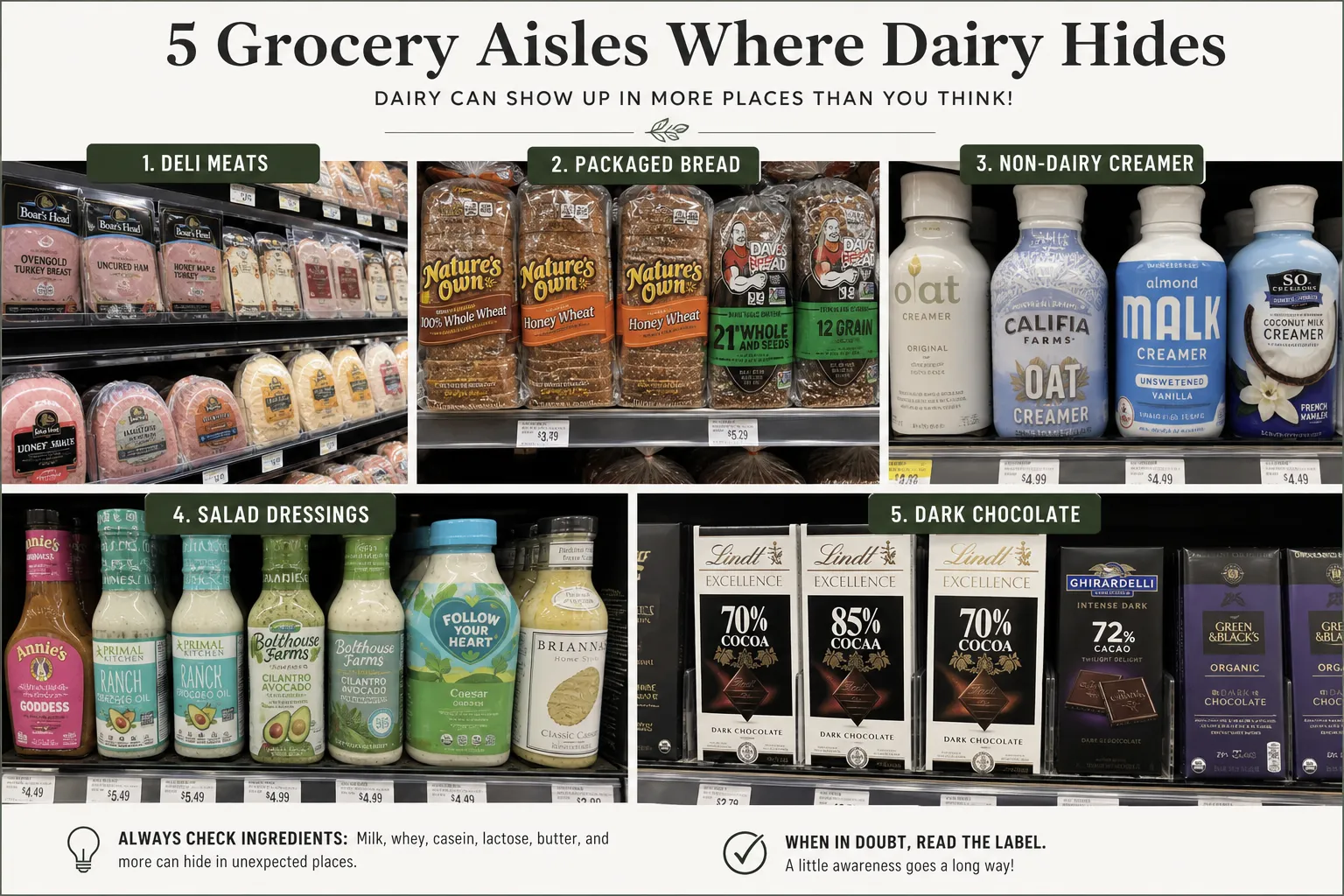
Deli meats and hot dogs

Sodium caseinate and milk protein concentrate are commonly used as binders in processed meats. Bologna, salami, hot dogs, sausages, chicken loaves, and lunchmeat slices can all contain dairy. Many "all-beef" hot dogs contain caseinate.

Canned tuna and processed fish

Some brands of canned tuna include hydrolyzed caseinate to improve texture. Frozen battered fish, fish sticks, and crab sticks frequently contain milk proteins.

Bread and baked goods

Sandwich bread, hamburger buns, pretzel rolls, and many artisan breads include butter, milk, whey, or milk powder. Even rye and sourdough loaves are not automatically dairy-free. Doughnuts, muffins, and pastries are almost always dairy-containing.

"Non-dairy" creamers and whipped toppings

A label that reads "non-dairy" can still legally include sodium caseinate. Coffee whiteners, powdered creamers, and frozen whipped toppings frequently fall into this category.

Margarine and butter substitutes

Many margarines contain milk components such as buttermilk, whey, or milk solids. Vegan-labeled spreads are typically dairy-free, but always verify.

Salad dressings and condiments

Caesar, ranch, blue cheese, and creamy dressings contain dairy. Some clear vinaigrettes also include lactose or whey for body. Mayonnaise is typically dairy-free, but specialty flavored mayonnaises may not be.

Snack foods and crackers

Cheese-flavored crackers obviously contain dairy. Less obvious: many "ranch," "sour cream and onion," and "cheddar" snack flavors use whey and casein. Some plain crackers and pretzels contain whey powder for browning.

Chocolate

Most milk chocolate is dairy. Many "dark" chocolates also contain milk fat or whey. A bar labeled "70 percent cacao" can still include dairy. Look for a "vegan" label or a "dairy-free" claim, and double-check the ingredient list.

Soups, sauces, and gravies

Cream-based soups are obvious. Less obvious: many tomato-based soups and pasta sauces contain butter, cream, or cheese. Brown gravies and broths may include whey or caseinate.

Protein bars and powders

Protein products often contain whey, casein, or both as the primary protein source. Products labeled "plant-based" or "vegan" are typically free of dairy proteins, but verify on the panel.

Medications and supplements

Some prescription tablets, over-the-counter drugs, and supplements use lactose as a filler. Always check with a pharmacist if a medication's ingredient list is unclear.

"May Contain Milk" Statements: How to Read Them

Precautionary allergen statements such as "may contain milk," "manufactured in a facility that processes milk," or "manufactured on shared equipment with milk" are voluntary in the United States. The presence of these statements is not standardized, and the absence of a statement does not guarantee a product is dairy-free.

For families with severe milk allergy, the conservative approach is to avoid any product that includes a precautionary statement. For families managing milder reactions, the picture can be more nuanced. Many allergists recommend creating a tier system with the input of a medical provider:

  • Tier 1: Products that are dairy-free and have no precautionary statement.
  • Tier 2: Products that are dairy-free in the ingredient list but carry a precautionary statement.
  • Tier 3: Products that include any dairy ingredient.

A trusted brand's manufacturing practices can also matter. Some companies test for cross-contamination at threshold levels well below regulatory minimums. Others rely on shared equipment without rigorous testing.

What "Dairy-Free," "Lactose-Free," and "Non-Dairy" Actually Mean

These labels are not interchangeable, and the differences matter for milk allergy.

  • Dairy-free is not formally defined by the FDA. The term is used inconsistently. A "dairy-free" product may still contain trace dairy or be made on shared equipment.
  • Non-dairy is a regulated term, but the regulation is permissive. A product labeled "non-dairy" can still contain caseinate or other milk derivatives, as long as the source is disclosed in the ingredient list.
  • Lactose-free means the lactose has been broken down or removed. The milk proteins (casein, whey) are still present. Lactose-free is not safe for milk allergy.
  • Vegan means no animal products, including dairy. A product correctly labeled vegan should be free of all milk-derived ingredients. Cross-contamination risk still depends on the manufacturer.

For milk allergy management, "vegan" is generally the most reliable marker, paired with a careful read of the ingredient list and any precautionary statements.

Building a Family Routine

A consistent label-reading routine reduces risk and decision fatigue.

  1. Read every label, every time. Manufacturers reformulate without warning. A product that was safe six months ago may not be safe today.
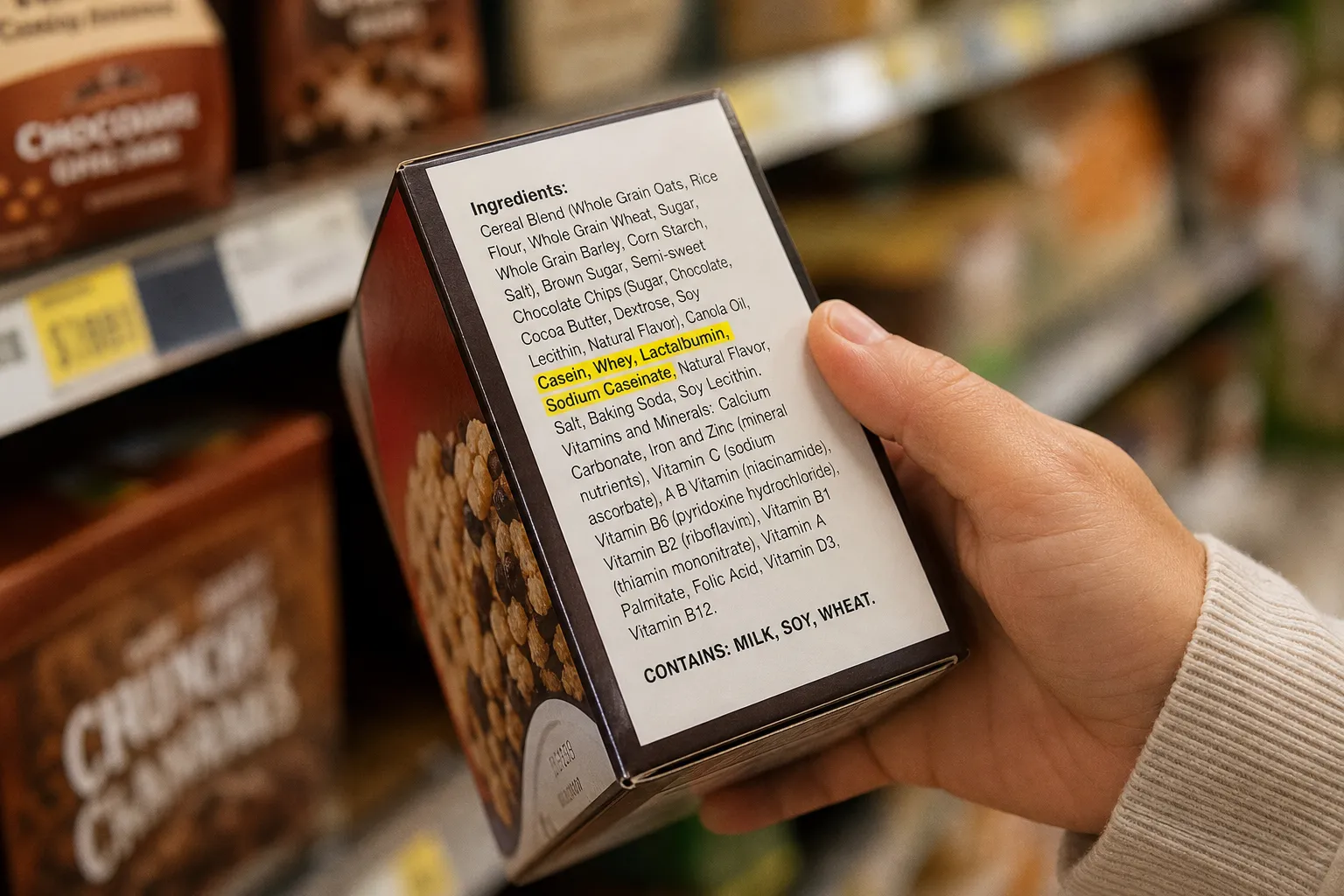
  2. Start with the "Contains" statement. If it lists milk, the product is out.
  3. Scan the full ingredient list for the names on this checklist. "Contains" statements are required to cover the major allergen, but the ingredient list reveals the specific form.
  4. Check for precautionary statements. Decide as a family which tier you accept.
  5. Build a list of trusted brands. Once you find products that work, keep a running list to speed up future shopping trips.
  6. Carry an emergency action plan. A milk allergy diagnosis should come with a written allergy action plan and prescribed medication, including epinephrine for severe reactions. Review and update this plan with your allergist annually.

Reading food labels for allergies is a skill that gets faster with practice, especially with the help of tools designed to make scanning more efficient.

The Bottom Line

Dairy hides under many names, in many product categories that do not look like dairy products. The good news is that the patterns are consistent. Once you know that any word with "case-" or "whey" or "lact-" likely points to milk, that "non-dairy" can still mean caseinate, and that processed meats and breads are common surprise sources, the label becomes a much more reliable guide.

Using IngrediCheck, you can scan any product and immediately see whether it contains milk in any of its forms, including the technical and easy-to-miss aliases on this list. That is one less worry on every aisle and one more way to keep an allergic family member safe.

Next Label Check

Follow the scanner, hub, and ingredient paths connected to this guide

Get the app for clearer label decisions.

Scan labels, see what fits your food notes, and read the why in plain English.

IngrediCheck app