Grocery Shopping with Food Allergies: 7 Tips to Speed Up Your Trip

Practical, evidence-backed tips that cut the time you spend reading every label and turn a stressful allergy-aware grocery run into a calm, predictable routine.

Apr 20, 2026|9 min read
By Sanket Patel|Updated 2026-04-20|4 sources|Editorial standards
Grocery Shopping with Food Allergies: 7 Tips to Speed Up Your Trip

Anyone who shops for a household with food allergies knows the routine. You walk into the store with a list. You walk out an hour later having read more ingredient panels than you can count, second-guessed two products, and put one item back on the shelf because the manufacturing line is "shared with peanuts." A trip that takes most people twenty minutes can stretch to ninety.

The time pressure is real. According to a FARE consumer journey study, 71 percent of food allergy consumers spend time reading the label of every single food item they purchase, and 53 percent say precautionary allergen statements like "may contain" interfere with their daily lives. A more recent IFIC survey found that 42 percent of people with food allergies still find packaged food labels unclear and confusing. Speed and safety can feel like opposing goals.

They are not. With a few small system changes, you can keep the same level of vigilance and shave a real amount of time off every trip. Here are seven tactics that work.
1. Build a "safe brand" core list before you leave home

1. Build a "safe brand" core list before you leave home

The single biggest time-saver is doing the label-reading work once, at home, instead of every week in the store.

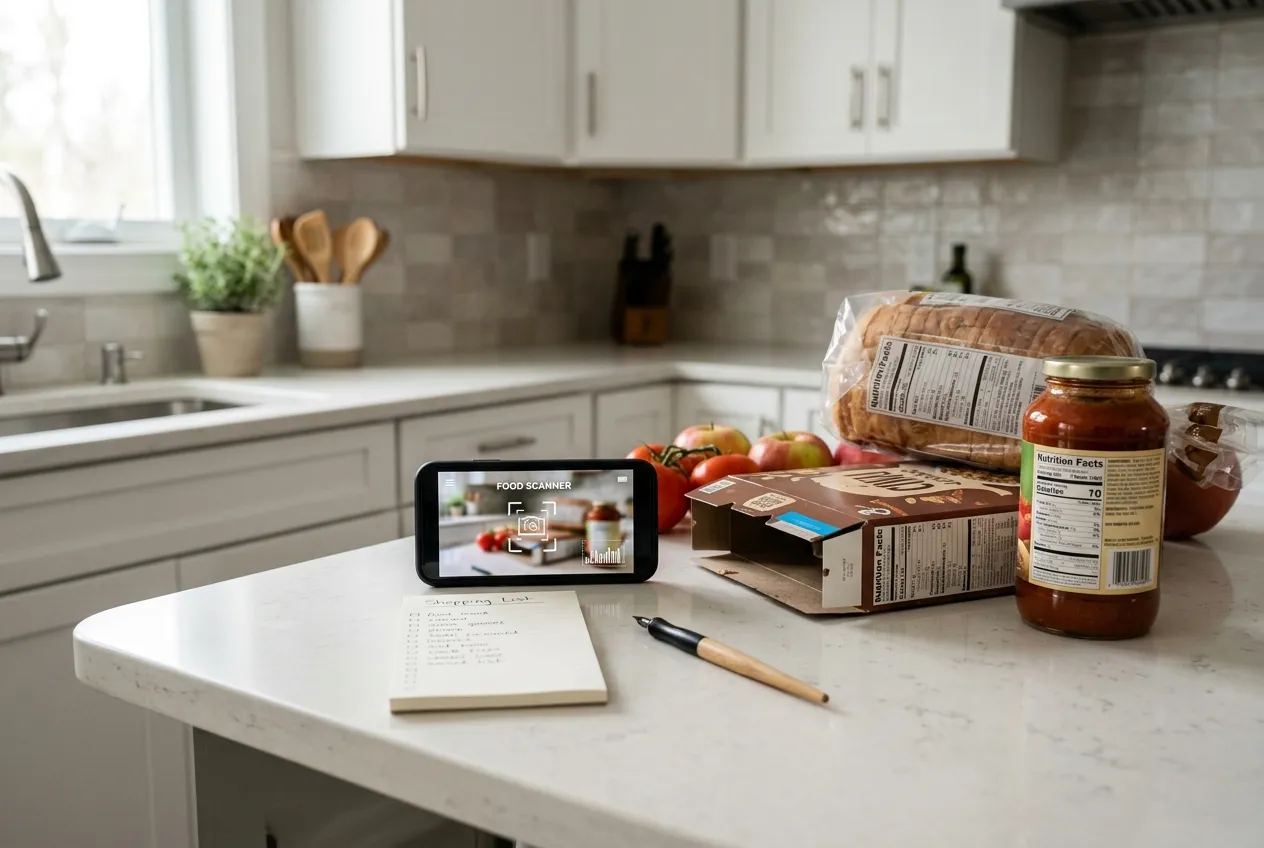
Sit down with the products you already trust. Pull up your favorite brands of bread, cereal, pasta sauce, crackers, snack bars, yogurt, and frozen meals. Confirm the ingredient panel and any precautionary statement on each one. Then write that brand and product name into a master list. This becomes your safe core.

When you go shopping, those items move from "must read every label" to "grab and go." A standard weekly basket has roughly 25 to 35 items in it. If even half of them are pre-vetted, you have just cut the cognitive work of the trip in half.

Two practical rules for the safe list

  • Re-verify quarterly. Manufacturers do reformulate. The FDA reminds consumers that ingredient lists can change without notice. A 90-day re-check on your top 20 items is a reasonable middle ground between paranoid and careless.
  • Note the exact size and variant. "Brand X granola bars" is not specific enough. The chocolate chip variant may be safe and the peanut butter variant may not be. Write down the product code or the full variant name.

2. Shop the perimeter first, the aisles last

2. Shop the perimeter first, the aisles last

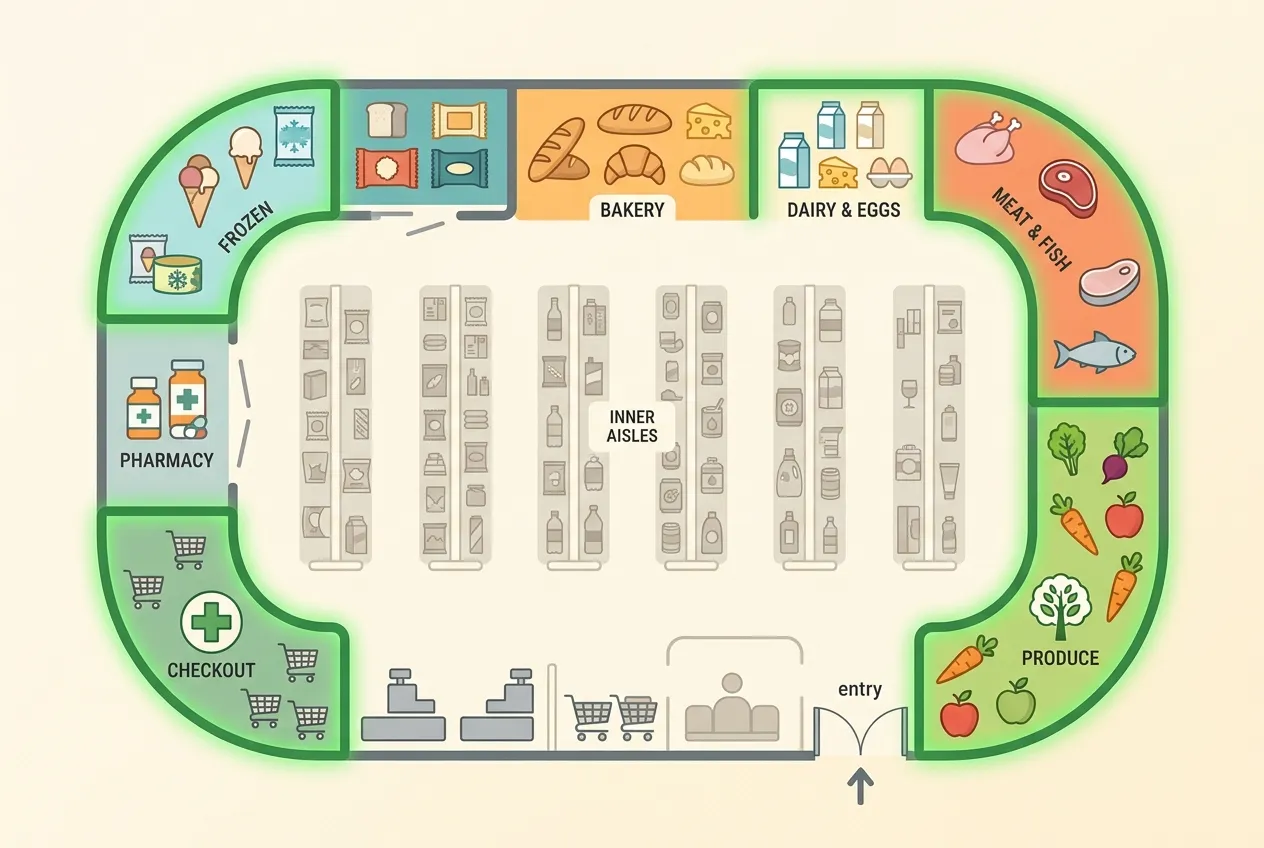
Most allergens hide in packaged foods, which live in the inner aisles. The perimeter of a typical grocery store, where you find produce, fresh meat, fresh dairy, and bakery, is mostly single-ingredient food. A whole apple, a chicken breast, and a head of broccoli do not need a label scan.

Shopping the perimeter first does two things. It fills your cart faster with low-risk items, and it reduces the number of decisions you still need to make when you reach the higher-risk inner aisles. Decision fatigue is real, and saving your sharpest attention for the section that actually demands it is a smart trade.

A few caveats. Fresh meat and seafood counters can introduce cross-contact risk if the same slicer or counter handles, for example, breaded products with wheat. Ask the staff. Bakeries that share equipment with major allergens are a known risk; the American Academy of Allergy, Asthma & Immunology flags shared equipment as one of the most common causes of unexpected reactions.

3. Use a barcode scanner to vet packaged foods in seconds

3. Use a barcode scanner to vet packaged foods in seconds

Reading an ingredient panel by eye is slow. You skim, you re-scan, you mentally cross-check against three or four allergens, and you check the "may contain" line at the bottom. For a single product that might take 30 seconds. For 15 products, you have just spent more than seven minutes squinting at fine print.

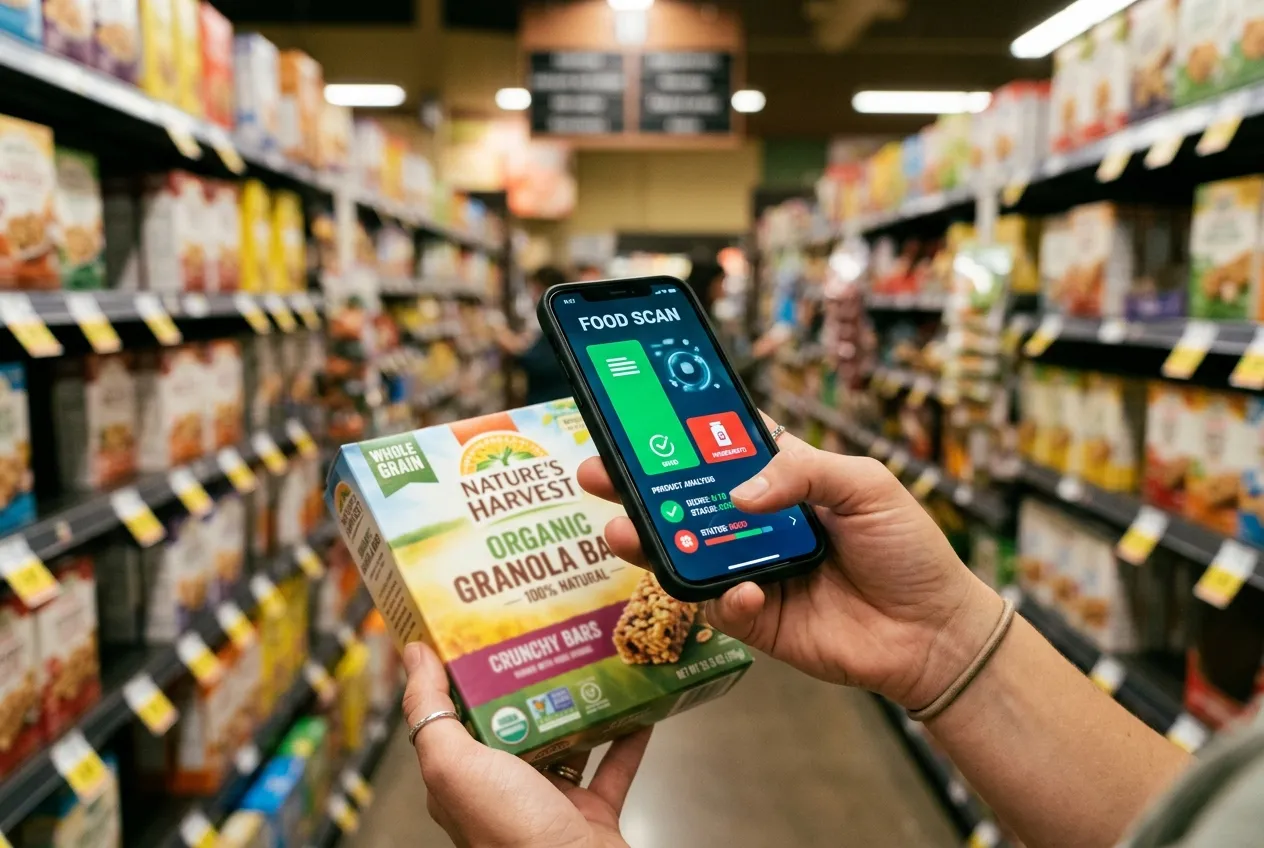
A barcode scanner app collapses that process to one second per product. You point the camera, it reads the barcode, it looks up the full ingredient list and compares it against your saved profile, and it tells you whether the product is safe for your specific household. No re-scanning. No interpretation. No question of whether "natural flavors" might hide a milk derivative.

The catch with any tool like this is the database it relies on. Mainstream apps cover the most popular brands well but miss regional and store-brand items. Before you depend on a scanner for a brand you have never tried, do a one-time sanity check by reading the panel yourself. Once a product is confirmed and added to your safe core list, the scanner becomes pure speed.

4. Stick to one or two stores you have already vetted

Familiarity is underrated. The first time you shop a new store, you spend extra time figuring out where things are, which house brands are safe, and how the deli or bakery handles cross-contact. The second time, all of that is cached in your head. The fifth time, you can run through the entire trip on autopilot.

Pick one primary store and one backup. Vet both thoroughly during a low-pressure off-peak visit. Note which house brands are reliably allergen-friendly, which deli counters separate equipment, and which sections you should simply skip. After that, use the same two stores for as much of your weekly shopping as possible.

For specialty items, online ordering with delivery can be a cleaner option than chasing a third or fourth physical store. You get more time to read labels at home, and you can build a recurring delivery list from products you have already approved.

5. Time your trip strategically

A crowded store is a slow store. When the aisles are packed, you cannot stand in front of a shelf for two minutes comparing labels without feeling pressure to move along. You also have less room to maneuver a cart, fewer staff free to answer questions, and longer lines at the deli or bakery counter where you might want to ask about cross-contact.

The quietest hours at most supermarkets are early weekday mornings, mid-afternoon on weekdays, and the last hour before closing. Pick a window that aligns with your schedule and protect it. A 30-minute trip at 9 a.m. on Tuesday will reliably beat a 75-minute trip at 5 p.m. on Saturday.

There is a stocking angle too. Stores typically restock overnight, so weekday mornings are also when shelves are most complete. Hunting down a substitute for an out-of-stock safe brand is one of the most time-consuming surprises a trip can throw at you.

6. Don't trust "free from" claims at face value

Front-of-pack callouts like "gluten-free," "dairy-free," or "nut-free" are useful filters, but they are not a substitute for the back-of-pack ingredient panel. A few important nuances:

  • "Gluten-free" in the United States is regulated by the FDA and means under 20 parts per million of gluten. It is reliable for most people with celiac disease but does not address oat cross-contact unless the oats themselves are certified.
  • "Dairy-free" is not regulated. A product labeled dairy-free can still legally contain casein or whey derivatives in the United States, depending on how the manufacturer interprets the term. Read the panel.
  • "Nut-free" usually refers to tree nuts and peanuts together, but check what the manufacturer specifies. Some "nut-free" products are made on lines that also handle sesame, milk, or soy.

Front-of-pack claims should speed up your initial filter, not replace your final check. Use them to narrow the shelf to two or three candidates, then read the actual ingredient list and any "may contain" line for the one you intend to buy.

7. Build a 60-second triage system for new products

You will always encounter new products. A new flavor, a new brand, a relative recommending something you have never tried. Rather than treating each new product as a 5-minute research project mid-aisle, run it through a fixed triage:

  1. Major allergen line. Look at the bolded "Contains" statement at the bottom of the ingredient list. If any of your household's allergens are on it, the product is out. This step takes 5 seconds.
  2. Ingredient list scan. If the Contains line is clear, scan the ingredient list itself for less obvious sources (whey, casein, lecithin, hydrolyzed protein, natural flavors when relevant). 20 seconds.
  3. Precautionary statement. Check for "may contain" or "made in a facility that processes." Decide whether your household's tolerance accepts that risk. 10 seconds.
  4. Verdict. Buy it, skip it, or flag it for deeper research at home. 5 seconds.

A minute of structured attention is faster than three minutes of unstructured worrying. And every product you triage well becomes a candidate for your safe core list, which feeds back into Tip 1.

A minute of structured attention is faster than three minutes of unstructured worrying.

Putting it all together

None of these tips is dramatic on its own. The compounding effect is what matters. A pre-built safe list shaves 10 minutes. Shopping the perimeter first shaves 5. A barcode scanner shaves another 5. Quieter store hours shave 10. The result is a 30-minute trip instead of a 75-minute one, with the same level of safety and noticeably less stress.

Food allergy management is, at the end of the day, a system. Every shortcut you build into that system is one less moment of friction for you and one less worry for the family member who depends on those choices being right.

Using IngrediCheck, you can scan packaged foods in seconds and instantly see whether a product contains any of the allergens or ingredients on your personal profile, including the hidden ones in "natural flavors," shared facility statements, and reformulated products. It turns the slowest part of an allergy-aware grocery trip into the fastest, so you can spend less time reading labels and more time actually shopping.

Next Label Check

Follow the scanner, hub, and ingredient paths connected to this guide

Get the app for clearer label decisions.

Scan labels, see what fits your food notes, and read the why in plain English.

IngrediCheck app