Even with the FASTER Act in effect, sesame remains one of the trickiest allergens to avoid. The problem is not just the ingredient itself. It is the sheer number of names, forms, and culinary traditions that rely on it.
Common Foods That Contain Sesame
Sesame is a cornerstone of many global cuisines. If you have a sesame allergy, the following categories deserve extra scrutiny:
Middle Eastern and Mediterranean foods: hummus, baba ganoush, halvah, falafel, and tahini-based sauces Asian cuisines: stir-fries, sushi rolls, noodle dishes, and dipping sauces that use sesame oil or seeds Baked goods: bagels, bread sticks, hamburger buns, crackers, and some pastries Snack foods: flavored chips, pretzels, granola bars, and trail mixes Sauces and dressings: salad dressings, marinades, barbecue sauces, and gravies Breakfast items: cereals, muesli, and some oatmeal blends
Even foods that do not taste overtly nutty or seedy can contain sesame. Manufacturers use sesame flour as a protein booster in gluten-free products. Sesame oil adds depth to salad dressings. Crushed sesame seeds appear as a textural garnish on everything from sushi to artisan bread.
The Many Names of Sesame on Ingredient Labels
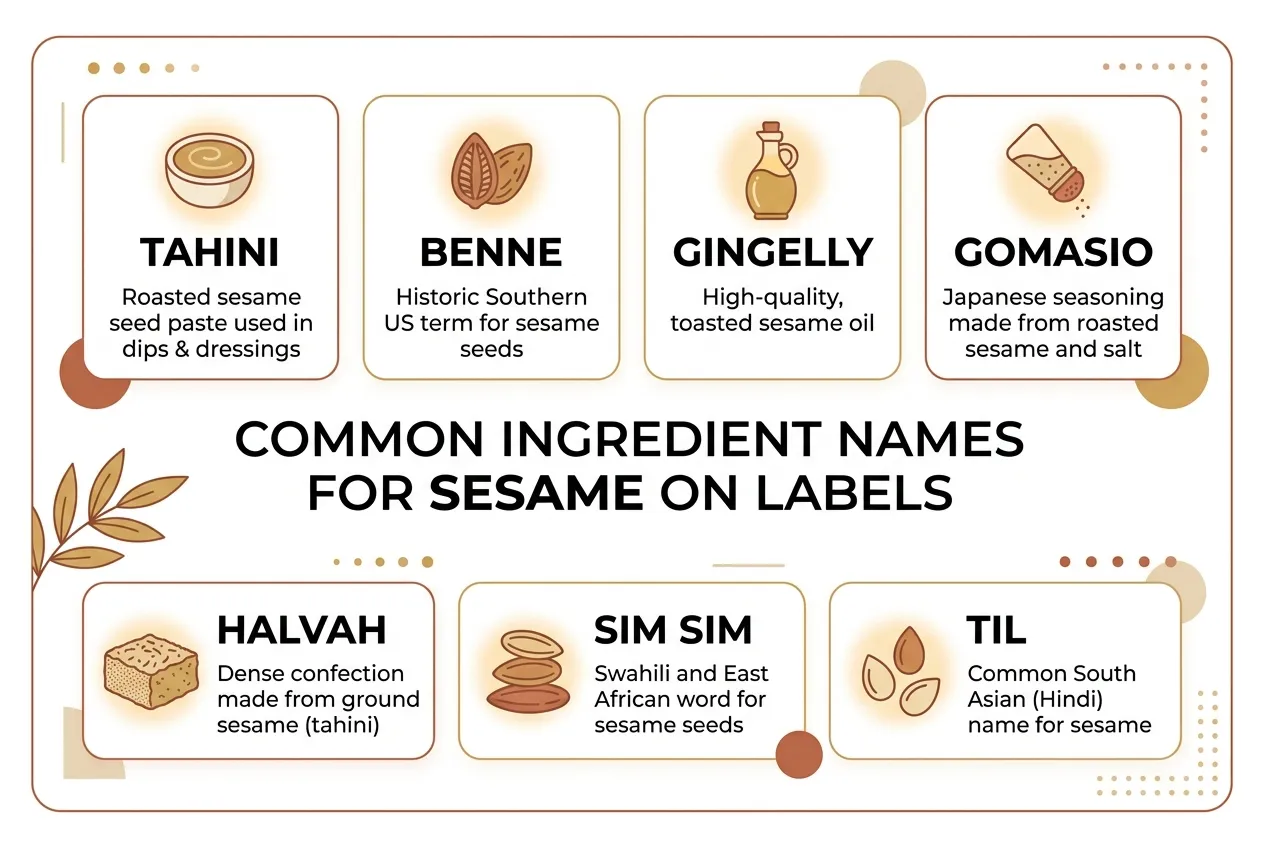
This is where label reading becomes a high-stakes puzzle. Sesame can be listed under dozens of names, many of which sound exotic or unrecognizable to the average shopper.
According to FoodAllergy.org, you should watch for:
Benne, benne seed, benniseed Gingelly, gingelly oil Gomasio (sesame salt) Halvah Sesame flour, sesame oil, sesame paste, sesame salt, sesame seed Sesamol Sesamum indicum Sesemolina Sim sim Tahini, tahina, tehina * Til
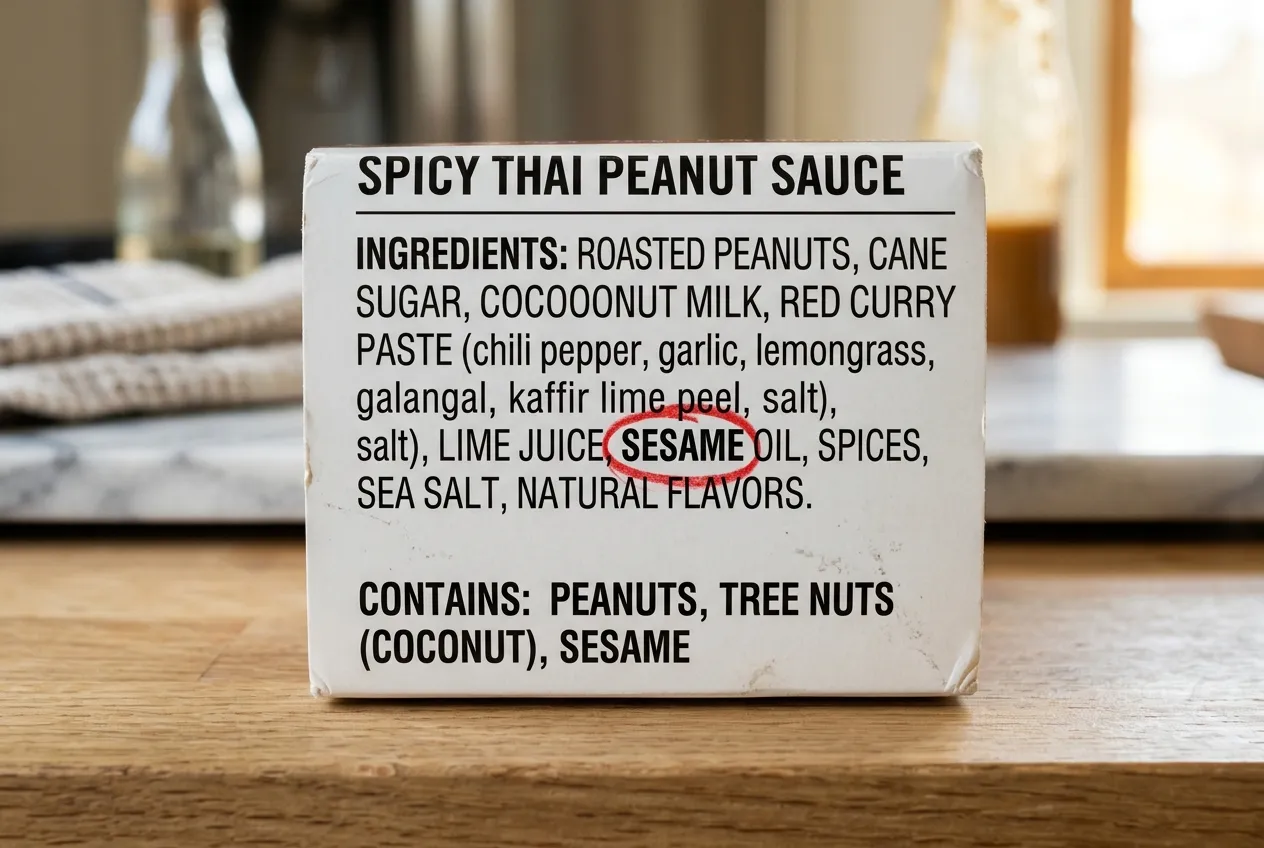
Some of these terms appear in ethnic grocery products that may not yet carry full English allergen declarations. Others appear in mainstream products where sesame is a minor ingredient. A "Contains" statement helps, but not all manufacturers use one, and imported products may lag behind U.S. labeling requirements.
The Sesame Oil Exception: Refined vs. Unrefined
Sesame oil deserves special attention because not all sesame oils are equally allergenic. Highly refined sesame oil undergoes processing that typically removes the protein fractions responsible for allergic reactions. For this reason, some individuals with sesame allergy tolerate highly refined sesame oil, while reacting to cold-pressed or unrefined varieties that retain more protein.
However, this is not a rule you should test on your own. Tolerance varies by individual, and product labels rarely specify the degree of refinement. If you see "sesame oil" on a label, the safest assumption is that it could trigger a reaction unless your allergist has specifically cleared refined sesame oil for your diet.