Loard's Ice Cream Recall: When Food Arrives With No Label at All

Loard's Ice Cream recalled all retail products after an FDA inspection found packaging shipped with no ingredient list at all. Here's what unlabeled food means for shoppers.

May 4, 2026|9 min read
By Sanket Patel|Updated 2026-05-04|8 sources|Editorial standards
Loard's Ice Cream Recall: When Food Arrives With No Label at All

On April 16, 2026, the FDA published an unusual recall notice. Silver Moon LP, the company that operates the beloved Northern California chain Loard's Ice Cream, was pulling every retail-sized container of ice cream from its San Leandro headquarters and parlor freezers. The reason was not a contamination event, a recipe change, or a supplier mistake. The reason was that the ice cream had been sold with no ingredient label at all.

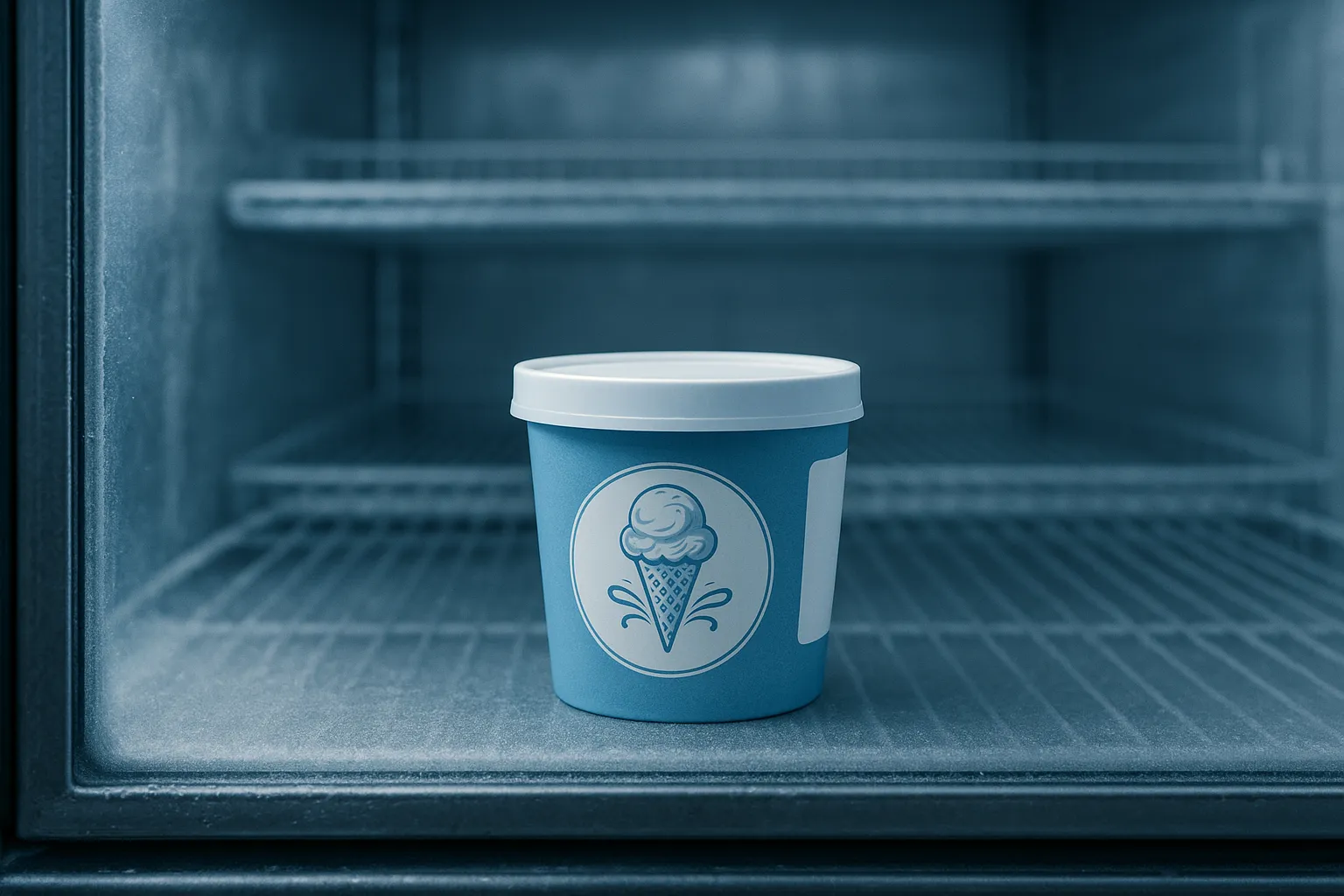
According to the FDA notice, the products in question were 32-ounce blue paper cups and 56-ounce plastic cups branded as Loard's Ice Cream, distributed through Loard's parlors and pulled from store-front freezers. The recall covered every flavor in those formats. Inspectors discovered that the retail packaging was missing the legally required ingredient statement and allergen declarations entirely. As a result, the agency listed eight categories of undeclared substances: milk, eggs, tree nuts, peanuts, soy, wheat, sulfites, and added color additives.

For families managing food allergies, that list reads like a worst-case scenario.
A recall about absence, not presence

Most allergen recalls follow a pattern. A bag of granola unexpectedly contains almonds. A chocolate bar picks up trace milk from a shared production line. A snack mix gets the wrong sticker on the wrong tray. The labeling problem is usually a mismatch between what the product contains and what the panel claims.

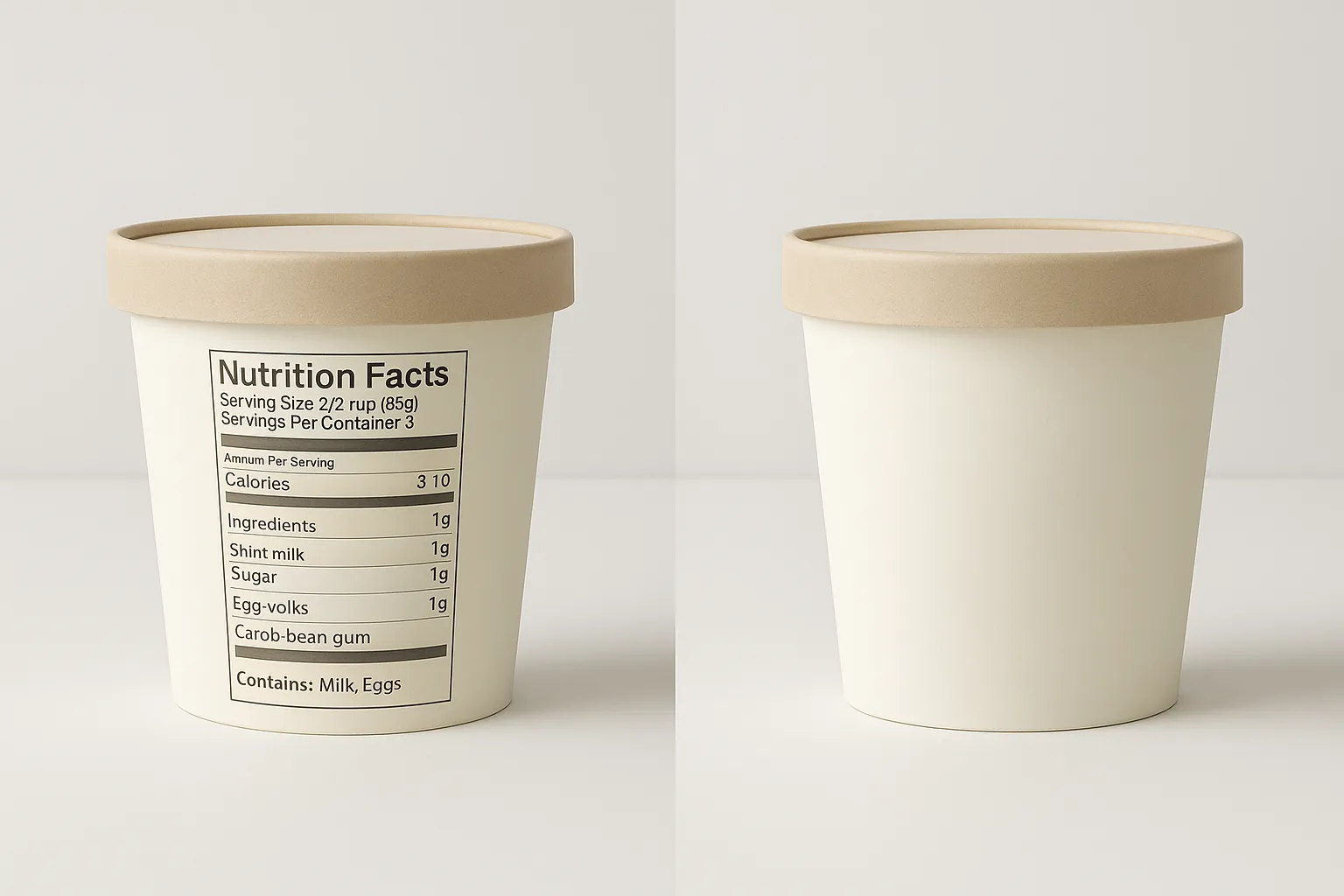
The Loard's recall is different. It is a recall about what was missing from the package, not about what was hidden inside it. The ice cream was made by a long-running parlor that has served Bay Area customers for decades. The flavors were what regulars expected. The defect was that someone packaged retail tubs without the panel that tells customers what is in them.

Federal law treats this as an allergen issue because, in the absence of a panel, a customer with a milk allergy or a peanut allergy has no way to know what is safe. The FDA requires that any of the nine major allergens be disclosed in plain language on the label. The Food Allergen Labeling and Consumer Protection Act, known as FALCPA, was passed in 2004 to make those disclosures consistent across the country. Sesame joined the list in 2023. The rule is unambiguous: if the food contains an allergen, the label must say so.

A blank label fails that test in every direction at once.

"When a company announces a recall, market withdrawal, or safety alert, the FDA posts the company's announcement as a public service." Even with that disclaimer, the language of the Loard's notice is striking, naming eight categories of undisclosed substance in a single line.

How label-less food slips into freezers

How label-less food slips into freezers

Industry data from 2024 and 2025 show that label problems are now the leading cause of FDA food recalls. A 2025 analysis by Loftware found that label errors triggered 192 of the 422 FDA food recalls in 2024, or roughly 45.5 percent. Of those label errors, almost 84 percent involved undeclared allergens. A separate 2026 review by the packaging firm Esko found that allergen mislabeling drove 115 of 251 FDA food recalls in 2025, again the single largest category.

Most of those errors are partial. A panel that lists wheat but forgets eggs. A reformulated recipe that picked up a new ingredient before the artwork caught up. The Loard's case sits at the extreme end of that distribution: not a partial mistake but a complete absence.

Several pathways can lead to that outcome.

Foodservice packaging used at retail

Many restaurants, parlors, and small producers use bulk or foodservice containers that legally do not require ingredient panels because the product is portioned and served on site. When the same operation starts selling those containers as packaged retail items, the federal labeling rules change. A container that is fine to scoop from behind the counter is illegal once it crosses the freezer case as a sealed retail unit.

Packaging supplier swaps

A printer might ship a batch of pre-printed cups that left the design step before the artwork was finalized. If the warehouse cannot tell the difference between the labeled and the blank stock at a glance, the unlabeled cups can flow into production unnoticed.

Speed and scale outpacing quality control

A small company growing fast often runs production lines faster than its label review process can keep up. The Loard's notice does not detail the cause, but the FDA explicitly says the recall was initiated after an agency inspection, not after a consumer report. That sequencing matters. Without the inspection, the gap might have continued.

What it means for shoppers with allergies

For customers with no allergies, an unlabeled pint of ice cream is an inconvenience. For someone with anaphylactic milk or peanut allergy, it is a hazard. The recall summary notes that no illnesses had been reported at the time of the announcement, but the absence of harm so far does not change the underlying exposure.

Allergy advocacy groups have flagged this gap repeatedly. According to the Asthma and Allergy Foundation of America, about 20 million people in the United States have a food allergy, including 16 million adults and 4 million children. Tree nut allergy alone affects an estimated 3.9 million Americans, and milk allergy affects 6.2 million. Anaphylaxis rates are particularly high for walnut and pine nut allergy, with more than 40 percent of cases producing systemic reactions.

A blank container makes those allergies invisible to the buyer. The standard advice for someone managing a serious food allergy, given by the FDA and by FARE, is to read every label every time, even on a familiar product, because formulas change. That advice assumes a label exists.

Practical signals that a package is missing required information

When a retail food container reaches a freezer or shelf, certain elements should always be present. If any are missing, the safest assumption is that the package was never meant to be sold to consumers in that form.

  • Ingredient statement. A list, in descending order by weight, of every ingredient in the product.
  • Allergen declaration. A "Contains" statement near the ingredient list, calling out any of the nine major allergens (milk, eggs, fish, shellfish, tree nuts, peanuts, wheat, soy, sesame).
  • Net weight. The contents in ounces or grams, on the principal display panel.
  • Manufacturer or distributor name and address. Required for accountability and traceback.
  • Nutrition facts panel. Required on most packaged foods, with a few small-business exemptions.

A pint of ice cream with branding on the front and nothing on the back fails several of those tests. So does a tub with only a flavor name and a barcode.

Why scanning matters even more in this category

Ice cream is one of the most allergen-dense product categories in the freezer aisle. Dairy is in nearly everything. Many flavors contain nuts, peanuts, eggs, wheat-based cookie pieces, soy lecithin, sulfite-treated dried fruit, and FD&C food colors. The list named in the Loard's recall is not unusual for the category. It is the kind of label panel a typical premium ice cream might carry on any given pint.

That density is precisely why a missing label in this category is so dangerous. A customer accustomed to scanning ice cream labels carefully will not be triggered to check at all if the front of the cup looks normal. The package signals "trust me" before the back reveals the problem. In the Loard's case, the back revealed nothing.

This is also a reminder that label coverage in the United States is not uniform. Many freezer cases include a mix of national brands, regional dairies, parlor-packaged tubs, and farmers-market products. The labeling discipline of a national brand like HΓ€agen-Dazs is not what controls the cup next to it from a small local producer. Shoppers cannot assume that consistency exists.

What to do if you bought one

The FDA notice gives clear guidance. Customers who purchased the affected products are urged to return them to the place of purchase for a full refund or replacement with updated packaging. Anyone with questions can contact Silver Moon directly at (415) 547-0520, weekdays from 9 AM to 3 PM PST, or at hello@silvermoonfoods.com.

If you have a relevant allergy and you have already eaten product from one of these containers, allergy clinicians generally recommend monitoring for symptoms in the hours following exposure. Anaphylaxis typically appears within minutes to two hours. If symptoms do appear, the American Academy of Allergy, Asthma & Immunology recommends using an epinephrine auto-injector immediately and seeking emergency care.

For shoppers without allergies, the most useful response is the same response that allergy families already practice. Treat every container as opaque until the panel proves otherwise. If a tub on a freezer shelf has a logo on the front and blank space on the back, put it down.

The bigger pattern

The Loard's recall is unusual in scale, but it is not unusual in shape. The FDA's 2025 enforcement report database, summarized by Esko, shows that allergen mislabeling has been the largest single cause of food recalls every year for nearly a decade. Across 2024 and 2025, that single category cost the industry well over $2 billion in retrieval and disposal costs alone, with damages from lawsuits and reputational harm on top.

The labels themselves are the front line of consumer safety. When they fail, no amount of careful eating can compensate. A buyer cannot read a label that is not there.

Independent verification helps close that gap. Even when a label is present and complete, modern formulations move quickly enough that yesterday's safe product can become today's risky one. Scanning a barcode, checking a current ingredient list, and comparing it against your own profile of allergies and intolerances takes seconds and catches changes that visual inspection misses. When a label is partial, missing, or fresh off a packaging supplier swap, that habit is what protects you.

Using IngrediCheck, you can scan a product's barcode to pull up its ingredient list, instantly check it against your allergy and intolerance profile, and confirm whether the package in your hand matches what is supposed to be inside. For unlabeled or suspicious packaging like the Loard's containers in this recall, the app can flag missing data so you know to put the product back rather than guess.

Next Label Check

Follow the scanner, hub, and ingredient paths connected to this guide

Get the app for clearer label decisions.

Scan labels, see what fits your food notes, and read the why in plain English.

IngrediCheck app