Cellulose Gum: The Food Additive Researchers Can't Stop Studying

Carboxymethylcellulose (CMC), listed as cellulose gum on ingredient labels, is one of the most common emulsifiers in processed food. A growing body of research links it to gut microbiome disruption and chronic inflammation.

May 22, 2026|10 min read
By Sanket Patel|Updated 2026-05-22|6 sources|Editorial standards
Cellulose Gum: The Food Additive Researchers Can't Stop Studying

Check the ingredient list on a tub of ice cream, a loaf of bread, a bottle of salad dressing, or a carton of flavored milk. If you see the words "cellulose gum," you have found carboxymethylcellulose (CMC). It is not a new additive. It has been used in food products for decades, cleared as safe by the FDA and the European Food Safety Authority. Most consumers have never thought twice about it.

Researchers, however, have been thinking about it a great deal. A series of studies published between 2015 and 2024 has produced findings that do not fit neatly with the "safe and inert" framing that CMC has enjoyed for most of its regulatory history. The research points to changes in gut microbiome composition, increased gut permeability, and low-grade inflammation in both animal models and, more recently, in a human clinical trial.

CMC is not going to be banned tomorrow. But the science has moved fast enough that informed consumers, particularly those managing gut conditions, are asking questions that deserve straight answers.

What Carboxymethylcellulose Actually Is

CMC is produced by treating cellulose, the structural polymer found in plant cell walls, with sodium chloroacetate under alkaline conditions. The process attaches carboxymethyl groups to the cellulose backbone, creating a water-soluble compound that can be dispersed evenly through food products.

The raw material is typically wood pulp or refined cotton linters. This industrial starting point surprises many consumers who encounter it for the first time. CMC is not a food-derived ingredient in the way that, say, pectin (from fruit) or xanthan gum (from fermentation) might be described. It is a chemically modified cellulose derivative produced at industrial scale.

In its final form, it is a white to off-white powder with no meaningful taste or smell. It is added to food in small quantities, typically between 0.1% and 1% of the finished product.

What It Does in Food

CMC's primary function is as a thickener, stabilizer, and emulsifier. In each of these roles, it is preventing something from happening that manufacturers do not want.

In ice cream, CMC absorbs water and prevents it from refreezing as large, gritty ice crystals when the container is repeatedly taken out of and returned to the freezer (an effect called "heat shock"). The result is a smoother texture and longer shelf life. A McGill University analysis notes that gums like CMC are "critical" to achieving the smooth texture most consumers expect from commercial ice cream.

In salad dressings and sauces, CMC prevents oil-water separation. In bread and baked goods, it improves moisture retention and slows staling. In reduced-fat products, it compensates for the textural contribution that fat would normally make.

Because it is not a fat or sugar, CMC is also frequently used in diet and reduced-calorie products. It adds bulk and mouthfeel without contributing meaningful calories.

How to Find It on a Label

The naming is inconsistent and this matters. On ingredient lists, CMC appears under several names:

  • Cellulose gum (the most common label in the United States)
  • Sodium carboxymethylcellulose
  • Carboxymethylcellulose
  • CMC
  • E 466 (the EU E number)

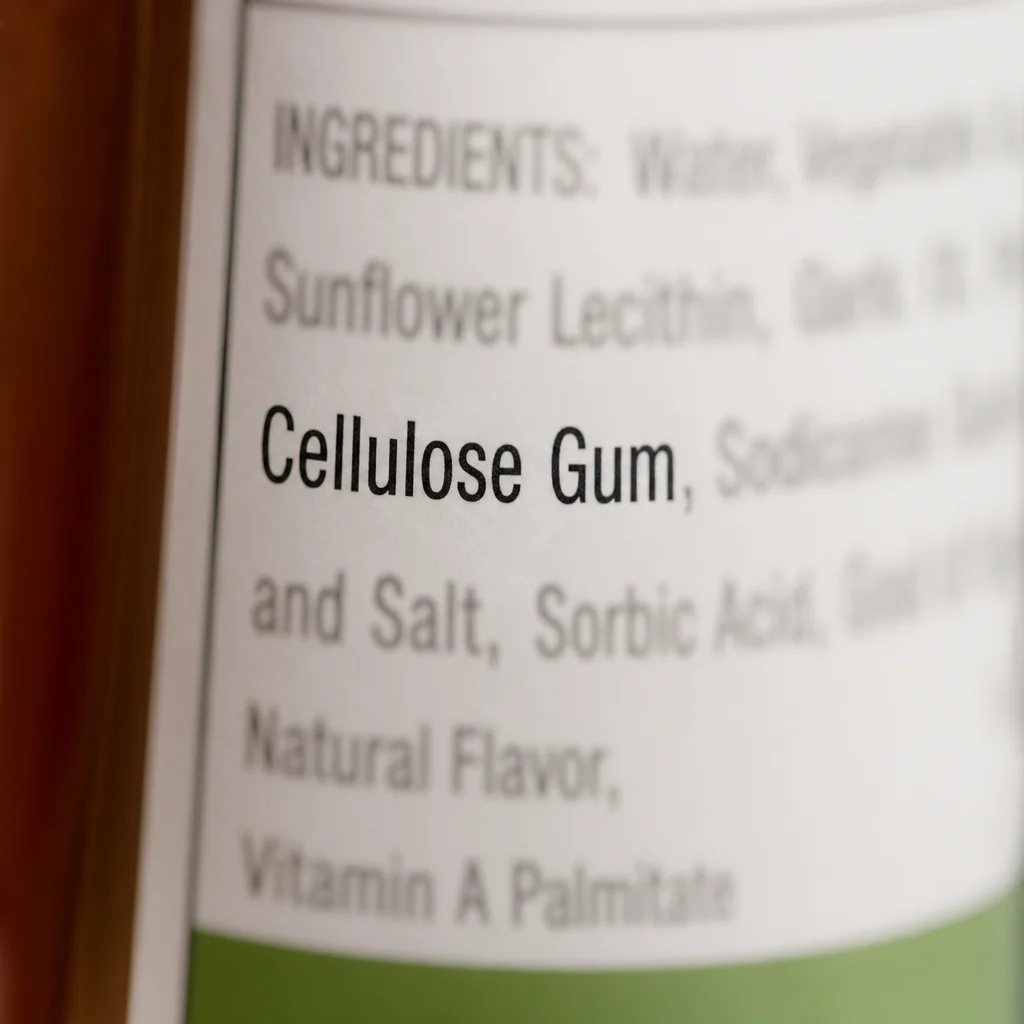
"Cellulose gum" is the name most US consumers will encounter. It sounds natural, a phrase built from a word most people associate with plant fiber. That association is misleading. CMC is a chemically processed derivative of cellulose, not simply ground-up plant material.

The Research That Changed the Conversation

For decades, CMC's safety profile rested on traditional toxicology: animal studies showing no organ damage, no carcinogenicity, no acute toxicity at high doses. Regulators concluded it was safe, set an ADI (Acceptable Daily Intake), and moved on.

What those traditional tests did not examine was the gut microbiome. They were designed to detect toxicity, not to study whether a substance altered the composition and function of the bacterial ecosystem living in the human gut. That question was not the primary lens of food safety science in the 1980s or 1990s.

It became the primary lens by the 2010s.

Animal Studies: A Consistent Pattern

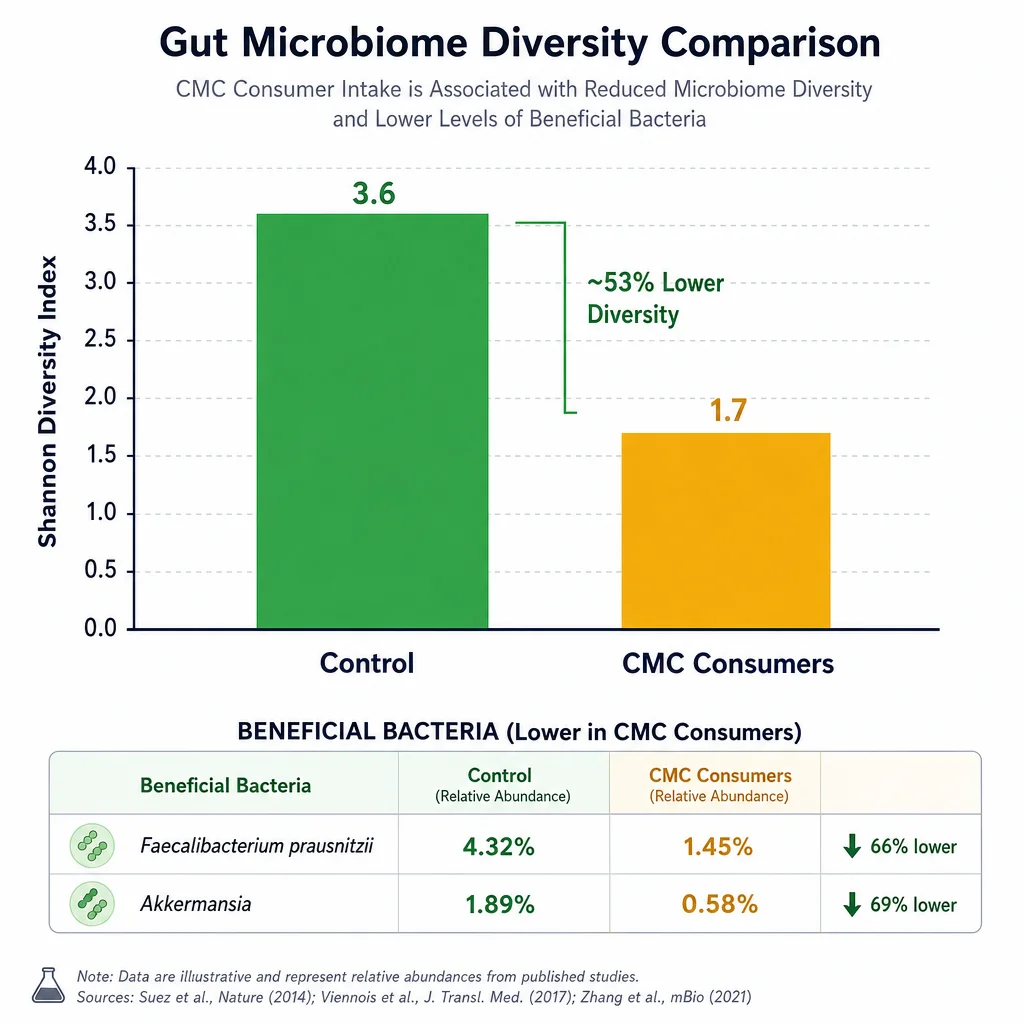
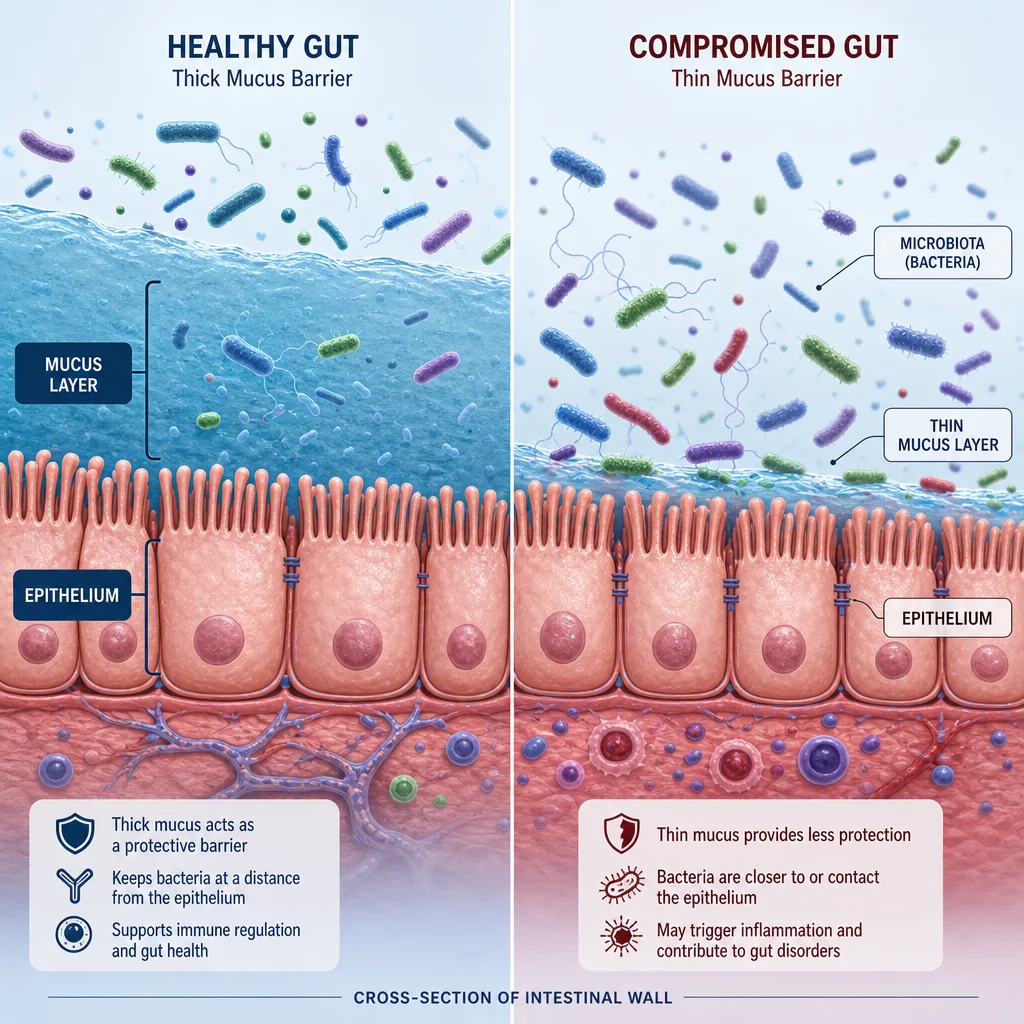
The research that began changing the CMC conversation was published in 2015 in Nature. A team led by Benoit Chassaing found that mice fed CMC or polysorbate 80 (another common emulsifier) developed low-grade intestinal inflammation and metabolic syndrome. The microbiota of CMC-treated mice showed reduced diversity, with increases in pro-inflammatory bacteria and decreases in beneficial species. The inner mucus layer of the gut, which normally keeps bacteria from contacting the intestinal epithelium, became thinner. Bacteria encroached closer to the gut wall than in control animals.

Subsequent animal studies replicated and extended those findings. A 2020 paper in Cell Reports31218-3) found that CMC and polysorbate 80 directly induced expression of virulence genes in adherent-invasive E. coli (AIEC), a pathobiont associated with Crohn's disease. The emulsifiers appeared to make this bacterium more motile and better able to colonize the intestinal epithelium, providing a mechanism by which they could drive chronic inflammation in genetically susceptible individuals.

A 2024 paper in Communications Biology found that CMC and polysorbate 80 promoted metabolic disorders and intestinal microbiota dysbiosis in mice, with CMC showing particularly consistent effects on microbiota composition and gut barrier function. CMC also raised circulating LPS (lipopolysaccharide) levels, a marker of bacterial product translocation across the gut barrier into the bloodstream. Elevated LPS drives systemic low-grade inflammation, which has been linked to metabolic syndrome, type 2 diabetes, and cardiovascular risk.

Across these studies, the direction of findings is consistent: CMC disrupts the gut microbiome, thins the protective mucus layer, and increases gut permeability in mouse models.

The Human Study

Animal models are informative but not definitive. The more important question is what CMC does in the human gut. One clinical trial has now addressed this directly.

A randomized controlled trial of healthy participants, reported in Gastroenterology, examined the effects of consuming 15 grams of CMC per day for approximately two weeks. The results tracked closely with what the animal studies had found. CMC consumers showed:

  • Increased postprandial abdominal discomfort
  • Lowered gut microbiome diversity
  • Decreased fecal concentrations of short-chain fatty acids, including butyrate (a key fuel for colonocytes and a driver of gut barrier health)
  • Decreased levels of beneficial bacteria including Faecalibacterium prausnitzii and Akkermansia muciniphila
  • Enhanced encroachment of microbiota into the inner mucus layer

The Important Caveat

15 grams per day is a high CMC intake. Most people consuming food with CMC as an ingredient take in far less. A generous serving of ice cream might contain 0.3 to 0.5 grams. Even a day of eating multiple CMC-containing foods would be unlikely to reach 15 grams.

This caveat is significant. The clinical trial established that CMC can alter the human gut microbiome at a dose high enough to detect, but it does not tell us whether the smaller, cumulative doses typical of everyday eating produce similar effects. Researchers have called for long-term studies at realistic dietary doses. Those studies have not yet been published.

What the trial does establish is a human proof-of-concept. The animal findings were not an artifact of mouse physiology. CMC acts on the human gut microbiome in measurable ways.

What Happens in the Gut, Specifically

The mechanism proposed across multiple studies works like this.

The human gut is lined with a mucus layer that serves as a physical barrier between the intestinal epithelium and the microbiota. Beneficial bacteria that colonize the outer mucus layer are normal and healthy. When bacteria breach the inner mucus layer and make contact with epithelial cells, the immune system responds with inflammation.

CMC appears to thin this mucus layer and alter the motility and adhesion properties of certain bacteria, particularly Proteobacteria, allowing them to move closer to the gut wall than they otherwise would. At the same time, CMC consumption shifts the microbiome away from short-chain fatty acid-producing bacteria, reducing butyrate levels. Butyrate is one of the primary signals that tells the colon to strengthen its mucosal barrier and regulate immune responses.

The result is a gut environment that is slightly more permeable, slightly more inflamed, and slightly less well-supplied with the microbial metabolites that maintain gut health. For healthy people, the immune system likely manages this without producing noticeable symptoms. For people with IBD, metabolic syndrome, or a compromised gut barrier, the same changes may be more consequential.

Where Regulators Stand

The FDA has not changed its GRAS assessment of CMC. The substance remains permitted in a wide range of food applications in the United States with no upper limit specified.

EFSA is in a different position. As part of its systematic re-evaluation of all food additives approved before 2009, EFSA has opened a call for technical data on celluloses (E 460 to E 465, E 468 to E 469). CMC is E 466. It sits just outside the range of the formal call for data, but the broader re-evaluation process for cellulose-based additives is clearly active.

EFSA has explicitly acknowledged that traditional toxicology studies do not adequately capture microbiome effects, and the agency has started incorporating microbiome research into its additive assessments. Whether this leads to a formal re-evaluation of CMC specifically will depend in part on whether the research evidence continues to accumulate.

What This Means If You Have Gut Issues

For healthy individuals eating an otherwise varied diet, the current research does not provide strong grounds for complete elimination of CMC. The human trial used high doses, and the animal studies, while consistent, are not direct translations to human health outcomes.

For people managing IBD, Crohn's disease, ulcerative colitis, or irritable bowel syndrome, the picture is different. The research suggests a plausible mechanism by which CMC could worsen gut permeability and microbiome balance in an already compromised gut environment. The beneficial bacteria whose populations decline in CMC studies are the same bacteria that tend to be depleted in IBD. The increase in Enterobacteriaceae is the same pattern found in IBD gut microbiome profiles.

Gastroenterologists increasingly discuss dietary emulsifiers with their IBD patients, and many suggest limiting CMC intake as a conservative precaution pending more definitive human data. If you manage a gut condition and notice symptoms worsen after eating processed foods, CMC is among the additives worth tracking.

How to Reduce Your CMC Exposure

CMC-free versions of most products exist. The practical steps are:

  • Choose ice creams with shorter ingredient lists. Many premium and artisan brands do not use CMC.
  • Read salad dressing labels. Many commercial dressings contain CMC, while some natural and organic brands do not.
  • Check bread and bakery labels. Whole-grain and sourdough products often lack CMC.
  • For flavored milk and dairy alternatives, compare brands. Some oat milks use guar gum instead of CMC; some use neither.

IngrediCheck can scan any packaged product and immediately flag whether CMC or cellulose gum is present. For people with IBD or other gut conditions, or simply anyone choosing to minimize emulsifier exposure, being able to check at the point of purchase without memorizing every possible label name is genuinely useful.

Next Label Check

Follow the scanner, hub, and ingredient paths connected to this guide

Get the app for clearer label decisions.

Scan labels, see what fits your food notes, and read the why in plain English.

IngrediCheck app