Guar Gum: From Ice Cream to Baby Formula, What to Know

Guar gum is one of the most common thickeners in processed food. A 2024 EFSA re-evaluation and a 2026 EU regulation have now removed it from infant formula — here's what consumers need to know.

May 22, 2026|9 min read
By Sanket Patel|Updated 2026-05-22|3 sources|Editorial standards
Guar Gum: From Ice Cream to Baby Formula, What to Know

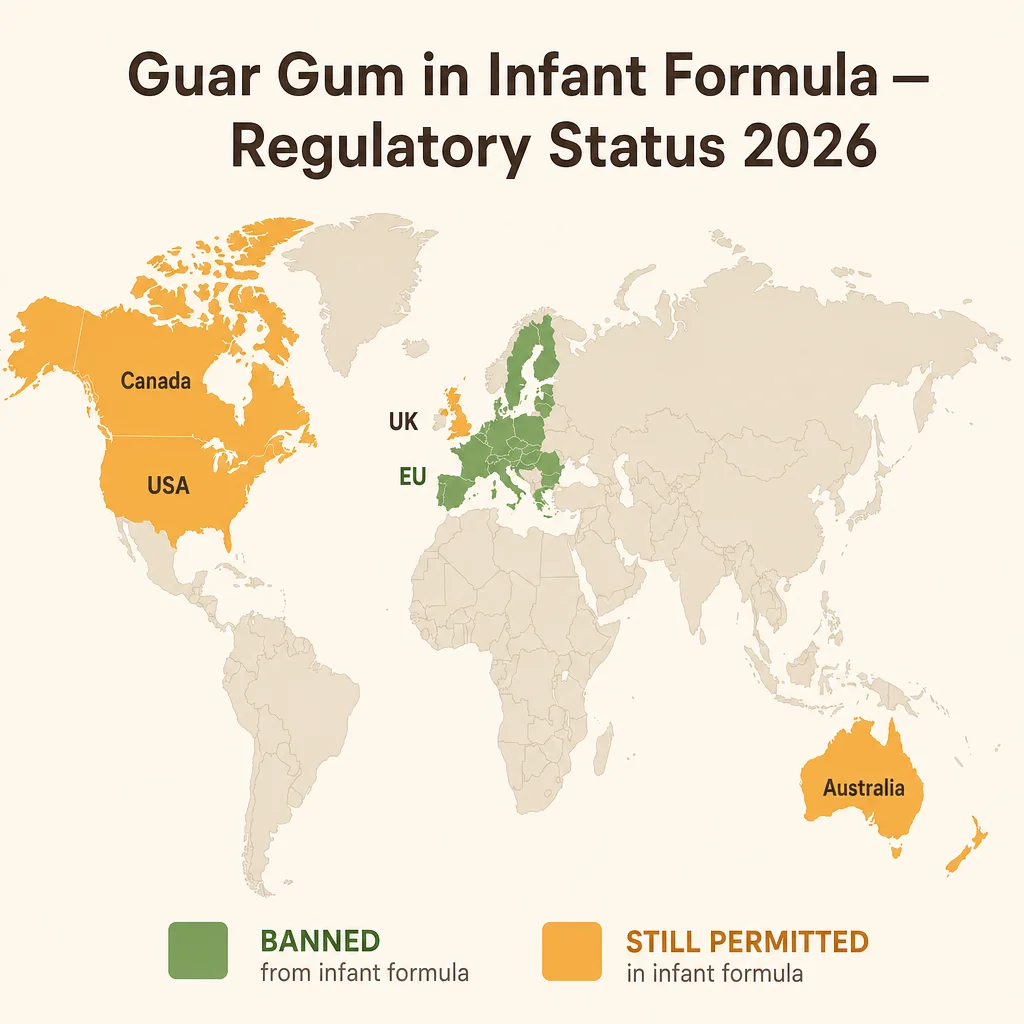
It shows up in your salad dressing, your oat milk, your gluten-free bread, and until recently, your infant's formula. Guar gum is one of the most widely used food thickeners in the world, yet most consumers have never given it a second thought. That started to change in 2024, when the European Food Safety Authority published a re-evaluation focused specifically on its use in infant products. By early 2026, the EU had acted: guar gum is now banned from standard infant formula across the European Union.

For parents and label readers, that regulatory shift is worth understanding. And for anyone with a sensitive gut, the underlying research offers context that goes well beyond the infant formula story.

What Guar Gum Actually Is

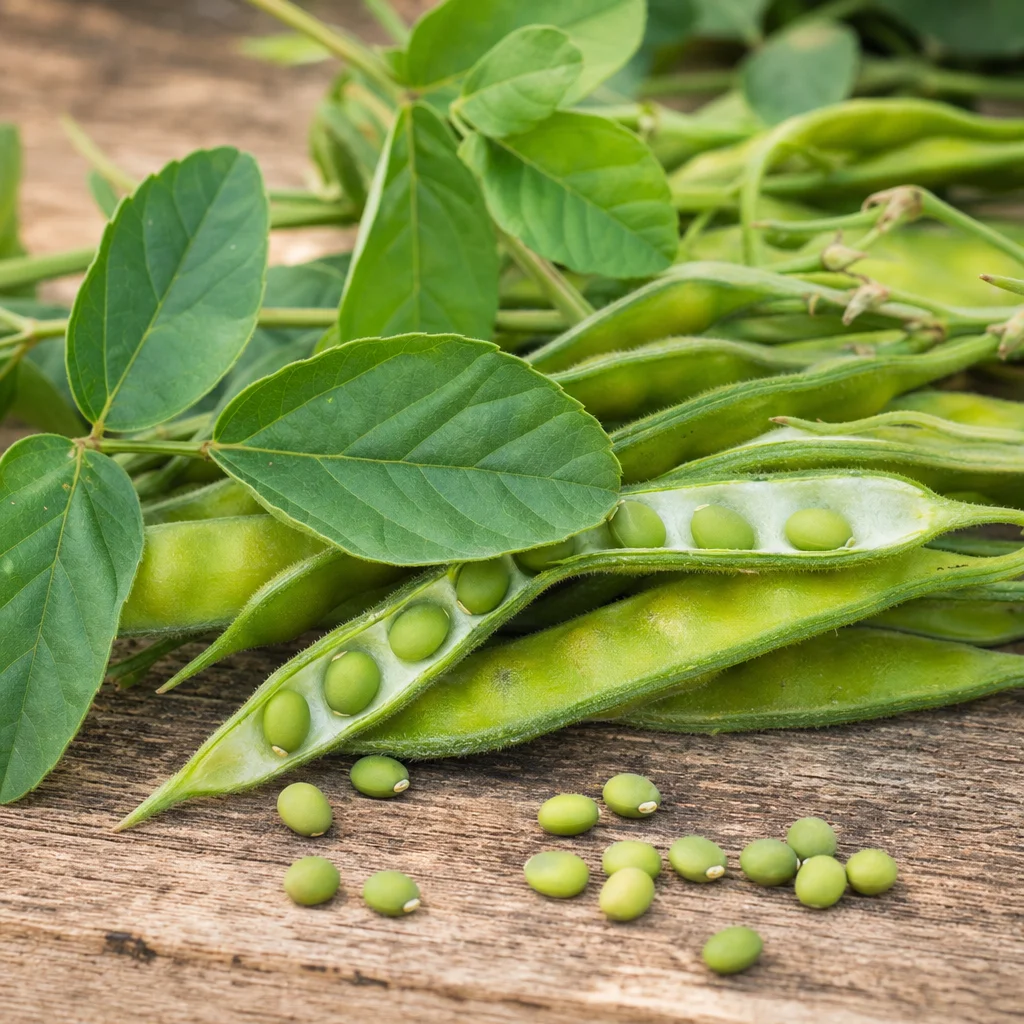
Guar gum comes from the seeds of Cyamopsis tetragonoloba, a drought-tolerant legume cultivated primarily in India and Pakistan. The seeds are dehusked, milled, and screened to produce a fine white powder. Chemically, it is a galactomannan: a long-chain polysaccharide made of mannose and galactose units that bind tightly to water molecules.

That water-binding ability is what makes it so valuable to food manufacturers. A very small amount of guar gum, often less than 1% of the product by weight, dramatically increases the viscosity of liquids, prevents ingredient separation, and extends shelf life. It can replace fat in reduced-calorie products, improve texture in frozen foods, and give gluten-free baked goods some of the structure that wheat proteins would normally provide.

In the EU, it carries the E number E 412. In the United States, the FDA classifies it as Generally Recognized as Safe (GRAS). Australia, Canada, and most other major markets share this broadly permissive approach.

Where It Appears on Labels

The ingredient list is where guar gum hides. Look for:

  • Guar gum (the most common label declaration)
  • Guaran (less common but technically the same substance)
  • E 412 (used in EU-labeled products)

You will find it across a wide range of product categories:

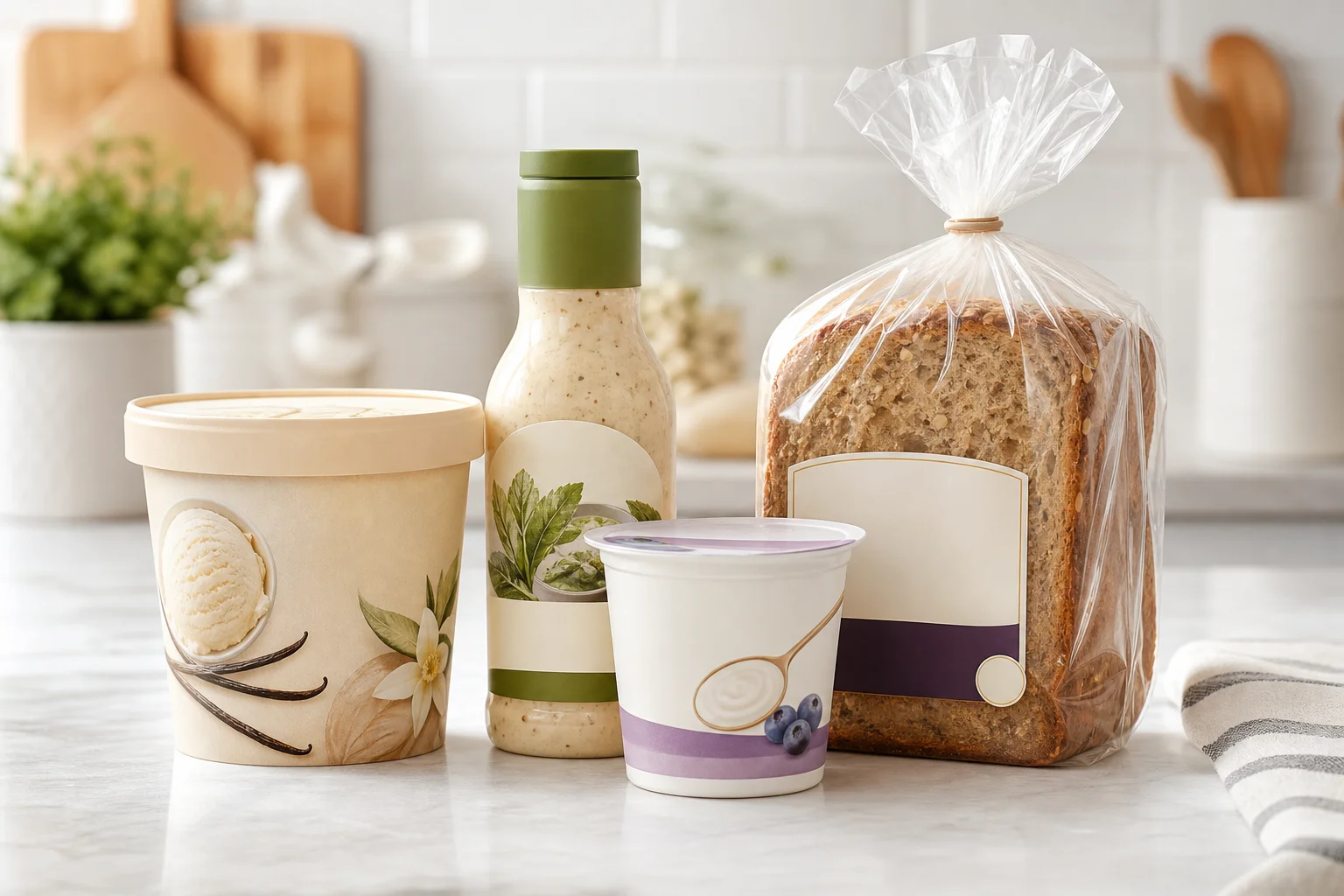
  • Ice cream and frozen desserts: prevents ice crystal formation during heat shock when the container is repeatedly removed from and returned to the freezer
  • Yogurt and dairy beverages: improves texture consistency and prevents whey separation
  • Salad dressings and sauces: stabilizes oil-in-water emulsions, prevents separation on the shelf
  • Gluten-free and low-carb products: replaces the structural role of gluten, binds moisture
  • Plant-based milks and creamers: keeps particles suspended and creates a fuller mouthfeel
  • Soups and gravies: thickens and prevents starch retrogradation during storage
  • Infant formula: previously used as a thickener in some formulations, now banned in the EU

The concentration used in most foods is small, but guar gum can appear in a surprising number of products in the same day's eating. Someone who has yogurt for breakfast, a salad with store-bought dressing at lunch, plant-based milk in their afternoon coffee, and a gluten-free pasta dish for dinner may consume guar gum at four separate meals.

The Safety Record Before 2024

For most of its history as a food additive, guar gum has been considered safe. EFSA's 2017 re-evaluation confirmed this for the general population. The panel established a "not specified" ADI (Acceptable Daily Intake), which in regulatory language means the evidence did not justify setting a numerical limit because safety margins were very comfortable at current intake levels. The additive was not carcinogenic in animal studies. No genotoxicity concerns were identified.

The 2017 opinion did flag one significant gap, however. It explicitly noted that the safety of guar gum in infant formula for infants below 16 weeks of age had not been sufficiently evaluated. That gap was left for a future assessment.

The 2024 EFSA Opinion: What Changed

EFSA's 2024 re-evaluation, published in May, closed that gap with a more cautious conclusion than regulators had reached before.

The Panel on Food Additives and Flavourings found that the available data could not confirm the safety of guar gum in infant formula for infants under 16 weeks. Several factors drove that conclusion:

Gut immaturity at this age. A newborn's intestinal barrier is structurally and functionally different from an adult's. The mucus layer is thinner, the microbiome is in its earliest stages of development, and the immune system is still learning to distinguish between harmful and harmless substances. Additives that are well-tolerated by adult guts may not behave the same way in an immature intestinal environment.

Concentrated, exclusive exposure. An adult eating a salad dressing gets guar gum alongside dozens of other food components. A formula-fed infant gets guar gum in every feeding, at relatively consistent concentrations, with no dietary variation to dilute or offset it. The dose-per-kilogram of body weight is also much higher in a 4-kilogram newborn than in a 70-kilogram adult.

Insufficient infant-specific safety data. The industry did not submit adequate data to resolve the uncertainties that the panel identified. When safety cannot be confirmed, EU regulators are required by law to apply the precautionary principle.

The panel's recommendation was explicit: guar gum should not be authorized in infant formula or in specialty medical nutrition products designed for the youngest infants.

How the EU Responded: The 2026 Regulation

The European Commission moved quickly after EFSA's 2024 opinion. Commission Regulation (EU) 2026/189, published on January 29, 2026, formally revoked guar gum's authorization in specific infant product categories:

  • Standard infant formulae (Category 13.1.1): Guar gum is revoked. Production and import of products containing it in this category must cease by August 18, 2026.
  • Dietary foods for infants for special medical purposes and special formulae for infants (Category 13.1.5.1): Same revocation, same August 18, 2026 deadline.
  • Dietary foods for infants from four months onwards for special medical purposes (Category 13.1.5.2): Use permitted temporarily at a maximum of 10,000 mg/kg, but the revocation becomes definitive by April 27, 2027.

The regulation entered into force on February 18, 2026. Formula manufacturers operating in or exporting to the EU are already reformulating their products.

For parents purchasing infant formula in EU markets, some compliant products may already be available on shelves while older formulations still move through retail channels. Reading the ingredient list remains the most reliable check.

What About Non-EU Markets?

Outside the EU, guar gum remains permitted in infant formula. The United States, United Kingdom, Australia, Canada, and India have not taken corresponding regulatory action. Parents in these markets who want to replicate the EU's cautious approach can check for guar gum on the ingredient list and opt for products that do not include it.

The Gut Health Research for Adults

The infant formula ban grabs the clearest regulatory headline, but there is a parallel body of research on guar gum's effects in adults that is worth knowing about, particularly for anyone with inflammatory bowel disease or a sensitive gut.

Two studies from a research group at the Crohn's & Colitis Foundation explored what happens when mice are fed a diet containing refined guar gum. The results were not reassuring for people with gut conditions.

In the first set of experiments, mice fed guar gum showed increased susceptibility to colitis when inflammation was triggered. Compared to control animals, the guar gum group experienced more rectal bleeding, diarrhea, and splenomegaly. Systemic and colonic markers of inflammation were higher. Crucially, when the gut microbiota was depleted with broad-spectrum antibiotics, the susceptibility to colitis reversed, pointing to microbiome alterations as the mechanism rather than guar gum acting directly on gut tissue.

A follow-up study found that the microbiome changes guar gum induced were specific. Guar gum-fed mice showed elevated branched-chain amino acids, reduced butyrate levels, altered gut microbiota community structure, and a substantial decrease in colonic IL-18 production. IL-18 is a cytokine that plays an important role in maintaining the intestinal epithelial barrier. When the researchers supplemented with recombinant IL-18, the increased colitis susceptibility in guar gum-fed mice was alleviated, clarifying the mechanism.

Important Context

These are animal studies, and mouse models of colitis do not translate perfectly to human disease. The research does not demonstrate that guar gum causes IBD in humans, and the dietary concentrations used in some studies are higher than typical human exposure from food.

What the research does suggest is that for people already living with IBD or other gut conditions, guar gum may not be a neutral bystander. It appears to interact with the gut microbiome in ways that could worsen an already inflamed intestinal environment. For people in remission who are trying to minimize dietary triggers, this is a signal worth taking seriously, even in the absence of human clinical trial data.
Reading the Label in Practice

Guar gum appears in the ingredient list of a surprisingly large number of products. It is not always easy to spot because it often appears near the bottom of a long list, after the main ingredients, nestled between other stabilizers or emulsifiers.

Products that frequently contain it include many ice creams, most commercial salad dressings, plant-based milks, flavored yogurts, many bread and bakery products marketed as gluten-free or low-carb, and several infant formula brands sold outside the EU.

If you are scanning for it, the label will always say "guar gum" or "guaran" (or E 412 in the EU). It will not be disguised as something more ambiguous. The challenge is simply noticing it amid a long ingredient list.

What to Do With This Information

For most healthy adults, guar gum at typical dietary exposure levels is not a cause for alarm. EFSA's 2024 opinion and the EU ban are specifically targeted at very young infants, not the broader population. If you are also monitoring carboxymethylcellulose (CMC), another widely used food gum with its own growing body of gut research, see Cellulose Gum: The Food Additive Researchers Can't Stop Studying.

But the EU regulatory action, taken in response to unresolved safety questions about a specific vulnerable group, is a meaningful signal. It is the kind of change that does not happen without a weight of scientific evidence behind it.

Parents feeding infants, particularly in non-EU markets, have good reason to check whether guar gum appears in their formula. People managing IBD or other gut conditions may find the animal research sufficient grounds to limit their guar gum intake. And anyone who prefers to minimize food additives in general now has an EU-level regulatory reference to point to when making that choice.

IngrediCheck lets you scan any packaged product and see immediately whether guar gum is present in the ingredient list. Whether you're checking infant formula before a purchase or reviewing the salad dressing in your fridge, IngrediCheck can surface the information you need without having to read every line of fine print.

Next Label Check

Follow the scanner, hub, and ingredient paths connected to this guide

Get the app for clearer label decisions.

Scan labels, see what fits your food notes, and read the why in plain English.

IngrediCheck app