Cereulide in Infant Formula: What Parents Need to Know

A contaminated ARA oil ingredient from China triggered a global wave of infant formula recalls across Europe and the US in late 2025 and 2026. Here's what cereulide is, why it is dangerous for infants, and what the delayed regulatory response revealed.

May 19, 2026|9 min read
By Sanket Patel|Updated 2026-05-19|3 sources|Editorial standards
Cereulide in Infant Formula: What Parents Need to Know

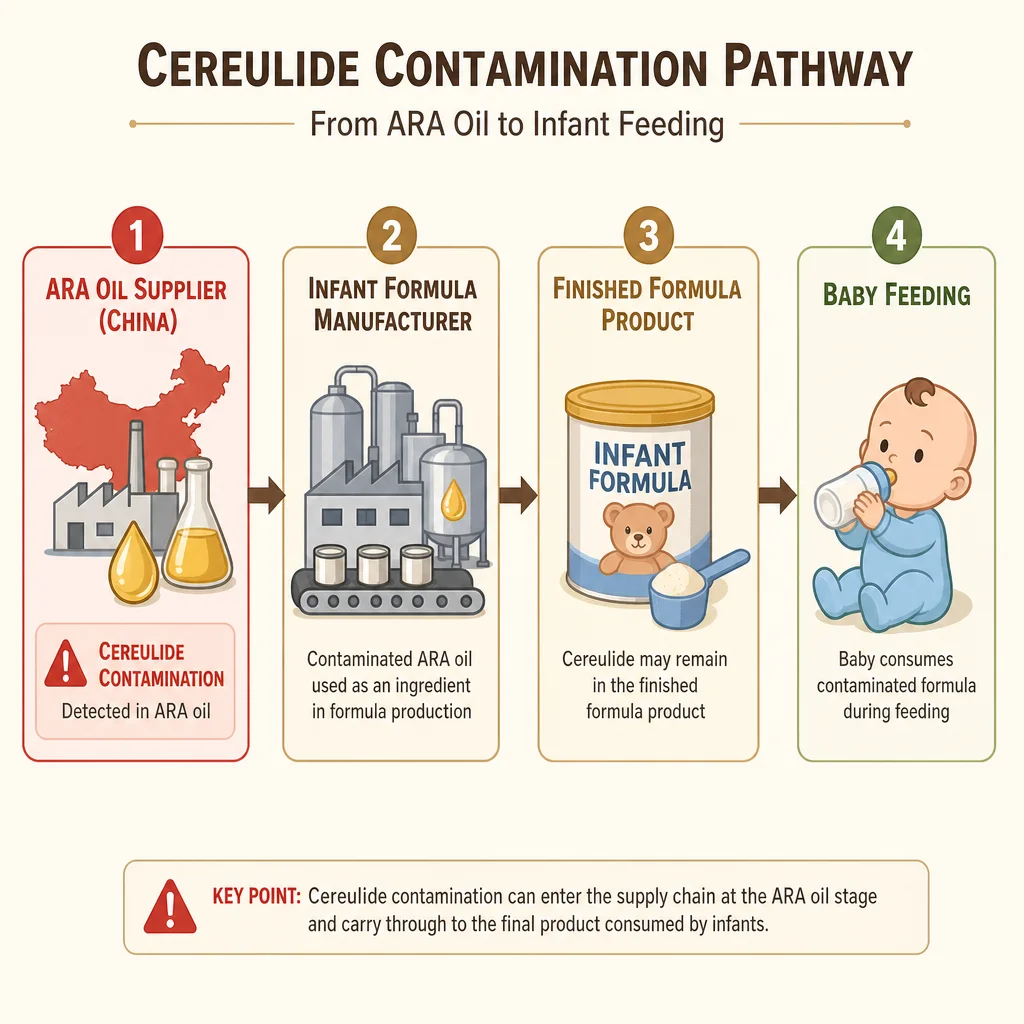
Between December 2025 and May 2026, infant formula products from some of Europe's and the world's largest formula manufacturers were recalled following the detection of cereulide — a heat-stable toxin produced by the bacterium Bacillus cereus — in a shared ingredient. The source was an arachidonic acid (ARA) oil produced by a single Chinese supplier and distributed to manufacturers including Nestlé, Danone, Lactalis, and Hochdorf. The contaminated oil reached finished formula products sold across six EU countries, the UK, and the United States.

The recalls were among the largest in infant formula history in terms of the number of major brands involved simultaneously. The regulatory response raised serious questions about how quickly food safety authorities communicated an emerging threat, and the EFSA rapid risk assessment published on February 2, 2026, established for the first time a specific acute reference dose for cereulide applicable to infants — the most vulnerable population.

What Cereulide Is

Cereulide is an emetic toxin produced by certain strains of Bacillus cereus, a bacterium that is widespread in the environment and found in many foods. Unlike the diarrheal toxins that B. cereus also produces, which are formed in the gut after ingestion of spores, cereulide is preformed: it is produced by the bacteria in the food itself, before consumption.

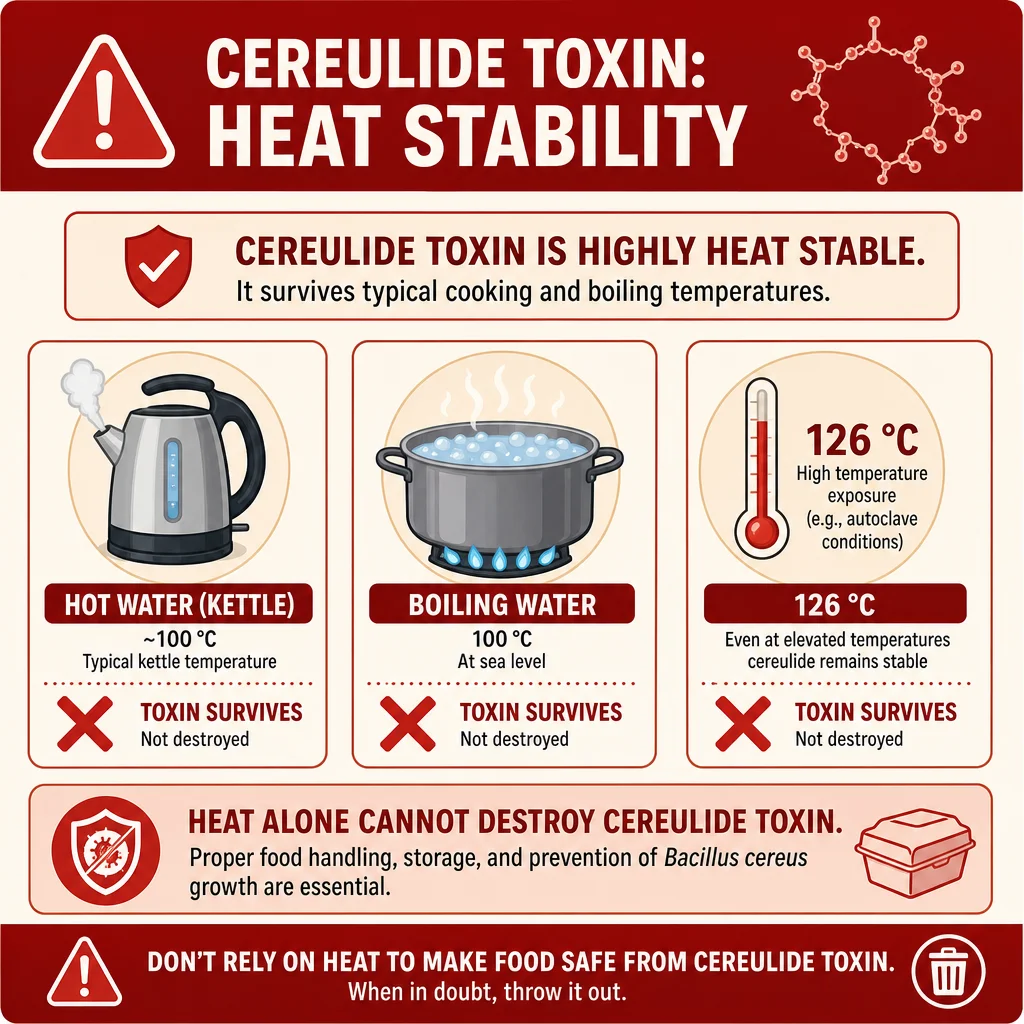
This distinction matters enormously in the context of infant formula preparation. Cereulide is heat-stable and resistant to proteolytic digestion. Boiling water does not destroy it. Following the standard advice to prepare formula with hot water above 70 degrees Celsius — advice intended to kill Salmonella and other pathogens — has no effect on preformed cereulide. Parents who followed every preparation guideline correctly were still exposed if the oil ingredient in their formula was contaminated.

The ARA oil in this case was derived from fungal fermentation, processed in China, and distributed globally to formula manufacturers who added it as a nutritional ingredient. ARA (arachidonic acid) is a long-chain omega-6 fatty acid added to infant formula to replicate one component of human breast milk's fatty acid profile. Its presence is considered beneficial for infant brain and eye development. The oil arrived at manufacturers already containing the toxin; the contamination occurred during production of the oil, not at the formula manufacturing stage.

Which Products Were Recalled

Which Products Were Recalled

The recall wave began in December 2025 and continued through early 2026. Dutch authorities initially identified the issue in their market, but the alert to the EU's Rapid Alert System for Food and Feed (RASFF) was delayed — a gap that later drew criticism from consumer organizations and foodwatch, which filed a criminal complaint over the delay.

The brands involved included major names across the market:

  • Nestlé: SMA formula lines in the UK and other markets
  • Danone: Aptamil and Cow & Gate products in the UK and Europe
  • Lactalis: Multiple infant and follow-on formula SKUs
  • Hochdorf: Swiss-based manufacturer with European distribution

In the United States, the a2 Milk Company recalled three batches of a2 Platinum Premium infant formula in May 2026, affecting 63,078 units. The US recall was coordinated with the FDA and followed the same contaminated ARA oil thread.

Six EU countries officially reported infant cases: Austria, Belgium, Denmark, France, Luxembourg, and Spain. UK cases were tracked separately. All affected infants in documented cases recovered, but the severity of symptoms in the youngest infants required medical intervention in some instances.

What the EFSA Risk Assessment Found

The EFSA rapid risk assessment published on February 2, 2026, is the most detailed regulatory document to address cereulide specifically in the context of infant formula. Its key findings set the framework for understanding how serious the contamination was.

EFSA established an acute reference dose (ARfD) for cereulide of 0.014 micrograms per kilogram of body weight for infants — one of the strictest acute thresholds in food toxicology relative to the contaminant quantity involved. This reflects the particular vulnerability of infants: their immature metabolic systems, their near-complete reliance on formula as a sole food source during the first months of life, and the risk that vomiting and diarrhea in a very young infant can quickly produce dangerous dehydration and electrolyte imbalance.

EFSA defined specific concentration thresholds for concern:

  • Above 0.054 micrograms per litre in reconstituted infant formula (for infants 0 to 6 months): considered potentially unsafe
  • Above 0.1 micrograms per litre in reconstituted follow-on formula (for older infants): considered potentially unsafe

Detected concentrations in recalled products exceeded these thresholds in multiple instances. The joint ECDC/EFSA rapid outbreak assessment published on February 19, 2026, confirmed that the contaminated ARA oil was the common source across all affected brands and countries.

Symptoms and Clinical Risk

Symptoms and Clinical Risk

Cereulide causes an emetic syndrome — vomiting and nausea — that typically begins 30 minutes to six hours after consumption. Diarrhea can also occur. In healthy adults, the illness is unpleasant but self-limiting, resolving within 6 to 24 hours.

In infants, the risk profile is different. A young infant who begins vomiting repeatedly has limited capacity to retain fluids, no ability to self-regulate hydration, and no compensatory reserves. Dehydration can develop quickly. Electrolyte imbalance — particularly disruptions to sodium and potassium — can produce serious clinical complications in infants that would be trivial in adults. Infants under six months are the most vulnerable, precisely because formula may be their sole source of nutrition and hydration.

The CDC and clinical literature note that cereulide toxin does not cause infection — there are no bacteria multiplying in the infant's body after consumption. The toxin acts on emetic receptors in the gut and is the direct cause of symptoms. This means antibiotic treatment is irrelevant; supportive care (hydration, electrolyte management) is the appropriate clinical response.

Why Hot Water Preparation Doesn't Help

Why Hot Water Preparation Doesn't Help

The WHO and most formula manufacturers recommend preparing infant formula with water that has been boiled and cooled to no lower than 70 degrees Celsius. This temperature kills Salmonella and Cronobacter sakazakii, two pathogens that historically caused serious infant formula contamination incidents. Many parents follow this guidance carefully.

Cereulide is not affected by this practice. The toxin is heat-stable to a degree far beyond what home preparation can achieve — it survives autoclaving at 121 degrees Celsius for 90 minutes in laboratory conditions. The WHO hot-water guidance is correct and remains important for other pathogen risks, but it provides no protection against a preformed heat-stable toxin already present in the formula powder.

This is a critical point for parents to understand. If a formula product is under recall for cereulide, altering preparation temperature or boiling the reconstituted formula will not make it safe. The only protective action is to stop using the recalled product.

The RASFF Communication Delay

One of the most significant aspects of the 2025-2026 cereulide episode was not the contamination itself but the delay in its communication across regulatory systems. Dutch food safety authorities identified the contaminated ARA oil in December 2025 but did not immediately file a RASFF alert that would have triggered coordinated EU-wide action. The alert that ultimately reached other member states and the UK came weeks later, during which period contaminated products remained on shelves and in homes.

The consumer organization foodwatch filed a criminal complaint in Germany over the delay, arguing that the failure to alert promptly violated food safety obligations and exposed infants to preventable harm. The complaint brought public attention to a gap in the RASFF system: alerts move through national contact points, and if a national authority delays in notifying the network — for whatever reason — the system cannot function as intended.

The episode highlighted that ingredient-level contamination originating from a shared supplier can simultaneously reach multiple brands in multiple countries, and that a monitoring system designed around individual product recalls may be slow to recognize a supply-chain-wide problem. By the time the pattern was identified and the ARA oil source confirmed, the recall had expanded across Europe and crossed the Atlantic.

What Parents Should Do Now

If you are currently using or have recently purchased infant formula, the most direct action is to check whether the specific lot numbers and best-before dates in your home match those listed in the recall notices. In the US, the FDA recall database is the authoritative source for current recall status. In the UK, the FSA recall alerts page covers UK-distributed products. In the EU, the RASFF consumer portal lists food safety alerts by country and product category.

Affected lot numbers vary by brand, product line, and country. The recall notices specify the exact batch codes and date ranges — match those precisely, because not all batches from a given brand are necessarily affected.

If your formula's lot number is on a recall list: stop using it immediately, do not attempt to make it safe by adjusting preparation, and contact the manufacturer for guidance on replacement. If your infant has consumed formula from a recalled batch and shows symptoms of vomiting, significant irritability, or lethargy, contact your pediatrician or seek emergency care. Mention the recall when you call.

For parents with formula not on any recall list, IngrediCheck's ingredient scanner can help verify declared ingredients in packaged foods, but recall monitoring requires checking the regulatory sources directly — the FSA, FDA, and RASFF portals publish updated notices in real time.

The Systemic Lesson

The cereulide episode has a structural lesson that extends beyond any individual recall. When a single ingredient supplier provides input to multiple major manufacturers simultaneously, a contamination event at that supplier becomes a multi-brand, multi-country incident by design. The ingredient-level supply chain in infant formula — and in many other categories — concentrates risk in ways that product-level monitoring was not originally designed to catch.

EFSA's rapid risk assessment and the ECDC/EFSA joint outbreak assessment represent a reasonably fast regulatory response once the pattern was recognized. The Dutch notification delay reveals a softer link in the chain: the moment between recognizing a national-level problem and alerting the network is when the most infants are at risk.

The outcome of foodwatch's complaint and any subsequent regulatory reform of RASFF notification timelines will shape how quickly similar supply-chain contamination events are communicated in the future. Until then, parents monitoring formula recalls are best served by checking FDA, FSA, and RASFF portals directly rather than waiting for news coverage to surface a recall that may already be weeks old.

Next Label Check

Follow the scanner, hub, and ingredient paths connected to this guide

Get the app for clearer label decisions.

Scan labels, see what fits your food notes, and read the why in plain English.

IngrediCheck app