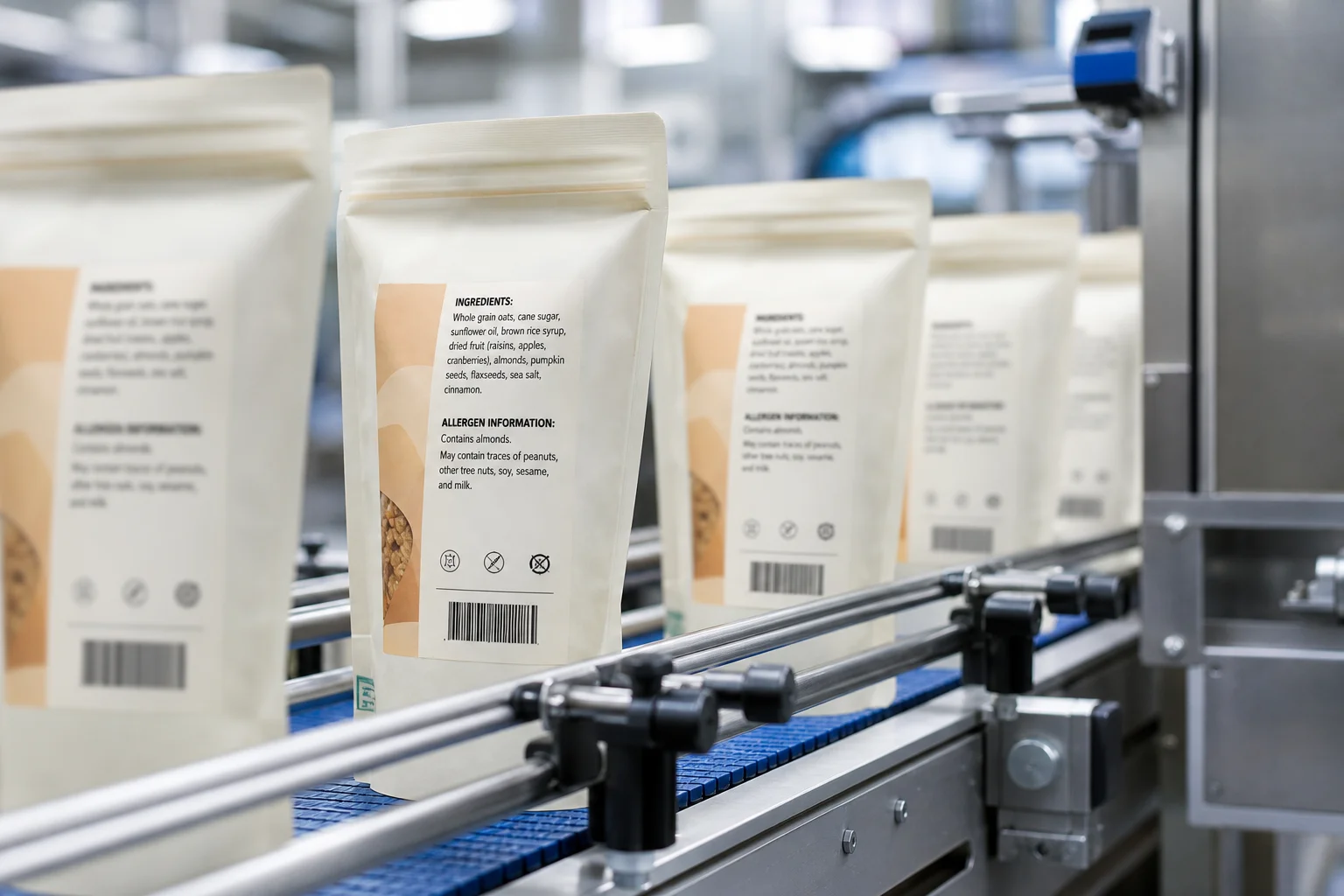
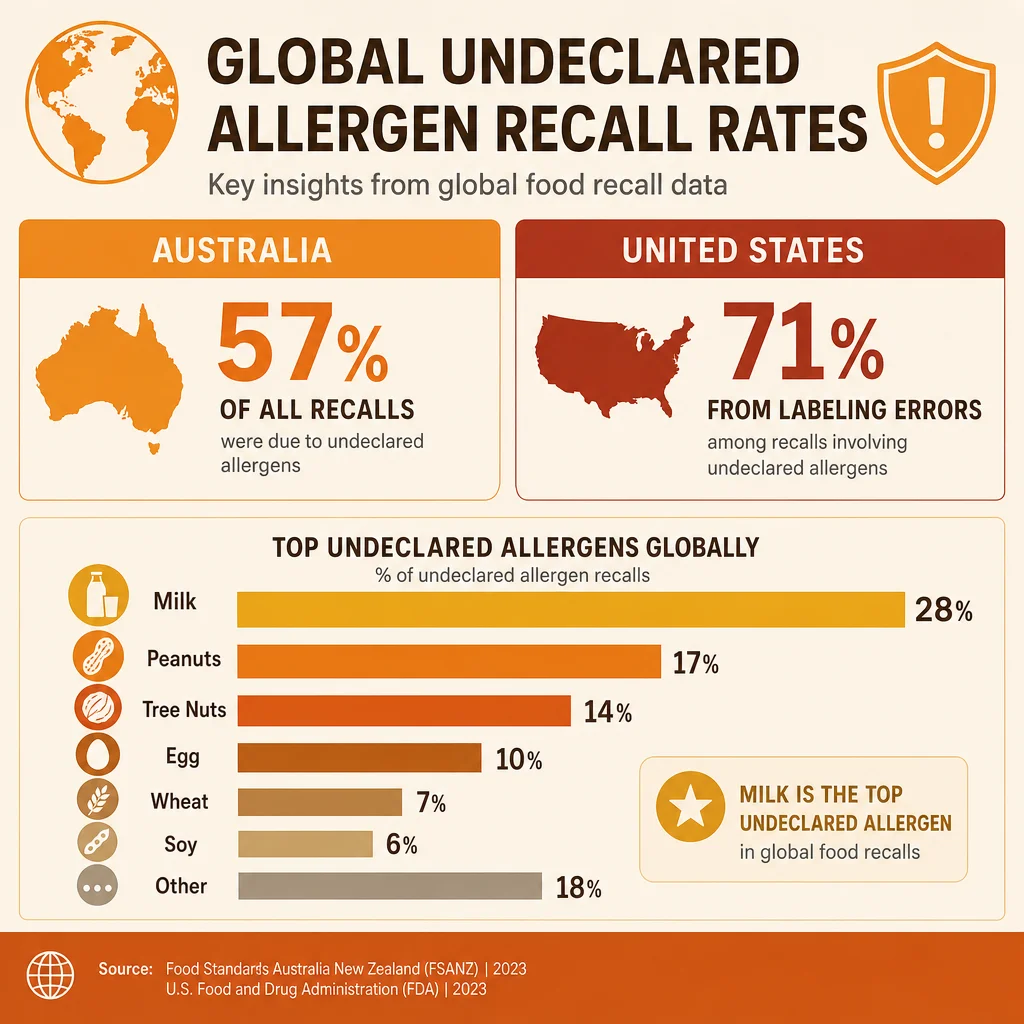
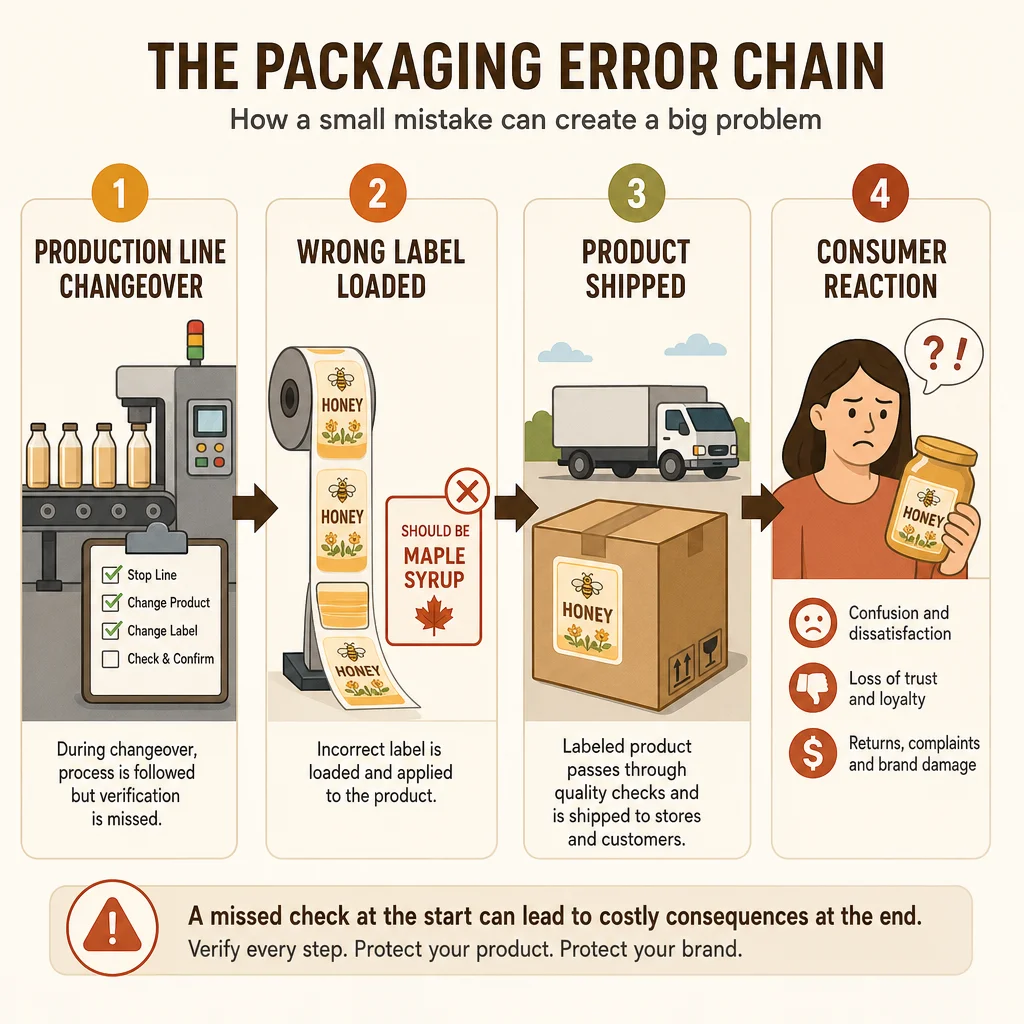
The March-April 2026 spike in Australian food allergy recalls is a reminder that the food safety system depends on a single point of failure: the label. If the label is wrong, the entire system fails. A consumer with a milk allergy who trusts a label that says "dairy-free" has no other defense. They cannot see milk protein in a chocolate bar. They cannot smell it in coconut water. They cannot taste it in caramel.
This is why allergen recalls are classified as Class I, the most serious category. The consequence of a labeling error is not just consumer confusion. It is a potential emergency room visit, an epinephrine injection, and in the worst cases, a death that was entirely preventable.
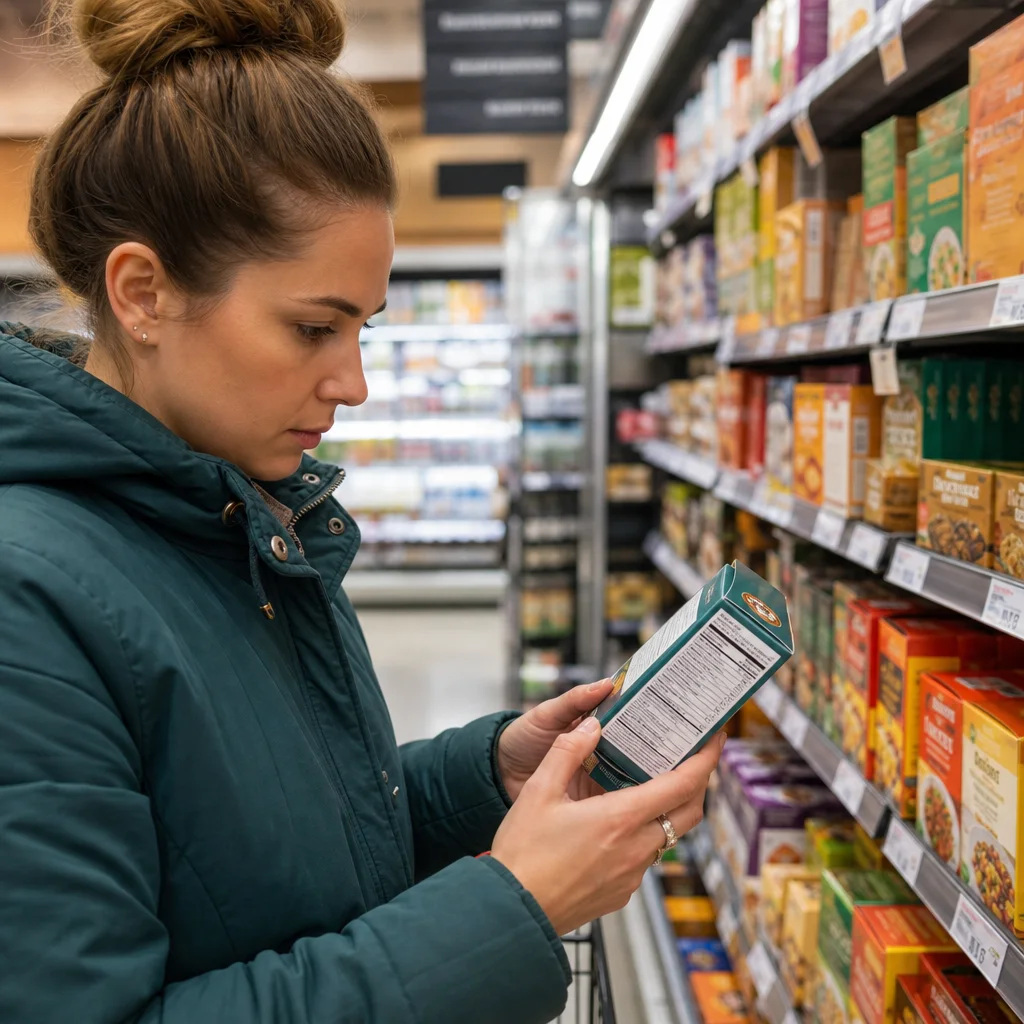
For consumers with food allergies, the practical lesson is that even products marketed as free from your allergen can carry risk. Labels are human-made, and humans make errors. Checking the full ingredient list every time, even on products you have bought before, is essential. Recipes change. Suppliers change. Manufacturing locations change. A product that was safe last month may not be safe today.
For the food industry, the lesson is that allergen management requires investment in systems, not just policies. Label verification at every changeover. Supplier documentation that is updated and audited, not filed and forgotten. Digital systems that can flag mismatches between recipes and labels before production starts. These are not speculative technologies. They exist. They are not universally implemented. For a closer look at how allergen labeling failures play out in practice, see our guide on undeclared allergens and why food recalls keep missing the label.
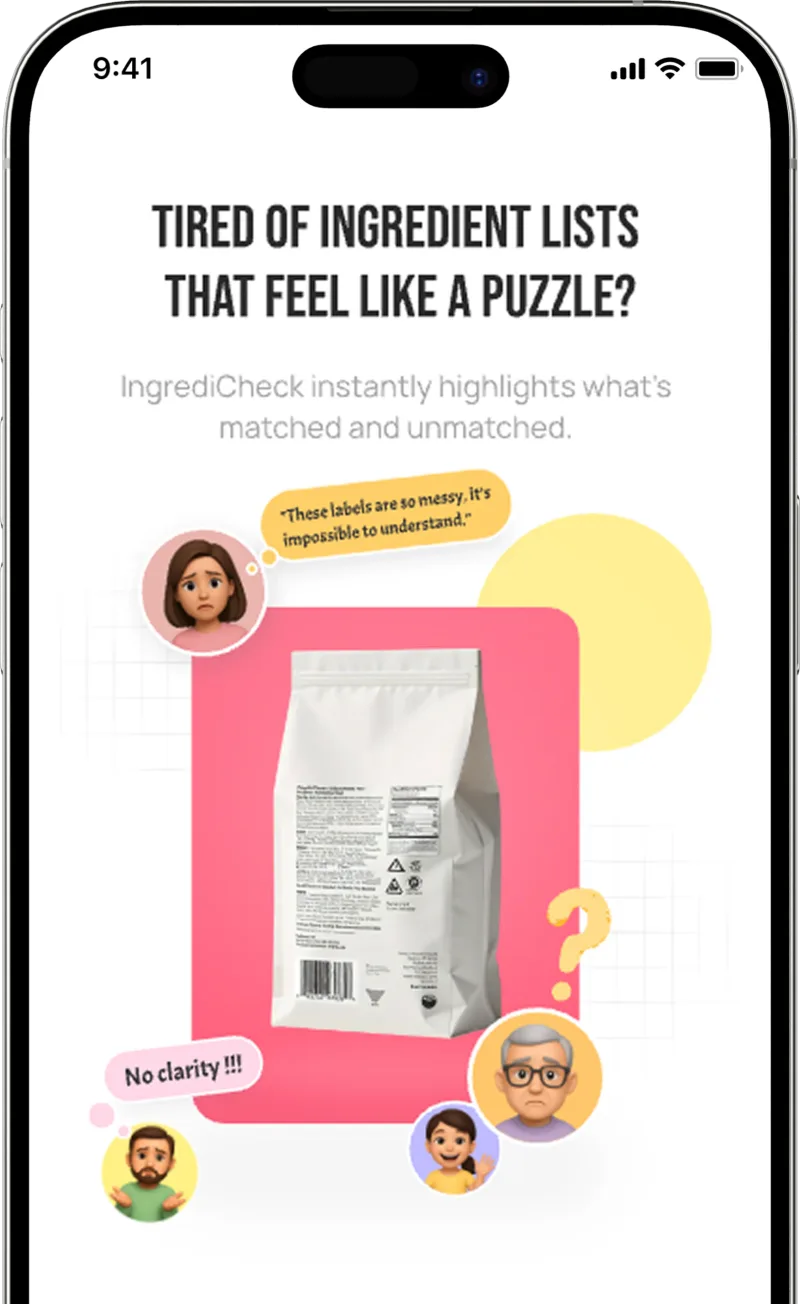
Using IngrediCheck, you can scan a product and cross-reference its declared ingredients against your known allergens.
The app provides an independent check on what the label says, helping you catch discrepancies before they become reactions. For consumers managing food allergies, an extra layer of verification is always worth having.