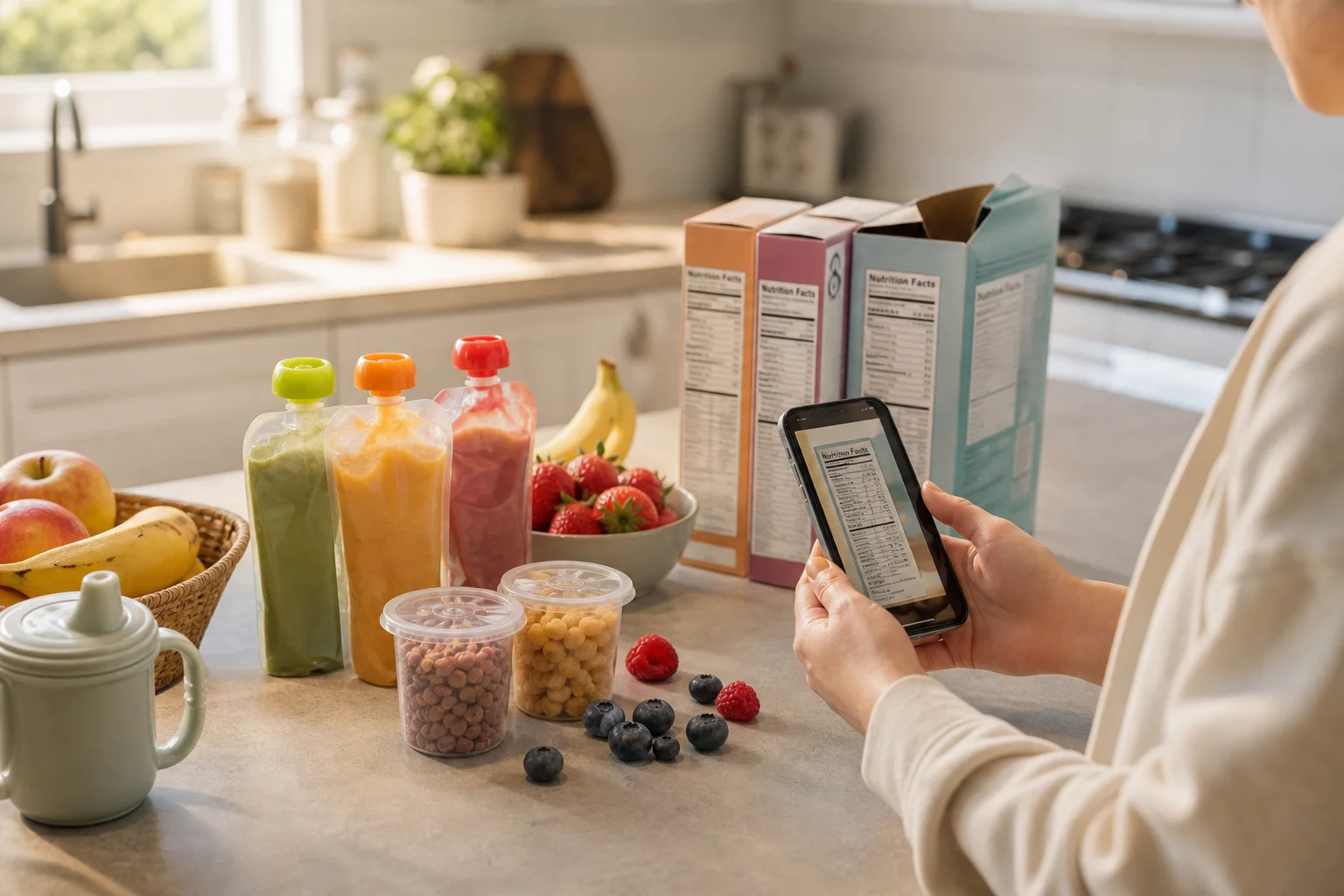
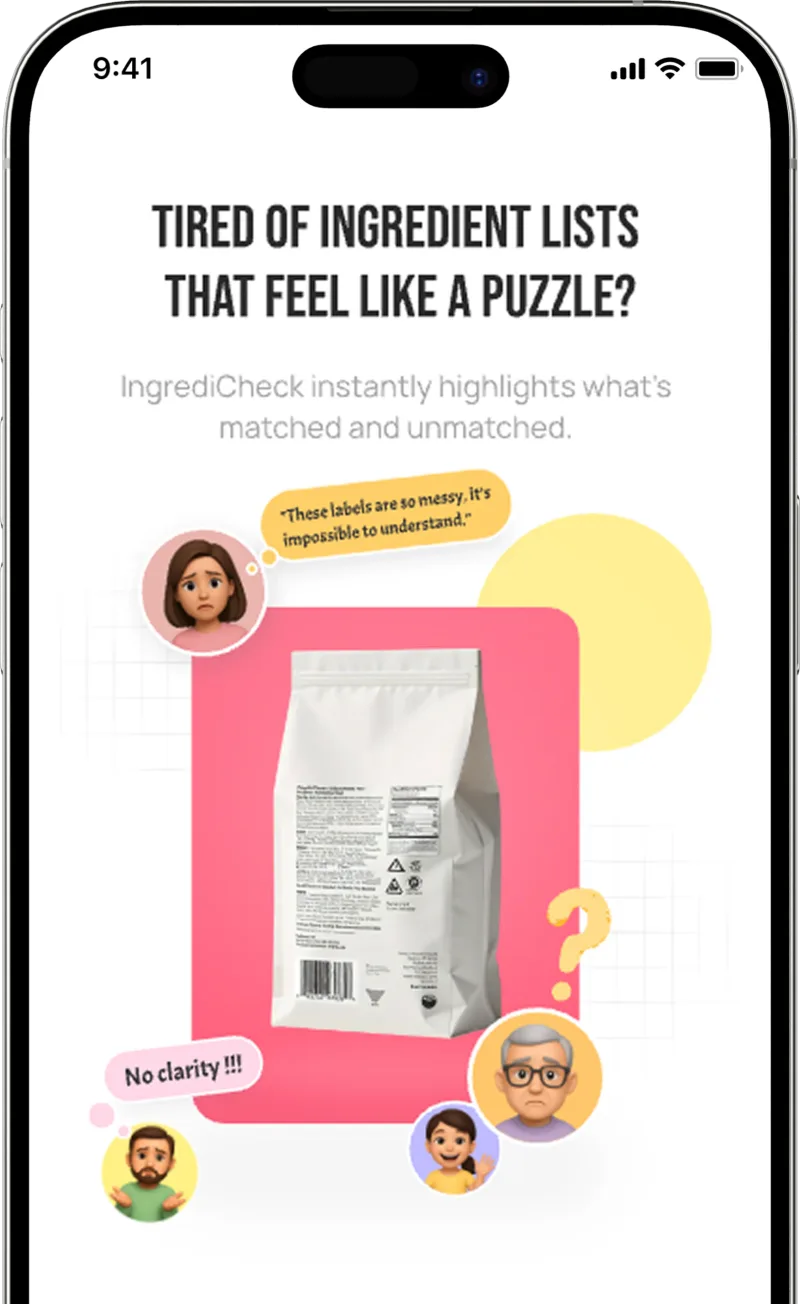
Baby and toddler food labels look simple until you compare five pouches, two snack cups, a cereal bar, and a frozen meal in the same aisle. The front of the package might say organic, toddler, fruit, veggie, or no artificial flavors, but the real questions are usually smaller and more practical.
Does this have added sugar? Is the sodium high for a toddler snack? Does the ingredient list include milk, egg, peanut, tree nut, sesame, soy, wheat, fish, or shellfish? Is the format a choking risk unless it is cut, softened, or avoided? A baby and toddler food scanner helps parents make that first-pass review faster by checking the product against saved household rules.
This is not a substitute for pediatric guidance. It is a label-reading workflow for parents who already know the rules they want to apply and need a faster way to apply them consistently.
Why Baby and Toddler Labels Need a Different Scan
Adult nutrition apps usually focus on calories, macros, or broad product scores. Baby and toddler shopping is different. Parents are often screening for developmental fit, allergy needs, choking safety, and household rules in the same product.
The CDC's infant and toddler nutrition guidance tells caregivers to avoid added sugars for infants and young children, limit foods high in sodium, avoid cow's milk before 12 months, and be careful with juice. It also points parents back to the Nutrition Facts label for sugar and sodium checks.
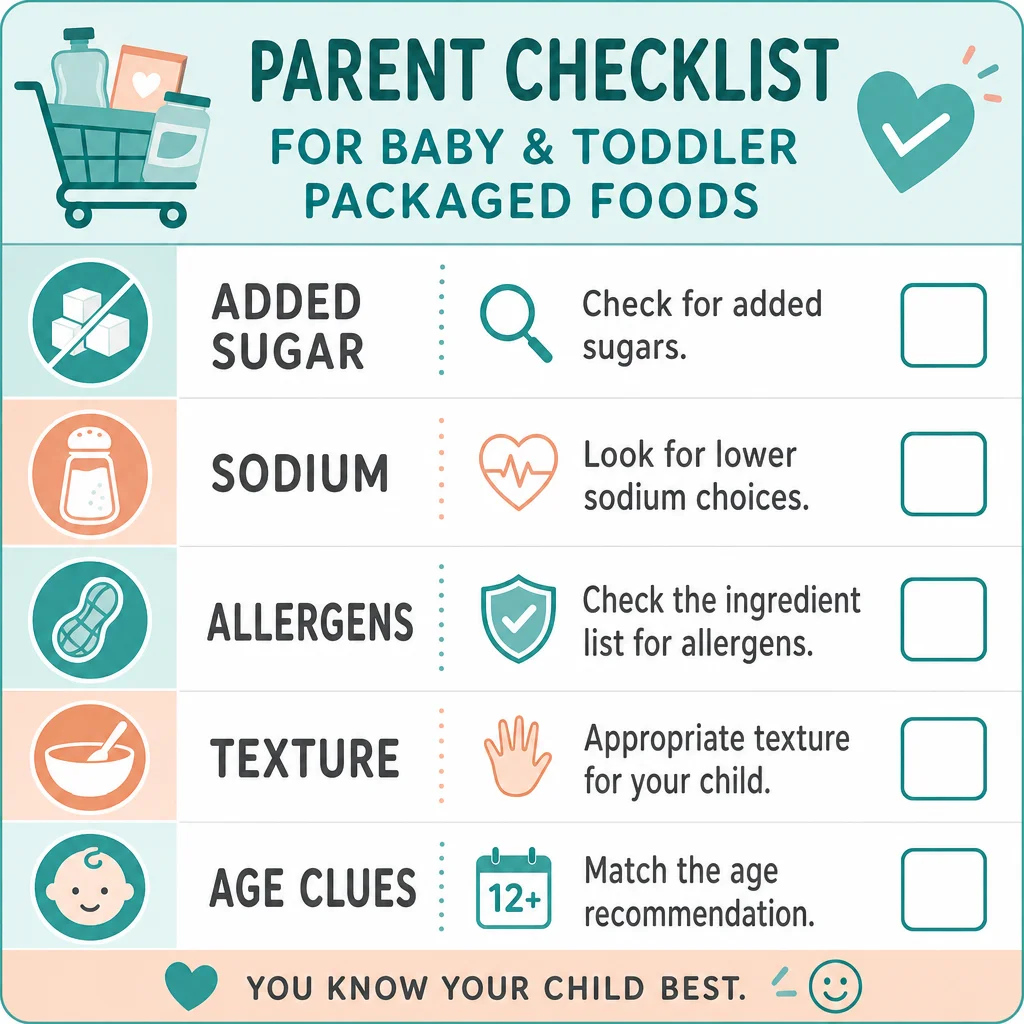
That makes the scanner job concrete. A useful toddler snack checker should not simply say whether a product is healthy. It should surface the label facts parents actually need:
- added sugar and sweetener clues
- sodium per serving and percent Daily Value
- major allergens and derivative names
- product formats that deserve choking review
- age claims that do not replace ingredient review
Added Sugar Is Often Hidden Behind a Friendly Front
Many foods marketed to toddlers are built around fruit, yogurt, cereal, or snack formats. That can make the package feel naturally sweet even when the ingredient list includes added sugar.
The CDC says infants and young children should not have added sugars, and lists examples such as muffins, flavored yogurts, and cookies. The American Heart Association's scientific statement on added sugars in children also recommends avoiding added sugars for children younger than 2 years.
The scanner should therefore check both parts of the label:
- the
Includes Added Sugars line on the Nutrition Facts panel - ingredient names such as cane sugar, syrup, honey, agave, juice concentrate, dextrose, glucose, fructose, maltose, and sucrose
For parents, the key distinction is that fruit is not the same thing as no added sugar. A pouch may contain fruit puree and still include juice concentrate. A toddler bar may sound breakfast-friendly and still include multiple sweeteners.
For a deeper sugar-claim workflow, compare this page with the sugar-free and no added sugar scanner guide. The baby and toddler version is stricter because age matters.
Sodium Can Sneak Into Toddler Snacks
The CDC also warns parents to avoid feeding young children foods high in salt. Examples include some canned foods, processed meats, frozen dinners, and store-bought packaged toddler snacks.
That matters because sodium is not only a chip or pretzel issue. It can show up in:
- soups and toddler meals
- cheese snacks
- crackers
- deli-style meat snacks
- savory pouches
- frozen nuggets and mini meals
- sauces and dips
A low-sodium adult scanner may use fixed limits based on the adult Daily Value. A toddler workflow should be more conservative and should show the parent the actual sodium number rather than hiding it behind a generic grade. Serving size matters too, because a small package may contain more than one serving.
If sodium is a major household concern, use this alongside the low-sodium food scanner guide.
Choking Hazards Are Partly a Label Problem
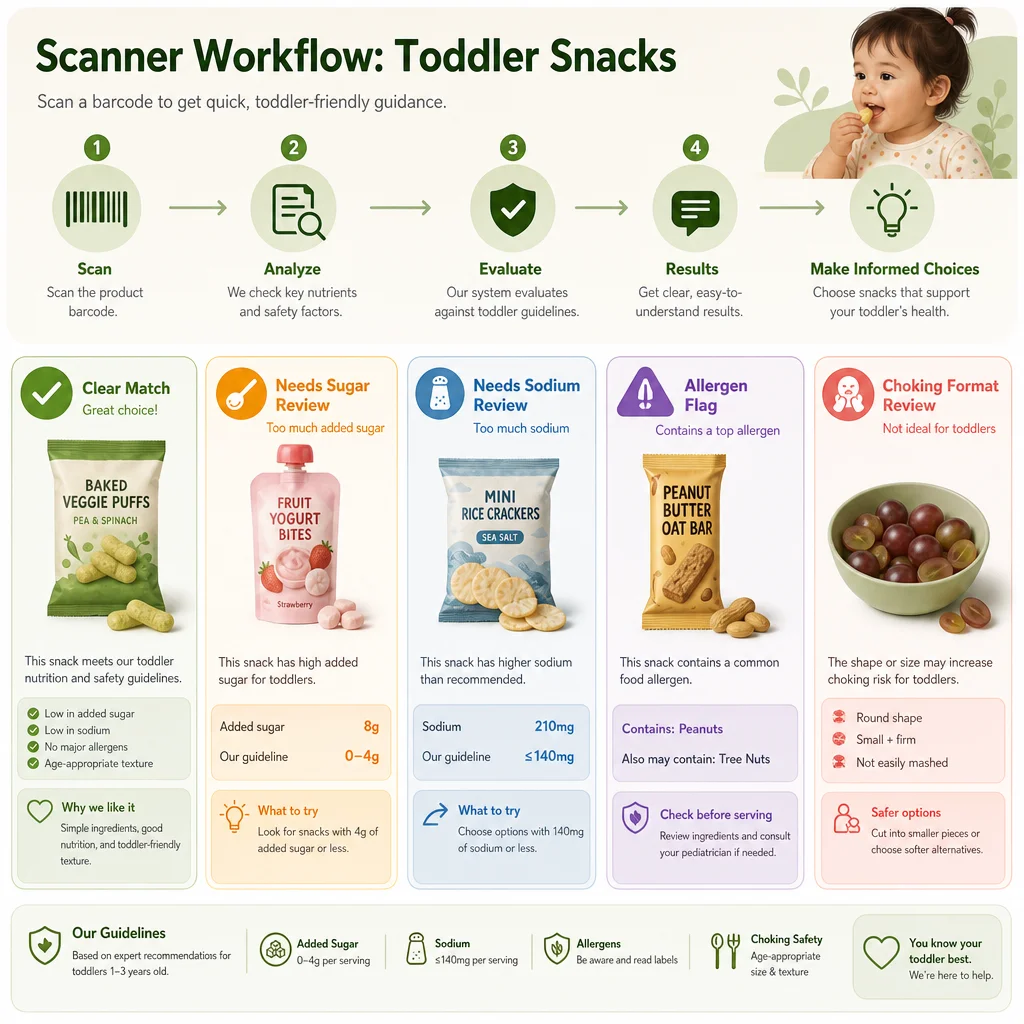
A phone cannot inspect how you cut grapes at home. It also cannot know whether a snack becomes sticky in your child's mouth. But a scanner can still help with the label side of choking risk.
The CDC's choking hazard guidance tells caregivers to prepare foods to the right shape, size, and texture and to avoid small, sticky, or hard foods that are difficult to chew and swallow. The CDC lists examples such as whole nuts and seeds, chunks or spoonfuls of nut butter, hot dogs, large chunks of cheese, popcorn, chips, hard candy, gummy candy, marshmallows, and uncut round fruits or vegetables.
That creates useful scanner flags:
- whole nuts or nut pieces
- popcorn
- hard chips or pretzel-style snacks
- gummy candy or fruit snacks
- marshmallow
- hot dog or sausage products
- large dried fruit pieces
- seed-heavy crackers
- sticky nut butter formats
These should be review flags, not automatic verdicts. Some foods can be modified safely for a child's age and skill level. Others should be avoided. The scanner can remind the parent what deserves attention before the product goes into the cart.
Why Age Claims Do Not End the Review
Age ranges on baby food packages are helpful, but they are not personal. A 12 months+ snack does not know your child's chewing skills, allergy history, sodium targets, or whether the product is being sent to daycare.
That is why saved rules matter. One family may want:
- no added sugars
- flag sodium above a chosen threshold
- avoid sesame and egg
- flag whole nuts and popcorn
- flag juice drinks
Another family may need:
- dairy-free and soy-free
- no honey under 12 months
- flag unpasteurized ingredients
- flag gelatin or pork-derived ingredients
- review all fruit snacks and gummy formats
Those are different workflows. A useful baby food scanner should make the rule set visible instead of forcing every parent into the same product score.
For broader scanner context, read the parent ingredient checker app guide and browse the full ingredient checker and food scanner guides hub. Those pages show how saved rules can cover allergies, diets, additives, and family profiles without pretending one label verdict fits everyone.